This week: CDC's response to measles deaths stirs fears about the agency's reliability. Also: Do you shy away from conflict with family and friends? Maybe there's a wiser approach. Plus: The copper peptide trend has gone from creams to injections -- ahead of the science.
"Red flag. Red alert," says Dr. Demetre Daskalakis, who resigned last year as the director of the National Center for Immunization and Respiratory Diseases at the Centers for Disease Control and Prevention.
He's protesting what he believes is political interference in how the CDC responded to the deaths in August of two infants in Pennsylvania. The state's health officials blamed the deaths on measles.
As NPR's Rob Stein reports: "Health and Human Services Secretary Robert F. Kennedy Jr. took the unprecedented step of questioning the deaths, and the CDC removed them from the agency's website."
That's a departure from the CDC's past role. Stein writes: "Usually, when someone dies from measles, the state where the tragedy happened determines the cause of death and reports the death to the CDC so the agency can alert the public, doctors and health officials around the country. The CDC usually defers to the state's determination."
"We need to have good solid evidence-based national data. And I'm obviously concerned that it will happen again for other infectious diseases," says Dr. Georges Benjamin, head of the American Public Health Association. "If it happens with flu and with COVID, the question is: Who can we rely on for the data on a national level. More people will get sick ... because they won't know what to do. They won't know who to trust. And that is the problem here."
Doubts are also being raised about the new head of the CDC, Dr. Erica Schwartz. She is a well-respected physician and attorney with solid public health experience. The hope was that Schwartz would restore the CDC's morale and credibility by pushing back against political pressure. But many public health advocates say the way the CDC handled the Pennsylvania measles cases doesn't bode well for Schwartz pushing back against political pressure.
NPR made repeated requests for comment from the CDC nor the Department of Health and Human Services; there was no response.
The past month has been really hard. My dear wife passed away on August 15. It's been a time of great sorrow for my daughters and me.
But amid the tears, we are thinking of how amazing she was at being a partner and being a mom. For one thing, she didn't shy away from conflict. When she did not agree with something I was doing (yeah, I had a lot of bad ideas), she would forthrightly raise the issue. She'd talk it out. We'd come to a resolution (she was usually right). And then we'd move on.
My daughters say the same thing. When they'd mess up as children and teens inevitably do, she'd let them know. And she'd move on. No weeks of punishments, no silent treatment. Just a good talk about the source of stress -- and a conclusion. Which sometimes was: "You made your own bed, now lie in it."
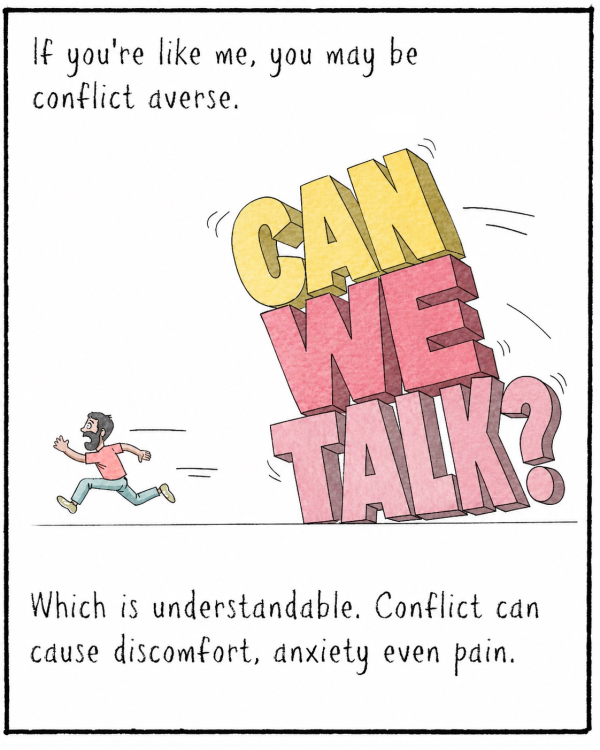
I thought of my dear wife's excellent approach to conflict when I read LifeKit's guide: "How to fight with the people we care about." It states forthrightly that conflict is a sign there's something to talk about. Priya Parker, author of the newly published The Art of Fighting: The Transformative Power of Conflict, advises: "Take a beat to talk about your feelings. Try not to get swept away by them."
Too good to be true? Well, the medical community actually does think there could be potential anti-aging benefits. Stone writes that "Studies have found that GHK-Cu stimulates collagen production and other compounds involved in skin remodeling, triggers the growth of new blood vessels and has anti-inflammatory effects."
"I think GHK can have a major role in helping enhance longevity," says Dr. Warren Ladiges, a professor at the University of Washington School of Medicine who has been involved in studying the peptide for many years.
"But injecting yourself without really knowing what it's going to do? I wouldn't do that to myself," he adds.
To learn more about the potential and pitfalls, read our story.
And keep in mind that wrinkles are not necessarily a bad thing. As Mark Twain observed: "Wrinkles should merely indicate where the smiles have been."
Listen to your local NPR station.
Visit NPR.org to hear live radio from WAMU 88.5 (edit station).
What do you think of today's email?
We'd love to hear your thoughts, questions and feedback: health@npr.org
You received this message because you're subscribed to Health emails. This email was sent by National Public Radio, Inc., 1111 North Capitol Street NE, Washington, DC 20002