| | Tech leaders call for an AI slowdown, drones knock out a critical Saudi oil pipeline, and US Preside͏ ͏ ͏ ͏ ͏ ͏ |
| |  | Flagship |  |
| |
|
The World Today |  - Rivals urge AI slowdown
- US’ lethargic regulators
- Saudi oil pipeline hit
- UAE, Iran hold talks
- BRICS condemns tariffs
- Ukraine strikes refineries
- Warsh faces rate test
- Keynesianism is over
- US shale expansion
- Lip fillers on way out
 A film with the ‘sweep of a wartime epic’ and the ‘mechanics of a geopolitical thriller,’ and a look at the week ahead. |
|
Tech leaders support AI slowdown |
 Denis Balibouse/Reuters Denis Balibouse/ReutersAnthropic co-founder and CEO Dario Amodei urged firms to slow the pace of AI development in a 3,800-word essay published Saturday that was quickly endorsed by rivals Sam Altman and Elon Musk. Amodei said another six months at present speeds of development could produce models capable of hijacking the internet and argued for independent observers inside leading firms. Altman on Saturday ruled out an IPO this year, telling Fortune that OpenAI would prioritize safety, as Anthropic prepared for a listing as soon as October. The safety debate “escaped containment” last week around fears of human extinction, Semafor’s Tech editor wrote, but Amodei is “proposing things every AI lab needs to do anyway, mostly for commercial reasons: Operational excellence, alignment, interpretability, testing, and evaluation.” |
|
AI risk warnings meet fractured politics |
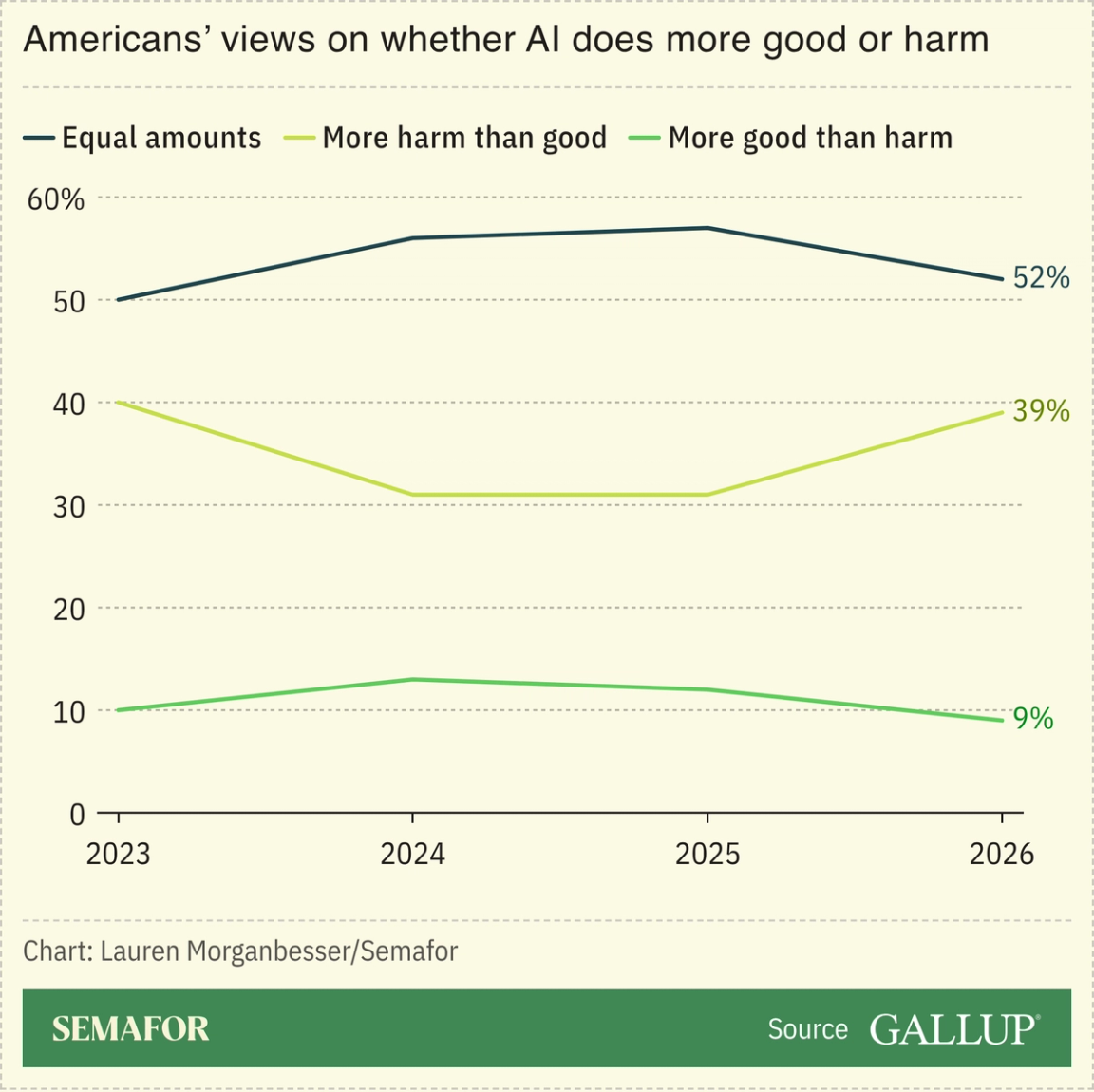 US President Donald Trump rejected calls from tech leaders to slow AI development on Sunday, as an increasingly urgent regulatory debate confronted a political landscape divided on how — and whether — to place guardrails on the tech. Trump downplayed fears on Sunday and cited competition with China as reason to forge ahead. Bipartisan legislation could be introduced this week, Semafor’s Ashley Gold reported, but emerging disagreements “portend a rocky road” for legislation to pass before 2027. Former President Barack Obama urged Democrats to prioritize AI regulation, while the Republican House speaker argued firms were responsible for ensuring safety. One AI expert pointed to a disconnect between labs’ warnings and governments’ focus on juicing the infrastructure and investment boom. |
|
Saudi pipeline shut after drone attacks |
 European Union/Copernicus Sentinel-3/Handout via Reuters European Union/Copernicus Sentinel-3/Handout via ReutersSaudi Arabia shut down its vital East-West pipeline after multiple drone attacks, intensifying the pressure on Gulf energy exports. The pipeline had provided a workaround for Saudi crude, allowing the kingdom to bypass the Strait of Hormuz; its shuttering threatens the loss of 4% of the global oil supply, Reuters reported. Yemen’s Iran-backed Houthis also seized Perim Island in the Bab al-Mandab Strait, threatening a second major shipping route through the Red Sea. Together, the disruptions could further squeeze oil exports, driving prices higher — the price of Brent crude surged above $109 a barrel last week. “With two critical maritime arteries simultaneously being choked, the world is facing an increasing constriction” of global energy flows, a consultant told The Washington Post. |
|
Iran and the UAE meet in New Delhi |
 Crown Prince of Abu Dhabi Sheikh Khaled bin Mohamed bin Zayed Al Nahyan and Iranian President Masoud Pezeshkian. Iran’s Presidency/WANA (West Asia News Agency)/Handout via Reuters Crown Prince of Abu Dhabi Sheikh Khaled bin Mohamed bin Zayed Al Nahyan and Iranian President Masoud Pezeshkian. Iran’s Presidency/WANA (West Asia News Agency)/Handout via ReutersIran and the UAE held their highest-level meeting since the start of the Iran war at the BRICS summit in India, where the two countries found a rare space for direct diplomacy. The meeting came after months of escalating tensions, including Abu Dhabi’s suspension of trade with Tehran in August following Iranian attacks. Together with a joint BRICS statement urging “maximum restraint,” the outreach signals Iran’s effort to engage Gulf states directly, rather than relying solely on stalled US-Iran negotiations. Iran plans to present Gulf nations with a planned temporary shipping route through the Strait of Hormuz Monday. “What India has done is keep the difficult conversations going,” a former Indian ambassador told Reuters. |
|
BRICS highlights opposition to tariffs |
 Sputnik/Alexander Kazakov via Reuters Sputnik/Alexander Kazakov via ReutersOpposition to US tariffs formed a point of consensus among the otherwise divergent interests at the BRICS summit, as Indian Prime Minister Narendra Modi touted the bloc’s “coming of age.” Trade tensions — though the US or President Donald Trump was never mentioned by name in the joint statement — are causing India to “reinvest in other relationships,” an expert wrote: Chinese leader Xi Jinping’s first visit to India in seven years deepened the Asian giants’ thaw, as both countries’ leaders embraced Russia’s Vladimir Putin. Still, the unanimous adoption of a “watered down statement” was “more of a relief for BRICS than it is a great victory,” one expert said, with the bloc largely remaining a “pragmatic club for limited purposes.” |
|
Trump blames Kyiv for diesel shortage |
 Anatolii Stepanov/Reuters Anatolii Stepanov/ReutersUS President Donald Trump on Sunday called on Ukraine to stop striking Russian refineries, after Kyiv struck several over the weekend, attacks that he said were increasing the price of diesel and “hurting the world.” Russia targeted Ukraine with more than 2,000 drones and nearly 80 ballistic missiles last week, Ukrainian President Volodymyr Zelenskyy said. Kyiv is facing a difficult winter as Russian strikes against its energy infrastructure intensify; Russia’s new jet-powered drones, improved versions of Iranian Shaheds, evade its air defenses at a much higher rate than their predecessors, the Financial Times reported, leading to more devastating strikes. On Sunday, Moscow struck a passenger train used to ferry foreign dignitaries into Ukraine from Poland, prompting condemnation from NATO capitals. |
|
Fed chair Warsh faces independence test |
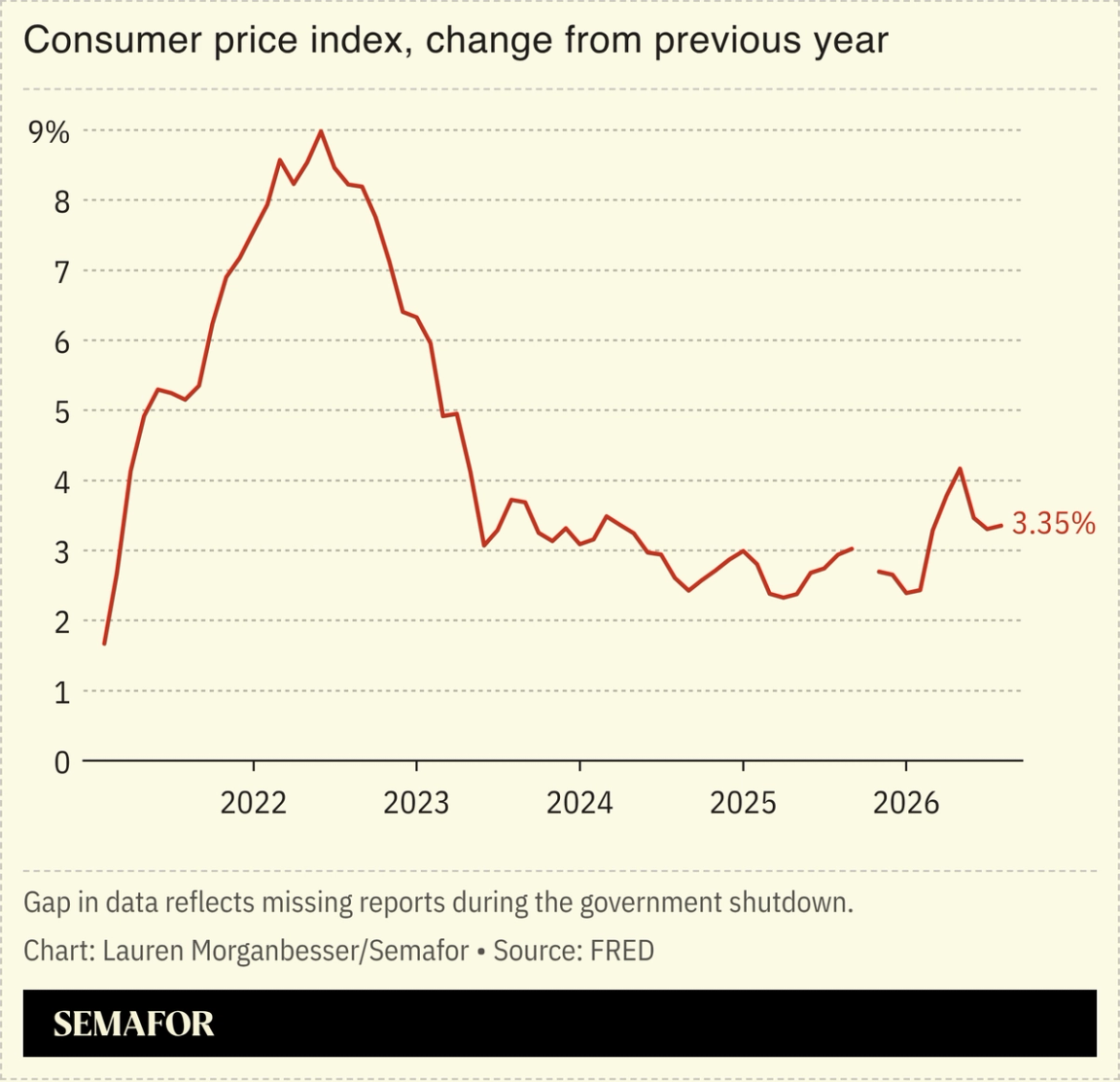 President Donald Trump said on Sunday that the US should have the world’s lowest interest rates, piling pressure on Federal Reserve Chair Kevin Warsh days before the bank is expected to raise them amid an increasingly hawkish global outlook. Trump’s call comes on the heels of a hotter-than-expected US inflation reading for August and an unexpectedly strong jobs report, prompting traders to say there is an 86% chance of an increase on Wednesday. After reiterating the bank’s 2% inflation target last month, “Warsh is now in the position to either vindicate his own views or reignite the debate about what is truly motivating him,” thereby generating uncertainty that “would likely raise the yield on long-term debt,” a CNBC analyst wrote. |
|
 Semafor is expanding its coverage of healthcare with a new weekly briefing led by veteran healthcare journalist David Lim. At the intersection of politics, policy, and business, Semafor Healthcare will bring clarity to the forces shaping the industry, explaining how decisions in government affect the private sector and global economy. The briefing will go beyond the headlines to show what is really driving health policy in the US and around the world. Each week, readers will get original reporting, scoops, and analysis on the people and institutions driving change across healthcare, from policymakers and major companies to scientists, investors, and technology leaders. |
|
Keynesianism may be dead, economist says |
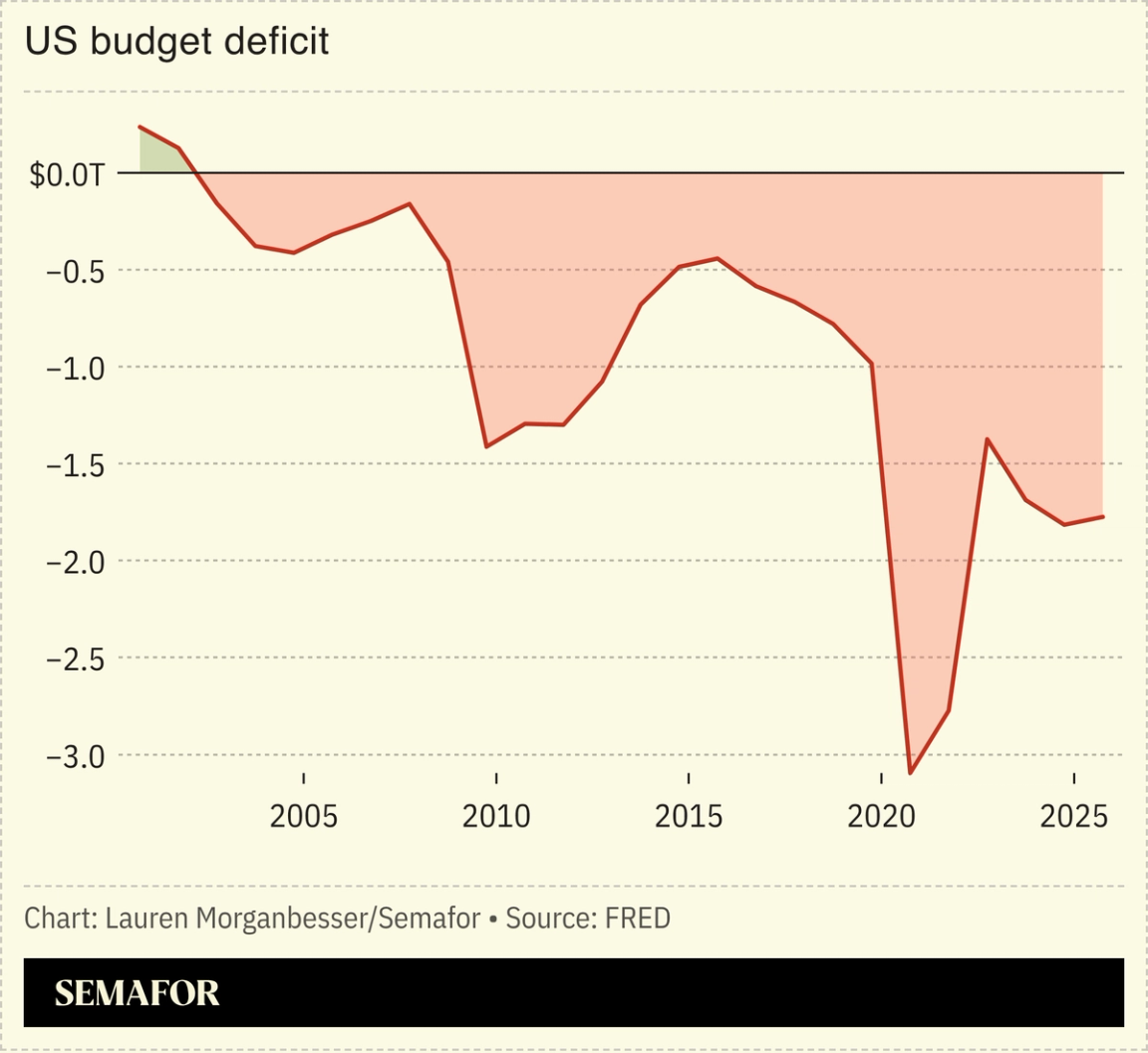 The second wave of Keynesianism may be over, a top economist warned. John Maynard Keynes, writing after the Great Depression, warned of the “paradox of thrift” — that economic crises lead to reduced spending, worsening the crisis. He proposed that governments should spend in recessions to kick-start the economy. Keynesianism fell out of fashion during the stagflation of the 1970s but returned after the financial crisis and COVID. Now, though, countries are heavily indebted and people fea |
|
|


