| |
One Nation this week said it wants to reduce the number of temporary migrants in Australia by more than 760,000 over three years – and the reaction from business and employer groups was swift.
The Business Council of Australia warned the plan “risks holding back economic growth”, while the Australian Industry Group said it “risks severe economic self harm at a time when we are already bedevilled by significant labour and skills shortages.”
Why?
Today, Professor Ly Tran, who researches international students and international graduate employability, unpacks what’s been proposed – and how cutting the number of international students and graduates living in Australia may affect Australia’s labour market and broader economy.
|
| |
|
Sunanda Creagh
Senior Editor
|
|
|
| |
| |
| |

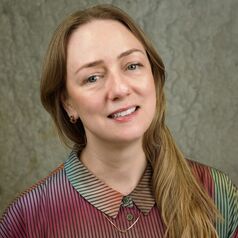
Ly Tran, Deakin University
Reducing the number of people on student and graduate visas may reduce migration numbers, but it could also weaken demand for Australian goods and services.
|

Corey J. A. Bradshaw, Flinders University; Alan N Williams, James Cook University; Lynette Russell, Monash University; Sean Ulm, James Cook University; Shane Ingrey, UNSW
Genetic, archaeological and environmental evidence suggest the Indigenous population fell by more than 90% in the 70 years after the British invaded.
|

Vivienne Lewis, University of Canberra
The discussion surrounding the American actor’s ad raises bigger questions about the attention placed on women’s bodies, not just in sport.
|

Michelle Grattan, University of Canberra
After facing a barrage of criticism for her comments, the One Nation leader says it was not her intention to cause hurt.
|

Denis Muller, The University of Melbourne
Amid news that 500 jobs will go at the Whyalla steelworks, once owned by Gupta’s GFG Alliance, The Big Steal is a powerful – and timely – work of journalism.
|

Bill Bateman, Curtin University
How does a dolphin or seal even get bird flu? Most likely through contact with sick birds – or eating their carcasses.
|

Jak Kakhkharov, Australian Catholic University
The rush to build data centres brings investment and the promise of a sophisticated digital economy. But it also creates new pressure on housing and skilled workers.
|

Susan Watson, University of Auckland, Waipapa Taumata Rau
Governments can curb corporate power. But first we need to understand how corporate law allows private ventures to accumulate power that can endure for generations.
|

Dianne Ma, Auckland University of Technology
Like many food debates, this one is tangled up in culture, history and power.
|
Politics + Society
|
-
Michelle Grattan, University of Canberra
Krissy Barrett’s call comes after recent murders in Sydney linked to organised crime included two cases of mistaken identity in one week.
-
Joshua Black, University of Canberra
It was once deemed crazy to get rid of protective tariffs. Privatising state banks was inconceivable. Both are now commonplace, but how does this happen?
-
Adrian Beaumont, The University of Melbourne
Labor is likely to lose the Victorian election, but it’s unclear whether the Coalition will be able to govern in majority or need support from One Nation.
-
Deirdre McGhee, University of Wollongong; Clare Hanlon, Victoria University; Dr Elliott Flowers, Victoria University
Most decision-makers in sport think girls and women would benefit from learning about sports bra design, fit and support. Less than 1% offer this education.
|
|
Health + Medicine
|
-
Robyn Brown, The University of Melbourne; Leigh Walker, Florey Institute of Neuroscience and Mental Health
Some women can’t take hormone replacement therapy to alleviate hot flashes and night sweats. This medication is one alternative.
|
|
Environment + Energy
|
-
Annabel Ellis, University of Sydney; Dieter Hochuli, University of Sydney; Peter Banks, University of Sydney
Humans have had a complex relationship with this marsupial, known for its pointy snout, thin tail and large hind feet.
|
|
Science + Technology
|
-
Susan Kelly, Macquarie University
Meretneith was buried in a tomb fit for a male ruler. But for decades, debate has raged over her true royal status.
|
|
Arts + Culture
|
-
Hannah Lewi, The University of Melbourne; Cameron Logan, University of Sydney
University campuses reflect the layers of architectural and landscape styles that have shaped our cities and suburbs.
-
Alex Burchmore, Australian National University
The National Gallery of Australia exhibition showcases the late British artist’s mastery of intimate detail and talent for connection.
|
|
Your Say
|

|
Regarding your article ‘Five years into AUKUS, what do we have to show for it? We’ve measured progress on three key metrics’, the projected public cost of AUKUS could, in my view, be far better directed towards reducing poverty in Australia, yet our elected representatives have committed to acquiring nuclear-powered, conventionally armed submarines at enormous cost. During COVID, welfare payments were substantially increased so people could better afford essentials, but those increases did not last. It is evident to me that our political parties are not sufficiently serving the people, leaving me to question whether greater use of referendums could provide a truer democracy based more directly on the will of the majority rather than the influence of lobbyists.
|
|
|
Yesterday’s article ‘1 in 3 uni students experience serious financial hardship. Could concession cards for all help?’ prompted two thoughts: first, there is no right to a university education. It’s a choice like many others in life and one to be made taking account of the realities of living it. Second, the article says the objective is to raise tertiary qualifications from 60% to 80%. I’m wondering how such a goal benefits our society. There are significant employment needs currently in childcare, aged care, agriculture (i.e. harvesting the food), logistics, transport and construction. I don’t know that any of those necessarily require tertiary qualifications, particularly university qualifications.
|
|
|
| |
|
We'd love to hear from you.
|
Each day we publish an edited selection of your views on our stories.
|
|
|
|
|
| |
|
|
| |

|
Featured Events, Courses & Jobs
|
View all
|
|
8 - 11 October 2026
•
New Farm
|

|
|
|

|
21 - 28 October 2026
•
Sydney
|

|
30 September 2026
•
Bundoora
|

|
|
|
|
| |