| | The future of climate finance, environmental impact of data centers, and Kenya’s $16 billion refiner͏ ͏ ͏ ͏ ͏ ͏ |
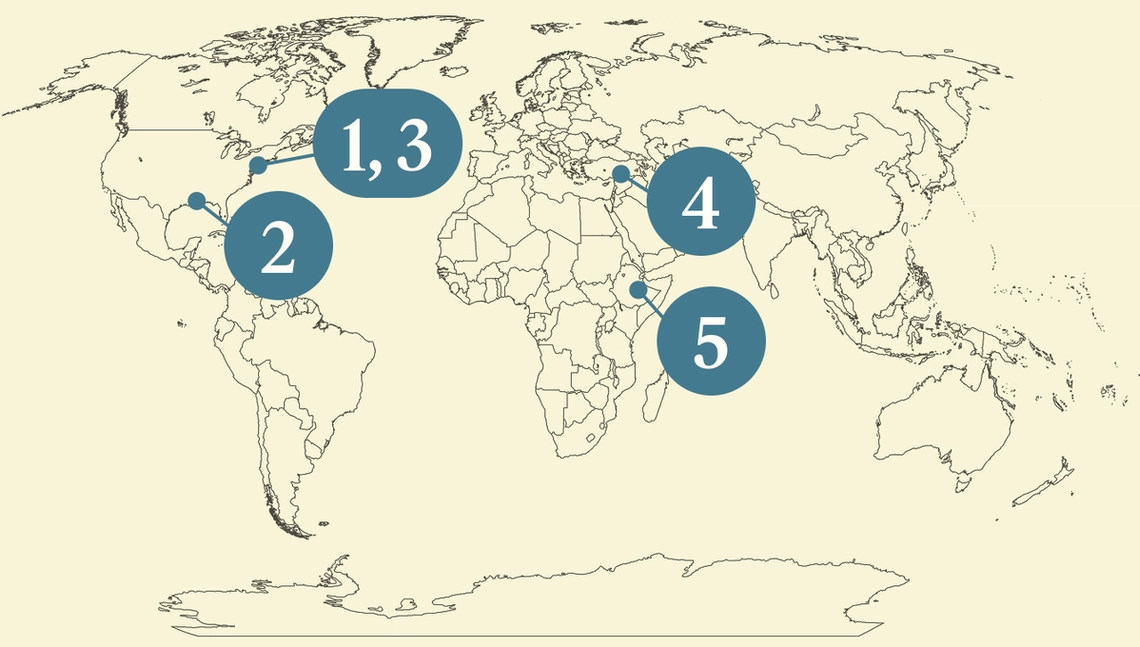
| |  New York New York |  Baton Rouge Baton Rouge | Lamu |
 | | | Climate Week Edition |
| |
|
 - ‘Very good meeting’
- Diesel ban could backfire
- Data center transparency
- Age of electricity
- New refinery breaks ground
 New York and California sue Trump over offshore wind, while a federal court tosses an antitrust lawsuit against Big Oil. |
|
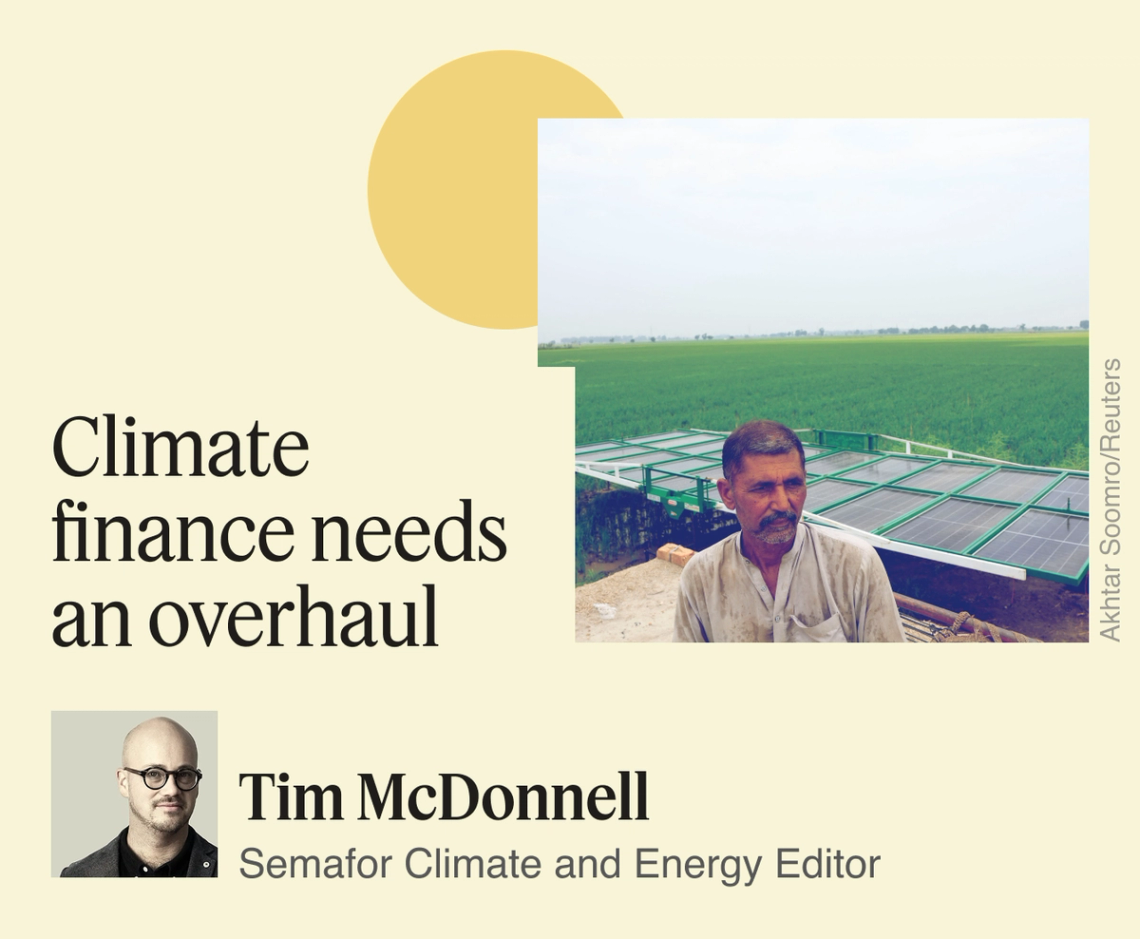 For developing countries, more green tech capital doesn’t always translate to a cheaper and cleaner energy system. There’s more money than ever available from private and public financial institutions for investments in clean tech in emerging economies: nearly $400 billion in 2025, according to the Climate Policy Initiative, double the sum five years ago. It’s not enough — countries agreed at the COP summit in Azerbaijan to hit $1.3 trillion annually by 2035 — but I remember coming to Climate Week a few years ago and hearing a lot more anxiety about this subject than I’ve heard this year. One reason is that clean tech is so much cheaper that there’s more bang for the buck. Evidence is also piling up that these investments are much less risky than many investors feared: A recent study of lending from development banks to private enterprises in emerging economies since 1994 found an average default rate of 3.5%, similar to that in advanced economies. The bigger challenge isn’t just getting more capital, but making sure it actually leads to lower poverty and lower emissions. “There’s a lot of good intent,” Tariye Gbadegesin, CEO of Climate Investment Funds, a World Bank-backed pool of concessional capital for clean energy, told me. “But we need to be better at converting that into outcomes.” One lesson Gbadegesin has learned in her years in this field is that climate finance investments work best when they are coordinated with a country’s finance ministry, rather than energy or environmental officials, which has often been the status quo. Development banks shouldn’t just dump cash into individual clean tech projects, she said, but rather be proactive about helping developing countries fix their energy market regulations so they become more attractive to private investors, and so that the energy system as a whole, from generation to grids to end users, functions better. More financial innovation is also needed to mitigate the risk of losses introduced when imported hardware is paid for in US dollars, but energy is sold in local currency. “That’s really the fundamental challenge,” she said. |
|
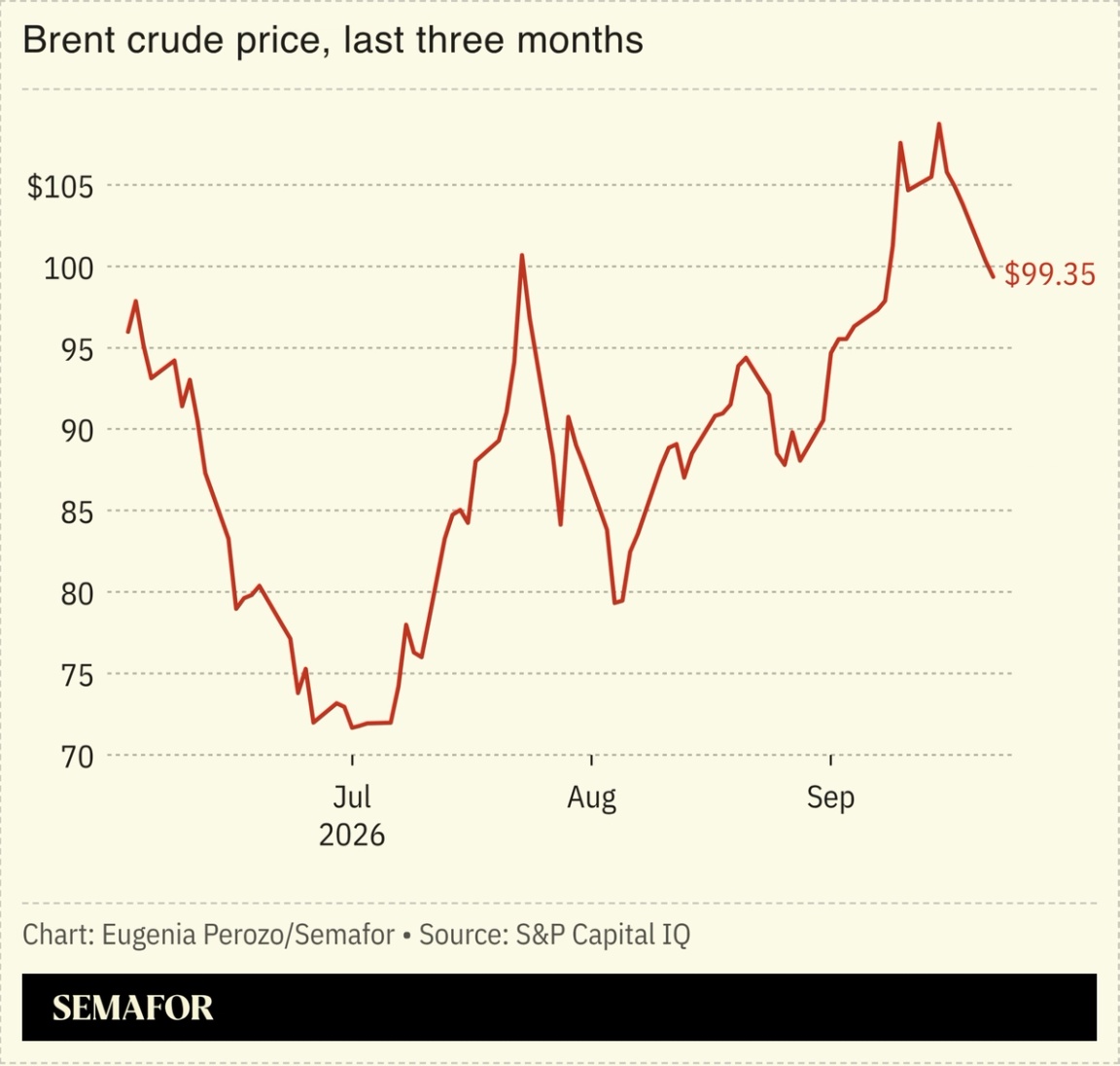 Oil prices fell to a two-week low, dipping below $100 barrel, after reports that Saudi Arabia restarted operations at its pipeline to the Red Sea and as hopes revived that US-Iran would advance a diplomatic solution to the conflict in the Middle East. US President Donald Trump said officials from both countries had a “very good meeting” on the sidelines of the UN General Assembly, their first talks since June. Earlier, Trump used familiar rhetoric to tell leaders gathered in New York he had a choice: Make a deal — he said he believes an agreement will be reached after the midterms — or “annihilate” Iran. His Iranian counterpart is due to address the UN today. The soaring cost of moving oil around the world shows the extent of the supply crisis, however. A single trip to ship crude from Saudi Arabia’s Ras Tanura to China now costs 13 times more than before the war, with the price of freight roughly one-fifth of the total cost of crude to refiners. Even aging vessels typically used to haul sanctioned Iranian and Russian oil are joining shuttle runs through the Strait of Hormuz, The Wall Street Journal reported. |
|
Potential ban on US diesel exports |
 Implementing a full ban on US diesel exports, as President Donald Trump endorsed on Tuesday, would backfire by driving American refineries to reduce their run rates by more than 10%, new analysis from S&P Global concluded. With US diesel prices soaring to record levels even though the country is the world’s top diesel producer, momentum has been gaining among Republican lawmakers for a ban on exports. The trouble is there aren’t enough pipelines to move all the diesel produced in Gulf Coast refineries to every market in the US. Removing US diesel from the global market would raise global prices, coming back to bite American consumers that still have to rely on imports. And although refineries are currently running full-steam, the loss of export markets would force them to instead fill limited storage facilities and then produce less, leading to yet higher prices. An alternative option to a full ban could be a limited export quota, the report suggests, which would be less disruptive to prices, though much harder to implement effectively. |
|
Amazon data center accountability |
 Semafor SemaforAmazon needs to “do better” to communicate the environmental impact of its vast data center buildout, amid growing backlash to projects in the US and Europe, the company’s chief sustainability officer told Semafor’s The Next 3 Billion event in New York. Kara Hurst said Amazon plans to voluntarily publish more metrics tracking its environmental footprint, such as energy and water usage at sites, to improve the firm’s transparency. “We’re saying, ‘hold us accountable for our practices,’” Hurst said. She added that communities living near new data centers should get a “return on that investment” through workforce development. Data centers’ impact on water and energy supplies has upset sustainability goals. S&P Global found that just 15 of the 50 global data center firms they surveyed received a passing grade, signaling that they would be low-carbon and climate-resilient by 2030. Amazon aims to be carbon neutral by 2040, but Hurst said emissions are likely to keep rising in the near term. |
|
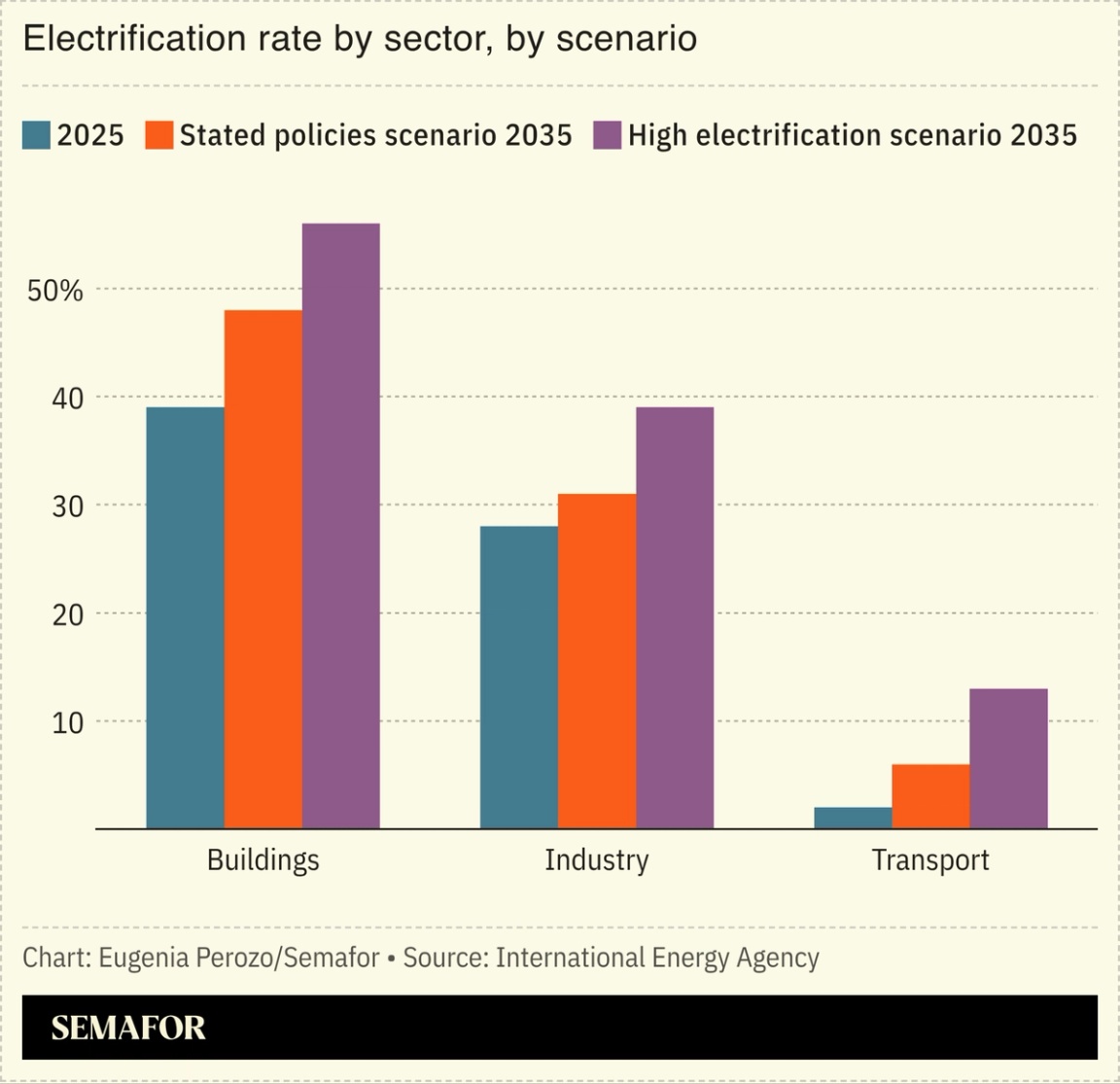 Electricity could cost-effectively meet a third of the world’s energy consumption by 2035 based on existing technologies and pre-war energy prices, putting a proposed goal to boost electrification within “striking distance,” the International Energy Agency found. High energy prices caused by the Middle East conflict could make even more of today’s energy demand economical to electrify, the Paris-based agency said in a new analysis. Ankara wants countries to collectively agree to raise the global share of electricity in total energy use to 35% by 2035 — up from 23% today — at the COP31 climate summit Türkiye is hosting in November. The proposal, launched at the UN this week, calls for electrification to be supported by “diverse and sustainable energy sources,” but it doesn’t preclude generating electricity from coal, oil, or gas. The IEA found that fuel-importing countries could cut their energy import bills by more than $400 billion in the decade to 2035 if they significantly sped up the electrification of their economies. Generating electricity with gas to meet the additional demand could partially offset, but not fully reverse, reductions in imports, it said. — Chloé Farand |
|
Kenya’s $16 billion refinery |
 Semafor SemaforKenya will start construction of a planned $16 billion refinery next week, a mammoth project that could turn the country into a regional fuel-processing hub, as East Africa seeks to reduce its reliance on imported fuels. Speaking at Semafor’s Next 3 Billion event, Kenya’s Investment, Trade, and Industry Minister Lee Kinyanjui said work on the 700,000-barrel-a-day refinery — backed by Nigerian industrialist Aliko Dangote — would begin on Sept. 30. Kinyanjui said its location on Lamu island, on Kenya’s Indian Ocean coast, would allow crude from the Middle East and elsewhere to be refined and products redistributed across East Africa. The project, which could be operational around 2030 if construction proceeds as planned, would give East Africa a major new refining hub just as a final investment decision on Uganda’s planned 60,000-barrel-a-day refinery at Hoima has been pushed back to 2027. The two projects could ultimately compete for regional markets, including landlocked Uganda, South Sudan, and Ethiopia. — Yinka Adegoke |
|
 - UN chief António Guterres hosts leaders for the UN Climate Summit.
- Google’s chief sustainability officer, Amazon’s director of decarbonization strategy, and Meta’s head of net zero strategy address the Superpollutant Action Summit.
- Former Vice President Al Gore marks the 20-year anniversary of ‘An Inconvenient Truth’ in an event with The Climate Reality Project.
- Investors, business leaders, start-ups and scientists meet at the Carbontech Summit to spotlight emerging carbontech solutions.
|
|
 New EnergyFossil FuelsTechPolitics & PolicyMinerals & Mining |
|
|


