| | AI spending set to lift global growth, Houthis strike Riyadh again, global oil buffers dwindle, Chin͏ ͏ ͏ ͏ ͏ ͏ |
| |  | Flagship |  |
| |
|
The World Today | 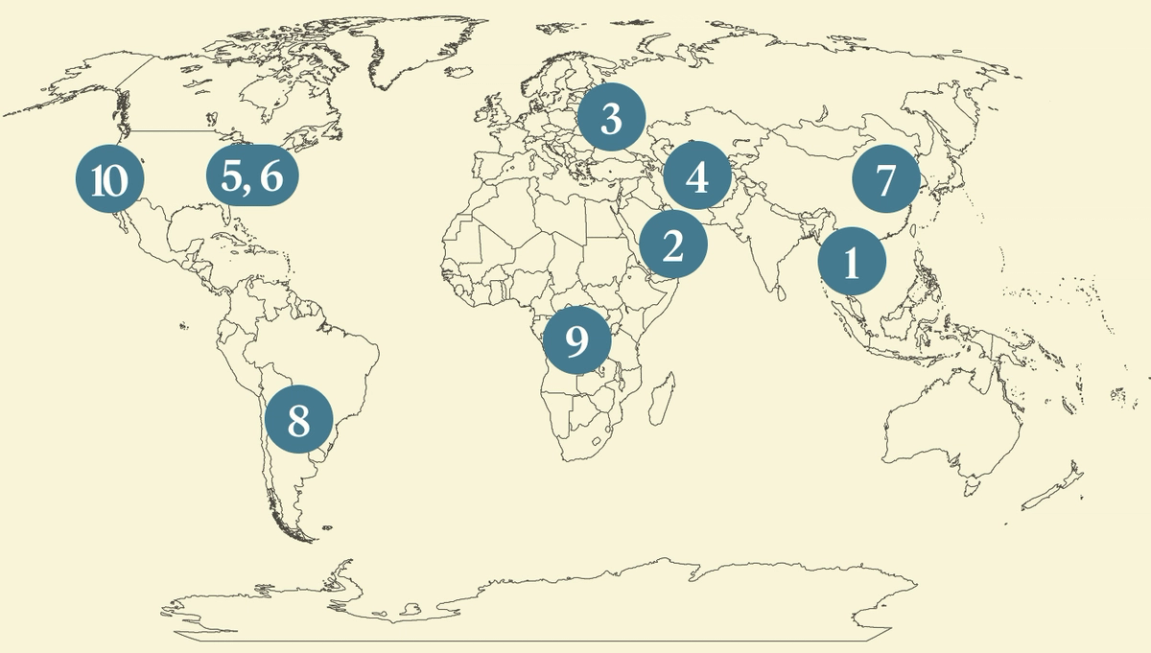 - IMF sees strong Asia growth
- Saudi-Yemen risks mount
- Russia still hitting Ukraine
- Global oil buffers thinning
- Yields set to stay elevated
- US voters’ geoeconomic tilt
- EU firms worried by China
- Beijing’s Latam pressure
- Mercenary losses in DRC
- Much-needed, poor harvest
 The London Review of Substacks delves into the world of work, and a recommendation for a biography of a man who built TV shows around nothing. |
|
Asia’s AI-led economic boom |
 Go Nakamura/Reuters Go Nakamura/ReutersInvestments in AI infrastructure look set to maintain the pace of global economic growth despite pressure resulting from global conflicts, with the IMF saying Asia is likely to be a notable beneficiary. “AI, love it, hate it, it’s already here,” the Washington-based lender’s managing director said ahead of the fall meetings of the Fund and the World Bank. Overall, she said the “investment shock” would help bolster growth in advanced Asian economies by as much as a full percentage point, and in emerging ones by almost as much. JP Morgan’s chief economist went further in a note to clients, saying Asia’s expansion was “broadening from an overwhelmingly tech-led export boom toward more balanced growth from tech, non-tech exports, and capex.” |
|
Riyadh hit by Houthi attacks |
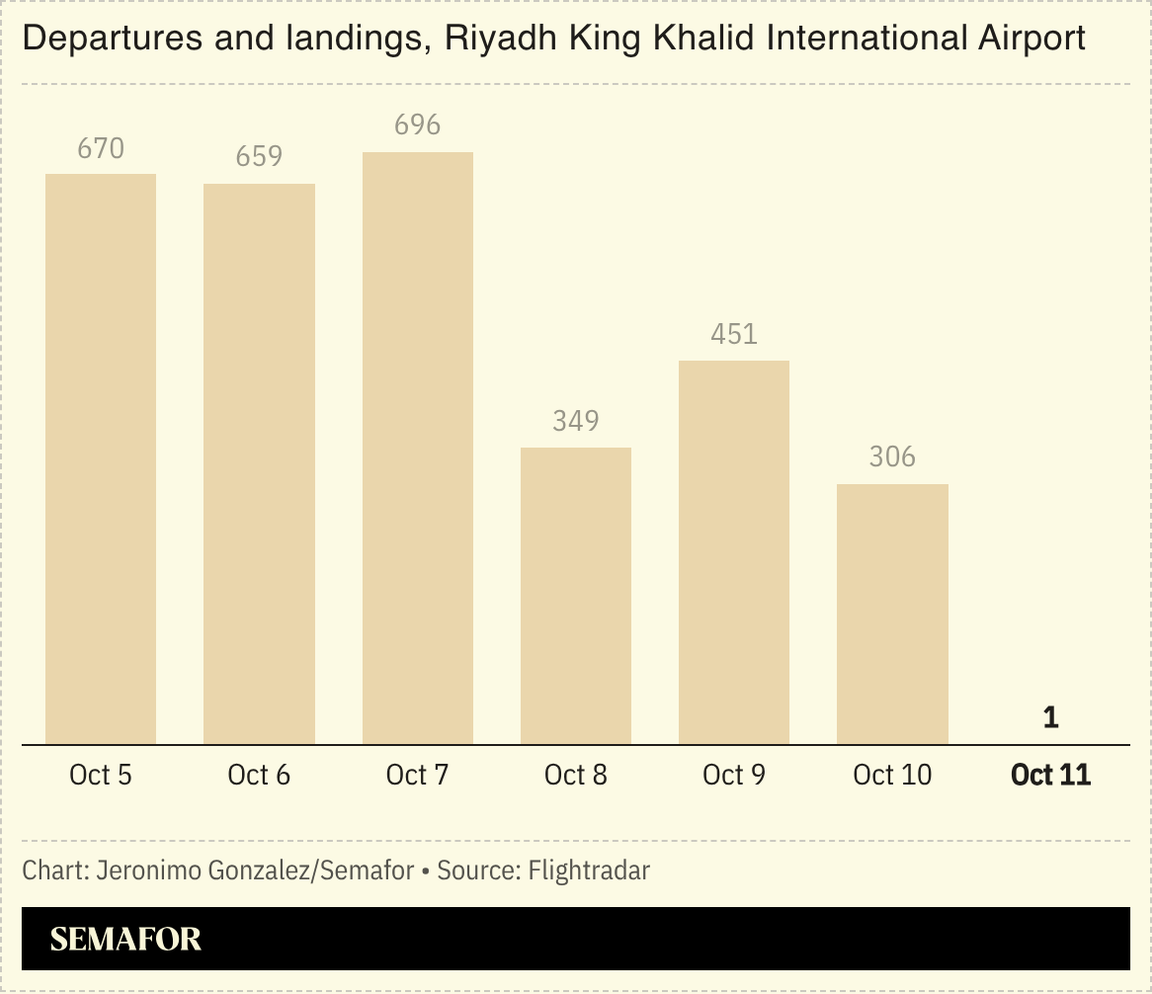 Deadly weekend Houthi attacks on Riyadh’s airport underscored the risk of war enveloping still more of the Middle East. Several major energy CEOs cancelled travel to Saudi Arabia, which had been preparing several major conferences courting foreign investment. The missile strikes from Yemen have killed more than a dozen people; the kingdom has pledged an aggressive response, and has reportedly requested “urgent defense support” from the US. The latest push by the Houthis, who are backed by Iran, “underscored the region’s volatility and the difficulty that [US President Donald Trump] faces keeping a lid on its conflicts at least until after midterm elections,” The Wall Street Journal said. |
|
Russia hammers Ukraine, still |
|
Global oil buffers weaken |
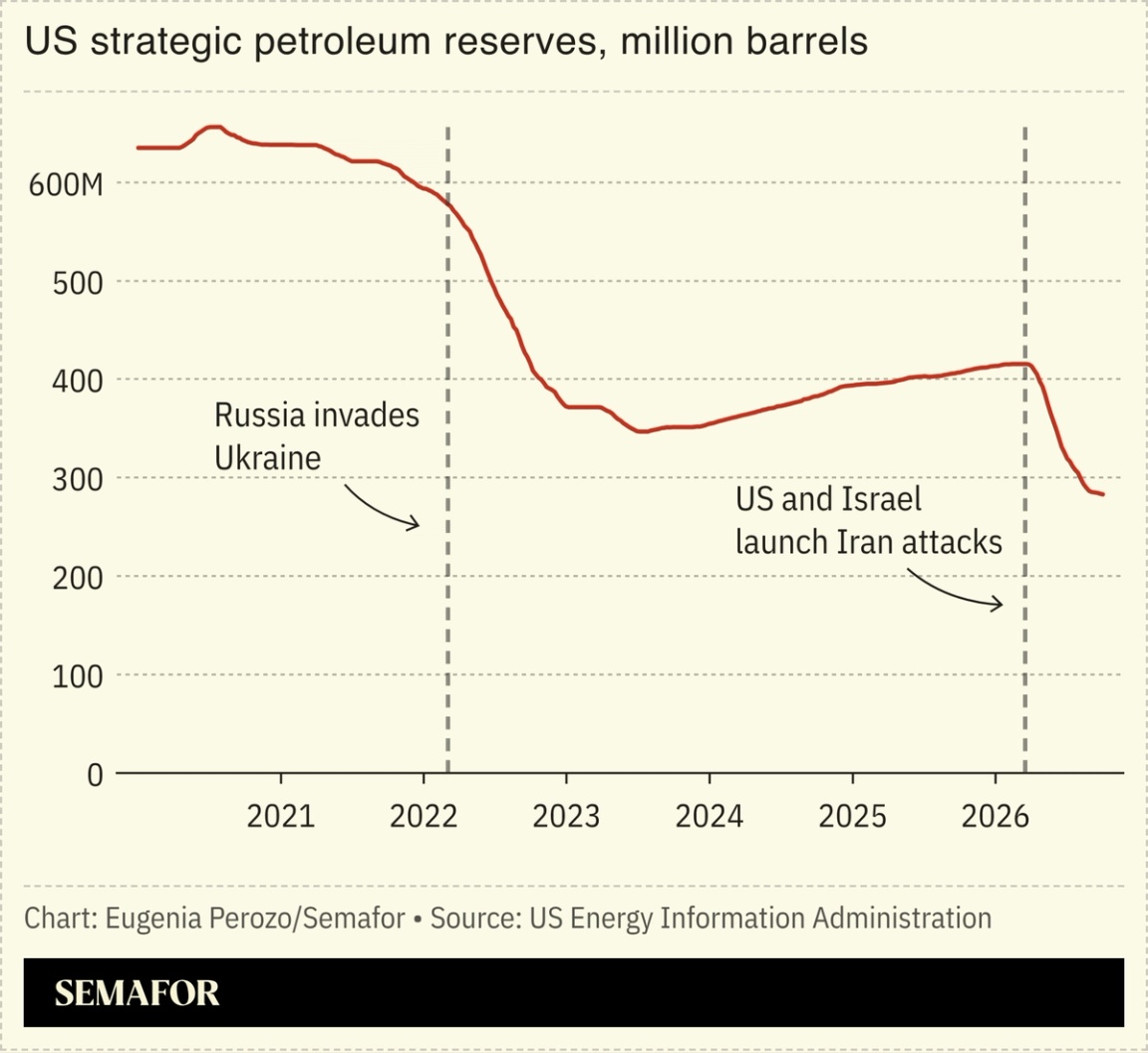 Economists and executives warned of thinning global oil buffers, with conflicts in the Middle East and Ukraine piling pressure on the energy supply chain. Goldman Sachs over the weekend raised its forecast for average year-end oil prices, warning of “downside risks to supply, low stocks, and the high sensitivity of interest rates to oil prices,” while the CEOs of major producer Saudi Aramco and trading giant Vitol respectively warned that stockpiles were “scarily thin” and that “there aren’t any more inventories to drain.” Though efforts to adapt by building new pipelines and trade routes are underway, countries such as Iran are “not likely to stand by,” experts at the Washington-based Center for Strategic and International Studies warned. |
|
Yields unlikely to fall soon |
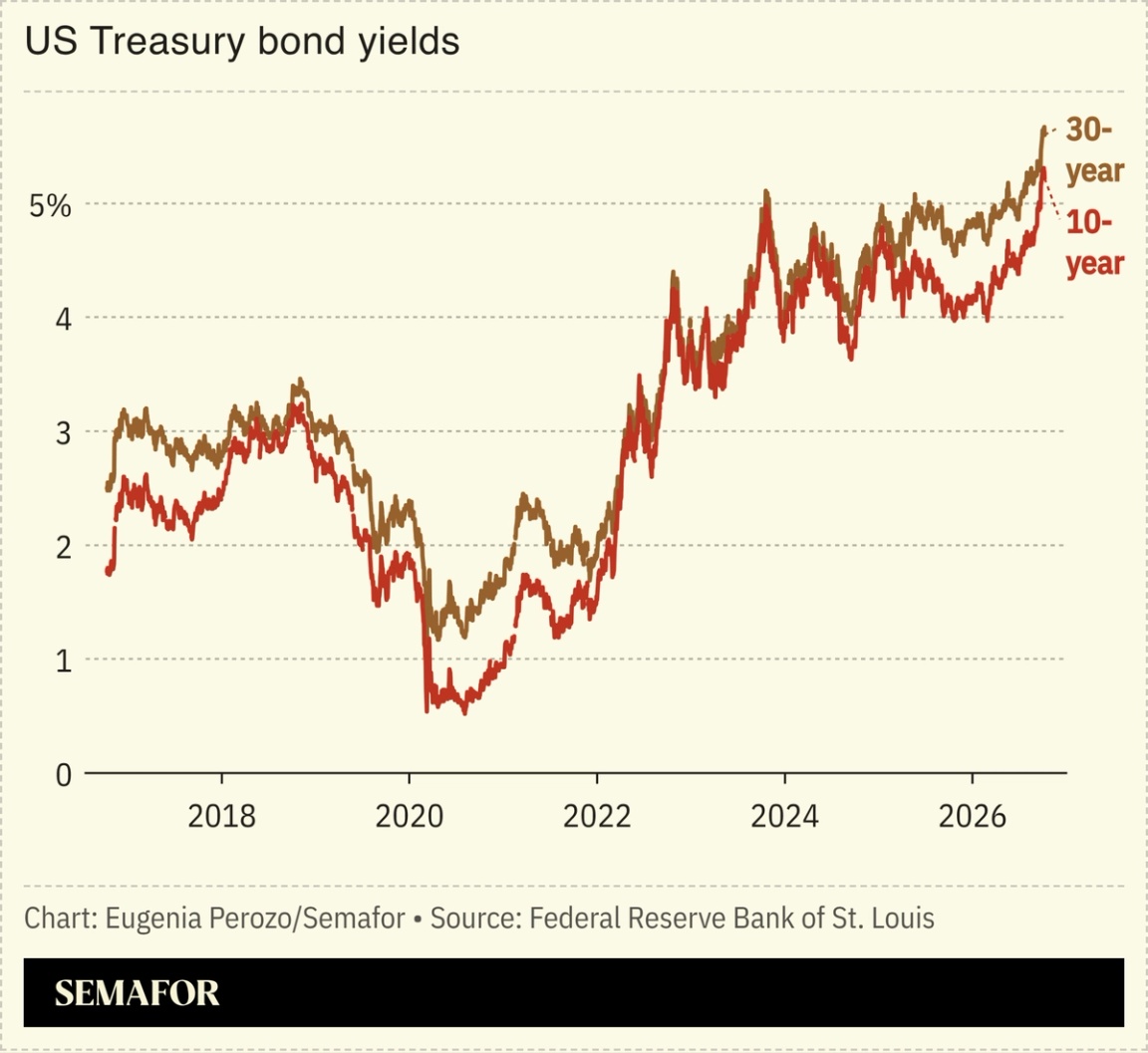 Borrowing costs are likely to remain elevated across the US and Europe for the foreseeable future, economists said. Experts surveyed by The Wall Street Journal projected that US 10-year Treasury yields would decline only slightly from current levels to end the year at 5.1%, and would dip to around 4.8% 12 months later: “It has been a sea change in the fundamentals underlying the fixed-income market and the economy,” one told the Journal. A key factor, as the economist David Skilling wrote in a recent note, has been that “state capitalism … is a much more capex-intensive regime” just as “the global economy is moving from a savings-abundant environment towards one in which available capital is becoming scarcer.” |
|
Geoeconomics at the fore in US |
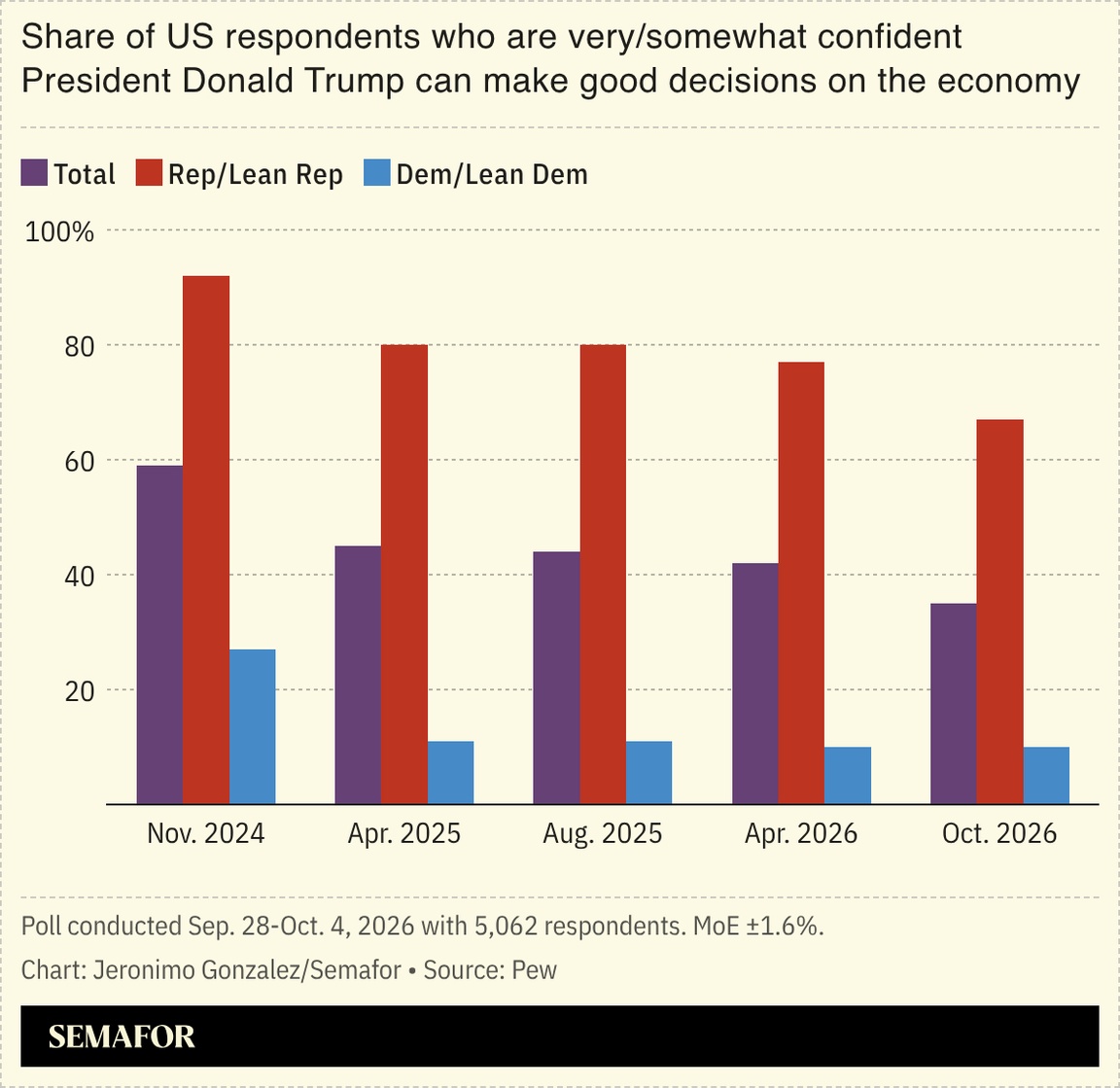 Americans are increasingly linking US President Donald Trump’s trade and foreign policies to pocketbook concerns, an unusual combination that is hitting his Republican party ahead of midterms. Washington’s forays abroad have rarely been top of US voters’ concerns, “but this time is different,” a Financial Times columnist noted. A Council on Foreign Relations poll showed respondents tied affordability struggles to tariffs, while research by the Chicago Council on Global Affairs found similar links for Trump’s foreign policy. “It is usually difficult for policymakers and political leaders to tangibly demonstrate to everyday citizens how foreign policy impacts their daily lives,” the latter said. “By upending … stability, the Trump administration’s policies may have brought this connection into sharper focus.” |
|
EU firms worried by China threat |
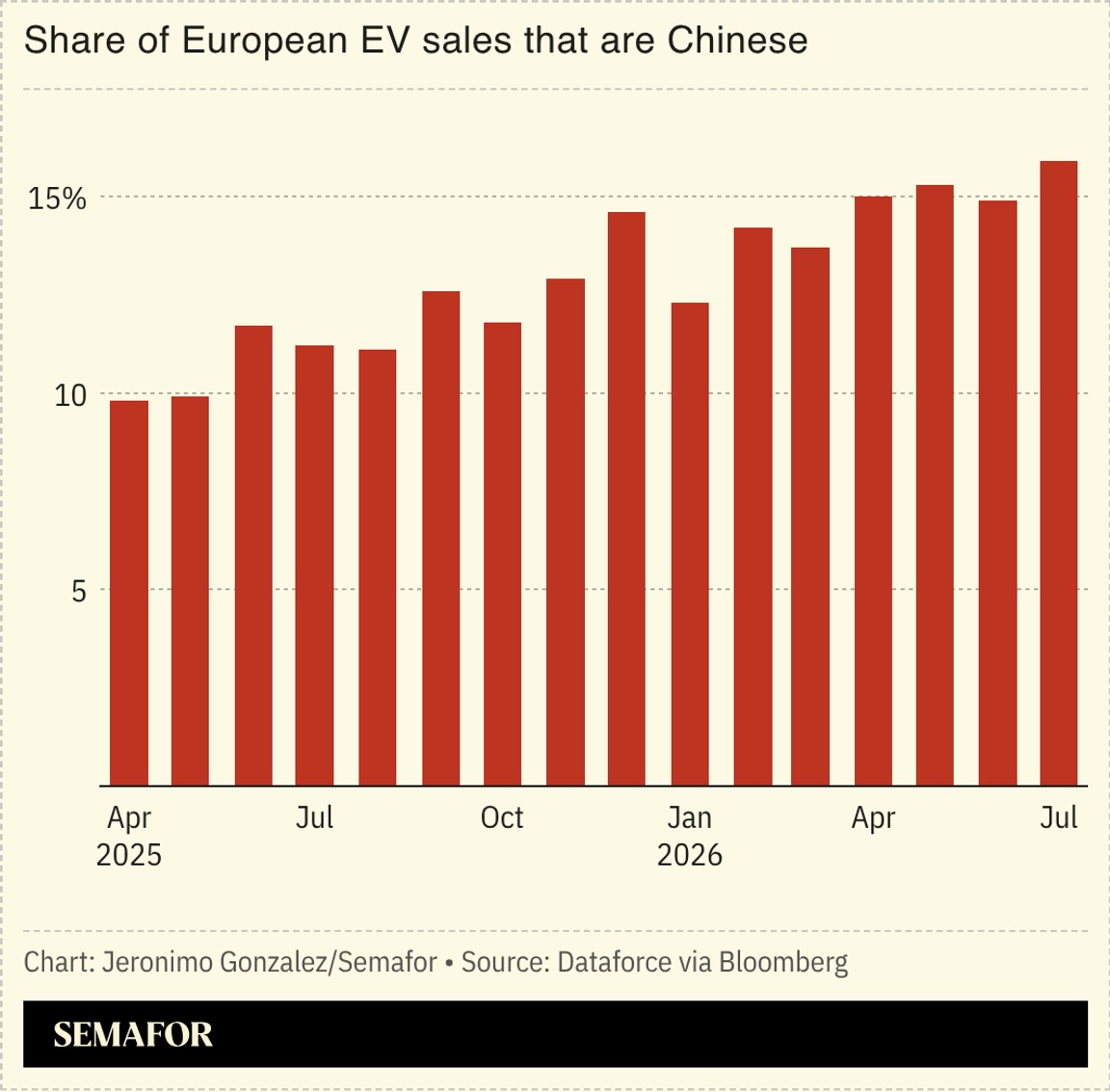 The CEO of carmaker Volkswagen called for greater cooperation between Germany and France to save Europe’s car industry in the face of Chinese competition. Brussels and Beijing this month agreed to curb Chinese vehicle imports amid growing trade tensions between the two giant economies. But VW boss Oliver Blume nevertheless said the bloc needed to do more to “ensure a level playing field.” Chinese overproduction and crashing domestic consumption — car sales fell for a 12th consecutive month in September — have led to a boom in exports that European automakers have struggled to compete with. The challenge is compounded by European buyers warming to Chinese brands: A record 20 will be on display at the Paris Motor Show, which opened today. |
|
 Reuters/Nathan Howard/Andrew Brucker Reuters/Nathan Howard/Andrew BruckerElon Musk refused to participate in Alex Gibney’s documentary. So Gibney decided to create an AI avatar of him instead. On this week’s episode of Mixed Signals, the documentary filmmaker joins Max and Ben to talk about his four-hour film on Elon Musk, including how he built an AI avatar of Musk using only his actual words, what Musk’s first wife revealed about his “gaslighting” as a management strategy, and why he thinks Musk’s political turn was less ideological than it was “transactional” and “childlike.” Watch the latest Mixed Signals now. |
|
China targets Taiwan’s allies |
 Paraguay President Santiago Pena attends a welcoming ceremony with Taiwan President Lai Ching-te in Taipei. Ann Wang/Reuters Paraguay President Santiago Pena attends a welcoming ceremony with Taiwan President Lai Ching-te in Taipei. Ann Wang/ReutersChina imposed sanctions on senior Paraguayan and Belizean officials over their countries’ ties to Taiwan, the first time Beijing has used such moves against the self-ruled island’s diplomatic allies. Taiwan — which China claims as a breakaway province — has sought to boost its remaining regional ties. Its push comes with both Beijing and Washington locked in a race that has pushed leaders across the region into a tough balancing act: While China has in recent years emerged as South America’s biggest trading partner, the US is positioning itself as the region’s key security ally. “Great power competition is here to stay,” an expert wrote in The Diplomat. |
|
|


