Plus: How trans rights are playing out in the midterms |

US Edition - Today's top story: Columbus’ own writings reveal how tightly religion and conquest were intertwined from the start

October 12, 2026

US Edition

The Conversation
 

Top headlines

Lead story

In 1492, Columbus “sailed the ocean blue.” And then what?

Over the next few years, he made two more trips to the Americas, opening the door to European conquest and colonization. He was hailed as “Admiral of the Ocean Sea.” But within a decade, he was brought back to Spain in chains to face charges.

Before long, he was released. But around this time, Columbus began to work on a peculiar project: the “Book of Prophecies,” as his son would call it. The explorer transcribed bits of the Bible and jotted down notes about them – “like a magpie on a spiritual quest,” writes USC Dornsife historian Peter Mancall. Columbus portrayed his mission in the “New World” as a holy one, and he compared himself to prophets of old.

The book itself may seem unusual, but it speaks to something bigger: how tightly religion and conquest were intertwined as Europe began to colonize the Americas.

Understand what’s going on in Washington and around the world. Get our Politics Weekly newsletter.


 

Molly Jackson

Religion and Ethics Editor

 
A manuscript with the text of the letter Cristopher Columbus wrote in February 1493, giving his account of the first voyage to the Americas. Archivo General de Simancas/Spanish Ministry of Culture via Wikimedia Commons

Columbus’ own writings reveal how tightly religion and conquest were intertwined from the start

Peter C. Mancall, USC Dornsife College of Letters, Arts and Sciences

The ‘Book of Prophecies’ shows how Columbus recast brutal colonization as a divine mission.

Economy + Business

Turmoil within Dolly Parton’s estate underscores the precariousness of family businesses after founders die

Reid Kress Weisbord, Rutgers University - Newark; Naomi Cahn, University of Virginia

Even when there’s a will, there’s a way for things to go awry.

Science + Technology

I teach doctors how to interpret test results – and the labels ‘normal’ and ‘abnormal’ often hide what matters most

Amiran Baduashvili, University of Colorado Anschutz

Labeling medical test results as ‘normal’ or ‘abnormal’ helps clinicians make quick judgments when diagnosing patients. But this binary approach to interpreting tests can lead to fatal errors.

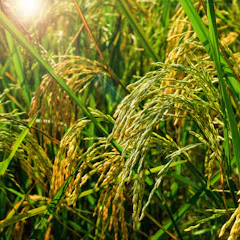
Ancient people relied on genetic variation already present in wild plants to domesticate crops like rice and corn

Ornob Alam, New York University

New genomic tools let scientists dig into the family trees of crops like rice, corn and adzuki beans to learn more about how they transitioned from wild plants to domesticated crops.

Arts + Culture

Americans can now see a famous portrait of the Pacific Islander who captivated 18th-century England for the first time

Saar Shahar, USC Dornsife College of Letters, Arts and Sciences

Joshua Reynolds’ 1776 ‘Portrait of Omai’ portrays a commoner from Tahiti as a nobleman, reflecting European fantasies and assumptions about Pacific cultures.

Environment + Energy

Physics Nobel highlights Antarctica’s role in exploring the cosmos

Daniella McCahey, Texas Tech University; Jean de Pomereu, University of Cambridge

For more than a century, scientists have treated Antarctica’s environments as windows into worlds beyond Earth.

How much rain can a hurricane make, and does the storm size matter?

Zachary Handlos, Georgia Institute of Technology

Storms big and small can produce a lot of rain. What matters most is how fast they’re moving, as an atmospheric scientist and educator explains.

Politics + Society

Democrats distance themselves from trans rights – close midterm races may show whether that pays off

Dorian Rhea Debussy, The Ohio State University

A scholar of LGBTQ+ politics looks at how Democratic campaigns in Texas and Ohio are shifting on trans issues and what that could mean for control of Congress.

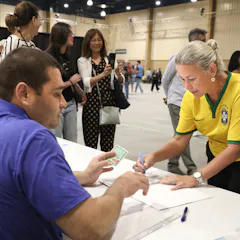
More than 119 million Brazilians voted in the Oct. 4 election – including about 21,000 Florida residents

Rafael R. Ioris, University of Denver

Brazilian voters abroad mirror the deep polarization shaping politics in their home country.

International

Pardoning of Israeli soldier evokes a long history of clemency for those who kill Palestinians

Tamir Sorek, Penn State

Elor Azaria, who killed a wounded Palestinian assailant, had his criminal record cleared. It follows a history of such pardons and reduced sentences.

Almost 300,000 people now live in flood-prone areas in the Nepalese Himalayas – new research

C. Scott Watson, University of Leeds; Milan Shrestha, Arizona State University

Satellite data shows roads, settlements and infrastructure are expanding into the same valleys that are vulnerable to floods and landslides.

Trending on site

Today's video

Woman wearing a black smartwatch with her eyes closed, appearing to meditate.
Watch on YouTube
 

About The Conversation

We're a nonprofit news organization dedicated to bringing you facts and trustworthy analysis to help you make sense of our complex world. We can give away our articles thanks to the generosity of readers like you. Learn more about us

Support our work

More from The Conversation

Follow The Conversation

You can find us on all your favorite platforms:

• YouTube • Bluesky • Facebook • TikTok

• LinkedIn •