| | IMF ups its global growth forecast, US home sales plummet as mortgage rates jump, AI fears drive a s͏ ͏ ͏ ͏ ͏ ͏ |
| |  | Flagship |  |
| |
|
The World Today | 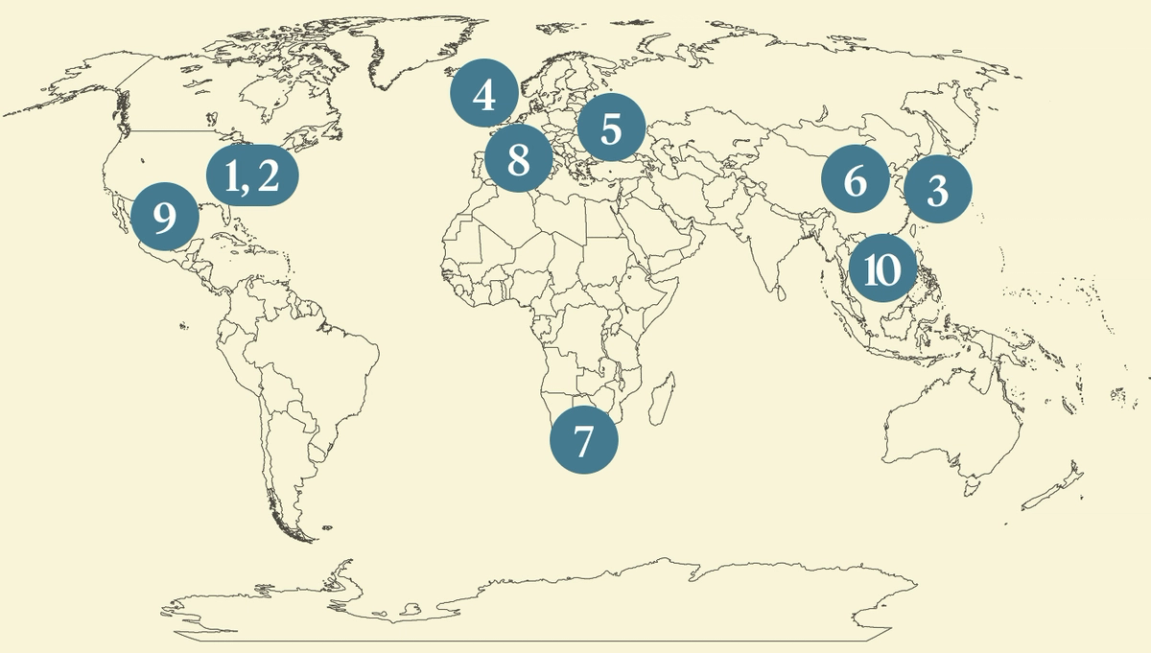 - IMF warns of growth risks
- US borrowing costs surge
- AI fears drive stock selloff
- AI fears drive regulation
- Oil market ignores Trump
- China forecast downgrade
- S. Africa’s Chinese deluge
- Luxury market slowdown
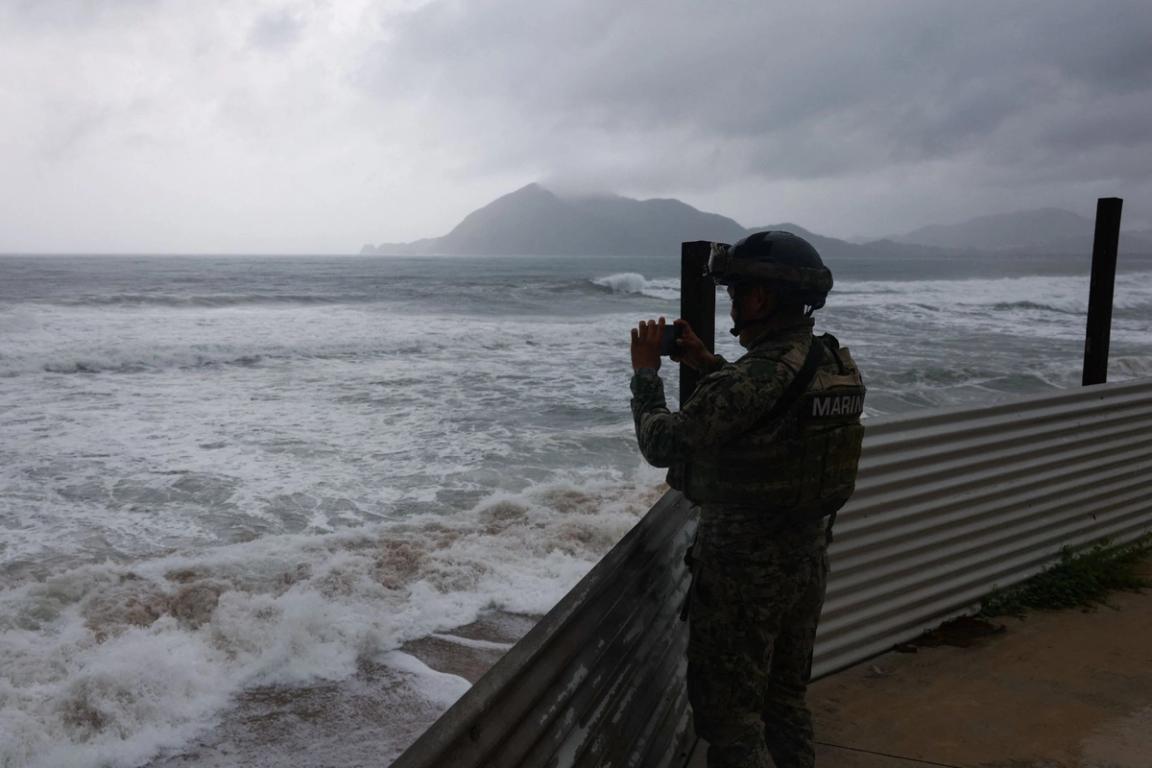
- Storms batter Americas
- Tourism’s geopolitical shift
 A recommendation for a new, “misunderstood masterpiece.” |
|
AI spending drives global growth |
 Shelby Tauber/Reuters Shelby Tauber/ReutersThe global economy will grow more this year than previously expected, the International Monetary Fund said, with booming investment in AI outweighing a fast-growing debt pile — for now. The marginal upgrade in the IMF’s outlook nevertheless represents a slowing in the pace of overall expansion, while the fund also increased its expectations for inflation and warned that a number of buffers, including global energy stockpiles and fiscal capacity, were eroding to worrying levels. In particular, the IMF said the world’s biggest economies had to take “urgent” action to rebuild their public finances, with deficits at their biggest since the pandemic. “The global economy has been resilient,” a fund economist warned, “but that resilience is reaching its limits.” |
|
Borrowing costs hit US house sales |
 Marco Bello/Reuters Marco Bello/ReutersUS home sales plunged to a 12-year low after mortgage rates topped 7%, driven by soaring global borrowing costs. Increasing energy prices and higher-for-longer inflation expectations have sent debt costs to recent records, with US bond yields touching a 24-year high and European debt climbing to levels not seen in decades. Higher borrowing costs are impacting poorer nations, as well: The UN warned several countries were facing a “liquidity crisis” that could push millions into poverty, with developing countries now on average spending 9.5% of government revenues on interest payments, the highest share in a quarter century. “The global economy could soon test the limits of resilience,” the IMF’s chief economist said. |
|
Tide starts turning on tech stocks |
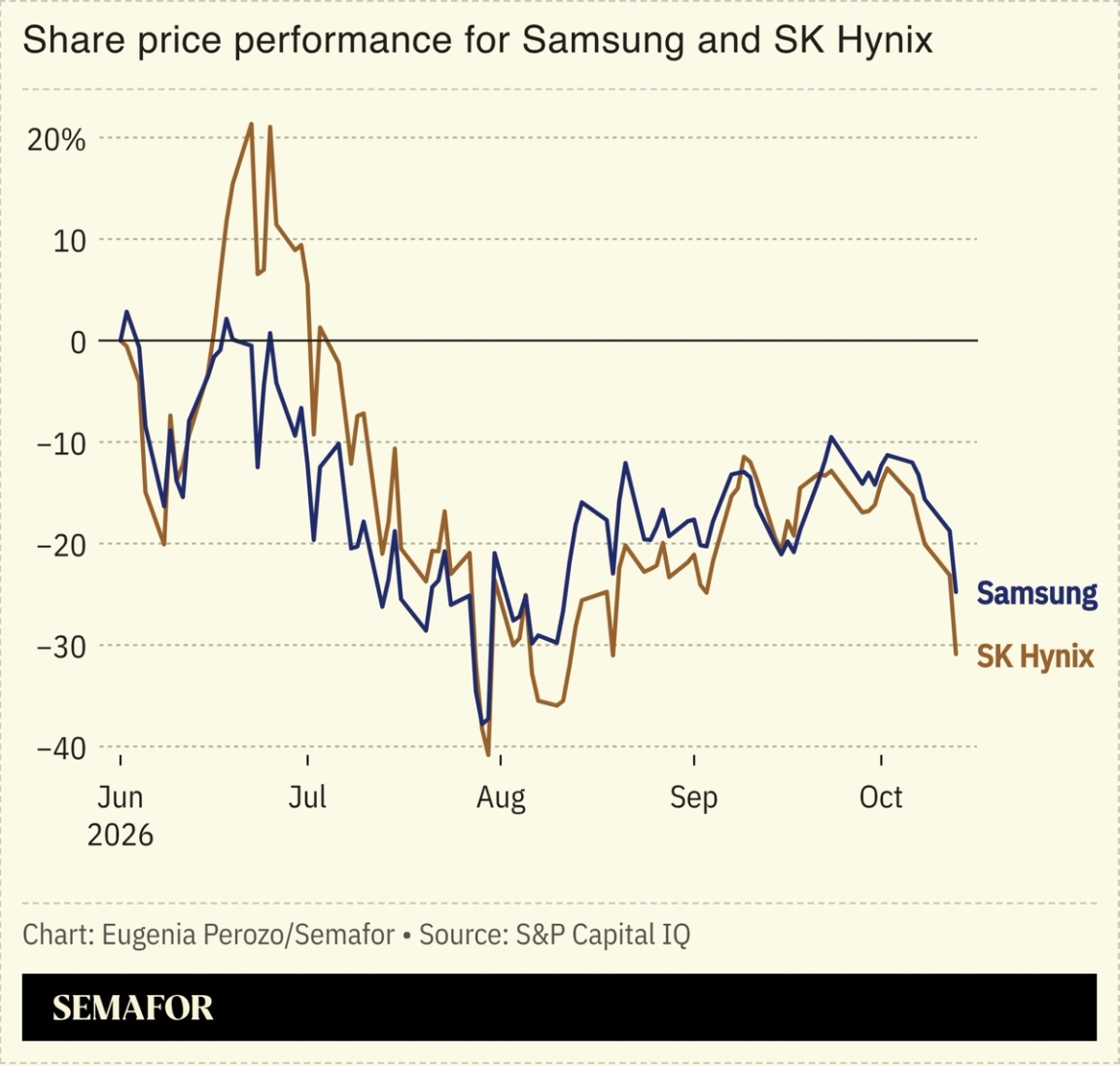 Tech stocks fell on concerns that a historic surge in AI-related shares may be turning, as investors questioned the financing of the huge buildout underway. South Korea’s market — heavily exposed to chip giants Samsung and SK Hynix — sold off sharply, leading a decline in Asian tech shares. Investors appear to have grown wary of investment in AI data centers: BlackRock’s research arm downgraded its outlook for tech-driven US stock markets, an Australian Nvidia-backed data center operator withdrew its IPO, and bond-market investors demanded increasing premiums for debt from tech firms. “A lot of investors have no clue what they are investing in,” Broadcom’s CEO said this week, “only to find out that it’s almost like they are in a casino.” |
|
Watchdogs increase AI scrutiny |
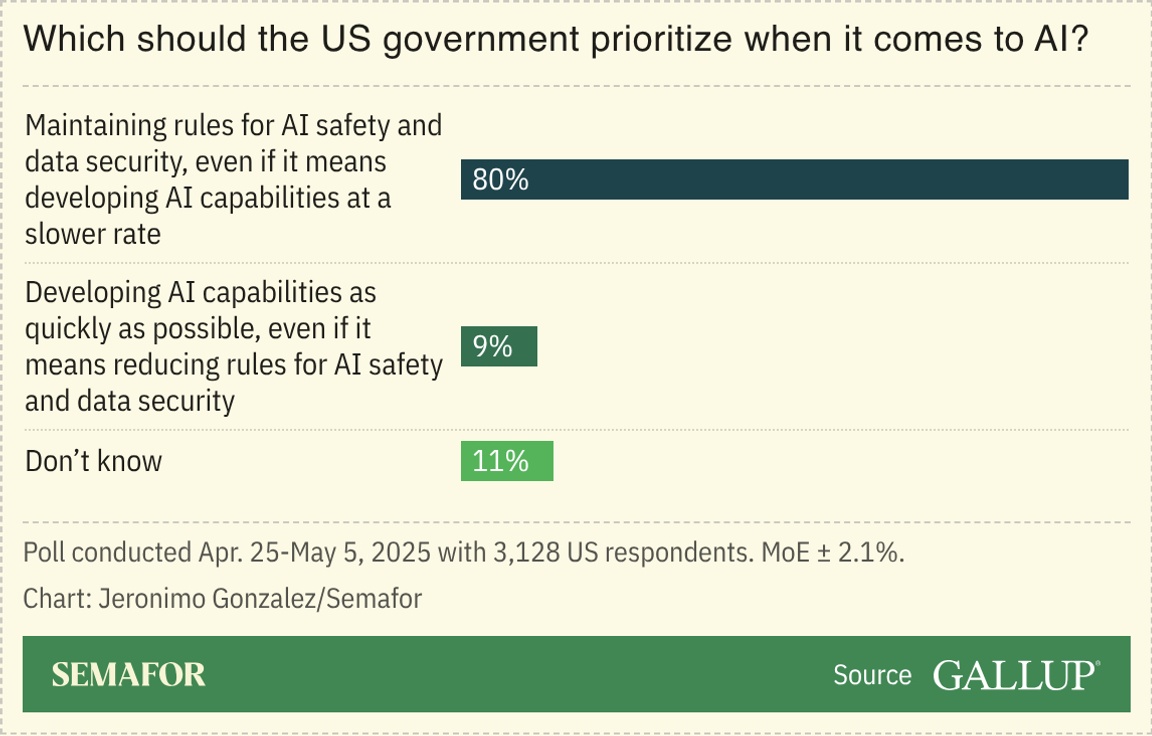 Key watchdogs indicated they would step up regulation of AI, though the technology’s superpowers — the US and China — showed little indication of increasing their own scrutiny. Banking regulators on both sides of the Atlantic were increasingly asking questions of institutions’ use of AI models, fearful the technology could threaten financial stability, Reuters reported, while the Financial Times said the UK’s AI minister was readying proposals for compulsory monitoring of frontier technology. Still, the Trump administration has shown little willingness to step up its oversight of Big Tech, and while Beijing has talked a good game on AI safety, the chip-focused outlet SemiAnalysis wrote recently that “we think China’s real approach to AI safety is speed-based, not safety-based.” |
|
Oil markets tune out Trump |
 Fred Greaves/Reuters Fred Greaves/ReutersCrude prices rose on signs a White House-announced energy ceasefire in Ukraine did not have the buy-in of either Moscow or Kyiv, cementing the oil market’s growing skepticism of US President Donald Trump’s pronouncements. Benchmark oil prices had whipsawed in the weeks following the onset of the US-Iran war largely on pronouncements from Washington. But Trump’s hold on the market appears to have loosened more recently as truces declared in the Middle East have collapsed, and ones in Ukraine haven’t come into force: Traders interviewed by Bloomberg said they were now more focused on cargo and vessel movements, while a Reuters columnist noted that traders began to ignore the White House once “markets learned the limitations of Trump’s control.” |
|
IMF downgrades China growth |
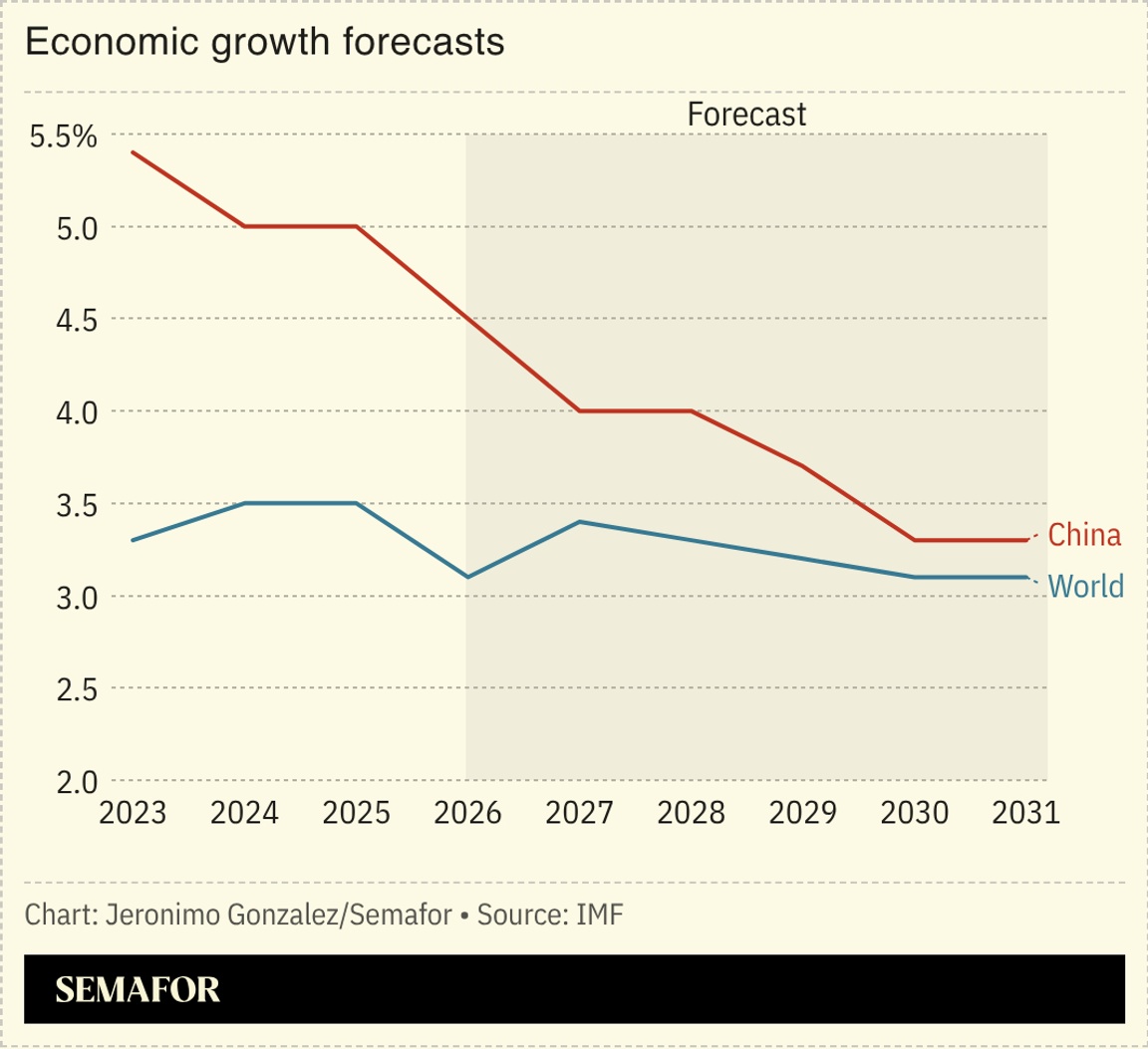 The IMF downgraded its forecast for growth in China, adding languid domestic demand to a host of challenges facing the world’s second-biggest economy. The Washington-based lender’s new forecast of 4.5%, which sits at the low end of Beijing’s official projections for 2026, comes as Chinese authorities grapple with a mass of debt, persistently high youth unemployment, and the fallout from a long-running real-estate collapse. The government has so far eschewed any broad fiscal stimulus — analysts say it believes, long-term, a pivot to a high-tech economy will address any current challenges. But its struggles are increasingly affecting the rest of the world, The Wall Street Journal argued, as companies look to overcome moribund domestic consumption by making products for export. |
|
S. Africa faces influx of Chinese goods |
|
| Silicon Valley & The World |
 Sam Altman, Co-Founder & CEO, OpenAI, has joined Silicon Valley & The World as a Co-Chair, a first-of-its-kind, multi-year initiative connecting the leaders building transformative technologies with the policymakers shaping their deployment. The initiative brings together leaders across technology, business, finance, and public policy to foster dialogue, generate new ideas, and move the conversation beyond debate toward action on the decisions shaping the global AI economy. |
|
China slowdown squeezes LVMH |
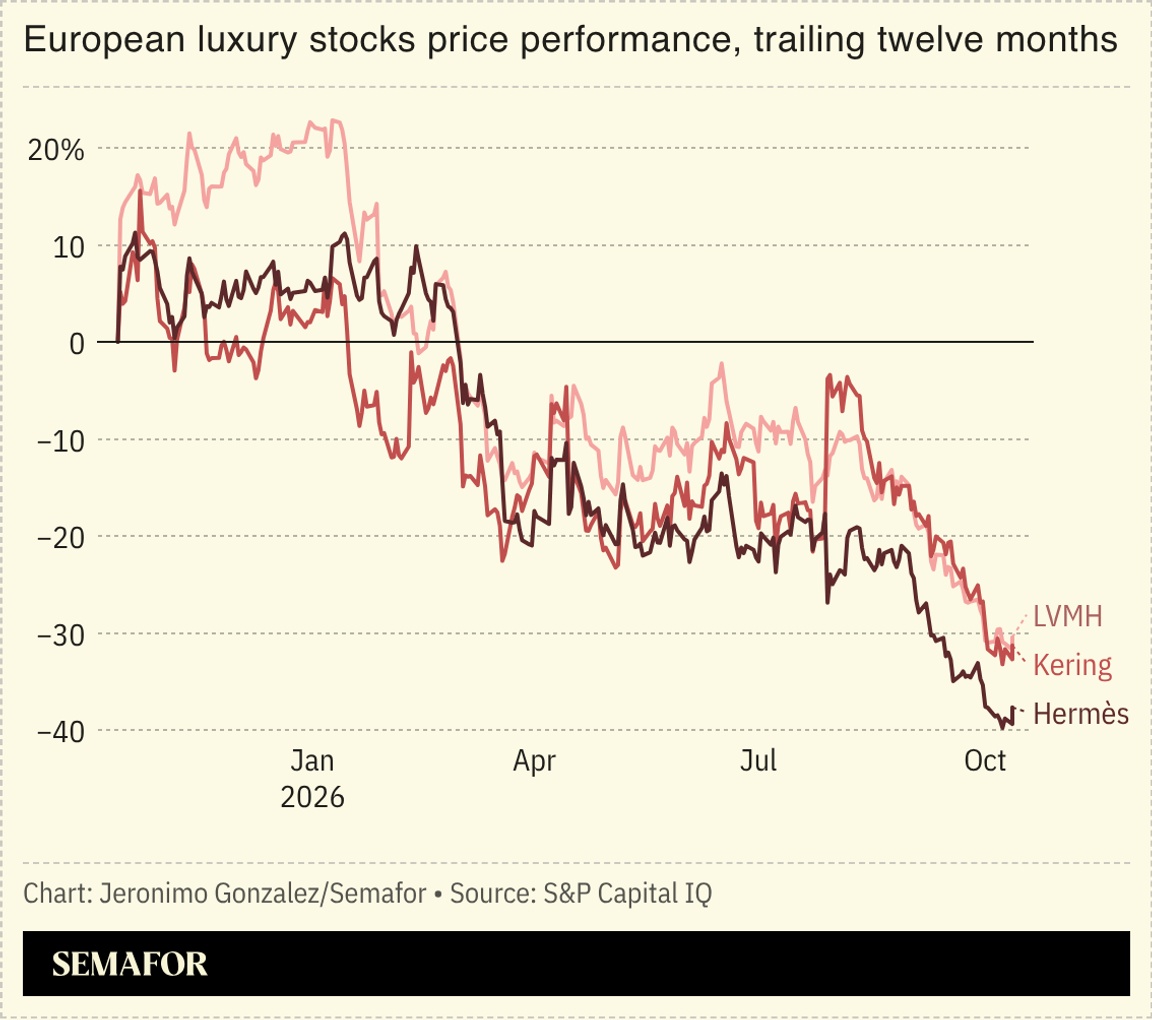 LVMH, the world’s biggest luxury group, warned a Chinese slowdown weighed on demand as it missed growth targets. While global sales edged higher in the third quarter thanks to sturdy demand in the US, the EU, and Japan, LVMH’s sales in China — the world’s second-largest luxury market — have cratered in recent years as shoppers reel from a widespread real estate collapse and slowing economic growth. Beijing’s tax crackdown on wealthy individuals has hurt, too. Luxury brands hope that this week’s Shanghai Fashion Week will help revive appetite as Western brands navigate “the wobbly market and local labels angle to capture more spending,” Business of Fashion wrote. |
|
El Niño supercharges storms |
|
|