| | In this edition, the Chicago Fed’s president warns that AI inflation is pushing up prices in unrelat͏ ͏ ͏ ͏ ͏ ͏ |
| |  | Business |  |
| |
|
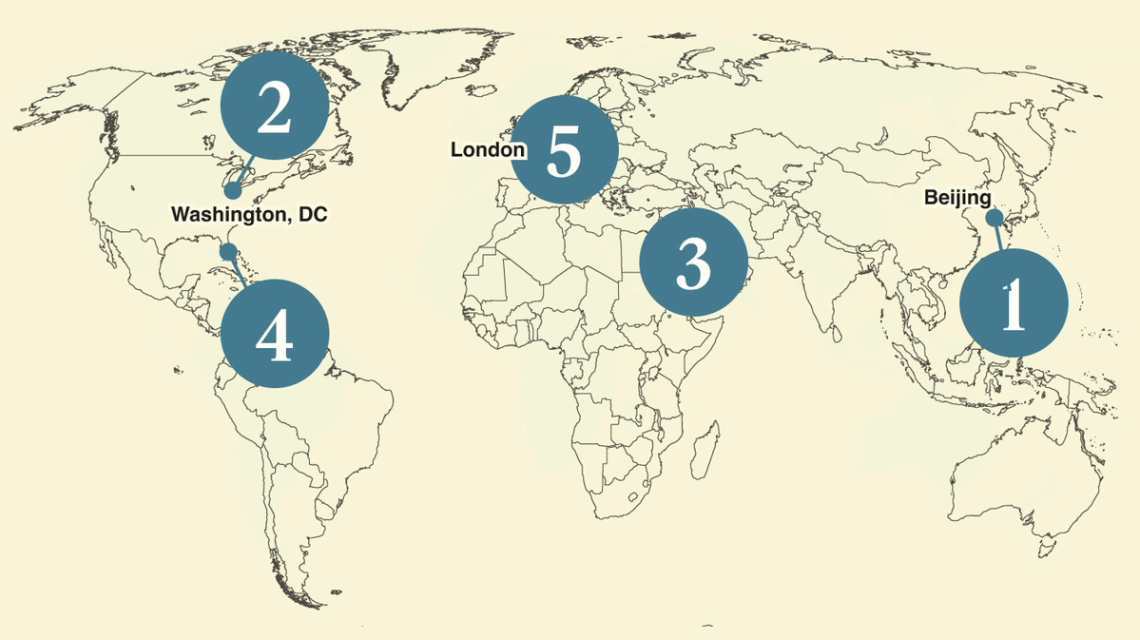 - IMF issues warning
- AI’s inflation contagion
- The Gulf’s Skydance bet
- Trump Jr. on the cap table
- Canary Wharf’s appeal
 JPMorgan’s earnings rare miss, Goldman revenue $2B higher than expected … UK’s welfare state is unsustainable |
|
The world’s biggest economies should take “urgent” action to rebuild their public finances, as deficits reach the highest levels since the pandemic, the International Monetary Fund warned on Tuesday. The global economy is still growing but increasingly concentrated: 32 countries now drive 95% of global growth, compared with 54 in April, and many are weighed down by debt levels that the IMF expects to reach 115% of GDP by 2031 for advanced economies. “Resilience is reaching its limits,” the fund said, echoing the IMF chief’s warning to Semafor last month that the AI boom is masking a deeper economic fragility and that “winter is coming.” 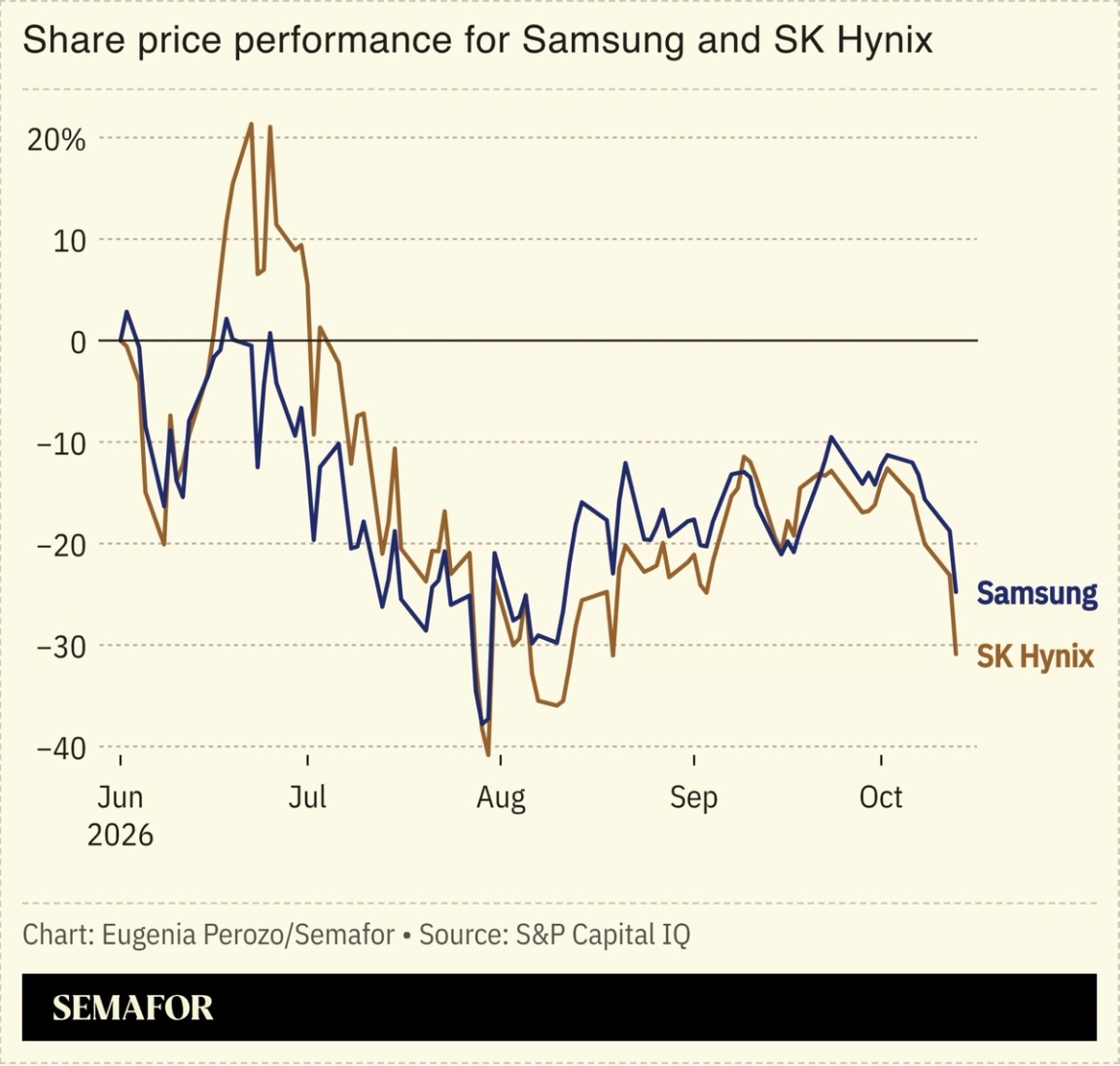 Almost as if on cue, a slump in chip stocks dragged global markets down Tuesday following a broadside from Broadcom’s CEO that likened AI investors to casino gamblers. “A lot of investors have no clue what they are investing in,” CEO Hock Tan said, questioning the long-term viability of money-losing frontier labs and massive amounts of capital rushing in to build the data centers and other infrastructure around them. |
|
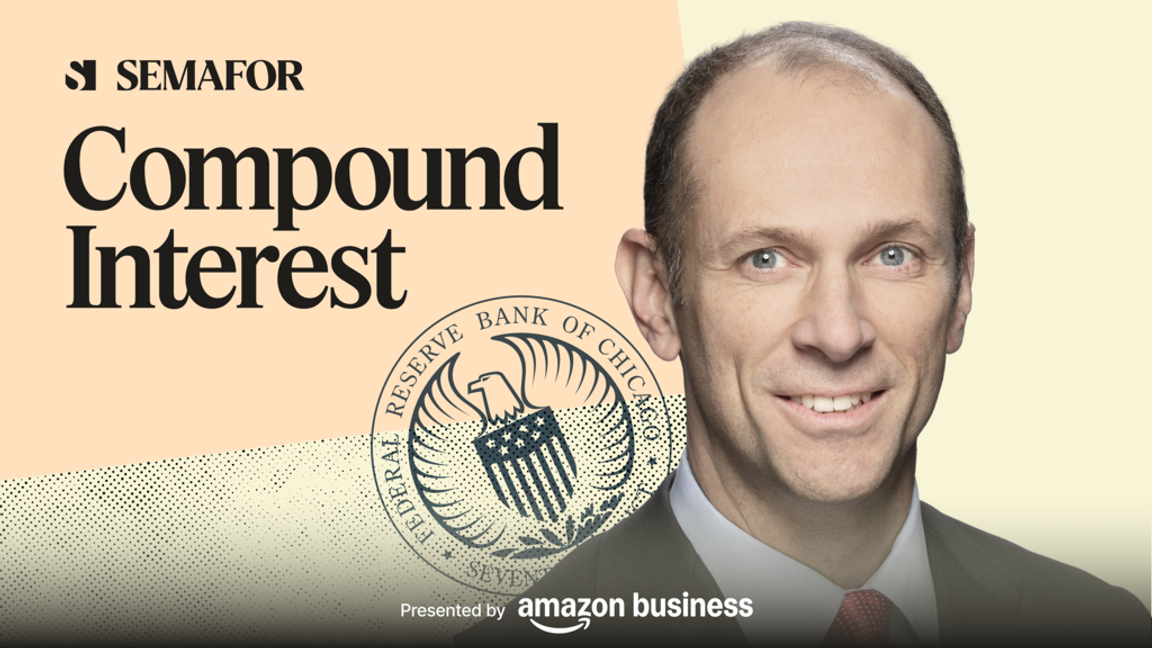 Inflation tied to the AI boom is “jumping out of its lane” and starting to push up prices in unrelated corners of the economy, Chicago Fed President Austan Goolsbee said. “Prices are going up in spaces that are not just components in data centers and the directly adjacent industries,” he said on Semafor’s Compound Interest. “I’m getting increasingly nervous that that’s just straight, old-fashioned overheating demand.” Economists have been trying to parse how much of today’s stubborn inflation is from higher oil prices triggered by the war in the Middle East, and how much is coming from hotter demand across the economy, a much thornier knot for central bankers to untangle. The Fed’s problem is that hyperscalers, locked in a must-win battle, seem immune so far to higher borrowing costs. That makes this bubble harder to deflate without pushing interest rates to a level that’s painful for everyone else. |
|
Gulf funds are in the red on Paramount |
 David Ellison and Ynon Kreiz. Jeenah Moon/Reuters. David Ellison and Ynon Kreiz. Jeenah Moon/Reuters.The Gulf governments that backed David Ellison’s Hollywood ambitions are already underwater on that bet. Sovereign wealth funds of Saudi Arabia, Qatar, and Abu Dhabi that helped finance Paramount’s $110 billion takeover of Warner Bros. have wired their $24 billion slice, according to people familiar with the matter, buying into the deal at $12 per share. Skydance shares are trading just over $9. Ellison and his newly hired co-CEO Ynon Kreiz suggested on CNBC last week that they could beat their projected cost savings of $6 billion by 50%, promising significant upside to the stock. And while Gulf investors may be in the red now, it’s not purely a financial play for them. Content giants like Paramount are useful as they look to build cultural and entertainment hubs in their home locales. — Rohan Goswami |
|
Is the ‘Trump bump’ fading? |
 Callaghan O’Hare/Reuters Callaghan O’Hare/ReutersSemafor Media recently reported on a minor debacle at ABC News, which had overstated the import of an investment in the defense tech firm Anduril from 1789 Capital, in which Donald Trump Jr. is a partner. What the story called a “major stake” in Anduril turned out to be a $50 million investment in a $2.5 billion fundraising round. At the root of the media confusion, though, was a misunderstanding of how finance (and defense contracting) work in these bubbly times. Trump Jr. and his partners are rarely originating these big venture-capital deals. Nor is there any evidence they’re meddling deep inside the Pentagon’s intricate contracting process. (Outbound administration deals will get more scrutiny.) But in Silicon Valley, they’re among a glut of investors jockeying for access to funding rounds like Anduril’s. Operators pick and choose who they let in, a process that’s partly about relationships (Anduril co-founder Palmer Luckey and Trump Jr. are close) and partly about political calculation. To some companies, accepting even a dollop of 1789’s money represents an insurance policy against Trumpian rage. As Trump’s star falls, however, it also represents a risk. The question, one executive told me Monday, is: “Do I let these guys on my cap table now in the event something random comes up and I need Trump universe aligned? Or does that hurt me later if Dems take back power?” — Ben Smith |
|
 Isabel Infantes/Reuters Isabel Infantes/ReutersThe UK may be struggling to hold onto its biggest companies, but London has found a way to keep at least some of the world’s biggest financial firms in the city by offering them space in its shiny, newer financial hub Canary Wharf. “You’ve got to have the best space to compete for that talent,” the CEO of Canary Wharf Group, Shobi Khan, told Semafor’s Andrew Edgecliffe-Johnson. Prime buildings in the city’s other financial district, the City of London, still charge a premium over Canary Wharf’s rents, but Khan said he plans to close the gap. JPMorgan, fresh off its building conquests in New York City, plans to erect a £3 billion, 265-meter tower that will be London’s largest office building, and other tenants include Visa, Barclays, and Citi. Khan says international expansion tempts him in the “medium term,” but immediate plans to build another seven-to-10 buildings in London means “we’ve got enough on our hands.” |
|
| Silicon Valley & The World |
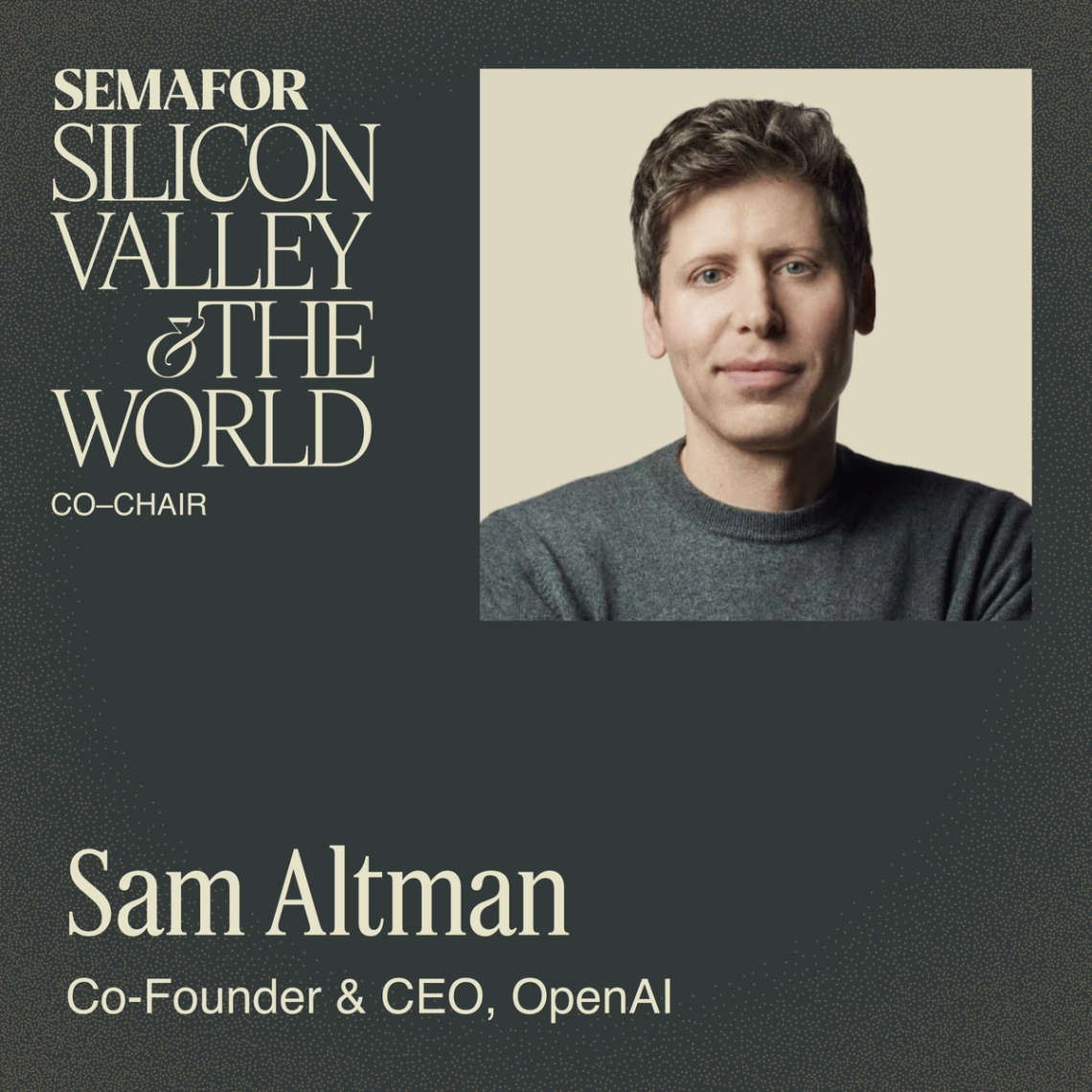 Sam Altman, Co-Founder & CEO, OpenAI, has joined Silicon Valley & The World as a Co-Chair, for a first-of-its-kind, multiyear initiative connecting the leaders building transformative technologies with the policymakers shaping their deployment. The initiative brings together leaders across technology, business, finance, and public policy to foster dialogue, generate new ideas, and move the conversation beyond debate toward action on the decisions shaping the global AI economy. |
|
➚ BUY: Second chances. Amazon is in talks to buy AI startup Decart for $7 billion, a month after Anthropic walked away from a deal to pay $6 billion. ➘ SELL: First lien. AI debt issuance has slowed as investors digest a record summer haul. |
|
 Grape harvesting in California. Carlos Barria/Reuters. Grape harvesting in California. Carlos Barria/Reuters.California’s wine country is facing its own grapes of wrath. Wine sales have fallen more than 20% in five years, leaving wine grapes across Napa, Sonoma, and beyond to wither on the vine. About half of this year’s crop entered harvest without a buyer, and growers have pulled roughly a quarter of the state’s vineyards out of production, tearing out some grapevines farmed by the same families for generations. But where there’s losses, there’s also opportunity: Buyers making concentrated syrup can snag uncontracted grapes from growers at a discount. |
|
|


