| | In today’s edition: Saudi Arabia faces shrinking options, the IMF slashes Gulf outlook, and the regi͏ ͏ ͏ ͏ ͏ ͏ |
| |  | Gulf |  |
| |
|
 - Saudi on defense
- IMF slashes Gulf
- Startup pipeline thins
- S&P on AI buildout
- Who are the Houthis?
 From the walls of a Jeddah schoolhouse to fine art in London. |
|
Quagmire deepens for Saudi Arabia |
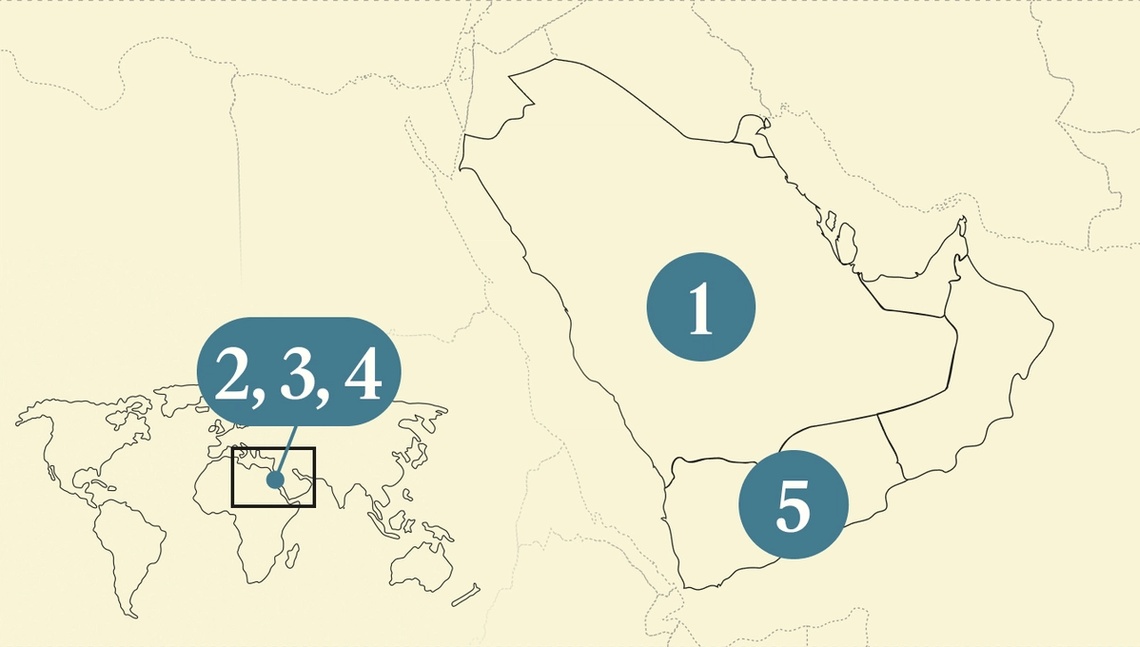
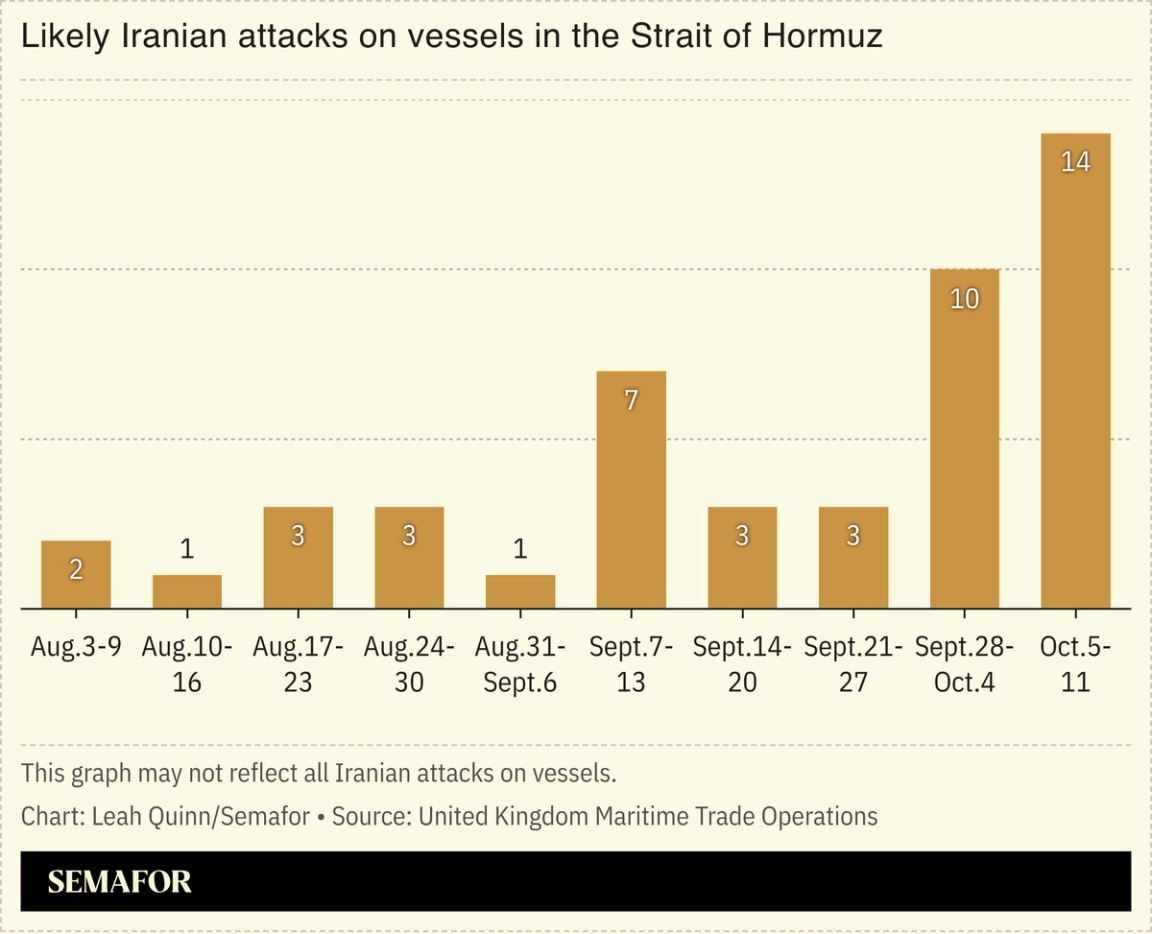 Iran is stepping up strikes on tankers, and Riyadh’s King Khalid International Airport said it won’t reopen until Sunday as the conflict widens. The airport’s closure, and the kingdom’s reportedly constrained air defenses, could signal to the Houthis that their campaign is working and encourage further attacks on infrastructure, the Washington-based Institute for the Study of War said, adding that “Saudi Arabia has not indicated any willingness to agree to Houthi demands.” The absence of public warnings before and during the strikes on Riyadh’s airport is raising questions among analysts and Arab officials about the kingdom’s ability to protect residents and visitors, according to Reuters. Still, organizers of the kingdom’s flagship investment conference, FII, are pressing ahead with the Wall Street-heavy event in less than two weeks. Meanwhile, Iran is using the pause in strikes on its territory to rebuild its missile and drone facilities and fortify nuclear sites to both deter and prepare for a return to fighting, The Wall Street Journal reported. — Kelsey Warner |
|
Hormuz drags down outlook |
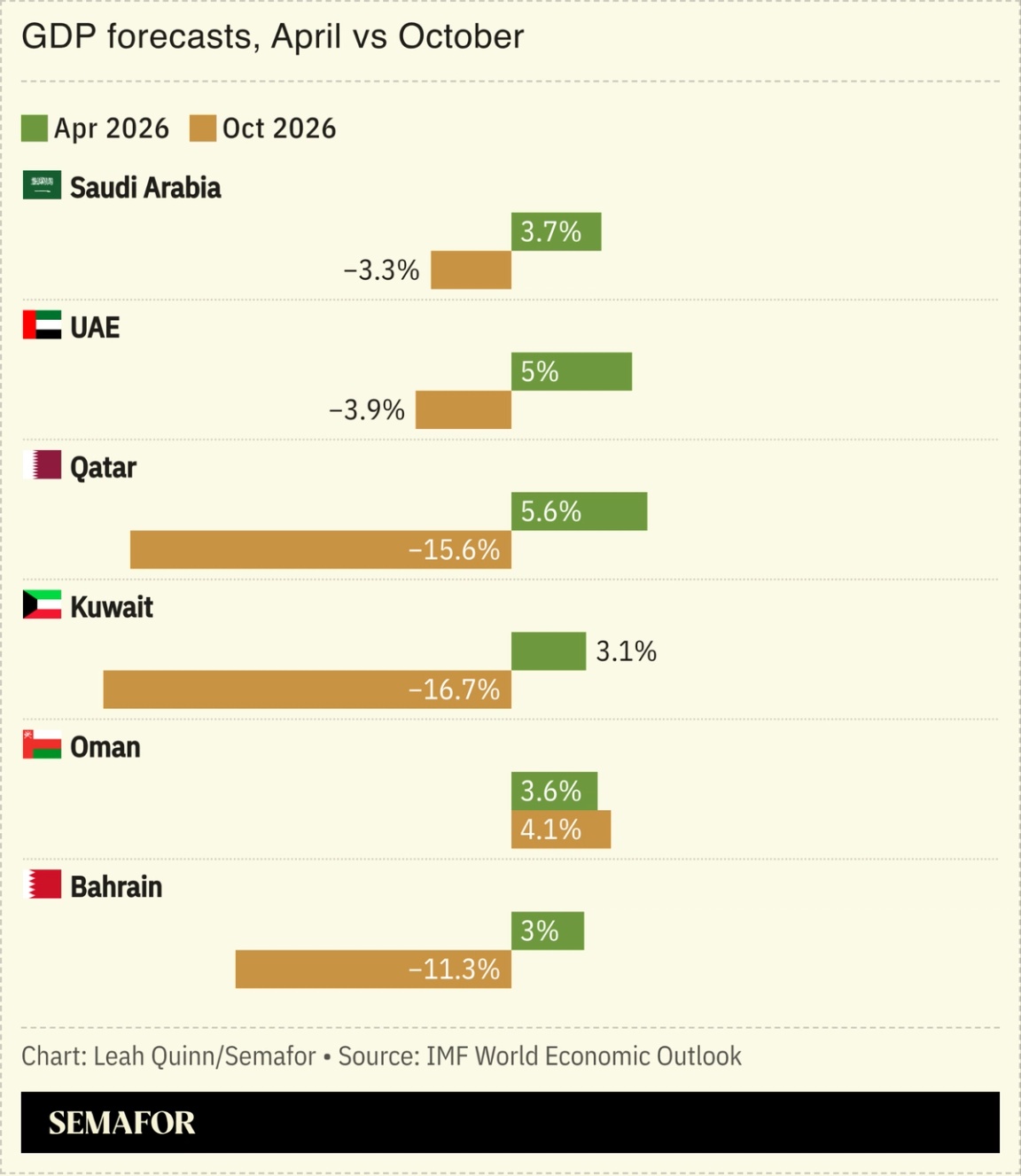 The IMF cut its 2026 growth forecasts across the Gulf and now expects the Middle East and North Africa to be the only region in the world to shrink this year. In April, the fund still forecast Saudi Arabia and the UAE would grow. Both will still do better than Kuwait, Bahrain, and Qatar, whose emir said today that government revenue was down 42% in the first half of the year, because they can pipe crude around the Strait of Hormuz to the Red Sea and Fujairah. The fund expects a strong rebound next year, but only if the strait gradually reopens from March, a date it has already pushed back. Oman, whose ports sit outside the strait, is the only Gulf economy still expected to grow in 2026, though its growth will roughly halve next year as Qatar and Kuwait rebound by more than 17%. |
|
Big rounds prop up startups |
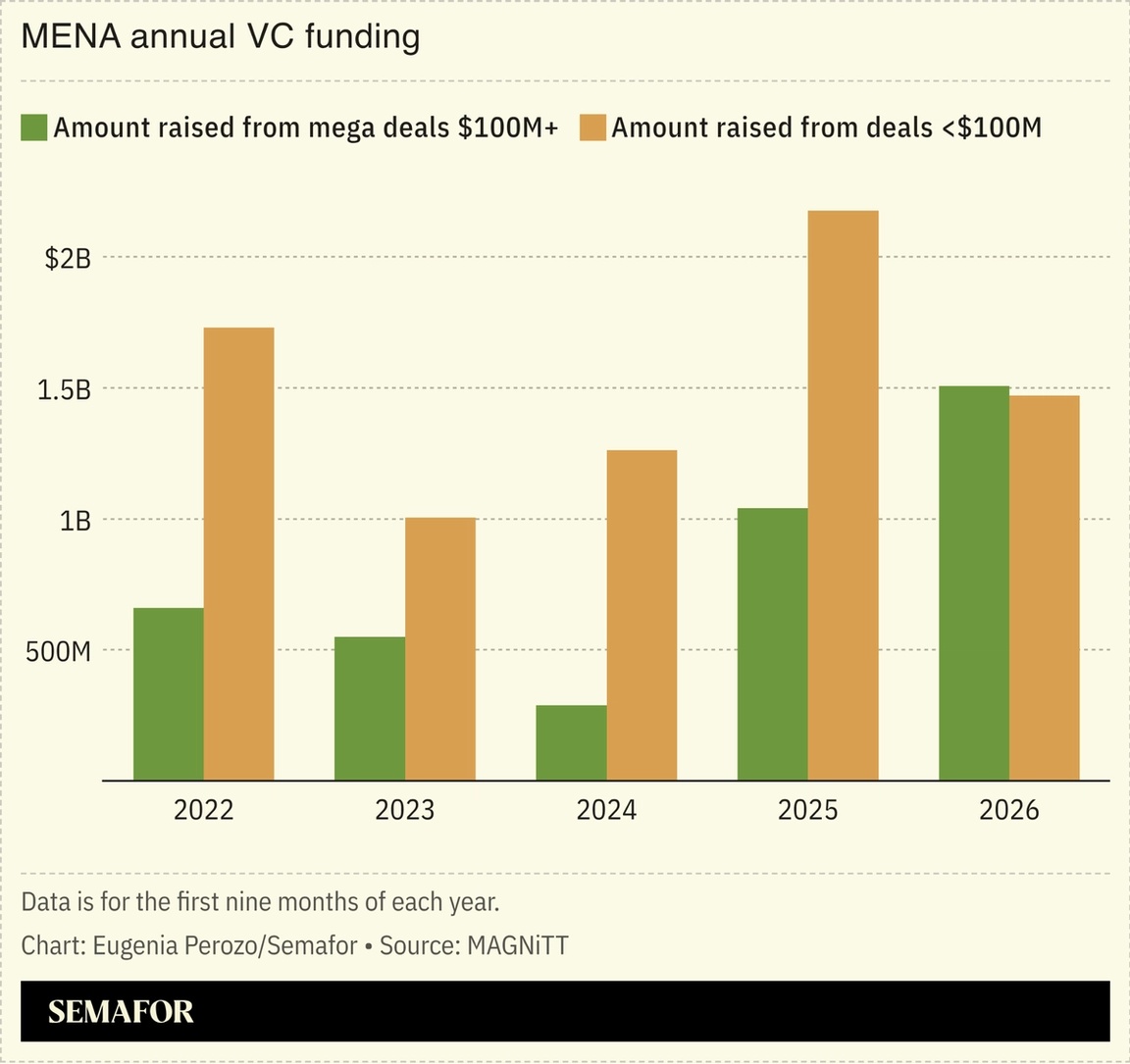 The UAE and Saudi Arabia accounted for almost 90% of the $2.98 billion that regional startups raised in the first nine months of the year, according to venture capital tracker MAGNiTT. The two countries were also responsible for every round of $100 million or more. Regional funding fell 7%, and the number of deals dropped by a third. Take out the big rounds and the picture is bleak. Most of the money went to a handful of fintech and logistics companies that have already proven themselves. Early-stage deals have thinned out, which leaves fewer companies ready for growth rounds in 2027. Gulf money is filling the gap that other investors left: Investors from outside the region want to know they can get their money out, and right now that’s hard, with fewer startups being bought. — Ed Clowes |
|
 Toby Melville/Reuters Toby Melville/ReutersDespite attacks on (and repeated threats to) the Gulf’s digital infrastructure, the massive data center buildout will continue to make the region a global hub for AI, according to S&P Global Ratings. Redundancy and site diversification, now crucial after the Iran war, are reshaping how projects are designed and financed. With advanced chips now arriving after the US loosened export restrictions, the availability and sequencing of power, grid connections, water, and cooling infrastructure will increasingly determine which projects get financed and built. The shift from hosting small enterprise cloud sites to planning some of the world’s largest AI campuses has been swift, with the growing need to keep data within national borders accelerating the trend, particularly in Saudi Arabia and the UAE, according to S&P.
|
|
 Houthi Military Media/Reuters Houthi Military Media/ReutersThe Houthis firing missiles at Riyadh are not just Iranian proxies — they’re heirs to a 1,000-year-old Zaydi imamate that ruled northern Yemen on and off until the modern state was established in 1962. Zaydism holds that power belongs to the Prophet’s descendants, not elected officials. In an explainer video, Baraa Shiban, a RUSI fellow who sat on Yemen’s National Dialogue before being exiled for criticizing the group’s abuses, describes how, after a 1995 trip to Iran, the group’s founder, Hussein al-Houthi, fused the Zaydi branch of Shia Islam with Tehran’s revolutionary doctrine and built a militia in Hezbollah’s image. The group seized Sanaa in 2014, a decade after its founder was killed. Rather than replace the state, the Houthis hollowed it out, Shiban said, assigning a “supervisor” to sit over every ministry and neighborhood, extorting businesses, indoctrinating the public, and recruiting children as soldiers. They now rule most of Yemen’s population and sit on one of the world’s busiest shipping lanes. — Manal Albarakati |
|
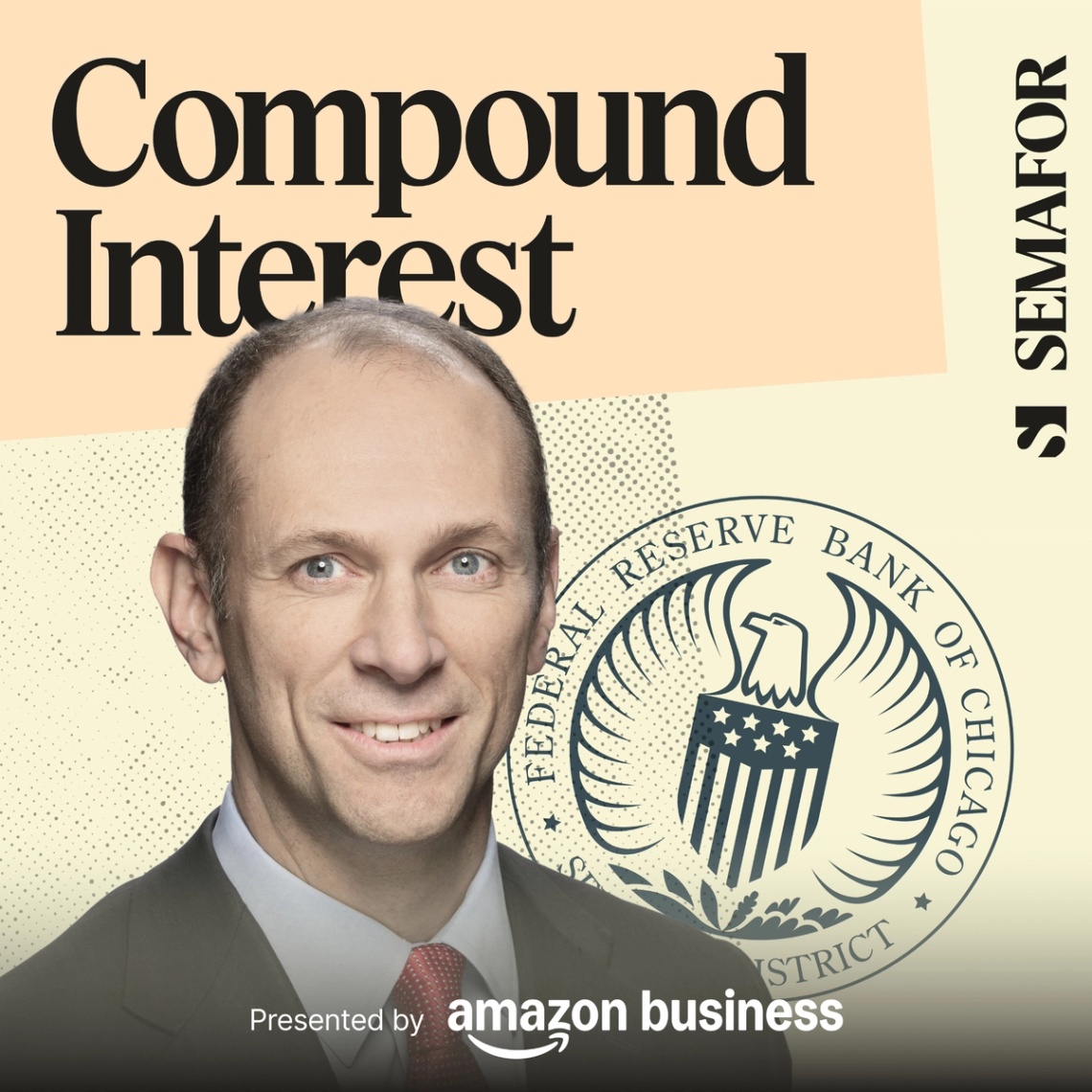 Austan Goolsbee is worried about inflation. On this week’s episode of Compound Interest, presented by Amazon Business, the president of the Federal Reserve Bank of Chicago warns that the AI data-center boom is driving up the cost of land, power, construction equipment, and labor, with rising prices threatening to spill over into the broader economy. Liz and Rohan sit down with Goolsbee to discuss those risks, whether hyperscalers even care about interest rates, and what a world where robots do all the jobs would mean for the Fed. |
|
 Bonds- Bahrain’s dollar bonds have slumped to crisis-era levels, bringing back memories of the $10 billion rescue Saudi Arabia, the UAE, and Kuwait put together in 2018. The yield on its 2028 note hit 8.99%, a six-year high. — Bloomberg
Deals- ADNOC Logistics & Services is in talks to buy a large stake in HEA Energy, an Abu Dhabi-based offshore marine services firm, at a valuation of up to $3 billion. The ADNOC unit has cash to spend after a surge in tanker rates helped quadruple its second-quarter profit to $917 million. — The Wall Street Journal
- Dubai doubled its Oraseya Capital fund to 1 billion dirhams ($272 million) and doubled the most it can invest in a single startup to $6 million. The fund, run by the Dubai Integrated Economic Zones Authority, can now back companies abroad and founders past Series B.
Media |
|
 Courtesy of Athr Gallery Courtesy of Athr GalleryIt took 58 years for a pioneering Jeddah schoolhouse show to reach Frieze Masters in London. In 1968, two female artists hung their paintings at a school in Jeddah called Dar Al-Tarbia Al-Hadetha, in one of the first exhibitions women had ever held in Saudi Arabia. One of them, Mounirah Mosly, spent the decades that followed — long before Vision 2030 set off a boom in Saudi art — designing Aramco publications, helping run its children’s art competitions, and working dyes, snakeskin, and rope into collages about war and Palestine, until her death in 2019. This week, her creations go on display at Frieze Masters, Frieze London’s fair for art made before 2000, where a slot reads as a verdict that the work now belongs to history. Jeddah’s Athr Gallery is debuting with Mosly and a second pioneer of Saudi modernism, Abdulrahman Alsulaiman. Her work hangs in the fair’s Feminist Legacies section. — Manal Albarakati |
|
|


