Plus: Eating 'misfit' food can help fight inflation – and climate change |

US Edition - Today's top story: 300 glaciers have disappeared from the American West since the mid-20th century – the survivors have a few things in common

October 13, 2026

US Edition

The Conversation
 

Top headlines

Lead story

If you take a flight across the mountain ranges of the Western U.S., be sure to look down: You might spot one of the last remaining glaciers, likely tucked into a protected niche.

These icy expanses were once common in the Rockies and other Western ranges, but they’re quickly disappearing. A newly published study found that more than 300 glaciers have disappeared from the Lower 48 states since the mid-20th century, and most of the survivors are pretty small. Their total area has shrunk by over a third.

“Those that survive reflect just how vulnerable mountain glaciers have become as global temperatures rise,” explains geographer and geologist Andrew Fountain, who led the study and explains his team’s findings in today’s top story. “The shrinking and eventual loss of all of these glaciers will affect ecosystems across the West, as well as waterways humans and wildlife rely on.”


 

Stacy Morford

Senior Environment + Energy Editor

 
images of smartphone on screen with text antidote to the algorithm, with a black background

Lead Story

Scientists take measurements on Sperry Glacier, in Glacier National Park, Montana. USGS

300 glaciers have disappeared from the American West since the mid-20th century – the survivors have a few things in common

Andrew Fountain, Portland State University

A new study compared the glaciers in the Lower 48 states today against historical data from the mid-20th century. The results show the region’s vulnerabilities as temperatures rise.

Health + Medicine

More rehab centers should mean fewer overdoses. In one California region, we found the opposite

Ilan Shrira, Penn State; Joshua D. Foster, University of South Alabama

When people travel out of state for addiction treatment, overdose risk is greater than many realize.

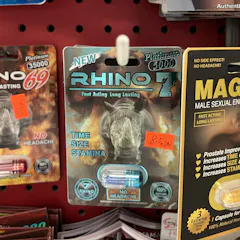
That brightly packaged sexual enhancement pill at the gas station might be laced with dangerous drugs

Andrew Yockey, University of Illinois Urbana-Champaign

Sexual enhancement supplements often contain unlisted prescription drugs that pose serious health risks.

Nicotine pouches, vaping or cigarettes: Which nicotine product is actually the least harmful?

Emma Fenske, University of Colorado Anschutz; Oregon Health & Science University

Not all nicotine products are equally harmful. An addiction medicine physician explains how to parse the science.

Politics + Society

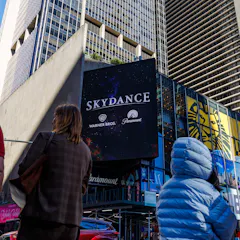
Why the Paramount-Warner merger is a problem for democracy

Seth Ashley, Colorado State University

The Paramount merger may make good business sense, but research shows putting more media power in fewer hands can come at a cost to the common good of citizens.

Murder of Black suffrage leader Octavius Catto reveals why Election Day 1871 was one of the most violent in Philadelphia history

Timothy Welbeck, Temple University

Philadelphia has given the intersection of 8th and South streets a new name: Octavius Catto Way.

Environment + Energy

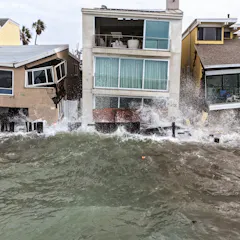
California is taking a beating from an unusually destructive 2026 Pacific hurricane season

Nicholas Grondin, University of Tampa

Tropical storms rarely survive in the cool water off California, but waves from storms far to the south can still damaged coastal areas. And flooding rain can sweep in.

Across the US, people don’t want data centers coming to their communities

Neha Gour, George Mason University; John Kotcher, George Mason University; Teresa Myers, George Mason University

Opposition to data centers is widespread across the US, uniting people despite other differences on political and environmental issues.

Ethics + Religion

Today’s irreverent politics ignore ancient wisdom: The need to know your limits

Robert A. Ballingall, University of Maine

Many Americans have decried today’s politics as ‘shameless.’ The antidote, a political philosopher argues, may be more reverence – awe at just how difficult democracy is.

Economy + Business

Americans are stressed about grocery prices, so why do they toss or overlook so much ‘misfit’ food?

Jintao Zhang, Binghamton University, State University of New York

Quality, rather than discounts or environmental benefits, is what’s needed to encourage shoppers to consider odd-shaped produce.

Economics Nobel: How this year’s winners helped to smooth the cycle of economic peaks and troughs

Conor O'Kane, Bournemouth University

Robert E. Hall and Michael Woodford were announced as this year’s winners.

Science + Technology

Hooked on tuna: People have been harvesting these ocean predators for 44,000 years

Emma Elliott Smith, Smithsonian Institution; Torben Rick, Smithsonian Institution

Bones in archaeological sites, ancient rock art, paintings on frescos and vases, written historical records and ethnographic accounts all helped researchers recreate a deep history of people and tuna.

Education

What colleges and universities need from donors to thrive

William Blomquist, Indiana University; Genevieve Shaker, Indiana University; William M. Plater, Indiana University

Philanthropy, which covers an average of 10% of college and university budgets, can help schools and the students who attend them weather today’s tough times.

Trending on site

 
images of smartphone on screen with text antidote to the algorithm, with a black background
 

Today’s newsletter is sponsored by InPress. Read about The Conversation’s underwriting and sponsorship policy here.

More from The Conversation

Follow The Conversation

You can find us on all your favorite platforms:

• YouTube • Bluesky • Facebook •