Flu levels low at start of season but higher than previous 4 years
Help raise awareness of the flu vaccine offer - winter vaccines communications toolkit available
UKHSA blog: 'Should we be worried about the current COVID-19 variants?'
The Food Standards Agency calls on businesses to withdraw and recall eggs from one Ukrainian food business as investigations find Salmonella Enteritidis contamination
Recording and slides now available: for UKHSA & NHS England: Communicating vaccines webinar - winter vaccines 2026/27
£33.2 million to protect public from future epidemics and pandemics
UKHSA blog: What is group A strep, and how do you catch it?
Consultation: Guidance on HIV viral load clearance and monitoring for healthcare workers living with HIV
Ongoing issues:
Eligible young urged to get protected with 2 doses of the MenB vaccine - new figures show almost 75% missing out
Vaccines for people experiencing homelessness - resources to support your engagement
UKHSA Keep Antibiotics Working campaign: phase three
Latest UKHSA communications toolkits
Upcoming webinars hosted by UKHSA and partners
UKHSA data, analytics and surveillance
Statistics at UKHSA
UKHSA data dashboard
Notification of Infectious Diseases report
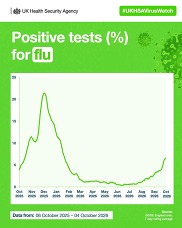
Flu levels low at start of season but higher than previous 4 years
Last Thursday, we published the first of our weekly winter respiratory virus surveillance reports. The latest data shows that activity throughout September has been higher than in the same period during all past 4 winter seasons. While still at baseline (very low) levels, flu trends have been rising since August and there are possible signs that we may see an early flu season.
In our press release, we also explain that a recent World Health Organization (WHO) technical report shows a drifted A(H1N1) flu virus circulating at low levels in the UK. Though it's too early to say how widely it will spread or how effective the vaccine will be against it, flu vaccines typically remain effective at preventing severe illness even against drifted strains.
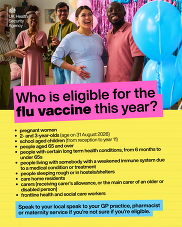
We are urging all those eligible for the flu vaccine to get vaccinated as soon as they can. Those who are vaccinated are likely to have milder symptoms and recover faster, cutting the risk of being hospitalised.
You can read more about what we know so far about this year's flu strains in our new blog post.
Help raise awareness of the flu vaccine offer - winter vaccines communications toolkit available
This is available on the Campaign Resource Centre and it contains key messages, statistics, FAQs, resource links, and social media assets to support flu, COVID-19, RSV and pneumococcal vaccine promotion, along with guidance on ordering leaflets and posters.
UKHSA blog: 'Should we be worried about the current COVID-19 variants?'
To support winter communications, we recently published a post on our blog exploring the COVID-19 variants which are currently circulating, including the XFG or Stratus strain, also referred to as 'American COVID' in some media coverage.
It explains the recent rise in positive tests and hospital admissions, noting this reflects a general seasonal increase in COVID-19 activity rather than a more severe variant, with similar trends seen across Europe and the US. The post also covers the BA.3.2 (Cicada) variant, current vaccine eligibility, treatment access for vulnerable groups, and UKHSA's ongoing surveillance work.
Stakeholders may wish to use this to counter misleading "American COVID" narratives, support winter respiratory illness messaging, and signpost eligible audiences to vaccination and treatment information.
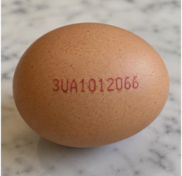
The Food Standards Agency calls on businesses to withdraw and recall eggs from one Ukrainian food business as investigations find Salmonella Enteritidis contamination
The Food Standards Agency (FSA) has issued a Food Alert for Action to businesses, including caterers, manufacturers, wholesalers and consumers, calling on businesses to withdraw and recall eggs from one Ukrainian food business.
Following egg sampling undertaken by UKHSA, Salmonella Enteritidis was found in samples of eggs from one Ukrainian supplier. UKHSA then carried out whole genome sequencing which showed that the strain did not match the outbreak strains currently under investigation. However, the strain from the eggs was linked to 36 cases of Salmonella infection reported in England in 2026.
The FSA’s advice is that if people have bought any of the affected products, do not eat them and instead, dispose of them at home, as they may be unsafe. While most eggs are used within the catering supply chain, some eggs may be available for retail sale in small shops. These eggs are not sold in large retailers like supermarkets.
Recording and slides now available: for UKHSA & NHS England: Communicating vaccines webinar - winter vaccines 2026/27
Thank you to those who attended our Communicating Vaccines webinar - winter vaccines 2026/27 which took place Monday 5 October, 2pm – 3-15pm.
In the next week, we will be sharing a short feedback form for attendees to complete. Any feedback you provide is greatly appreciated as it informs how we run future stakeholder webinars.
£33.2 million to protect public from future epidemics and pandemics
Last week, Department of Health and Social Care (DHSC), UKHSA and Innovate UK announced £33.2 million to fund 8 vaccine projects which will target diseases including Ebola, plague, Marburg, Lassa fever, Nipah virus, chikungunya and Mayaro.
The new awards will build the research, clinical trial and technical capability needed to develop, test and deploy vaccines at speed. They will also help make vaccines affordable, accessible and ready for use in countries at greatest risk.
Richard Pebody, Director of Epidemic and Emerging Infections at the UK Health Security Agency (UKHSA), said:
"The ongoing Ebola outbreak in the Democratic Republic of the Congo is a reminder that emerging infectious diseases are not a distant threat. UKHSA plays a critical role in responding to disease outbreaks, both at home and through our work with international partners. But preparedness, detection and response are only part of the picture.
"Having effective vaccines and the manufacturing capability to produce them at speed is essential. This investment will help ensure that the UK is ready to respond quickly and effectively to a range of emerging health threats. By working in partnership with affected countries we can help stop outbreaks, protect vulnerable populations and make the world, including the UK, safer from future epidemic and pandemic threats."
UKHSA blog: What is group A strep, and how do you catch it?
Last week we published a blog post on Group A streptococci (GAS), also referred to as 'strep A'. It sets out what strep A is, the mild infections it causes (such as scarlet fever, strep throat and impetigo) and the rarer but more serious invasive infections, including signs that warrant urgent medical attention. It also covers simple steps to reduce spread, such as handwashing and staying away from others when unwell, and highlights that children who've recently had chickenpox face a slightly higher risk of iGAS.
Stakeholders working with parents, schools, early years settings or healthcare audiences may find this useful for signposting into winter illness messaging, particularly around chickenpox season and when to use 111 versus A&E. The blog can also support local health protection communications and links to UKHSA's data dashboard for tracking case trends.
Consultation: Guidance on HIV viral load clearance and monitoring for healthcare workers living with HIV
The review was prompted by stakeholder requests citing updated clinical evidence and changes in HIV treatment practice, and follows consideration of published and unpublished evidence on transmission risk, HIV natural history on treatment, and testing frequency, alongside UK and international clinical and occupational health guidance.
Stakeholders are being asked for feedback by .
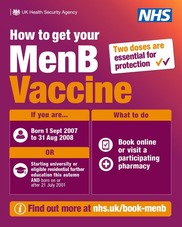
Eligible young urged to get protected with 2 doses of the MenB vaccine - new figures show almost 75% missing out
Our first interim report on MenB vaccine coverage for the year 13 cohort for the the one-off vaccination offer targeting young adults in England shows coverage:
was 26.6% (212,549 vaccinated out of 799,840 eligible individuals) up to 20 September 2026
is gradually increasing as young adults have more time to be vaccinated (the report figures are for the first 9 weeks of the vaccination offer)
varies substantially by geography, sex, deprivation and ethnicity
A reminder that the one-off vaccination programme is being offered to:
Everyone born between 01/09/2007 and 31/08/2008
Young people under 25 (born on or after 21/07/2001) who will be starting higher education for the first time, or who will be starting further education for the firsttime as a residential student, in autumn 2026
International students under 25 entering their first year of university. They should receive their first dose in their home country where possible to give the best chance of protection ahead of the start of the autumn term.
Stakeholders can support communications on the MenB vaccine offer by using our communications toolkit.
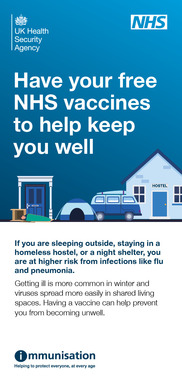
Vaccines for people experiencing homelessness - resources to support your engagement
This winter people experiencing homelessness (people rough sleeping and those using homeless hostels or night-shelters) are eligible for both the flu and pneumococcal vaccines.
The latest NHS England press release confirms that, alongside the vaccine offer being available at GP practices and community pharmcies, NHS pop-up clinics and mobile vans will also be established in homeless hotspots to ensure everyone has the best chance to get protected against winter diseases.
Here are some resources to help communicate this new vaccine offer:
Poster and guide: We have a poster, a guide, a pocket guide and an easy read version providing information on vaccines for people experiencing homelessness. It offers information on the flu, pneumococcal and other vaccines offered to eligible people. These are able to download or to order for free via the Find Public Health Resources website (login required for ordering large quantities).
Social cards: NHS England has produced some social cards and display screen materials (available on Google Drive). These have been designed to display in services, to make outreach workers aware of the vaccine offer so they can promote it to the people they work with.