| | In today’s edition: Saudi Arabia’s deadly week, the bid to bypass Hormuz, and why Dubai’s property s͏ ͏ ͏ ͏ ͏ ͏ |
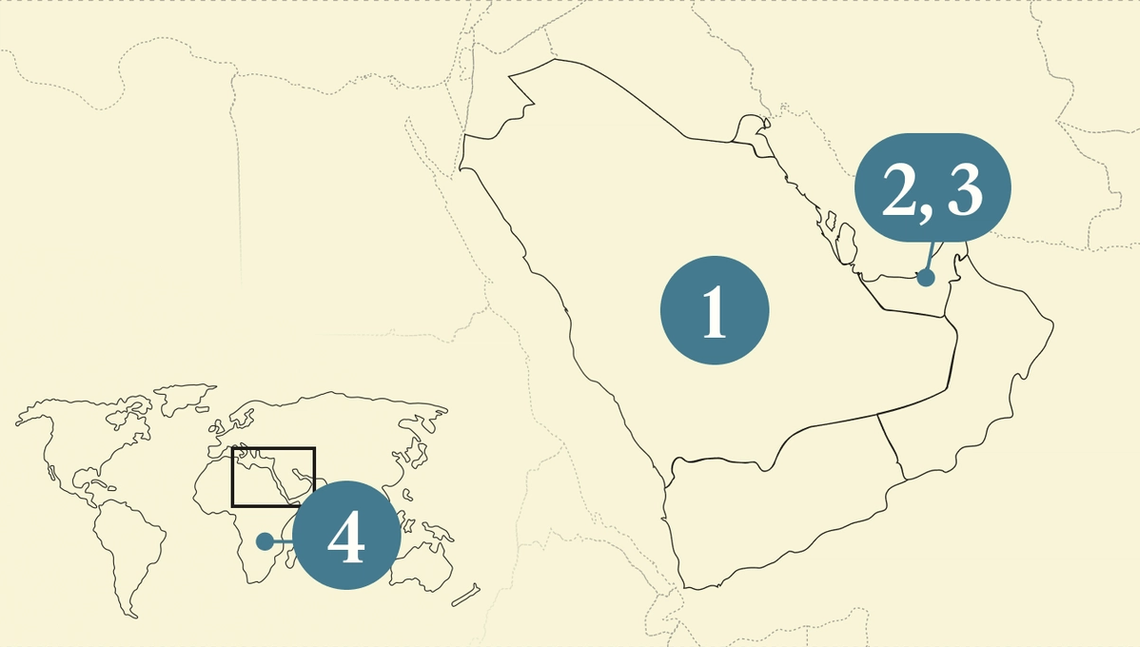 - Deadly week in Saudi
- Fujairah’s wartime windfall
- Dubai property’s ‘slow burn’
- IHC revives copper deal
 Checking in on Saudis’ social feeds. |
|
Houthi strikes expose Saudi vulnerabilities |
 Houthi Military Media/Handout via Reuters Houthi Military Media/Handout via ReutersThe deadliest week for civilians in the Gulf marks a turning point in the US-Iran war that has engulfed the Middle East from Beirut to Aden, and from Irbil to Salalah. Saudi Arabia stepped up strikes on Yemen’s Houthis after the group hit Riyadh’s airport 20 times this month, killing 17 people and injuring 333. Despite Riyadh’s considerable air defenses and vast military spending, the militants have been able to outsmart the systems using relatively cheap drones and missiles. Iranian attacks on the Gulf have brought the region closer together, and the latest strikes by Tehran’s allies in Yemen have galvanized support for Saudi Arabia. Authorities in the region are reinforcing this message of unity: In today’s Friday prayer sermons in Kuwait, imams were instructed to praise the kingdom’s support during Iraq’s 1990 invasion and condemn the Houthis. Similar expressions of support were also voiced in Bahrain, Qatar, and the UAE. While security is by far the most pressing priority, new projections from the IMF have revealed the war’s deepening economic toll. Jihad Azour, the fund’s regional director, told Asharq Bloomberg that the Gulf’s financial reserves, diversified export routes, and government interventions have cushioned the shock. But the IMF now predicts a deeper contraction than previously expected, with GDP trailing pre-war forecasts even after energy production and trade recover. — Mohammed Sergie |
|
The opportunities beyond Hormuz |
 Kevin Zweerink/Semafor Kevin Zweerink/SemaforStanding aboard one of the large tugboats used to guide giant crude tankers into Fujairah’s port, the UAE’s race toward its “Zero Hormuz” strategy is visible in every direction. Most of the UAE’s crude loads at this port, cargo for the country’s 10 million residents arrives here and at other terminals along the Gulf of Oman. On the horizon, ship-to-ship transfers are surging, up from a handful pre-war to around 120 in September. Fujairah — one of the UAE’s poorer emirates, better known for its low-cost resorts and mountain escapes — is at the center of a regional push to reduce Iran’s leverage over Gulf trade through the Strait of Hormuz. Geography has become the port’s biggest asset, and it’s not alone. Saudi Arabia is expanding its pipeline network, and Kuwait is in talks with Riyadh and the UAE to move crude through their respective links. Oman is also a likely beneficiary of the Hormuz disruption, with separate pipeline plans for its ports to safely ferry fossil fuels trapped in the Gulf. — Mohammed Sergie
|
|
Dubai lures ‘Selling Sunset’ crowd |
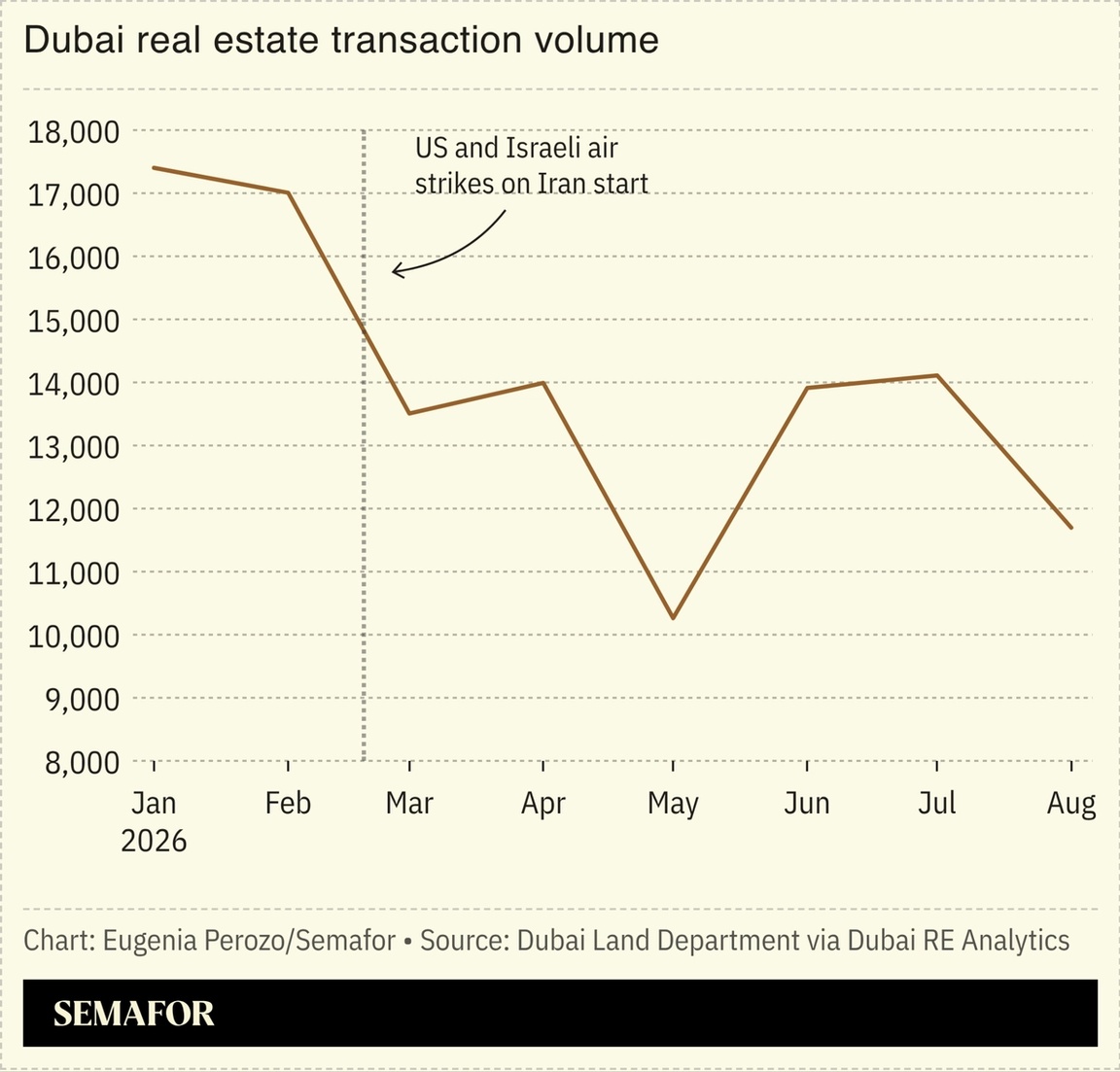 The sheer volume of properties selling in Dubai for $5 million-plus — even during wartime — has lured one of Los Angeles’ top luxury real estate agencies. Whether they will bring their Netflix reality show cameras is another question, but The Oppenheim Group, known for Selling Sunset, pressed ahead with opening a new office in September. Despite signs the premium segment is stalling, some brokers and developers say this is a much-needed correction in one of the world’s hottest real estate markets that is helping to avert a market crash. Jason Oppenheim, president of The Oppenheim Group, is among them. “Now you just have a slow burn, and that’s exactly what you want in every real estate market,” he told the Financial Times. Another sign of confidence: A $1.4 billion extension of Dubai’s financial hub is going ahead, selling units at the under-construction Four Seasons, Bloomberg reported. |
|
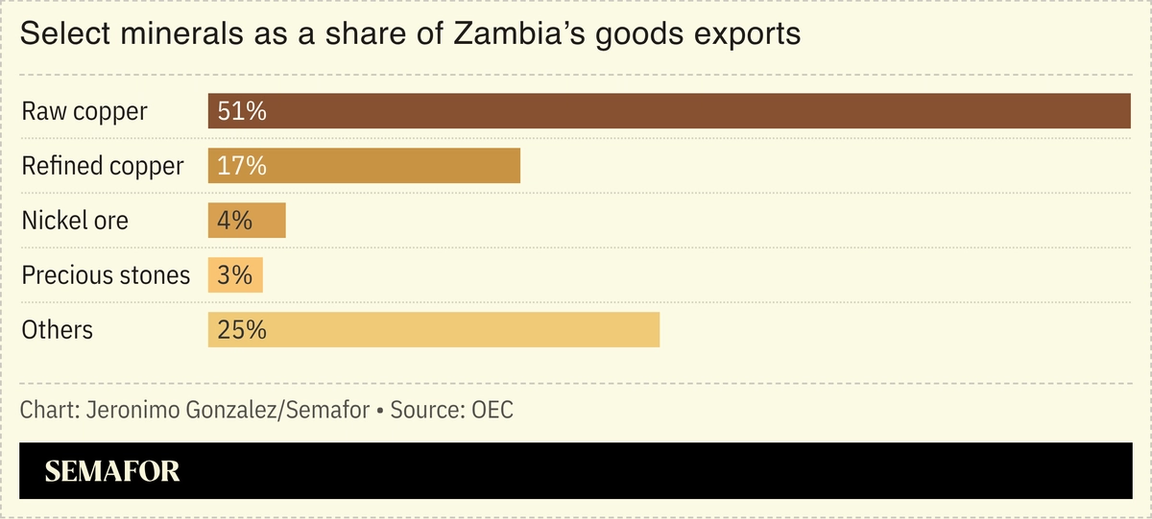 Abu Dhabi-based International Resources Holding and Zambia’s state miner ZCCM-IH say they have patched up their financing dispute over Mopani Copper Mines. The statement skirted the charges in ZCCM-IH’s September letter, which accused IRH — part of Sheikh Tahnoon bin Zayed’s International Holding Company — of failing to provide equity funding and taking on unapproved debt. Instead, the partners pointed to new joint-exploration projects, saying they “remain aligned on the long-term development” of the mine, but left funding questions open. The truce followed a meeting in Abu Dhabi between Zambian President Hakainde Hichilema and IRH’s CEO on the day the letter became public. IRH paid $620 million in 2024 for a 51% stake in Mopani as part of a deal worth more than $1 billion. Neither side can afford a fight: Zambia needs Gulf capital for its bid to more than triple copper output to 3 million tons a year, and IRH aims to lift Mopani’s production from 66,369 tons in 2025 to 300,000 tons by 2029. |
|
 A social media post that urges Saudi citizens to defend their country. @saudipopular_/Instagram A social media post that urges Saudi citizens to defend their country. @saudipopular_/InstagramSaudi social media looks different this week. Throughout the first six months of the war, the widespread response to Iranian attacks was posting images of the flag, the crown prince, and a prayer for the country. Now, following Houthi strikes on the kingdom, my social feeds (algo: female, Gen Z, relatively liberal) are full of soldiers saluting the flag, or reading the Quran beside missile racks. Nationalist language has sharpened too: One viral post tells Saudis to defend their homeland and warns against “traitors” who would “cast doubt on their loyalty.” Many are repeating the official mantra that “there is no fear in the Saudi dictionary.” The framing of the war has also shifted, from a US conflict to the kingdom’s. — Manal Albarakati |
|
| |