|
|
| When I go out to eat, I’m often impressed by how much food comes with one meal. On the one hand, more bang for my buck! On the other hand, it can be hard to avoid overeating to the point of discomfort. By the end of the meal, I usually regret not splitting the dish with a friend or family member. But hey, at least I still have some leftovers to enjoy later. |
| Today, registered dietitian Jessica Sandoz is here with some helpful tips on determining your portion size. |
|
|
|
|
|
|
Forks up,
Sarah Matysiak
Associate Editor, Healthline |
 |
|
Written by Sarah Matysiak
December 2, 2025 • 3 min read |
|
|
|
 |
|
|
| Q: |
How do you determine the right portion size for you? |
|
| A: |
Steadily increasing portion sizes have been linked to overeating and increased rates of obesity. A portion is the amount of food you choose to eat for a meal or snack. (This is different from a serving, which is a measured amount of food or drink, such as one slice of bread or 1 cup of milk.)
Many factors influence the optimal portion size for you, including your age, sex, activity level, and health goals. For example, my portion sizes as a 5-foot-2-inch small-boned female will be vastly different from those of someone with a 6-foot-2-inch muscular male build.
So where do you start? I suggest using the MyPlate calculator to determine your daily calorie needs. (Heads-up: It tells you how many calories you need to maintain your current weight. If you’re trying to lose weight, this calculator is specifically designed for that.)
The MyPlate calculator will also tell you the serving sizes of each food group — fruits, veggies, protein, grains, and dairy — to aim for each day. If it’s difficult for you to eyeball it, try using hand guides to estimate serving sizes.
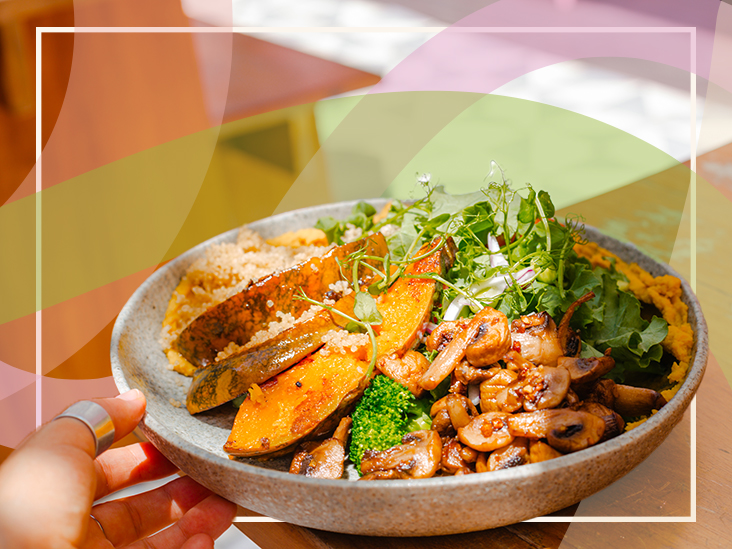
Remember: A standard balanced meal is made up of:
- 1/2 plate veggies or a combination of fruits and veggies
- 1/4 plate protein, ideally lean meat, fish, poultry, or a vegetarian option
- 1/4 plate starch, ideally a whole grain or a starchy veggie
- fat, ideally a healthy fat, in moderation
Knowing the calorie and nutrient content of your food can help you determine your portion size. The best way to get that information is to use a food tracking app. All you have to do is enter the meal, recipe, or ingredients (including amounts), and the app tallies up the calories and nutrients in an ongoing record. A food scale can also help you get more accurate measurements/conversions (though it depends on the database the app uses to power its ingredient library).
Tracking your food can help you better understand calorie and nutrient content, which may also help you make informed decisions about your portions.
|
|
|
|
| Jessica Sandoz, Registered Dietitian
|
|
| Want to learn more about food, diets, cooking, or some other nutrition subject? Let us know at nutritionedition@healthline.com and we'll look into it for you! (Heads up, we may use your response in an upcoming newsletter.)
|
|
|
|
|
|
|
| What we’re digesting |
| |