|
Thank you for reading A Year of Mental Health, my occasional newsletter on purposeful productivity. It’s now completely free for everyone! If you find it helpful, click the “like” button at the top or bottom and share the post with someone who might benefit from it. 💚



Hello friends! 👋🏼
First, an update: I’ve paused the billing for all paid subscriptions here—everything with A Year of Mental Health is now completely free, and nothing is paywalled.
I’m working on something new for 2026, but some occasional posts will continue on this newsletter as well. Thanks for being out there! I love writing for you and don’t take your attention for granted. 🙏
Alright, on with today’s post…
 |
Last week I heard a story on This American Life about an unsolved mystery. Thankfully, it wasn’t a murder mystery or true crime story—it was about a classroom game that a second-grade teacher plays with her students.
In the game, the teacher reveals a sealed shoebox and asks the students to guess what’s in it. The students pass it around, each giving it a shake or pressing an ear to it, before making a series of guesses.
“Nope!” the teacher says each time. All of the guesses are incorrect.
So, you might wonder—what was in the box? Surely the game comes to an end with a reveal of sorts, right?
Normally I’d say “I won’t spoil the ending of the story,” but in this case, the whole point is that there is no ending. Or rather, the game ends and the kids don’t get to find out what’s in the box.
The students are very frustrated with the lack of reveal. Some of them even get mad. But that’s the lesson—we don’t always get the answers we want.¹
 |
As I heard this story unfold on my morning run, I understood the frustration. I’m not sure those second-grade students are much different from most adults. We want closure! We want answers! We like mysteries, but only when they proceed to a swift and thorough resolution. We want to know what happened and why.
But of course, life contains all sorts of sealed shoeboxes and mysteries. You can drive yourself crazy trying to solve the riddles.
On Reading 3-Star Books
Earlier this year I started seeking out 3-star books to read. Specifically, I look for books (mostly fiction) that have a lot of five-star reviews and a bunch of one- and two-star reviews. The ratio is key: if it’s just a lot of 3-star reviews, that means the book is probably mediocre. You want to find books that are loved or hated with little in between.
These are books that are divisive! They are books that make an emotional impact with readers, and not always a positive one.
One of my favorites in this category is Piglet. A quick look at this book’s reviews reveals that readers love it or hate it. (Personally, I loved it.)
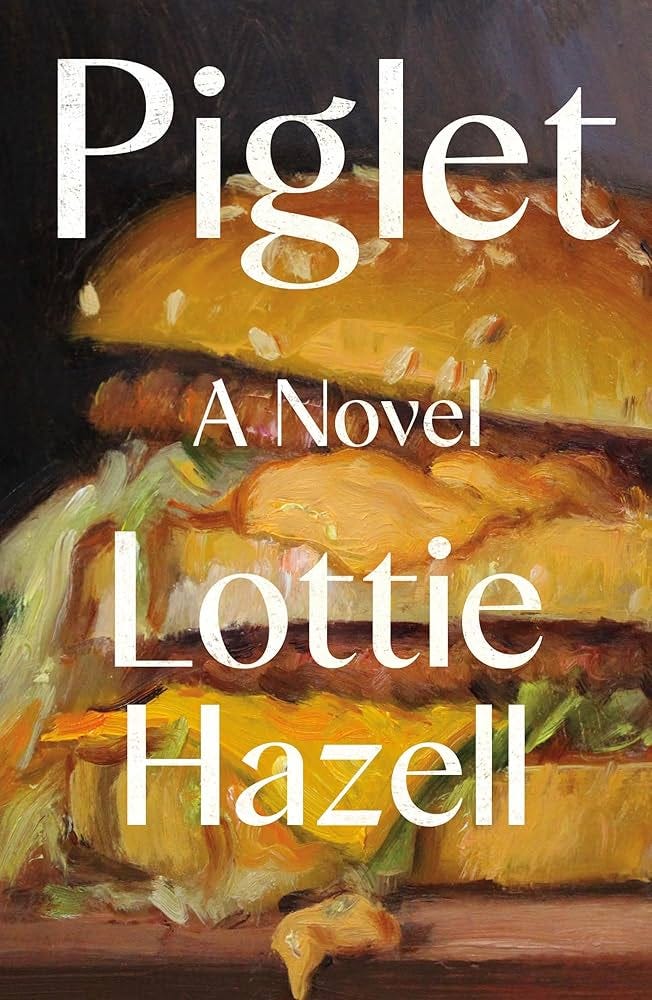 |
I don’t want to give away too much for someone who wants to read this book, so I’ll just note that the rift that develops between two prominent characters is ultimately left unexplained. You learn about the consequences of a betrayal but never the origin of the betrayal itself. So if you’re reading the book hoping to figure out “what happened,” you might be left unhappy!
This outcome, however, is like so much of life.
Life is the mystery box. Life is the change that develops between people that is examined obsessively in the interior world of at least one of them, but never openly discussed. (At least not to the satisfaction of one of the parties.)
It’s the person you’re getting to know so well who ghosts you forever.
It’s the job interview or business opportunity that seems so promising, just before it’s taken from you with no explanation.
It’s so many other things that don’t go the way you want, or even just the way you expect.
“But I thought…”
Well, you thought wrong! Sometimes that happens. 🤷🏼♂️
I’ve spent a lot of time considering why I’ve sometimes gotten stuck on things. Historically, I expended a lot of energy trying to pursue or create resolutions to situations that were fundamentally unresolvable.
One of the main ways I get stuck is in searching for “closure” or “the answers.” And sometimes, just like with the mystery box or a good 3-star book, the answers are elusive.
It’s hard to accept that sometimes you just need to move on without the answers that feel so urgent. There’s probably some German word for “the feeling of residue that persists after an undeveloped experience.”
In the absence of that word, at least in English, I just think: maybe I need to read more 3-star books.