|
 |
The Risk No One Warns You About When You Work With Guests
What happened when a guest asked me to erase their interview… after it had already gone live.
|

| |||||||||||||||


I used to think having guests on my show was all about the conversations… the energy… the connection.
And honestly, for a long time, I treated everything else as optional.
Especially paperwork.
Release forms? I thought those were for big shows, celebrity interviews, or high-stakes legal teams. Not for people like me, someone who prioritizes relationships, trust, and collaboration.
But like most things in business… you only learn the importance of structure after something goes wrong.
The Moment It Finally Hit Me
There was a stretch early on where I didn’t use a single guest release form.
My thinking was simple:
If a guest ever had second thoughts, I’d rather keep the relationship intact than wave a contract in their face.
Then one day, a guest emailed me asking to pull down an interview not because anything went wrong, but because they were suddenly uncomfortable being online.
Completely fair request.
But here’s the part that made my stomach drop:
I had already promoted the episode everywhere.
Other people had already shared it.
My team had already repurposed clips, quotes, and promos.
And without a release form, I had zero ground to stand on.
I removed it immediately, because that’s who I am, but it was my wake-up call.
Sometimes the thing you skip because it feels “too formal” is the thing that protects you from unnecessary mess later.
A release form isn’t a wall between you and your guest.
It’s protection for both of you.
Why This Matters More Than You Think
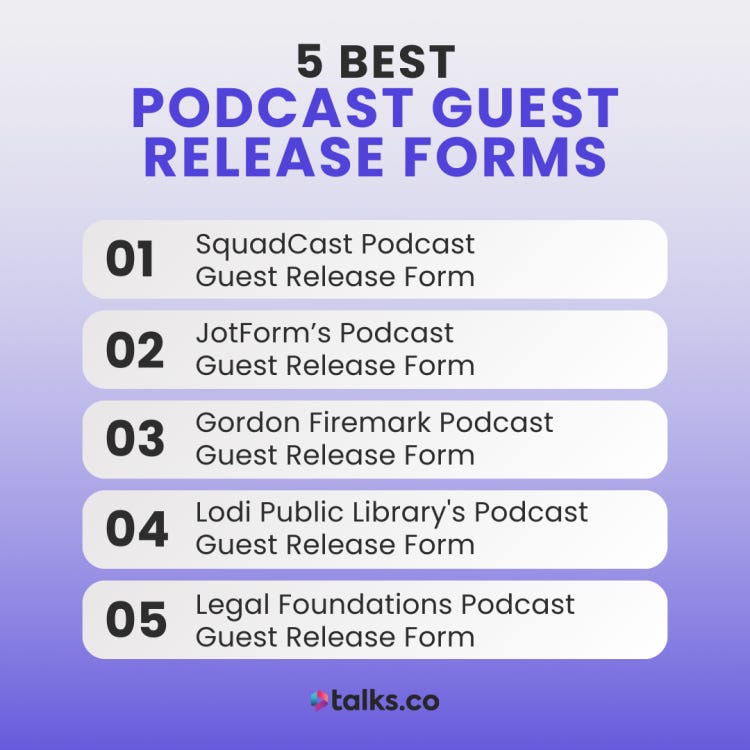 |
Most people assume release forms are for big names or controversial topics.
But here’s the truth:
A guest release form isn’t a legal complication. It’s a clarity tool.
It removes confusion, protects relationships, and gives you confidence when you hit “publish.”
And for guests, especially those sharing personal stories, opinions, or proprietary ideas, it signals professionalism.
Collaborations have evolved.
The stakes are higher.
Content spreads further and faster than ever.
And yet very few people protect the asset that visibility depends on most… content.
Any collaboration - podcast, summit, webinar, interview, co-hosted event, guest workshop - comes with invisible risks:
Someone wants something removed
Someone claims you misrepresented them
Someone withdraws permission
Someone wants to control edits
Someone disputes ownership
Most people experience this only once it’s too late.
This simple one-page document keeps everyone in alignment… and out of trouble.
How Visibility Actually Grows (And Why Release Forms Are Part of It)
After hosting 400+ interviews and running 15+ virtual summits, I’ve learned that visibility grows fastest when your systems do the heavy lifting.
Here are the lessons I wish I knew sooner:
1. If you want to grow, protect what you create
Every piece of content you publish is an asset.
But without clear rights, you don’t truly own it.
A guest release form is simply the creative version of wearing shin guards… boring until the moment they save you.
2. Visibility scales when collaboration becomes frictionless
When guests know exactly what to expect, they’re more comfortable:
sharing
promoting
repurposing
tagging you
partnering again
Clarity creates confidence.
Confidence creates reach.
3. Professionalism is a visibility multiplier
Most creators rely on trust alone.
Professionals use systems.
And audiences can feel the difference.
A release form doesn’t just protect you, it elevates you.
4. The more visible you become, the more protection you need
When you’re small, no one cares.
When you grow, people start caring a little too much.
Sponsors, brands, platforms… all want proof that you have rights to your content.
Visibility attracts opportunity but only if your foundation is solid.
Why This Matters For You (Even If You Don’t Host a Podcast)
Whether you’re a coach, creator, founder, or subject expert, visibility is becoming the new currency.
But the mistake most people make is assuming visibility is something you build on the outside.
It’s not.