|
 |


Tonight, at just about the same time, there was news in both the Brown University shooting case and in the prosecution of Wisconsin Judge Hannah Dugan. I’m shifting gears, and rather than what I’d been working on for this evening, I’ll update you briefly on both of those situations.
Brown University Shooter
After identifying a person of interest earlier this week and then advising the public that the individual was not involved in the shooting that took the lives of two Brown University students and injured nine others, Rhode Island officials revealed that the person who was actually responsible for the attack was deceased. Here’s what we learned at the press conference: The shooter, identified as Claudio Valente, was enrolled as a student at Brown University in Fall 2000 and Spring 2001. He took a leave of absence in April 2001 and formally withdrew in July 2023. As a Ph.D. physics student, he spent a “great deal of time” in the Barus and Holley building, where he attacked students preparing for exams without warning.
Rhode Island Attorney General Peter Neronha explained that his office had obtained an arrest warrant for Valente earlier today. This evening, law enforcement tracked Valente to a Salem, New Hampshire storage unit. After obtaining a federal search warrant for the unit, authorities entered and found him deceased from a self-inflicted gunshot wound.
The twist came when a question at the press conference elicited the information that Valente had attended school in Portugal with MIT physics professor Nuno Loureiro, who was shot to death in his Brookline, Massachusetts, home two days after the shooting at Brown. It turns out, law enforcement believes the two crimes are linked. The U.S. Attorney in Massachusetts held a press conference moments later, confirming that was her view. She indicated the search of the storage unit was still ongoing and that ballistics reports hadn’t yet been completed that would permit them to say whether the same weapons were used in both cases, but she expressed confidence that they had their man.
The lengthy affidavit from Rhode Island, which explains how Valente was identified and tracked, is available at the link at the bottom of the page here.
The most important development tonight is that law enforcement seems confident that the risk to the public is over. There is no word on motive, but that is likely to develop over the next few days. Given the linkage between the deceased subject and the university, as well as his connection to the victim in Massachusetts, investigators will look for a triggering event that could have set him off. They will trace his weapon and his location—his last known residence was in Florida—and travel pattern, as well as friends, family, and online contacts to see what they can learn.
Valente does not fit the pattern we see in most mass shootings. He used a 9-millimeter handgun, not an assault style weapon, and there was a level of premeditated effort to conceal his whereabouts, including using an app on his phone to obscure his location, that allowed him to avoid capture after both of his crimes. That, and the two very different types of shootings he executed, suggest at a very specific, although still unidentified, motive.
Judge Dugan Convicted
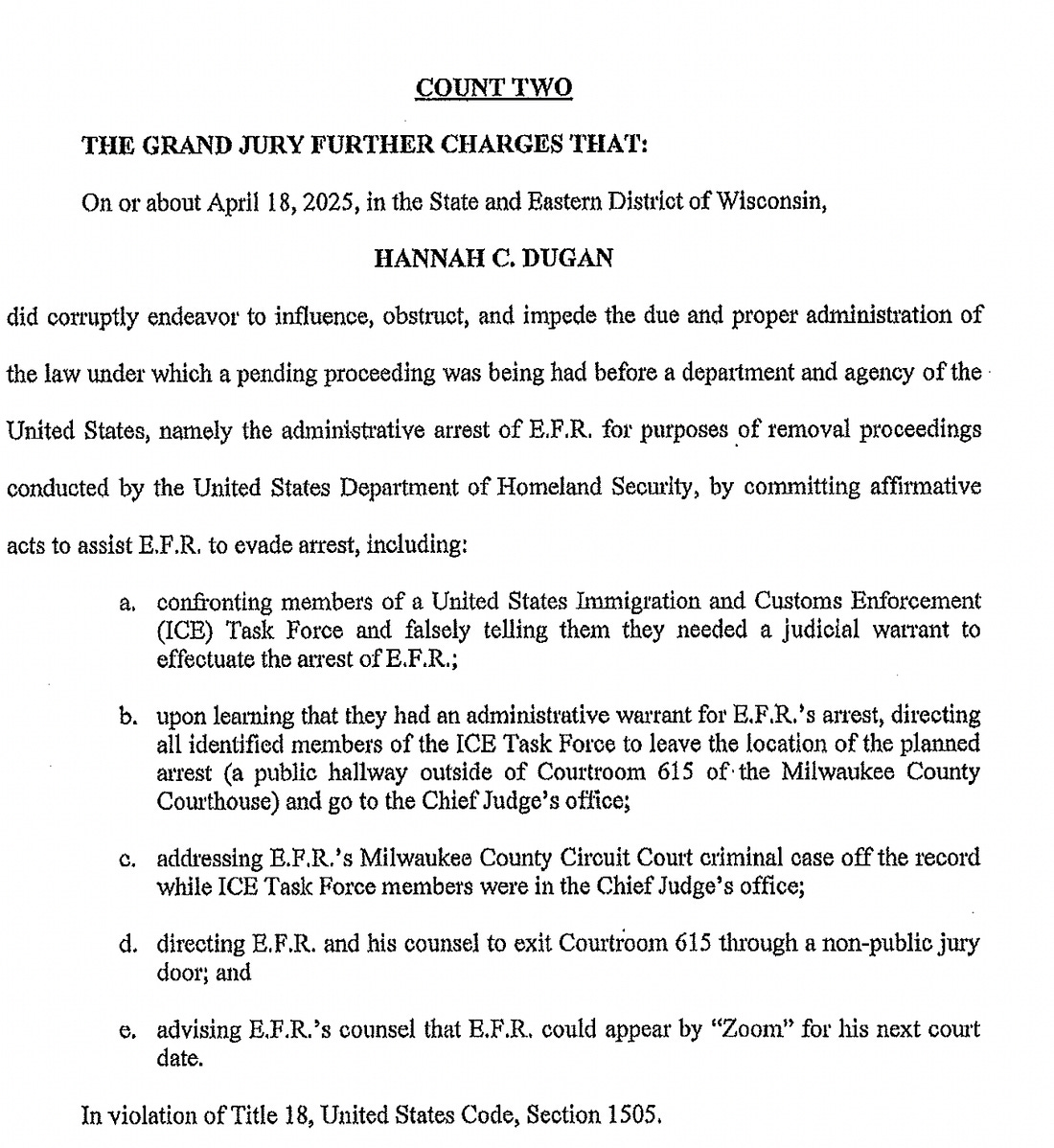
After several hours of deliberation, a federal jury in Wisconsin convicted Judge Hannah Dugan on a felony obstruction charge, Count Two in the indictment against her. They acquitted her on the misdemeanor charge in Count One.
 |
Judge Dugan faces a maximum sentence of five years. But her actual sentence is likely to be much lower under federal sentencing guidelines. And there will be an appeal, with any sentence likely held in abeyance until it is completed.
One of the Dugan’s issues on appeal will involve judicial immunity. Ahead of trial, her lawyers sought to dismiss the case against her, arguing she had absolute judicial immunity for the conduct she was charged with because it was part of her courtroom management authority. Judges’ work on the bench, as well as their work organizing and maintaining order in their courtrooms, is protected by immunity to ensure they can judge cases before them fairly and without fear of being sued. The precedent for that immunity is well established under common-law principles dating back to 17th-century England.
But while immunity is fairly well established in civil cases where private parties try to sue judges, this case is different, because it’s the rare case involving a federal prosecution of a state court judge. The question will be whether this immunity applies in a criminal case, as it would in a civil lawsuit. The government’s argument is that directing a defendant to evade arrest is not a judicial act, and that doing so falls outside of Judge Dugan’s jurisdiction and scope of her work as a state judge, so her conduct is not protected.
There is a 2020 case from the First Circuit, U.S. v. Joseph, where the court declined to dismiss a prosecution against a state court judge in Massachusetts, on very similar charges, where the government claimed obstruction of an ICE arrest, on immunity grounds. The government has tried to stake its case on that decision, but it’s unclear how much it will help. The court in that case held that it had to “reject the defendants’ request for pre-trial review of the denial of their motions to dismiss” because they were premature—they would need to wait until after conviction, if any, to press their claims.
In other words, Joseph turned on the First Circuit’s view that it could not consider the judicial immunity issue before trial; that it would need to wait until after a conviction. The court wrote, “We therefore dismiss their appeals without expressing any views on the merits of any charges or defenses in this apparently unprecedented prosecution.” That’s not exactly good language for the government. Now that Judge Dugan has been convicted, her immunity argument would seem ripe for a hearing.
That’s all for tonight. Tomorrow, at 11 a.m. ET, I’ll be joining my good friend Mary Trump for a Substack Live. If you have questions or issues you want us to discuss, please drop us a note in the comments.
Civil Discourse exists because readers support it. If my writing helps you process what’s happening, separate fact from fiction, and stay on top of the news, I hope you’ll consider subscribing.
We’re in this together,
Joyce
.
You're currently a free subscriber to Civil Discourse with Joyce Vance . For the full experience, upgrade your subscription.