| | China warns the US over its campaign against Venezuela, a car bomb kills a Russian general, and a US͏ ͏ ͏ ͏ ͏ ͏ |
| |  | Flagship |  |
| |
|
The World Today |  - China slams US over Caracas
- Gold, silver prices soar
- China AI firms eye 2026 IPOs
- Japan’s rare-earth mud
- Trump halts wind projects
- India-Bangladesh tensions rise
- Car bomb kills Russia general
- Baidu robotaxis in the UK
- Uber hires more engineers
- Switzerland population limit
 The art of drapery, and Semafor’s senior editor recommends re-reading a century-old science-fiction short story. |
|
China condemns US’ oil tanker seizures |
 US Navy/Petty Officer 3rd Class Gladjimi Balisage/Handout via Reuters US Navy/Petty Officer 3rd Class Gladjimi Balisage/Handout via ReutersChina said the US is violating international law through its seizures of oil tankers in the waters off Venezuela, underscoring the global ripple effects of Washington’s campaign against Caracas. Most Venezuelan crude is typically shipped on shadow tankers to China, according to OilPrice.com, but the US’ “blockade” on sanctioned vessels around Venezuela cuts off that lifeline for President Nicolás Maduro. Washington and Beijing are jockeying for influence in Latin America, and a potential US invasion of Venezuela would mark a setback for China and its business interests. But Beijing would likely not offer Caracas any support beyond rhetorical condemnation and might privately view Maduro’s fall “as the shedding of dead weight,” an expert wrote in UnHerd. |
|
Gold, silver hit new highs |
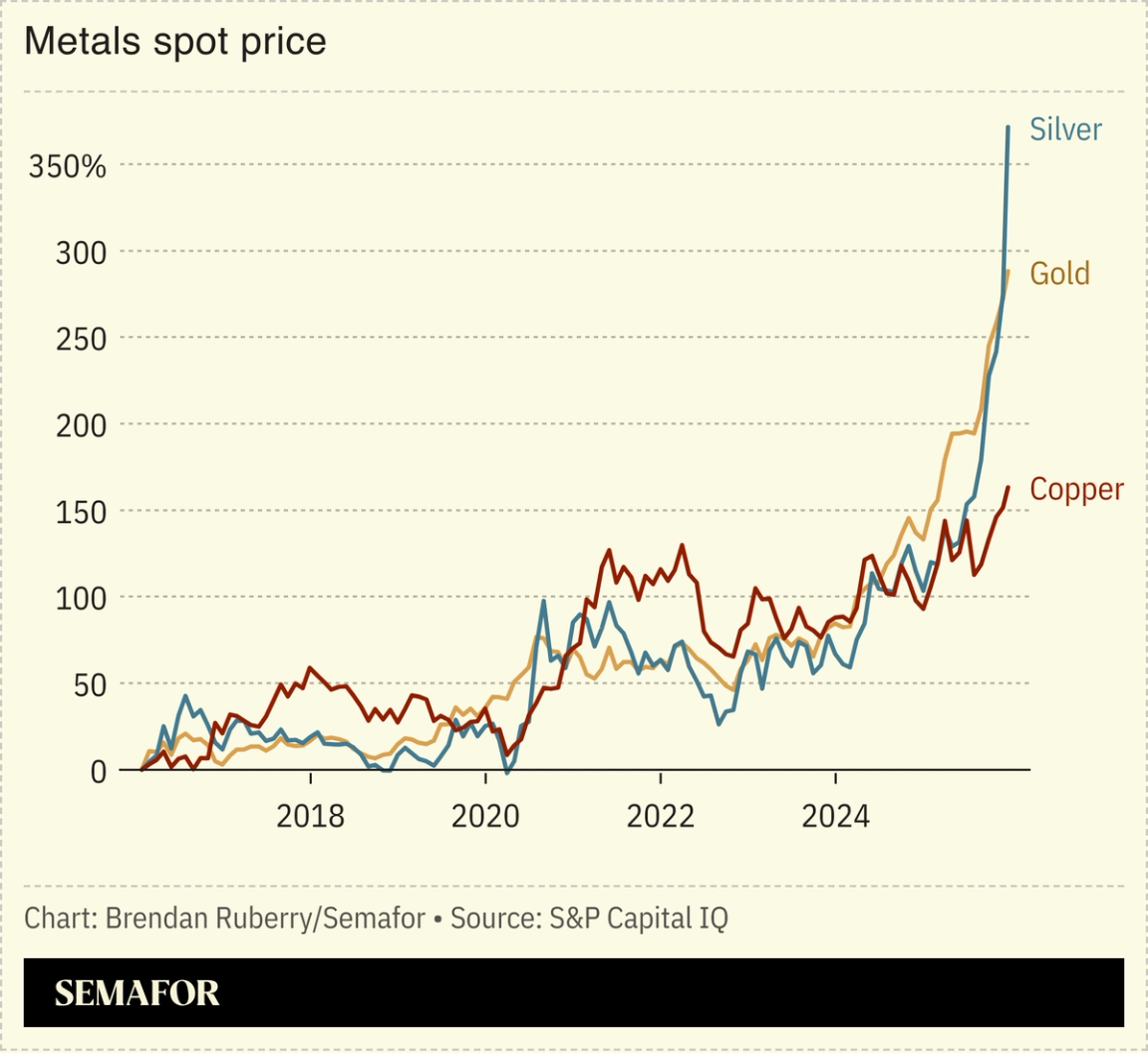 Gold and silver prices hit fresh highs on Monday as investors rushed toward safe havens amid end-of-year geopolitical tensions. Washington’s blockade on Venezuelan oil triggered the latest surge, analysts said, along with bets on US interest rate cuts. Gold has become “the ultimate hedge against further uncertainty,” one money manager said, as investors this year fretted over US President Donald Trump’s tariffs and his attacks on the Federal Reserve’s independence. Wall Street strategists are bullish about 2026 — a consensus implying a boring year — but basing your investment strategy off that assumption “is roughly as helpful as consulting a fortune cookie,” a Bloomberg columnist argued: Markets are now shaped by “unknowable global forces… and great innovations.” |
|
More Chinese AI firms plot IPOs |
 BR100 chip developed by Biren Technology. Tang Yanjun/China News Service via Getty Images BR100 chip developed by Biren Technology. Tang Yanjun/China News Service via Getty ImagesChinese AI companies are poised for a blockbuster year of debuts on Hong Kong’s stock market as Beijing moves aggressively to reduce technological reliance on the US. Chipmaker Shanghai Biren Technology is planning a $623 million IPO at the beginning of 2026; a successful listing could spur other Chinese tech firms to go public. Two other AI model developers have reportedly submitted documents inching toward IPOs as China makes technological self-sufficiency, especially around advanced AI, a priority for the next several years. Beijing has yet to approve imports of powerful Nvidia chips after Washington greenlit the sales, but the US chipmaker told Chinese clients it hopes to ship the accelerators by mid-February, Reuters reported. |
|
Japan taps deep-sea mud for rare earths |
 Samarium. Benoit Tessier/Reuters Samarium. Benoit Tessier/ReutersJapan plans to extract rare earths from deep-sea mud in a bid to further reduce dependence on China for the minerals. The government is building a facility on Japan’s easternmost island that can tap resources 6,000 meters below the ocean’s surface. Japan imports 60-70% of its rare earths from China — down from 90% in 2010, when a dispute forced Tokyo to build a supply chain less reliant on Beijing. China’s export restrictions on rare earths this year have also pushed the US to build up its domestic mining sector and diversify supply chains; experienced American defense industry players managed to evade Chinese curbs by tapping into a European stockpile of samarium, a mineral capable of handling high heat. |
|
Trump admin halts 5 wind projects |
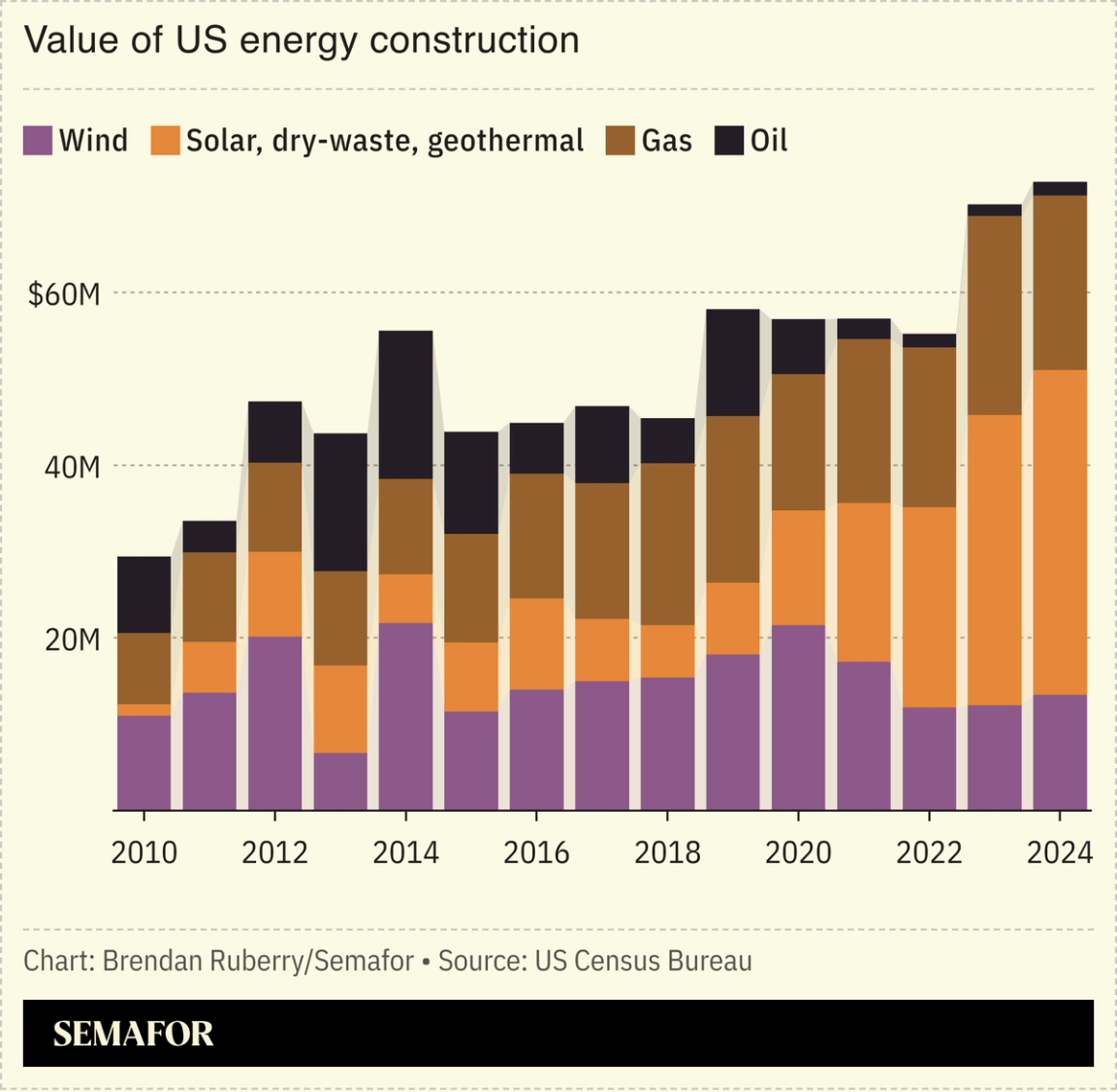 The US government halted five wind projects off the country’s East Coast, the latest blow to clean power under the second Donald Trump administration. Officials cited classified national security risks, though Trump has also long held personal disdain for wind power, particularly offshore turbines. The suspensions come despite voter concerns about ballooning electricity costs as well as rising demand for energy to power AI data centers. The move follows Trump’s yearlong reshaping of US climate and energy policy: Federal agencies have loosened pollution rules, ended clean power subsidies, and pushed other nations to pull back on climate goals. But clean energy advocates are still optimistic heading into 2026, at least about solar, battery storage, nuclear, and geothermal energy. |
|
New Delhi-Dhaka ties strain over lynching |
 Prothom Alo newspaper office. Abdul Goni/Reuters Prothom Alo newspaper office. Abdul Goni/ReutersThe lynching of a Hindu worker in Bangladesh raised concerns about the safety of the country’s religious minorities, and heightened tensions with neighboring India. Thursday’s killing, over accusations of blasphemy, is the latest violent flare-up to roil Bangladesh following the murder of Sharif Osman Hadi, a student leader and critic of India who was central to last year’s uprising that toppled former Prime Minister Sheikh Hasina. Hadi’s death this month triggered widespread anti-India demonstrations, which targeted Bangladesh’s two biggest newspapers perceived as sympathetic to India, where Hasina is taking refuge. A Bangladeshi journalist warned that anti-India sentiment will be further fomented in the lead-up to Bangladesh’s national elections in February. |
|
Car bomb kills Russian general |
 Anastasia Barashkova/Reuters Anastasia Barashkova/ReutersA car bomb killed a top Russian general in Moscow on Monday, the third such explosion in the past year. It was unclear whether the death of Fanil Sarvarov, who led the army’s operational training division, would affect US-led talks aimed at ending the war in Ukraine. The explosion came just hours after Washington’s negotiators held separate talks with Ukrainian and Russian envoys in Florida. Russian authorities suggested Ukrainian intelligence services were behind the attack, while some pro-war commentators suggested it was a precursor to a prolonged conflict, The Washington Post reported: “It’s hard to talk about peace when your opponent is preparing for an even bigger war,” one Russian military blogger wrote. |
|
 Stay informed with Foreign Affairs This Week — a free round up of the week’s top articles curated by the editors of Foreign Affairs, delivered every Friday. From global insights to must-read analysis, it’s the smartest way to end your week. Sign up today and stay ahead of the conversation. |
|
It’s Waymo vs. Baidu in the UK |
 Brendan McDermid/Reuters Brendan McDermid/ReutersThe UK is emerging as the premier battleground for the US-China robotaxi war. Chinese tech giant Baidu on Monday said it will deploy autonomous cars across London starting next year through partnerships with Lyft and Uber. The announcement came just days after Waymo, owned by Google’s parent company, began testing its self-driving taxis in the British capital ahead of a full launch. Chinese carmakers including BYD and Geely have already made inroads in the UK, thanks to the country’s low tariffs and the absence of a domestic, mass-market champion. Europe is a fitting front for the robotaxi race; economists say the aging population is more open to automation, while high-income markets make for a stronger business case. |
|
AI pushes Uber to hire more engineers |
|
|


