| | The most explosive stories from 2025, in chronological order. ͏ ͏ ͏ ͏ ͏ ͏ |
| |  | Washington, DC |  |
| |
|
 As 2025 comes to a close, we’re looking back at the biggest stories of the year — from both our Semafor team and our competitors — in chronological order. - The end of USAID
- Independent regulators out
- Trump’s pressure on Ukraine
- Entering the chat
- Liberation Day fallout
- The Trump-Musk crackup
- RFK upends health policy
- Stunning Ukraine leaks
- Chips for China
- Susie Wiles lets loose
PDB: Trump-class battleships?  US releases third quarter GDP … Conference Board releases consumer confidence data … FDA approves Wegovy weight loss pill |
|
We’re excited to announce that our own Eleanor Mueller, who spent 2025 delivering scoop after scoop on the Congress beat, is moving over to cover the White House economic agenda in the new year. That means we’re hiring a new congressional reporter for the DC team. Check out the job listing here. |
|
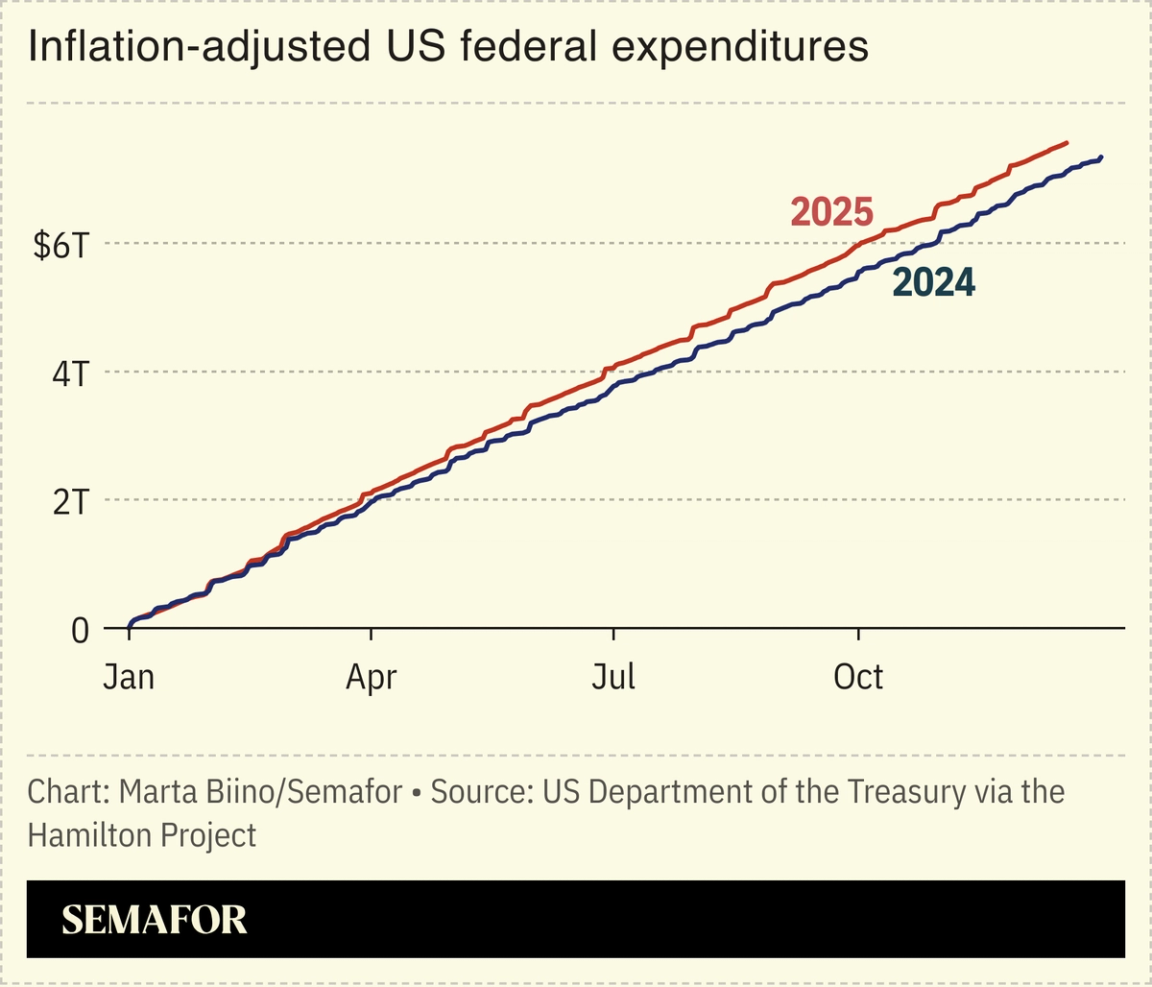 The biggest single impact of DOGE stemmed from one of its first casualties: the US Agency for International Development. The federal body in charge of administering foreign development aid was neutered early on in President Donald Trump’s second term, its footprint nearly erased as it was moved inside the State Department. Headlines about the consequences of its closure, both inside and far outside Washington, quickly followed. The New York Times took the public inside the chaotic two weeks of USAID’s demise, later documenting what one internal assessment projected would be the dire global public health costs of the agency’s shuttering. A USAID memo forecast there will be as many as 18 million additional cases of malaria and 200,000 children paralyzed with polio annually; the official who prepared the assessment was swiftly put on administrative leave. |
|
Trump topples independent regulators |
 Kent Nishimura/Reuters Kent Nishimura/ReutersIt was a very public president’s most under-the-radar upheaval: Only a month after Trump took office, his administration began seeking the reversal of a 90-year-old Supreme Court ruling that effectively insulated independent regulators from presidential politics. As Semafor first reported, that push to unravel the Humphrey’s Executor decision posed a potential threat to the Federal Reserve’s independence — and as the year went on, Trump ousted Democratic-appointed regulators from the National Labor Relations Board to the Federal Trade Commission. The conservative high court has so far largely cleared the way for the president to assert unprecedented political control over those independent bodies, even as it’s sought a carveout for the central bank. But it’s far from clear that the narrow Fed exemption will hold if the Supreme Court takes a stronger line against the precedent of Humphrey’s in 2026. |
|
Trump weighs Crimea-to-Russia |
 Brian Snyder/Reuters Brian Snyder/ReutersFollowing February’s contentious Oval Office meeting between Trump and Ukrainian President Volodymyr Zelenskyy, Semafor scooped an early sign of a pressure campaign by the US to get Ukraine to agree to a Moscow-friendly proposal to end Russia’s war. We reported that Trump was considering recognizing Ukraine’s Crimea region as Russian territory as part of a ceasefire deal, an idea that hasn’t gone over well in Ukraine. That kicked off what eventually became a very public debate about whether or not Kyiv should cede territory to Moscow to end the nearly four-year conflict, a question that remains a sticking point in ongoing peace talks. And it previewed a theme of 2025: Russia hawks in the Republican Party awkwardly suppressing their interest in stronger sanctions on Russian President Vladimir Putin’s regime to give the administration time to work. |
|
The Signal chat read round the world |
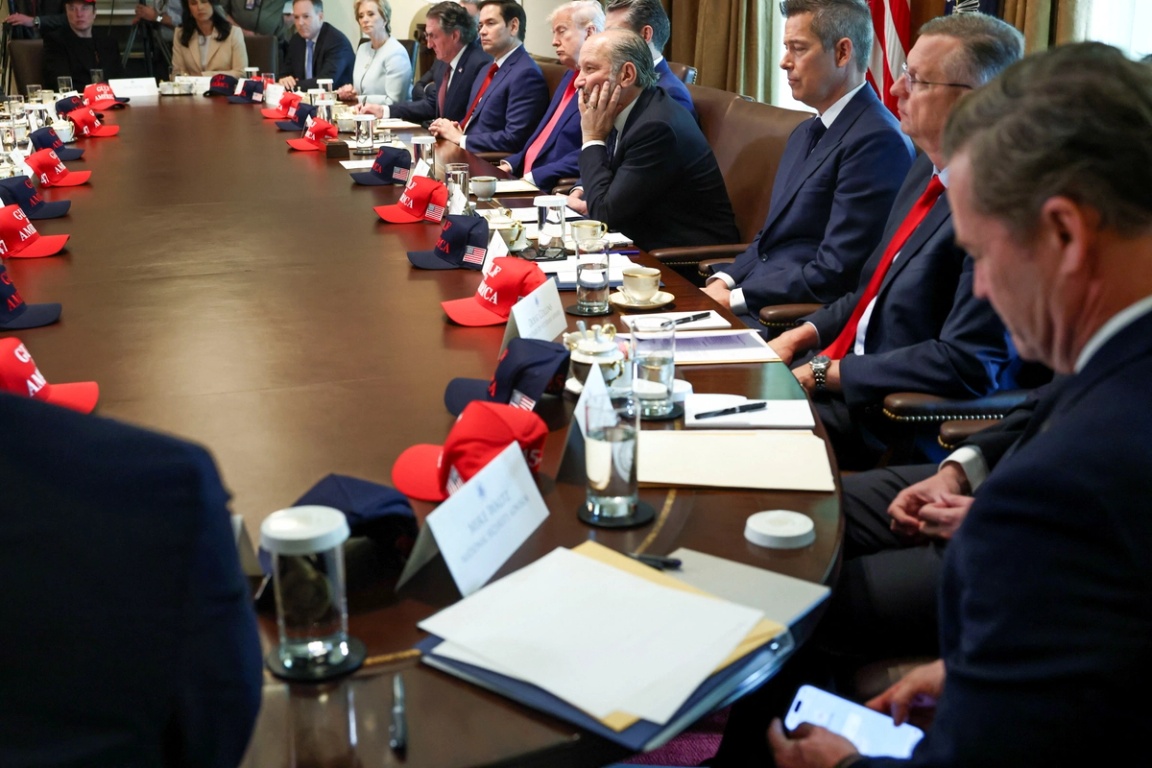 Evelyn Hockstein/Reuters Evelyn Hockstein/ReutersThe Atlantic’s revelation that a group of high-level Trump officials used a Signal group chat to discuss sensitive military operations resulted in a Pentagon investigation, a lawsuit, and eventually the ouster of the president’s national security adviser. The Atlantic’s Jeffrey Goldberg revealed that Mike Waltz inadvertently added him to a sensitive Signal group discussing plans to attack Houthi rebels in Yemen. The sharing of war preparations with a journalist stunned a Washington that does not shock easily in the Trump era. And while Trump’s second term has seen fewer departures than the first, Waltz’s quick removal was an exception. Secretary of State Marco Rubio took his post in a double act last pulled off by Henry Kissinger, and Waltz was shifted over to be UN ambassador. He seems happy now, though. |
|
How Trump’s tariffs vexed his party |
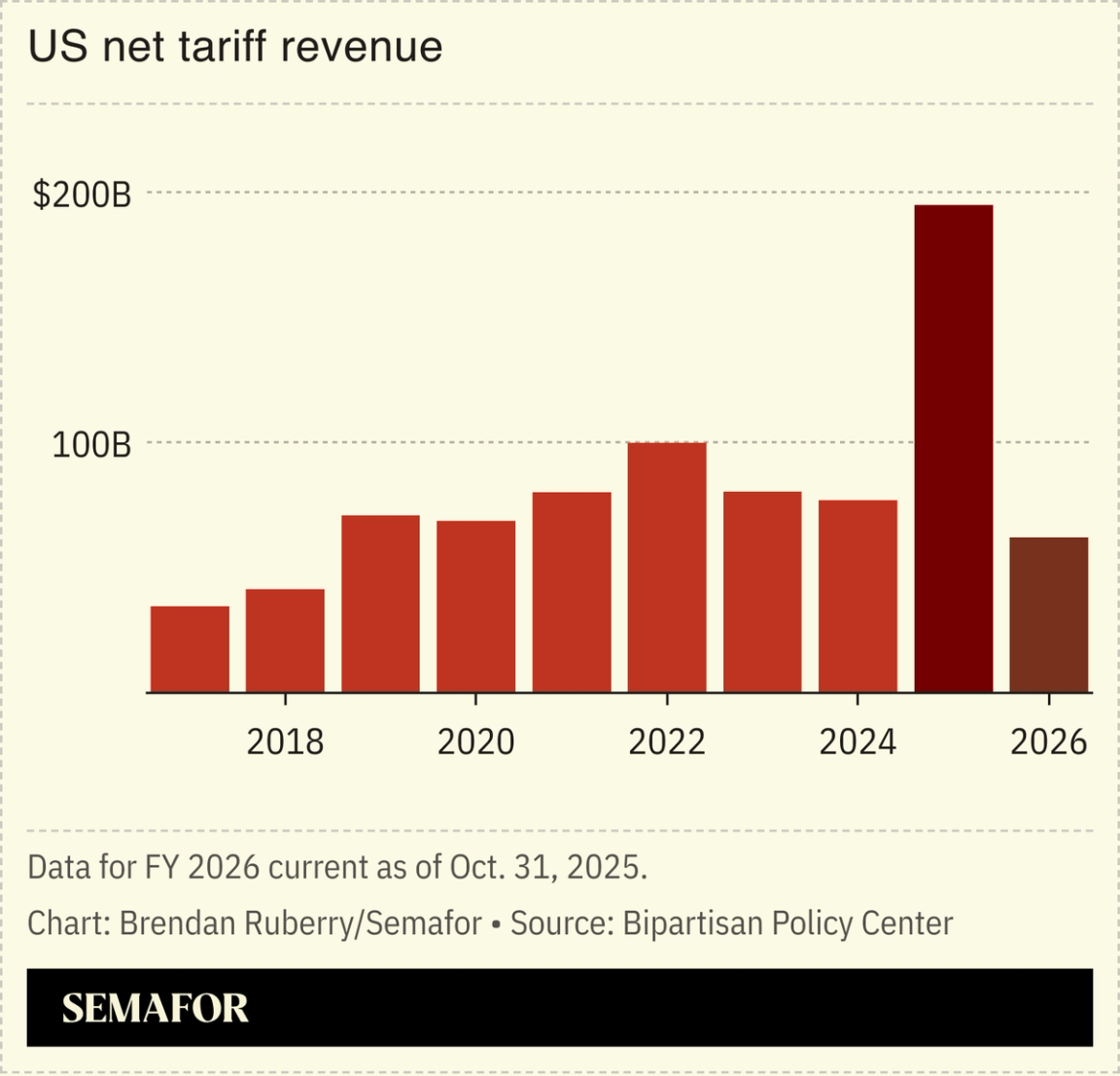 The president’s rollercoaster of a tariff regime, imposed on April’s “Liberation Day” but then riddled with exceptions and carveouts, did more than complicate his economic agenda. It caused market turmoil and, as we reported all year long, frustration among his fellow Republicans. Even free-market GOP lawmakers largely fell in line with the levies’ uneven imposition, thanks in large part to Treasury Secretary Scott Bessent’s consolidation of a springtime muddle of conflicting tariff messaging. “Trying to get everyone on the same effing page would be great,” one Republican lawmaker told Semafor. But by autumn, Republicans were starting to privately acknowledge hope that the Supreme Court might rule against Trump’s questionable use of presidential tariff power. “We are the ones who dictate tax policy,” one GOP senator told us. “This is a form of taxation.” |
|
NASA pick portends Trump-Musk crackup |
 Nathan Howard/Reuters Nathan Howard/ReutersAs 2025 began, Trump seemed to be joined at the hip with billionaire Elon Musk, who had accumulated stunning power to dismantle the federal bureaucracy rivaling that of Cabinet secretaries. But by early summer, DOGE’s work was starting to become a political liability, and the growing friction in the West Wing spilled into public: Semafor’s scooped the White House’s abrupt withdrawal of NASA administrator nominee Jared Isaacman, a Musk ally. Days after that, the president and Musk were tearing each other down with personal attacks on social media as the Tesla CEO abruptly exited the White House. Isaacman ended up working his way back to Trump’s NASA, thanks in part to GOP Sen. Tim Sheehy, but his nomination’s implosion was the clearest sign that the Trump-Musk bromance was ending (although Musk, despite his stated regrets about DOGE, is still interested in spending to help Republicans). |
|
Health officials revolt under RFK |
 Alyssa Pointer/Reuters Alyssa Pointer/ReutersWhile less visible than Rubio, Robert F. Kennedy Jr. presided over one of the most tumultuous transitions of all of the Trump Cabinet secretaries. Under his leadership, the Department of Health and Human Services has rejected widely accepted science on vaccines, including by canceling hundreds of millions of dollars in grants for work on mRNA vaccines that were critical to containing the spread of COVID-19, in addition to their value in cancer treatment. The New York Times documented Kennedy’s dramatic split with the medical mainstream, quoting health officials like former Trump COVID testing czar Brett Giroir criticizing Kennedy’s “large-scale undermining of vaccines and vaccine confidence.” His policies have led to considerable uproar at US public health agencies; the CDC director was ousted over the summer, prompting resignations of other senior officials. The Washington Post documented the open revolt. |
|
US-Russia talks leak into the open |
 Sputnik/Gavriil Grigorov/Pool via Reuters Sputnik/Gavriil Grigorov/Pool via ReutersTrump’s second-term foreign policy team has been defined by its cohesion: Officials may not share the same worldview or level of hawkishness, but they take pains to project unity. That’s why two leaks about the administration’s behind-the-scenes maneuvering for a deal to end the Ukraine war were so remarkable. First, Axios scooped the early details of the secret, controversial 28-point plan hatched between the US and Russia to end Moscow’s war. Then, Bloomberg obtained a recording of a phone call between Trump envoy Steve Witkoff and Putin’s senior aide Yuri Ushakov discussing how to present a peace proposal to Trump. Russia may well have been the source of both stories, but they generated tremendous scrutiny of Witkoff, whom Russia hawks had already viewed skeptically. The White House and Trump have stood by him, however. |
|
Trump greenlights AI chips for China |
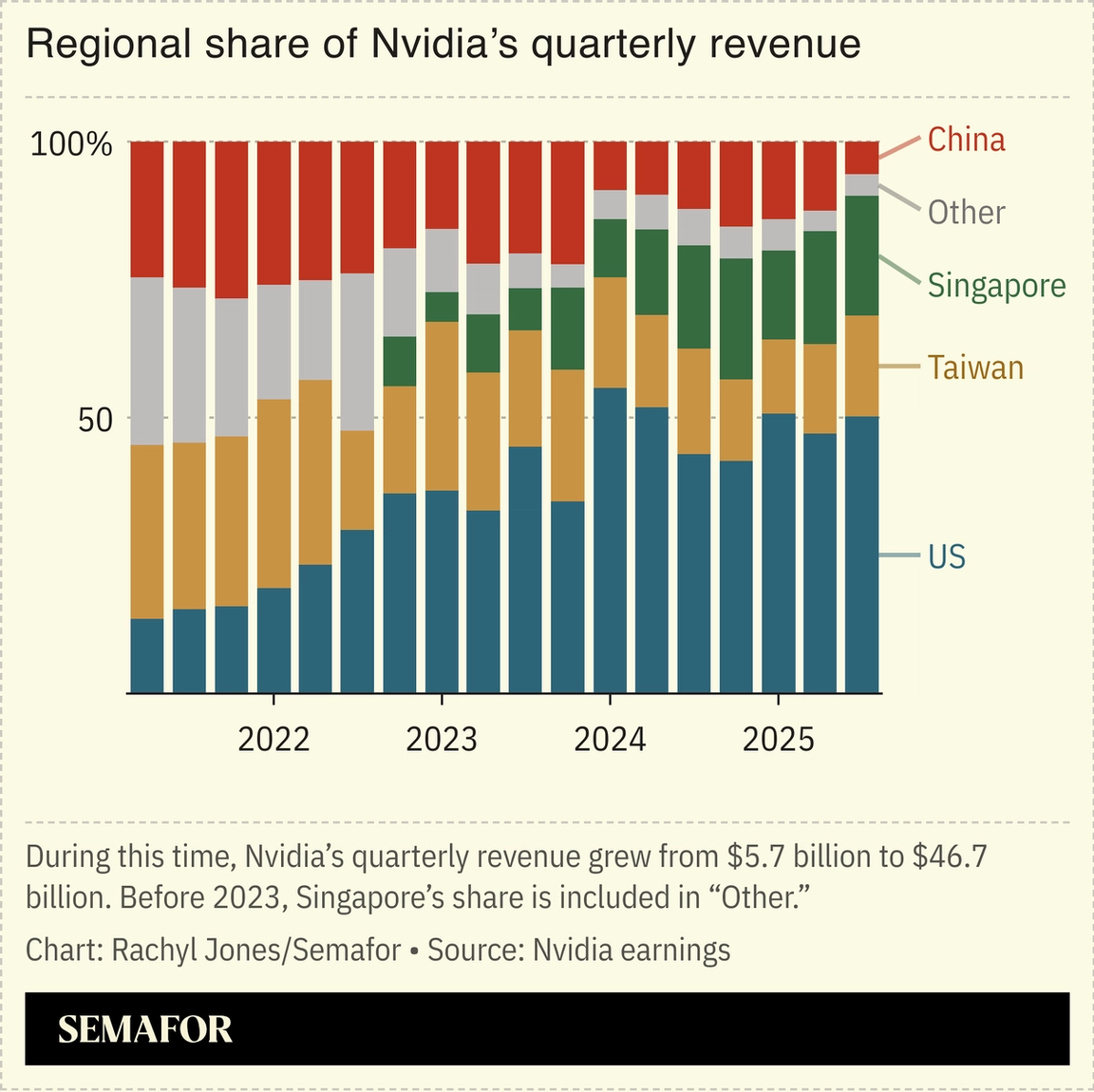 Trump’s first year saw him get closer to tech executives charting the course for future US development in artificial intelligence. Perhaps the most powerful among them is Nvidia’s Jensen Huang, who notched an enormous win earlier this month: The Trump administration decided to approve sales of the company’s H200 AI chips to China, as Semafor scooped. The development is an important chapter in the story of Trump-era business influence in Washington — especially the tech sector — as well as that of tech as a battleground for geopolitical tech competition. Hawks who argue that giving China advanced chips will unduly enable it would prefer to see more of Trump’s protectionist side. But White House AI czar David Sacks and other industry types are clearly exerting more influence with their argument that exporting US tech is the way to win the race. |
|
|


