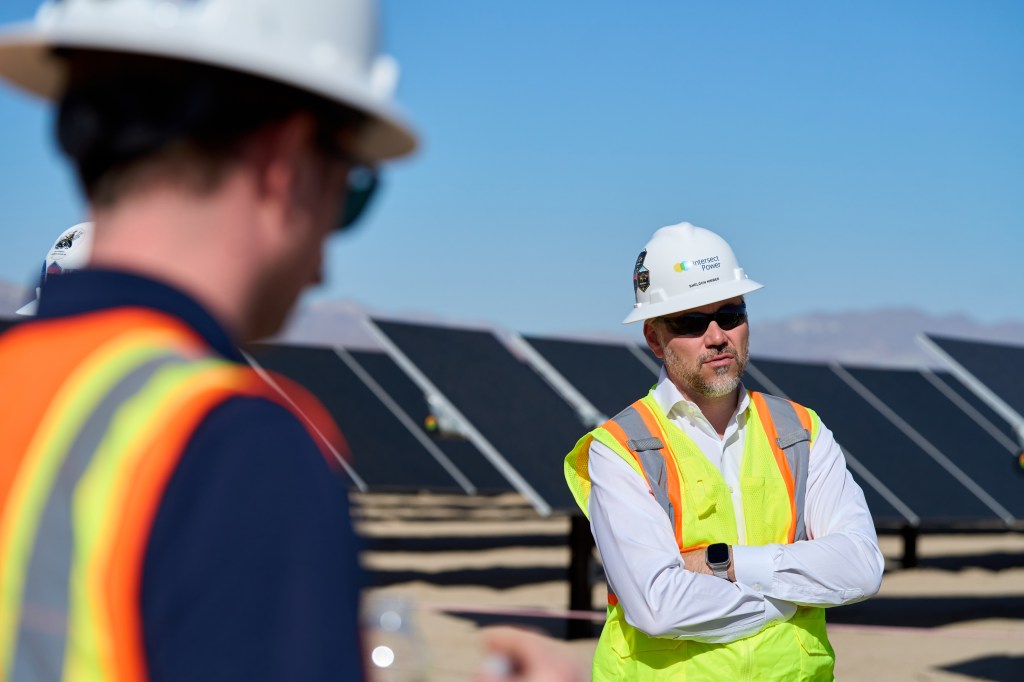
 Sheldon Kimber, CEO of Intersect Power, right, at the Oberon Solar plant near Desert Center, California, on Oct. 25, 2023. Lauren Justice/Bloomberg/Getty Images
Vertical integration? Been around since the Industrial Revolution.
Carnegie and Rockefeller did it with steel and oil, respectively; a half-century later, RCA and IBM did it with consumer electronics and mainframes. (Even the venerable publisher of
Fortune magazine couldn’t resist buying
paper mills—and the timber itself—in the middle of the 20th century.)
On Monday, Google’s parent company renewed its membership in the V.I. club with one of its largest-ever deals, behind only Wiz, Motorola Mobility, and Mandiant. Alphabet said
it would pay $4.75 billion cash for TPG-backed Intersect Power, which sells utility-scale renewable energy and infrastructure.
Intersect—which was founded by CEO Sheldon Kimber in 2016 and earlier this year moved HQ from Beaverton, Ore. to San Francisco—partnered with Google last year to build energy facilities next to data centers in exchange for a minority stake in the smaller firm.
Now Alphabet will own the whole kit and kaboodle (well, almost: it’s not buying assets contracted to other customers) in a bid to keep electricity flowing to its fast-growing network of data centers as the AI boom threatens to overwhelm U.S. energy infrastructure.
As part of the deal, Kimber will remain in place; Intersect will retain its brand.
Alphabet’s not the only Big Tech firm mulling vertical integration in an Age of Intelligence. SoftBank, which owns multiple chipmakers,
has reportedly looked at buying data center operator Switch. A consortium including Microsoft and Nvidia
agreed to buy Aligned Data Centers in October. And though Amazon doesn’t own a stake in Talen Energy, it was more than happy to
take a data center campus off its hands in June for $650 million.
—AN 