Explaining Dementia to Children: Simple Ways to Start the Conversation

When someone we love begins to experience dementia, it can feel confusing and even scary—especially for children. They may notice changes in a parent, grandparent, or family member and wonder why that person seems more tired, frustrated, or forgetful than before. Explaining dementia to a child can feel overwhelming, but it doesn’t have to be. With the right approach and resources, you can help them understand what’s happening and reassure them that their loved one is still the same person at heart.
While dementia changes how the brain works, it doesn’t erase the bond between a child and the person they care about. Kids can still share meaningful moments, laughter, and love. The key is helping them see that connection is possible—even if things look a little different now.
Here are some practical tips and resources to guide those conversations and keep relationships strong:
Videos aimed at children can take the weight of explaining complicated brain processes off your shoulders and invite conversation. Watching other kids care for a loved one with dementia can remind your child that they aren’t alone and provide ideas on how they can continue to spend time with someone living with dementia.
-
My Life: Mr. Alzheimer's and Me By Tigerlily Productions— Children talk about having a grandparent/parent with dementia. It focuses on the many emotions children feel as they watch and help their loved ones with dementia (29 minutes).
-
Let's Talk About Dementia by Dementia UK—A short video explaining symptoms of dementia and ways to support. (3 minutes 21 seconds).

Many books about dementia are available for children and teens of all ages. Head to your local library to check out books or you may find free read-aloud versions on YouTube. Picture books aimed at younger readers include:
-
“The Remember Balloons” by Jessie Oliveros: This book uses balloons as a metaphor for memories. A boy notices his grandfather's memories, represented by balloons, are floating a way. He learns he must catch these memories and share them with his grandfather.
-
“A Doll for Grandma” by Paulette Bochnig Sharkey: Kiera connects to her grandmother with Alzheimer’s through her doll, which brings grandma comfort.
-
“Grandma, it’s Me” by Y.Y. Chan: Riley mother explains to her why her grandmother doesn’t recognize her. Riley learns about dementia, and maintaining love and patience through the changes her grandma goes through.
-
“Wilfred Gordon McDonald Patridge” by Mem Fox: Wilfrid lives next to his elderly neighbor, Miss Nancy, who is losing her memory. Wilfrid sets out to learn what a memory is by asking others and bringing meaningful objects to Miss Nancy to remind her.
Books for middle graders include:
-
“The Memory Keeper” by Jennifer Camiccia: Lulu, a young girl has the ability to remember every single moment in her life. Recently, Lulu’s Gram starts to become more absentminded. Lulu goes on a journey to try and fix her Gram’s forgetfulness
-
“The Space Between Lost and Found” by Sandy Stark-McGinnis: Cassie and her mother aim to check off all the adventures on their bucket list— until Cassie’s mom starts to lose her memories. Cassie decides it’s time for one last adventure.
-
“Merci Suarez Changes Gears” by Meg Medina: Merci and her brother struggle to fit in at their Florida private school as the only two students receiving scholarships. Merci copes with the challenges sixth grade brings while her Lolo, grandfather, begins to act strangely. Merci’s family won’t tell her what’s happening, and she struggles with these new changes.
-
“Sticky Notes” by Dianne Touchell: 10-year-old Foster’s favorite thingin the world is listening to his father’s stories. When Foster’s dad starts forgetting things, the mistakes are silly at first—like buying cat food for their long-diseased cats. As his father’s memory worsens, Foster becomes more concerned.
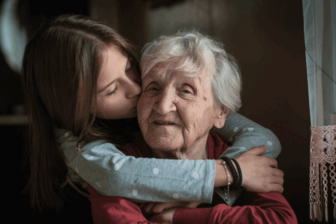
Turning Confusion into Connection
Brainstorming ways to support a loved one with dementia can bring more agency to a child and invite them to connect. Reflect on what dementia means for your loved one and what symptoms they experience. Speak to your child about ways they can support their loved one. Depending on the child’s age, you may need to simplify the language you use to explain dementia. For example, you might refer to it as “brain changes.”
-
Reassure your child that periods of agitation, confusion, and sadness are not their fault.
-
Let your child know their feelings are normal—it’s okay to feel scared, sad, angry, embarrassed, afraid, etc.—and encourage them to share their feelings with you.
-
Reflect on what times of day are best for your loved one with dementia. If they are less confused earlier in the day, schedule visits and activities then. If they experience sundowning, suggest having “quiet time” to provide the person with dementia space.
-
Remind your child that your loved one still loves and cares about them, even if they might not remember their name or recognize their relationship. Often, people with dementia have stronger long-term memory, so they may better remember a younger version of the child or a time before they were born.
-
Have the child introduce themselves when they see their loved one with dementia. For example, “Hi, it’s your grandson, John.”
-
People with dementia may not respond to or get confused when referred to as mom, grandpa, aunt, etc. Instead, the child may have to refer to their loved one by their name.
-
Encourage the child to use their imagination and enter their loved one with dementia’s reality.
-
Brainstorm together ways your child and loved one with dementia can spend time together. Someone experiencing mobility changes and balance issues may not be able to play baseball anymore but could play seated balloon toss instead. Someone losing their ability to read, could be read to instead.
-
Encourage the child to keep toys and clutter away to prevent fall hazard and reduce overstimulation for the person with dementia.
-
The Alzheimer’s Association offers ways to answer common questions, such as “Will I get Alzheimer’s?,” “Will they get better? And “Will they forget me?”
Support exists for adults and children caring for a loved one with dementia, including:
-
Lorenzo House provides free, virtual one-on-one programs for youth caring for a loved one with younger-onset dementia.
-
Memory Cafes are free social events for people living with dementia and their carepartners. Usually they’re centered around an activity, like painting and music, and provide refreshments. Find a local memory café here or by putting your area and “memory café” into a search engine.
|
|
|
|
| This email was sent to NPkvdejmf6@niepodam.pl on behalf of Arlington County. |
 |
|