|
 |
Welcome back to HEATED, a newsletter for people who are pissed off about the climate crisis.
So much environmental coverage today is locked behind paywalls. That’s because journalism is a tough business, and the easiest way to monetize it is to lock it away.
The main reason I don’t do that is because I deeply believe environmental journalism should be accessible for all. The other, more practical reason is because I have a subscriber community that makes it possible. If you’re in a position to help sustain this business model, a paid subscription goes a long way toward keeping HEATED free.
Air pollution denial is now EPA policy
Dirty air may kill people, but Trump's EPA won't count the bodies.
|

| |||||||||||||||


 |
Did you know? Air pollution regulations actually do more harm than good if you ignore all the lives they save.
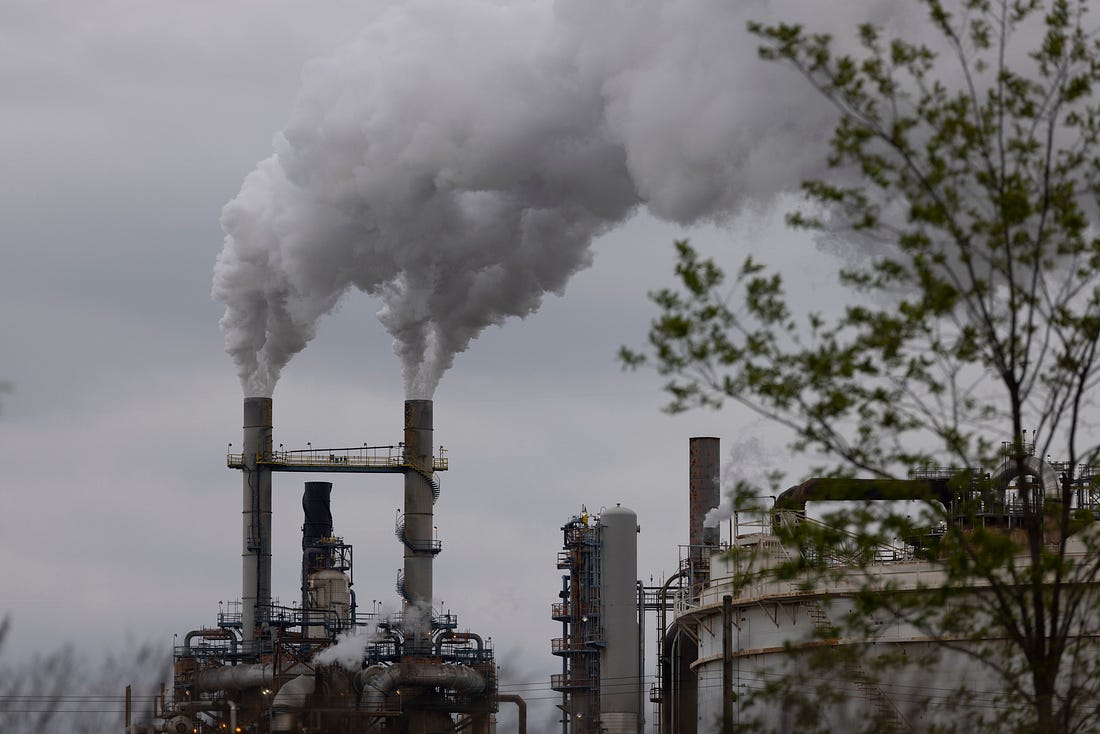
That sentence sounds deranged because it is. But it’s also the honest-to-God logic behind the Trump administration’s new approach to regulating air pollution, which kills more Americans every year than car accidents.
On Monday, the New York Times reported that the EPA plans to judge all future air pollution rules solely by their costs to industry—not by the number of hospitalizations, chronic illnesses, and deaths they prevent. Maxine Joselow reports:
Under President Trump, the EPA plans to stop tallying gains from the health benefits caused by curbing two of the most widespread deadly air pollutants, fine particulate matter and ozone, when regulating industry, according to internal agency emails and documents reviewed by The New York Times. …
The change could make it easier to repeal limits on these pollutants from coal-burning power plants, oil refineries, steel mills and other industrial facilities across the country, the emails and documents show. That would most likely lower costs for companies while resulting in dirtier air.
“Dirtier air” may sound dangerous. But if you don’t acknowledge what it actually does to people, it’s really nothing to worry about—at least according to Trump’s EPA.
The Trump administration insists this is not what’s happening. Carolyn Holran, an EPA spokeswoman, told the Times in an email that the agency is still weighing the health effects of PM2.5 and ozone; it just won’t be assigning them a dollar value in cost-benefit analyses. “Not monetizing does not equal not considering or not valuing the human health impact,” she said.
But functionally, that’s exactly what it equals. In regulatory cost-benefit analysis, monetization is how harms are weighed, compared, and justified. If the EPA refuses to assign a dollar value to the illnesses and deaths caused by air pollution, those harms cannot influence the outcome of the rule. And if they cannot influence the outcome, they may as well not exist for policy purposes.
Make no mistake: this is air pollution denial, a phenomenon the Trump administration has been advancing since 2017. It’s taken different forms over the years: Attacking the science linking particulate pollution to premature death, minimizing the harms, arguing the evidence was too uncertain to justify federal policy. But the goal was always the same: to stop regulatory agencies from treating air pollution as a public health problem. The Trump EPA has now reached that endpoint.
The first casualty: nitrogen oxide limits for gas plants
The EPA’s new approach to air pollution regulations is already being used to justify allowing the fossil fuel industry to pollute more.
In 2024, the Biden EPA proposed strict limits on nitrogen oxide and sulfur dioxide emissions from new gas-fired power plants. To justify the rule, Biden’s EPA estimated that reducing this pollution would save anywhere from $27 million to $92 million per year in avoided doctor visits, hospitalizations, and deaths. (Nitrogen oxide and sulfur dioxide form PM2.5 and ozone—the main ingredients of smog—which damage lungs, hearts, and brains).
Trump’s EPA is, of course, trying to weaken this rule. And on Monday, the Trump EPA posted a cost-benefit analysis of its proposal. Instead of updating the math on how many illnesses and deaths the rule would prevent (which would have been alarming, because it would have been a lot less) the agency just… did not count those health benefits at all. It only counted how much the new rule would cost the fossil fuel industry. Turns out, it was a lot less!