How to Succeed a Founder. Taking over from a founder is a uniquely complex leadership challenge. You’re stepping into a role shaped by deep emotional ties, unspoken norms, and lasting loyalty. Here’s how to lead effectively—and how founders can help smooth the transition. Lead with quiet confidence. Don’t rush to prove yourself.

Read online 

Manage email preferences

Harvard Business Review | The Management Tip of the Day
 

Today’s Tip

How to Succeed a Founder

Taking over from a founder is a uniquely complex leadership challenge. You’re stepping into a role shaped by deep emotional ties, unspoken norms, and lasting loyalty. Here’s how to lead effectively—and how founders can help smooth the transition. 

Lead with quiet confidence. Don’t rush to prove yourself. Many successors overcompensate out of fear they’ll be seen as temporary. Focus instead on earning trust through steady, thoughtful leadership. Founders can accelerate this by voicing support often and early. 

Immerse yourself in the culture. Company culture runs deeper than systems or metrics. Take time to understand its rituals, language, and shared history. Founders should actively decode this for you, so you can evolve the culture without erasing its meaning. 

Navigate power dynamics wisely. You’ll be balancing influence from the founder, board, and team. Don’t let self-doubt take over. Founders can normalize the messiness of early leadership by sharing their own missteps and reinforcing your legitimacy. 

Bring the right strengths for the moment. You’re not there to imitate the founder. Your strengths—whether in scaling, structure, or discipline—should clearly align with the company’s current needs. Founders should name and champion those differences. 

Lead change with respect. Introduce evolution carefully. Founders can help by framing change as necessary progress, not disloyalty. 

Build emotional resilience. Expect early isolation as you find your footing. Founders can support by checking in without advising, offering quiet empathy over direction. 

 
A photo of 3 chairs stacked on top of each other outside on grass with a blue sky.

Read more in the article

Leading After the Founder

by BJ Wright, et al.

Read more in the article

Leading After the Founder

by BJ Wright, et al.

A photo of 3 chairs stacked on top of each other outside on grass with a blue sky.
 

ADVERTISEMENT


A tablet displaying the HBR subscriptions webpage alongside a copy of the magazine and various office supplies.

Real decisions aren’t made in one read

An HBR subscription gives you access to the ideas leaders rely on.

Get full access


Harvard Business Review Virtual Event

Strategy Summit 2026

Build your transformation playbook for the AI era.

Join us Thursday, February 26. Featuring Rita McGrath, Andrew McAfee, Tsedal Neeley, and more strategy experts.

Register now
 

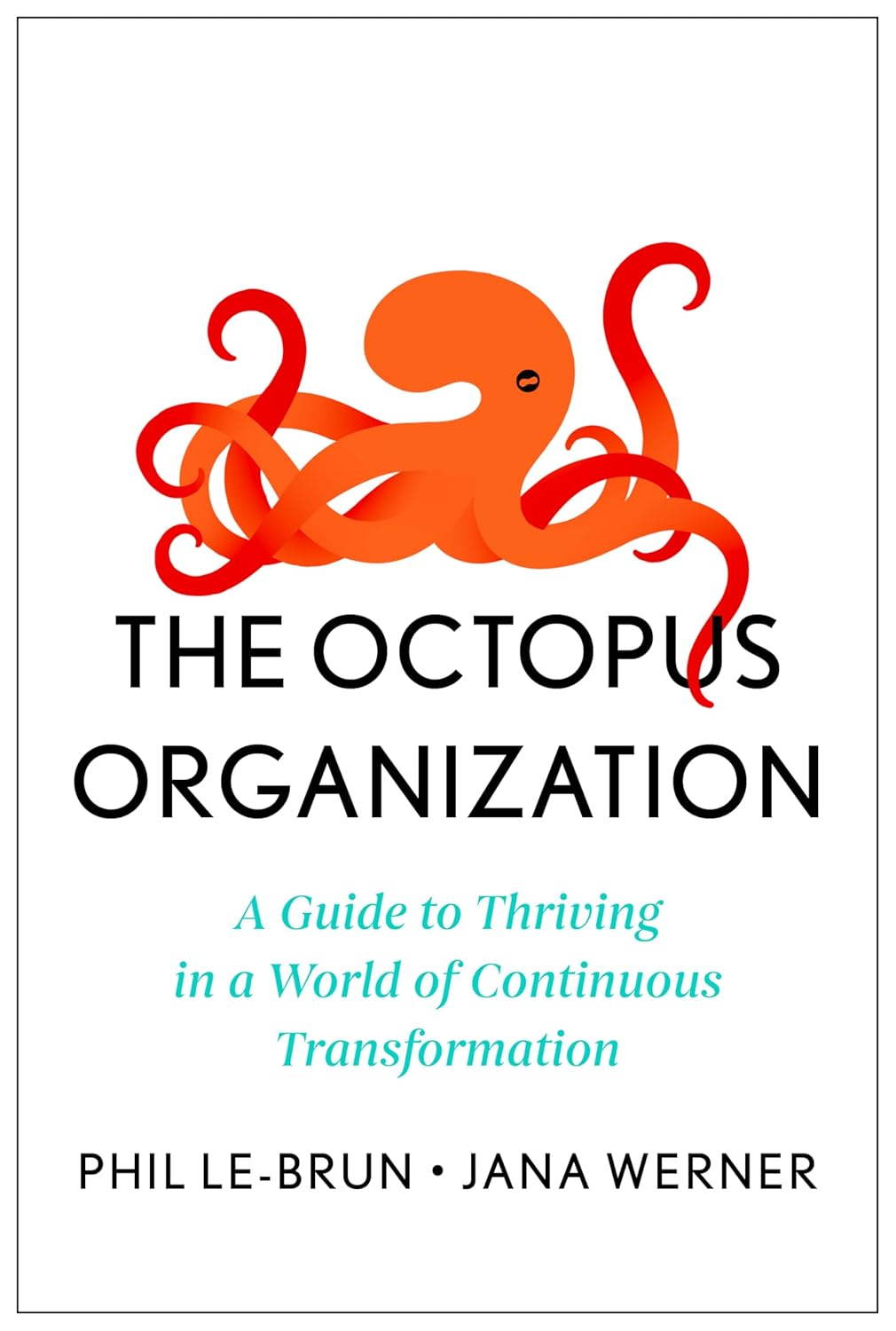
The Octopus Organization: A Guide to Thriving in a World of Continuous Transformation

The Octopus Organization: A Guide to Thriving in a World of Continuous Transformation

by Phil Le-Brun and Jana Werner

Learn more

Don’t forget you’re entitled to 20% off your first purchase*


*Use promo code HBRORGREG4.
View details here.


The HBR App:
Get the best in leadership thinking on-the-go.

Download on the App Store.
Get it on Google Play
 
X IconFacebook Icon Instagram Icon

You are receiving this because you registered at hbr.org to receive The Management Tip of the Day emai