What is it like to be a Fortune 500 CEO during the second Trump administration? I ask that question every time I meet with one in a closed-door setting, including a half-dozen CEOs I met this week in Davos, where Trump and his associates showed up in force.
In five recent conversations, the answers have been remarkably similar: This president is pro-business, and that’s a refreshing change from the last administration. “It feels like he wants us to win,” one CEO remarked.
That was apparent in Davos, where the president gathered dozens of top CEOs after his address on Wednesday evening for a multi-hour dinner and power-networking session. And you can’t deny that America’s economy (in part due to the AI race) has been surging, with markets up and GDP growth blowing past expectations to hit 4.4% in Q3 of last year.
That doesn’t mean CEOs all like the president’s tactics or rhetoric (one executive told me he tells CEOs to pretend it’s a “silent movie”). But the overall strategy may prove correct—that the American government can benefit from more businesslike thinking and private-public partnership.
The United States is the capital of capitalism, with the world’s top innovators and yes, the most and wealthiest billionaires as a result. Meanwhile, we have a national debt that has ballooned, a devastating wealth divide, and a looming AI wave that threatens to wipe out lower-paid jobs first.
If you think of the U.S. as a business that needed a financial overhaul, what would a turnaround CEO do? They’d throw out the old playbook, size up the operation, ditch inefficiencies, place new bets, and move as fast as possible to right the ship, paying no mind to detractors.
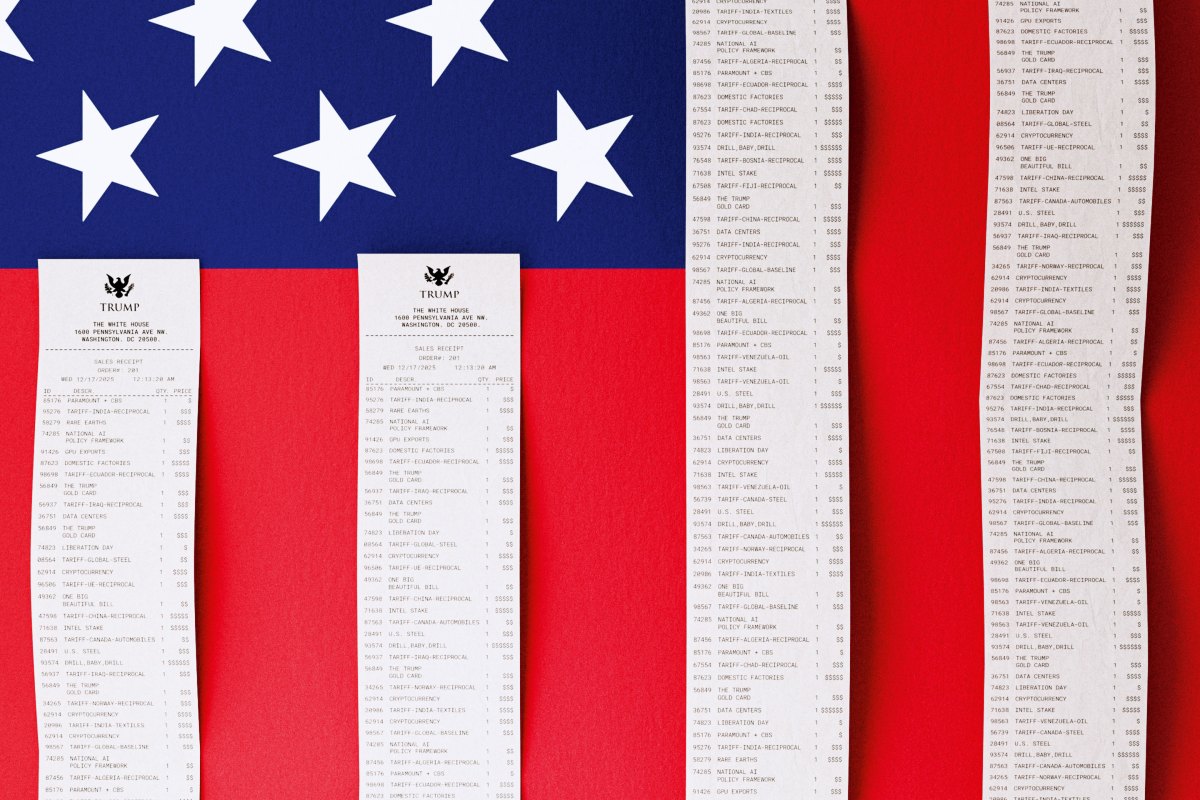
The CEO-president is an experiment we are all witnessing firsthand, as Trump pushes boundaries, including legal ones; tests new revenue streams (tariffs); pushes for equity stakes in place of government subsidies; and drives his agenda aggressively forward in a move-fast, make-or-break-America approach, outcome TBD.
There’s also the question of where the line is between what’s good for America, what’s good for business, and what’s good for the president himself, with sometimes murky overlap.
We explored his approach and all those questions in our new issue of Fortune, with an analysis of how President Trump draws inspiration from his dealmaking background to tackle his job like he’s the CEO of USA Inc.
We also took a look inside one of the Trump family’s operations, Eric Trump’s new venture, American Bitcoin, as he seeks to become one of the world’s biggest miners and holders of Bitcoin—while separating his cryptocurrency agenda from his father’s. (Donald Trump “has no involvement in our crypto business,” Eric told Fortune. “This is a company that I run, and he does a great job running the United States of America.”)
You’ll also find a profile of Google’s AI mastermind Demis Hassabis (whom I interviewed in Davos for an upcoming episode of my vodcast, Fortune 500 Titans and Disruptors), as well as our 28th World’s Most Admired Companies ranking, where executives across the Fortune 500 vote for the peers they look up to.
Check out those features on our site, or subscribe to Fortune’s print magazine and get the smartest curation of high-quality business journalism delivered to your mailbox.