2001: 9/11 Response
The September 11th attacks on America, carried out by the terrorist group al-Qaeda, prompted the first—and only—invocation of Article 5, under which NATO considered the attacks to be against all of its members.
In response, NATO spearheaded an anti-Taliban coalition in Afghanistan. The intervention in Afghanistan constituted its first mission outside the North Atlantic. The mission was sustained to varying degrees over two decades until NATO forces pulled out in 2021.
2011: Questions on Expanded Mission After Chaos in Libya
In early 2011, NATO intervened in Libya’s civil war in an effort to stem the fighting between dictator Muammar al-Qaddafi and rebel forces. But NATO’s mission quickly expanded from simply grounding Qaddafi’s air force into a broader political mission to remove Qaddafi from power.
In the following months, NATO-backed rebels took over most of Libya and executed Qaddafi. NATO leaders hoped Qaddafi’s ouster would mark the end of Libya’s violence. However, the country soon spiraled into even greater chaos.
2014: Renewed Relevance in Face of Russian Aggression
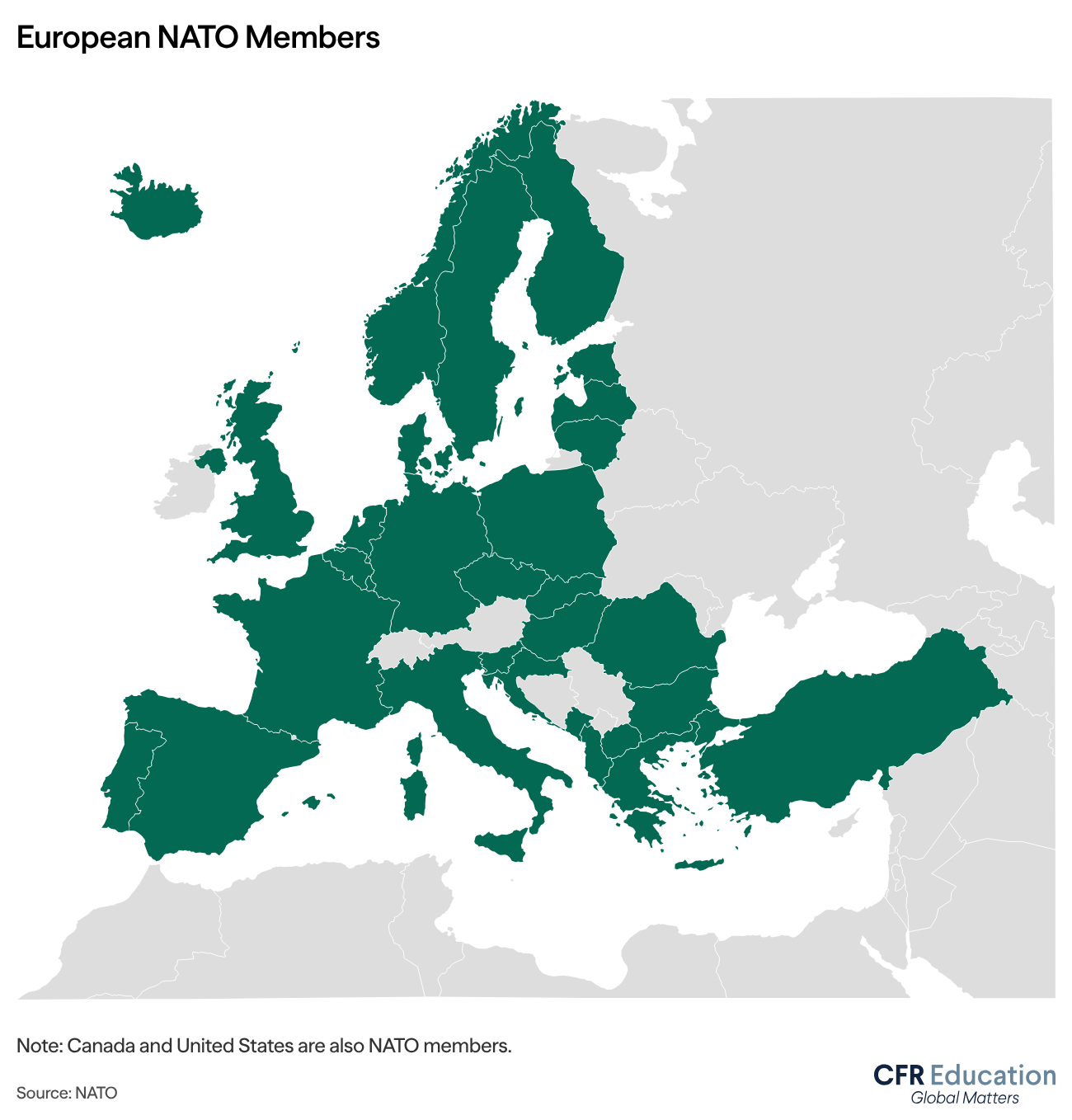
After Russia annexed the Ukrainian territory of Crimea and began arming separatists to fuel conflict in the southeastern part of Ukraine, NATO was reminded that Russia still threatened democracy in Europe. In response, NATO suspended all military and civilian cooperation with Russia and promised to send more troops to its members in Eastern Europe.
2022: War in Ukraine
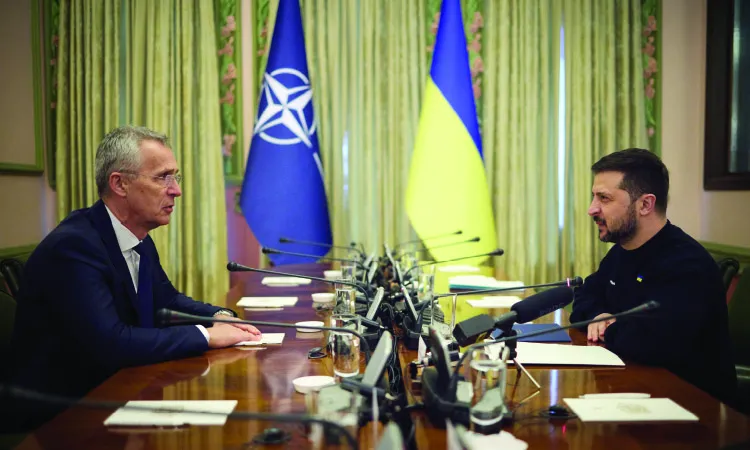
Russia's earlier provocations and NATO's earlier fears came to a head in 2022 when Russia fully invaded Ukraine, initiating a destructive conflict that has led to the deaths of hundreds of thousands. NATO's member states worked together to deliver billions of dollars' worth of military and financial assistance to Ukraine, and NATO itself has supported the training of Ukrainian troops.