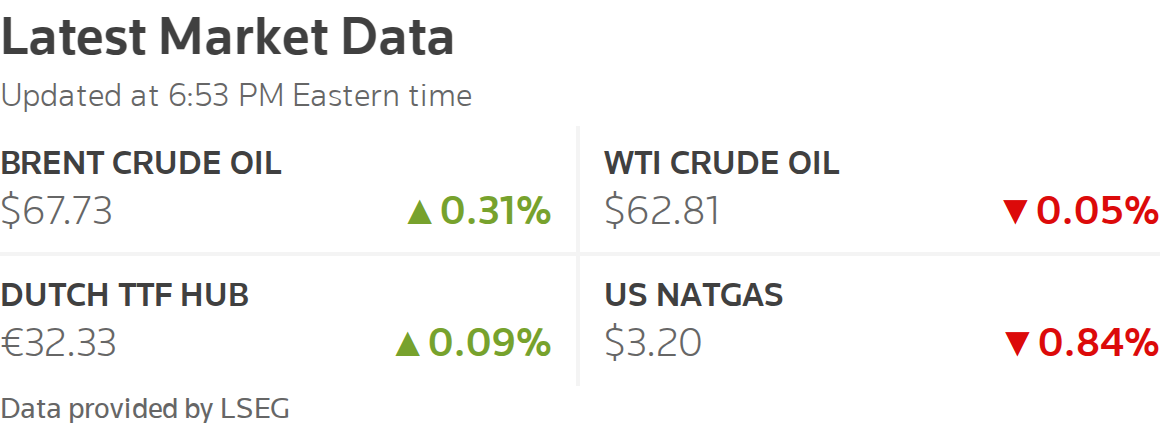
As discussed above, the Arctic blast sweeping across the U.S has led to a sharp drop in natural gas output as icy conditions force drillers in regions such as the Permian shale basin in Texas and New Mexico to curb output due to “freeze‑offs,” when water and other liquids in the gas stream freeze.
Such declines in production have happened several times in recent years, and production tends to return to its pre-storm levels within a month or two.
What has changed in recent years is that cold weather conditions in the U.S. can now lead to higher gas prices in Asia and especially Europe, which is heavily dependent on U.S. LNG after Russia slashed pipeline flows following its invasion of Ukraine in 2022.
The U.S. has since 2023 dominated the LNG market, becoming the first country to export over 100 million metric tons per year in 2025. Around two-thirds of that was delivered to Europe, according to data analytics firm Kpler.
The U.S. has since 2023 dominated the LNG market, becoming the first country to export over 100 million metric tons per year in 2025. Around two-thirds of that was delivered to Europe, according to data analytics firm Kpler.
The increasingly interconnected LNG market means that when sudden shifts in supply or demand do occur in major producing areas, whether due to outages or extreme weather, the global impact will be more pronounced than in the past.