| |  | | | | |  | By Megan R. Wilson | Did someone forward this newsletter to you? Sign up here to get it in your inbox. In today’s issue: The trouble with leaning on AI for health advice. … Washington heads toward a partial government shutdown. … And more. Good afternoon, and welcome to Health Brief. The D.C. snowplow has missed my little neighborhood street, so I’m hunkered down with Maui the cat. In the meantime, I’m crunching a lot of data for you this week, so stay tuned. Don’t forget to send story tips and health policy intel to megan.wilson@washpost.com. If you prefer to message me securely, I’m also on Signal at megan.434. This newsletter is published by WP Intelligence, The Washington Post’s subscription service for professionals that provides business, policy and thought leaders with actionable insights. WP Intelligence operates independently from the Washington Post newsroom. Learn more about WP Intelligence. | | | |  | The Lead Brief | Every week, more than 230 million people come to ChatGPT with their health and wellness questions, according to OpenAI, which runs the artificial intelligence platform. Earlier this month, it launched ChatGPT Health specifically to “help you feel more informed, prepared, and confident navigating your health.” Shortly thereafter, competitor Anthropic released its version, Claude for Healthcare. → But what happens when AI gets health guidance horribly wrong? That’s what Geoffrey A. Fowler, a Washington Post tech columnist, explores in his latest piece: “I let ChatGPT analyze a decade of my Apple Watch data. Then I called my doctor.” (The Post has a content partnership with OpenAI.) In short: Despite having access to Fowler’s Apple Watch data, which contained information gleaned from his 29 million steps and 6 million heartbeat measurements, ChatGPT Health initially gave his cardiac health score an F. Once he connected his medical records, it improved slightly: to a D. Fowler reported the results to his doctor, who said he’s “at such low risk for a heart attack that my insurance probably wouldn’t even pay for an extra cardio fitness test to prove the artificial intelligence wrong.” Claude had given Fowler’s cardiac health an initial C grade — but his column finds that both platforms may be misreading fuzzy data points and using the same exact information in a way that results in inconsistencies. - The best-case scenario of a poor reading of a patient’s health records is that it leads to a false alarm. However, as Fowler writes, “the problem is ChatGPT typically answers with such confidence it’s hard to tell the good results from the bad ones.”
- In the worst case: What if a flawed reading of a person’s medical records or questions about their health dissuades them from seeing a doctor or getting treatment when they actually need it?
→ OpenAI and Anthropic argue that their platforms are not meant to provide clinical analysis — just information to help a patient speak with their doctor more effectively. But both did give his heart health a score and provide analysis. - For providers and insurers: This opens up an interesting set of questions. What happens when a doctor disagrees with AI? What happens if an insurance company pushes back on paying for treatments derived from the use of artificial intelligence tools?
The use of the technology in hospitals and doctors’ offices — and among patients at home — is growing. While some of it requires regulatory oversight, some of the most widely used products don’t. - For tech companies: Earlier this month, Marty Makary, who leads the Food and Drug Administration, said at a tech conference that regulators don’t want to thwart innovation by overregulating the industry. He pledged to stay out of the way as long as technologies are not “making medical or clinical claims.”
Makary said the FDA is working on a “new regulatory framework for AI” that is “smarter and more forward-thinking.” | 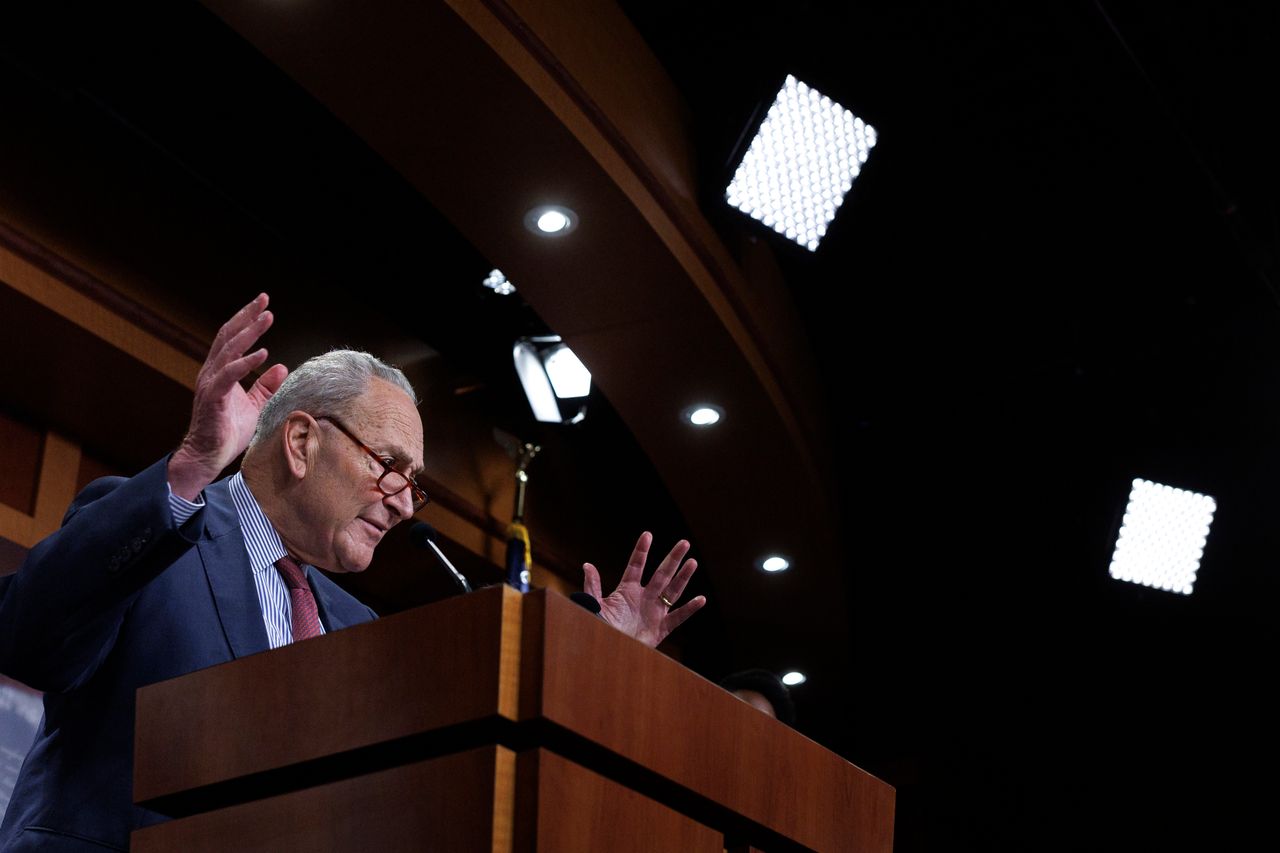 | | “Senate Democrats will not provide the votes to proceed to the appropriations bill if the DHS funding bill is included," Senate Minority Leader Charles E. Schumer (D-New York) said in a statement. “What’s happening in Minnesota is appalling — and unacceptable in any American city." (Tom Brenner/For the Washington Post ) | | | | | | Health on the Hill | Senate Democrats are unifying around a plan to object to the government funding package in the aftermath of the fatal shooting of intensive care nurse Alex Pretti by federal immigration agents in Minneapolis on Saturday, Riley Beggin in The Washington Post newsroom reports. → That puts Washington once again on the verge of a government shutdown, and billions of dollars in funding for health agencies and federal health care programs in limbo. If Congress doesn’t act by Friday, it could jeopardize Medicare patients’ access to telehealth services and funding for community health centers — both of which are among the programs extended in the package. The “minibus” legislation includes several funding bills, including one that provides money for the Department of Homeland Security, which oversees the Immigration and Customs Enforcement agents on the ground in Minnesota. Democrats want to strip the DHS funding bill from the larger package to make reforms to the agency in the wake of the second killing of a U.S. citizen by immigration agents this month while passing the five other bills — which provide funding for the Department of Health and Human Services, the Pentagon and the Department of Transportation, among other agencies. However, Senate Republicans are pushing back on the idea, Riley reports, making a shutdown likely unless they change course. → House lawmakers passed the sweeping government funding measure last week and are now back in their districts on recess until Feb. 2. Breaking up the larger legislation would require the House to return to Washington to approve both. Meanwhile, government funding expires on Jan. 30. | | | | | | What We’re Reading | “Freeze of public health funds for states, then reversal, sows confusion,” The Washington Post’s Lena H. Sun and Rachel Roubein report. “The next frontier in weight-loss drugs: one-time gene therapy,” The Washington Post’s Daniel Gilbert reports. “Parents say teens are addicted to social media. Now, a jury will decide,” The Washington Post’s Naomi Nix writes. “Rejecting Decades of Science, Vaccine Panel Chair Says Polio and Other Shots Should Be Optional,” Apoorva Mandavilli reports at the New York Times. “Congress Pressed on NIH Neurology Leadership Change,” Judy George writes in MedPage Today. New York Magazine’s Ben Terris interviewed Donald Trump and his doctor about the president’s health in “The Superhuman President.” “Sarepta, battling slowing sales, claims Duchenne gene therapy’s impact grows with time,” Jonathan Gardner writes for BioPharma Dive. | | | | | | | | | | |


_tstmp_1756933376-1920-1080.png)