Image

Daily News Brief

February 20, 2026

Welcome to CFR’s Daily News Brief. Today we’re covering new data on the U.S. trade deficit in goods, as well as...

  • Gaza pledges from President Donald Trump’s Board of Peace meeting
  • An artificial intelligence (AI) summit in India
  • A UN warning about Sudan’s civil war

Our daily coverage of the 2026 Milan-Cortina Olympics continues today. Scroll down for news about a standout day for U.S. women’s sports, plus the rise of drone photography at the Games.


Top of the Agenda

The U.S. trade deficit for goods hit a record in 2025 despite Trump’s claim his signature tariffs would reduce it, new data shows. Trump declared the country’s goods trade deficit a national emergency last year and pledged to shrink it as part of efforts to revive U.S. manufacturing. Yesterday’s numbers add to previous data suggesting U.S. companies have generally not brought production back home—all while Trump’s tariff policy is being challenged in a Supreme Court case. 


Understanding the numbers. The Commerce Department released trade data yesterday for December 2025, in addition to an annual report that had been delayed by last year’s government shutdown. The data showed tariffs did appear to impact U.S. imports, but not in the way the Trump administration pitched. Rather than reducing imports across the board, U.S. companies simply moved away from Chinese goods—which were hit with some of the highest tariffs in 2025—and shifted to other suppliers such as Vietnam and Mexico. As for Trump’s reindustrialization goals, the U.S. manufacturing sector has lost around 72,000 jobs since Trump announced his so-called Liberation Day tariffs last April.


What comes next. That’s not to say the verdict is fully in on Trump’s strategies for the manufacturing sector. Growing its U.S. base would be a yearslong process, and the results of foreign investment pledges from Trump’s trade deals could show up in future data. A White House spokesperson this week continued to tout the administration’s strategy for the manufacturing sector, saying “the days of American workers and industries getting ripped off are behind us.” Yet the Supreme Court could rule as soon as today on the legality of Trump’s emergency tariffs, potentially overturning them and kicking off a refunding process for companies that have been forced to pay them. If the tariffs are overturned, the U.S. government could owe as much as $175 billion in refunds to companies, according to a Reuters calculation.


“The administration is trying to get far too much credit for shifting imports around a bit…The goods coming through Southeast Asia have enormously significant amounts of Chinese content.”

—CFR expert Brad Setser tells the New York Times


Americans Tie Tariffs to Affordability

A shopper walks past a partially empty dairy section at a grocery store ahead of an expected winter storm spreading across the United States, in Washington, D.C., U.S., January 24, 2026.

Nathan Howard/Reuters

A CFR-Morning Consult poll conducted in January found that American households would feel better about the cost of living if tariffs were lowered as part of the affordability policy agenda, CFR Senior Fellow Rebecca Patterson writes in this Expert Take.


Across the Globe

Board of Peace pledges. Countries on the Board of Peace have pledged $7 billion to a Gaza reconstruction fund, while the United States will contribute $10 billion, Trump said yesterday at the Board’s inaugural meeting in Washington. The Board’s top representative for Gaza, Bulgarian diplomat Nickolay Mladenov, said that recruitment is underway for a local police force that will be deployed inside the territory in two months, as a complement to the larger international stabilization force envisioned in Trump’s Gaza peace plan.


AI Summit in India. Washington “totally” rejects global governance of AI, White House tech advisor Michael Kratsios said today at a New Delhi summit on the future of the technology. His remarks stood in contrast to a plan heralded by UN Secretary-General António Guterres at the summit, which would create an international advisory panel on AI, similar to the role of the Intergovernmental Panel on Climate Change. The summit also included forums on how to handle AI’s investment needs and safety concerns, as well as how AI will affect employment. 


U.S.-Indonesia trade framework. The White House will maintain a 19 percent base tariff rate on Indonesian goods while exempting some products like textiles and clothes, it announced yesterday. In exchange, Indonesia will remove tariffs on most U.S. goods and import $15 billion of U.S. energy products and $13.5 billion of U.S. aviation products. Indonesia also committed to cooperating with U.S. export controls, designed in part to keep U.S. technologies from reaching China. 


Trump’s deadline for Iran. Iran has ten or “pretty much maximum” fifteen days to reach a deal with the United States or “bad things” will happen, Trump told reporters yesterday. Concerns about the recent large-scale U.S. military buildup near Iran and the prospect of military conflict have driven the price of oil this week to its highest level in more than six months.


U.S. pays some UN dues. The United States paid around $160 million of its almost $4 billion in outstanding dues to the United Nations, a UN spokesperson said yesterday. Last month, Guterres warned the organization faced “imminent financial collapse” if countries did not make overdue payments—some 95 percent of which in the UN’s regular budget are owed by the United States. Trump said yesterday that Washington would “make sure the United Nations is viable.” 


UN genocide accusation in Sudan... A UN fact-finding mission yesterday said an offensive by the Rapid Support Forces (RSF)—a Sudanese paramilitary—in and around the city of El Fasher over eighteen months bore “the hallmarks of genocide.” Their report marked the first time a UN-backed body had leveled a genocide allegation against the RSF. The RSF did not immediately comment on the report, though their commander has previously acknowledged the forces committed some atrocities. 


…and new U.S. measures regarding the conflict. The United States announced new sanctions yesterday on three RSF commanders for their actions during the siege of El Fasher. Washington reiterated its stance that the RSF has committed genocide in the conflict. It also updated a previous sanctions announcement about another RSF commander to note he holds a passport from Kenya, which maintains it is neutral in the conflict.     


Where U.S. Counterterrorism Efforts Stand Today

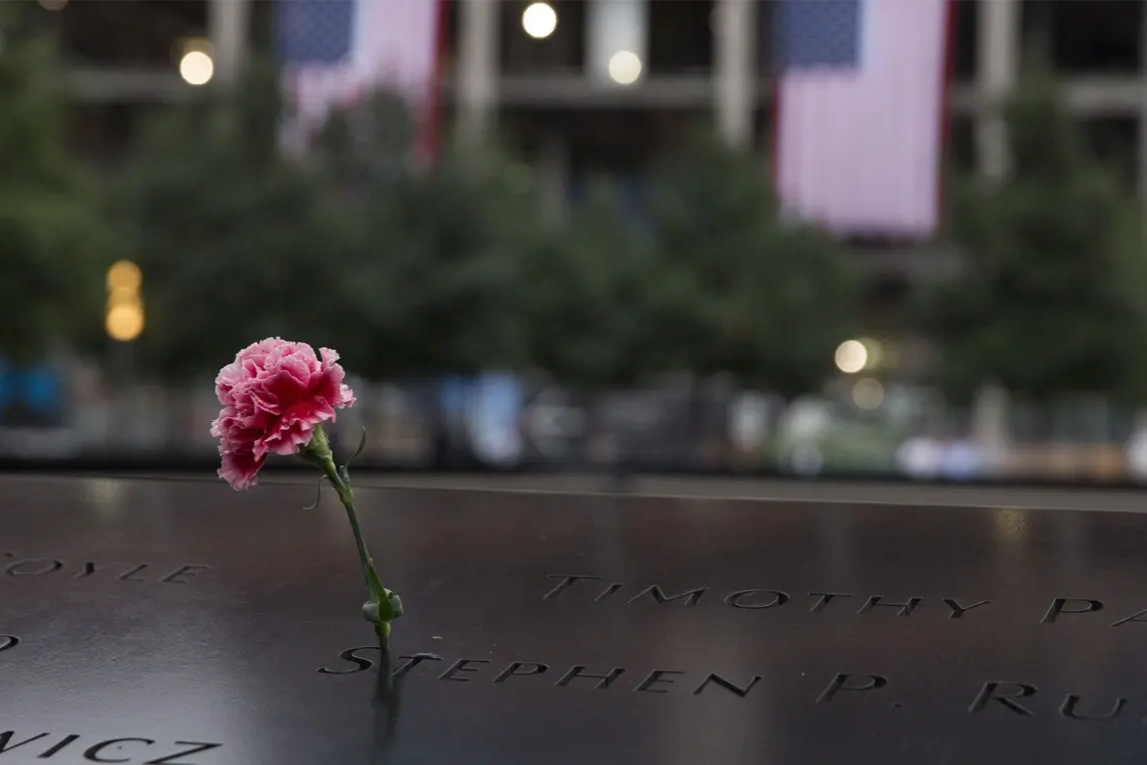
9/11 memorial in New York City.

Andrew Kelly/Reuters

In recent years, the United States has pulled resources from foreign counterterrorism operations to focus more on domestic threats, former Homeland Security Council Chair Frances Fragos Townsend says in this YouTube Short. 


What’s Next

  • Today, European defense ministers are meeting in Poland.

  • Sunday, Brazilian President Luiz Inácio Lula da Silva visits South Korea.

  • Sunday, the British Academy Film Awards take place in London.


What You Missed: 2026 Milan-Cortina

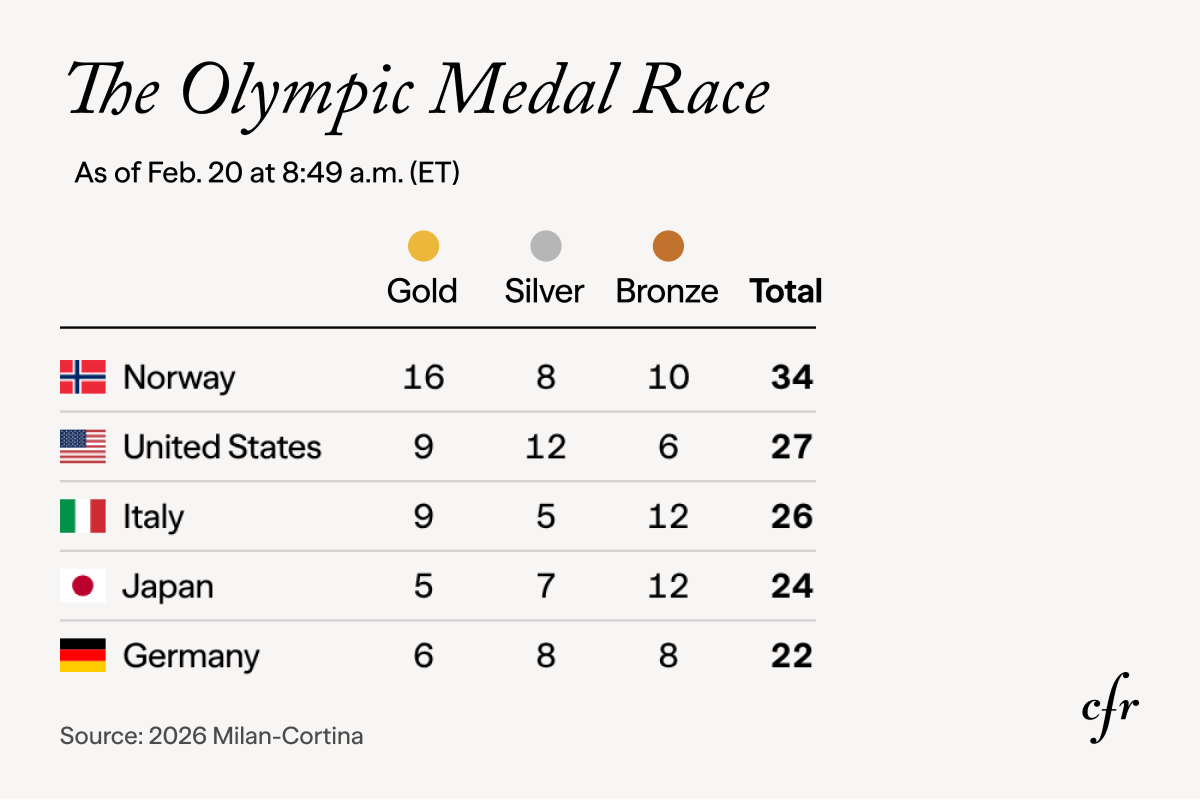
Media count tracker.

Every morning the Daily News Brief team will share the latest highlights from the 2026 Winter Olympics! Without further ado, here’s what you might have missed since yesterday. 


American women triumph in hockey… It wasn’t just about winning, but also the nail-biting way they won. At yesterday’s women’s hockey final between Canada and the United States, Canada had earned a one-point lead by the time there were only two minutes left in the game. It was a dramatic reversal from only days earlier, when the United States beat them 5-0. But U.S. captain Hilary Knight, a five-time Olympian, made a shot from halfway down the rink that slid past at least four defenders—including the goalie—launching the game into overtime. The U.S.’s Megan Keller scored the winning shot. Of Knight’s equalizer, a teammate said, “legends do legendary things.” 


…and figure skating. Only minutes after Team USA’s hockey victory, twenty-year-old Alysa Liu became the first U.S. woman in twenty-four years to win gold in figure skating. The disco-inspired routine was set to Donna Summer music; Liu’s style is informed by ice dancing. Liu has drawn attention within and beyond the figure skating world for setting boundaries around training time to allow for life and relationships outside of work. Liu “changed figure skating forever” in part due to her commitment to her mental health, former competitive skater Chris Schleicher wrote, adding that Liu showed that competitive skating can be joyful instead of “scary and stressful.” 


Airborne photography. Spectators in Milan have become used to the whooshing sound of photo and video drones that accompany athletes. While drones have documented the Olympics for at least a decade, the Associated Press photography team said that it had never before positioned cameras in such far-scattered locations. Those include mountaintops above skiers and the inside corner of a hockey net. (Check out some of their shots here.) Some fans have begun cheering for the drone pilots as they make tricky maneuvers during races. A decidedly old-school photography style has also gotten audience love: skating backwards, camera in hands, to document the figure skaters.


Reflecting on Nixon’s Trip to China