| | As the full-scale war in Ukraine moves into its fifth year, the country is forging a new energy syst͏ ͏ ͏ ͏ ͏ ͏ |
| |  | Energy |  |
| |
|
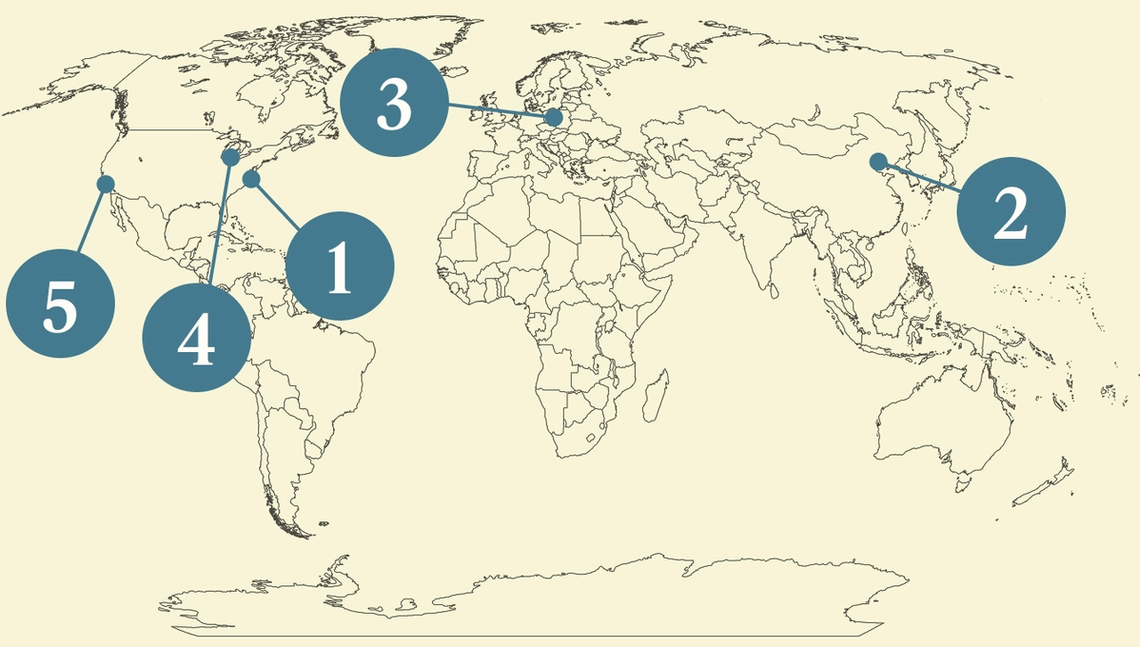 - Mixed fallout from tariffs
- China’s European expansion
- Europe’s new energy threats
- Biggest source of emissions
- Data center delays
 Hillary Clinton’s message about India, and new strategies for smuggling Russian oil. |
|
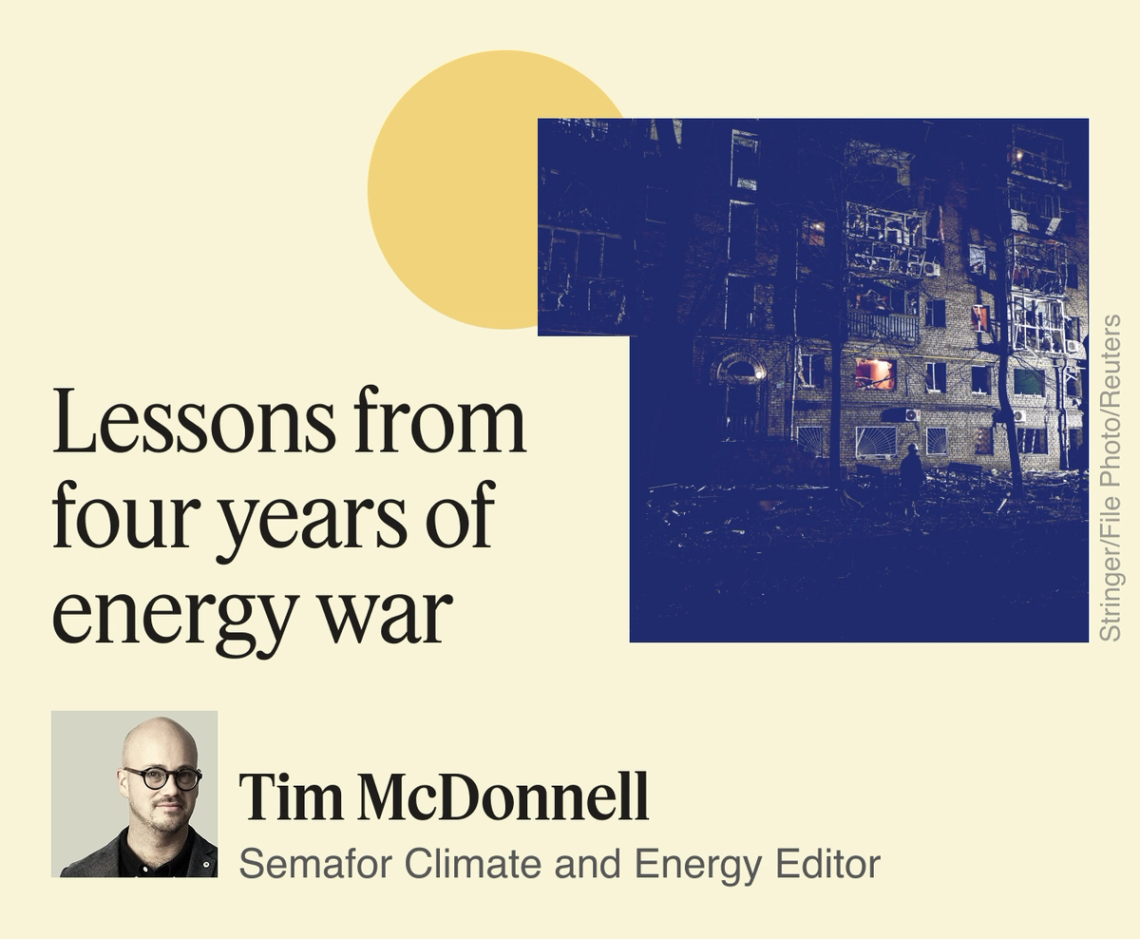 As the full-scale war in Ukraine enters its fifth year, the world has learned what an unprecedented, relentless campaign to target energy infrastructure can, and can’t, achieve. Russia’s weaponization of energy against Ukraine started months before the invasion of February 24, 2022, when Moscow choked off the supply of natural gas to Europe as a warning about what support for Kyiv would cost. And energy was among the main reasons Russian military planners chose this particular date: It was the day that electric grid officials in Ukraine, Russia, and Europe had jointly agreed to trial a disconnection of Ukraine’s grid from Russia’s. In what would prove to be a recurring theme of the next four years, Ukraine’s energy engineers were able to move much faster than anyone expected to avert rolling blackouts. But that became more difficult once Russia ramped up its drone, missile, and artillery assaults, eventually carrying out at least 1,894 separate attacks on energy infrastructure between February 2022 and today, according to the ACLED database. The pace and devastation of those attacks reached their peak this winter. For a few weeks in late January and early February, during the coldest winter in Kyiv in a decade, thousands of households in the capital — mine included — were without heat, with only sporadic electricity, and occasionally without water in a not-always-successful effort by municipal officials to prevent pipes from bursting. For the most part, the heat is back on. But ongoing power cuts continue to be a major drag on the national economy. And European countries are increasingly divided about whether, or how, to help Ukraine fight back. But if the intent of Russian President Vladimir Putin was to force Ukrainians to capitulate, it’s clear that the most expensive, focused, and prolonged military campaign against energy infrastructure in history has failed. “They’re trying to scare us,” Anastasiia Vereshchynska, CEO of the European-Ukrainian Energy Agency, a trade group, told me. “I’m stressed, and I’m tired, and less productive. But there’s no way we are giving up in these circumstances.” Ukraine has also, by necessity, pieced together a new system that is both more secure and more sustainable than the old one. Most households and small businesses have their own generators and/or battery storage systems. Rooftop and commercial-scale solar is everywhere. The big energy companies have learned hard-won lessons about how to rebuild quickly, how to diversify supply chains, and how to work closely with the military to defend their assets against drones and other novel threats. And they’re replacing the old reliance on Russian fossil fuels with new trade relationships, with the US at the center. US President Donald Trump may not always seem like a stalwart ally of Ukraine. But Alex Riabchyn, the chief international and sustainability officer of Naftogaz, told me that working on energy deals — he’s in Washington this week shopping for more US LNG — has brought the two countries closer: “We see reciprocity. It’s transactional, but we’re quite happy with it.” And while the frontline situation remains bogged down, the melting ice on Kyiv’s sidewalks this week is a sign that conditions on the energy front are about to improve. “The most positive thing is that spring is coming,” Riabchyn said. “That will improve everyone’s morale.” |
|
Mixed fallout from tariffs |
 Bridget Bennett/Reuters Bridget Bennett/ReutersThe US Supreme Court’s decision to strike down much of President Donald Trump’s tariff regime won’t have much impact, for better or worse, on beleaguered US clean tech companies. When Trump rolled out sweeping “Liberation Day” global tariffs last year, it looked like a surefire way to raise the cost of clean energy projects, which are heavily reliant on hardware imported from manufacturers in Asia. First Solar, a US manufacturer with many supply chain links to Asia, saw its stock price tick up after the ruling. But in general, scrapping those particular tariffs “will have a rather limited impact on the US clean tech sector going forward,” Cindy Jia, head of the sustainable solutions group at Dutch bank ING, told Semafor. The industry is still simultaneously juggling tariff uncertainty, other restrictions on Chinese imports, slashed tax credits, competition with low-cost gas, permitting bureaucracy, and worker shortages. And, Jia said, “for clean tech players who were negatively impacted by the IEEPA tariffs, they also unfortunately have limited options to pursue refunds for higher import costs or seek damages for projects that were put on hold or cancelled as a result.” |
|
China’s European expansion |
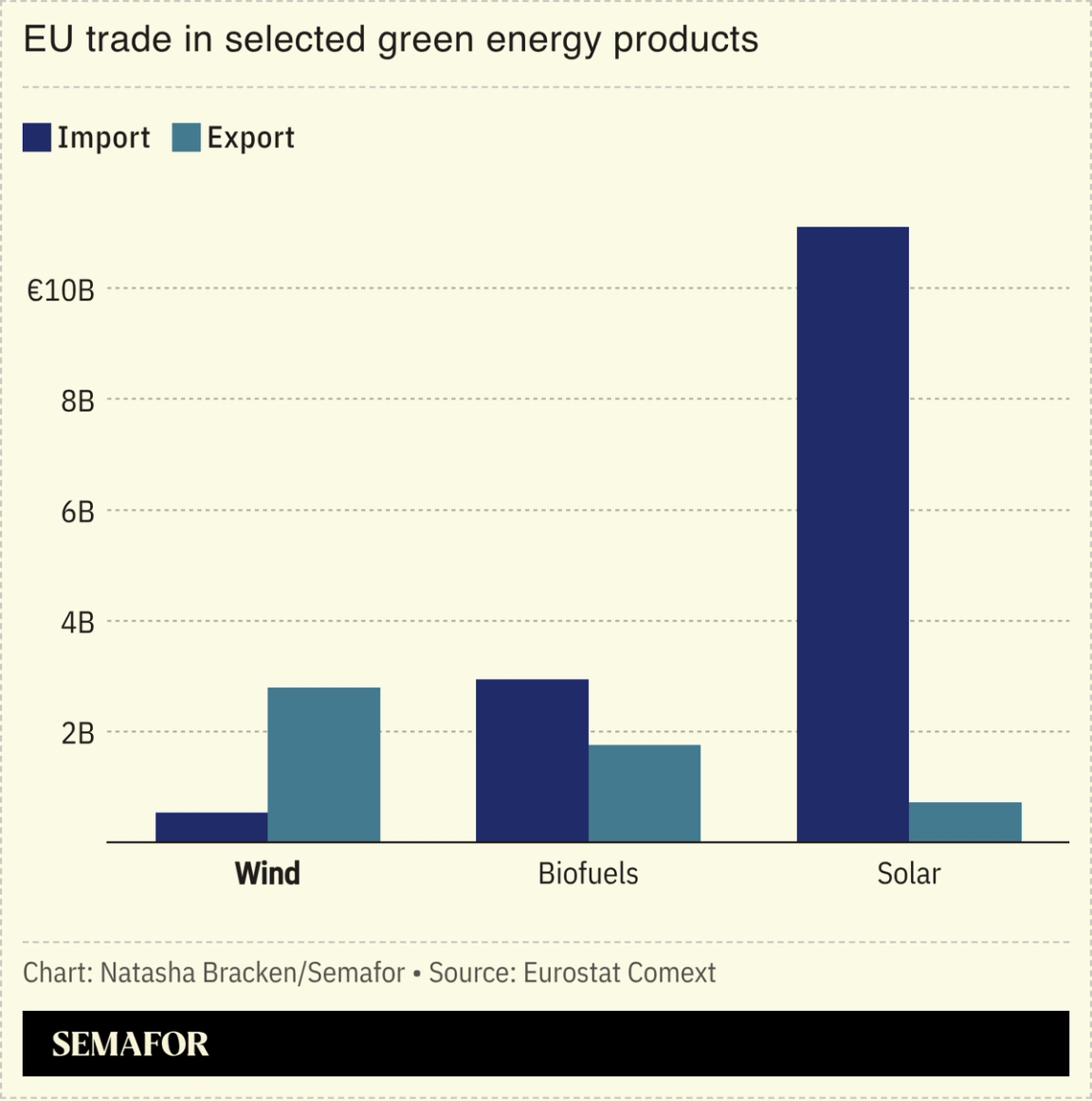 Geopolitical tensions won’t deter Chinese wind turbine manufacturers from expanding into Europe, a top executive at one of China’s biggest firms told Semafor. The remarks by Windey International CEO Yu Feng come with Beijing and Brussels appearing to calm a row over Chinese green exports to the EU, and with Germany’s leader visiting China this week, the latest of several European leaders to do so. Despite China’s global dominance in the wind sector, European capitals — wary of apparent security risks tied to using Chinese tech — have been reluctant to deploy the country’s wind turbines, prioritizing homegrown companies instead. But Yu was confident that Chinese wind turbines would arrive in Europe “sooner or later,” saying they were “irreplaceable” to the world. |
|
Europe’s new energy threats |
| |  | Tim McDonnell |
| |
 Stringer/Reuters Stringer/ReutersEuropean countries should prepare to face more threats to their energy infrastructure from Russia and Russia-aligned hackers, a former CIA analyst warned in a report first shared with Semafor. In late December, a wave of Russian cyberattacks hit energy facilities across Poland, a sign that Moscow may be willing to expand its energy campaign beyond Ukraine as a means of testing NATO cohesion, Chelsea Cederbaum, now a senior threat intelligence analyst at the cybersecurity firm Recorded Future, said. And as Russian President Vladimir Putin grows frustrated by slow progress in Ukraine and anticipates a post-midterms political landscape in the US that may be less inclined to favorable dealings with Moscow, “there’s a high risk of escalation by Russia over the next two years.” That’s unlikely to include large-scale bombings of the kind seen in Ukraine, Cederbaum said. But, she wrote in her report on Russia’s new hybrid war tactics, it could include cyberattacks coordinated across wider regions of Europe’s grid, drone flights close to critical infrastructure, and Kremlin-sponsored digital disinformation campaigns designed to paint European countries as unprepared. Europe’s rapid pivot to US gas imports and renewables has, however, eroded some of Moscow’s historic ability to leverage its fossil fuels for political coercion. |
|
Biggest source of emissions |
 Metric tons of CO2 that could be produced annually by a massive new gas-fired power plant the Trump administration proposed last week, which would make it the largest single source of power-sector emissions in the US. The proposed plant, planned for Ohio, is one piece of a $550 billion investment package promised by Japan as part of the country’s trade deal with the US. And while greater use of natural gas could in theory displace some dirtier coal in the power system, according to a Bloomberg analysis it’s more likely this new plant will largely be used toward meeting surging new demand from data centers, and thus represent a major net addition to the US carbon footprint. |
|
 This April, Barbara Humpton, CEO of USA Rare Earth, will join global leaders at Semafor World Economy — the premier convening for the world’s top executives — to sit down with Semafor editors for conversations on the forces shaping global markets, emerging technologies, and geopolitics. See the first lineup of speakers here. |
|
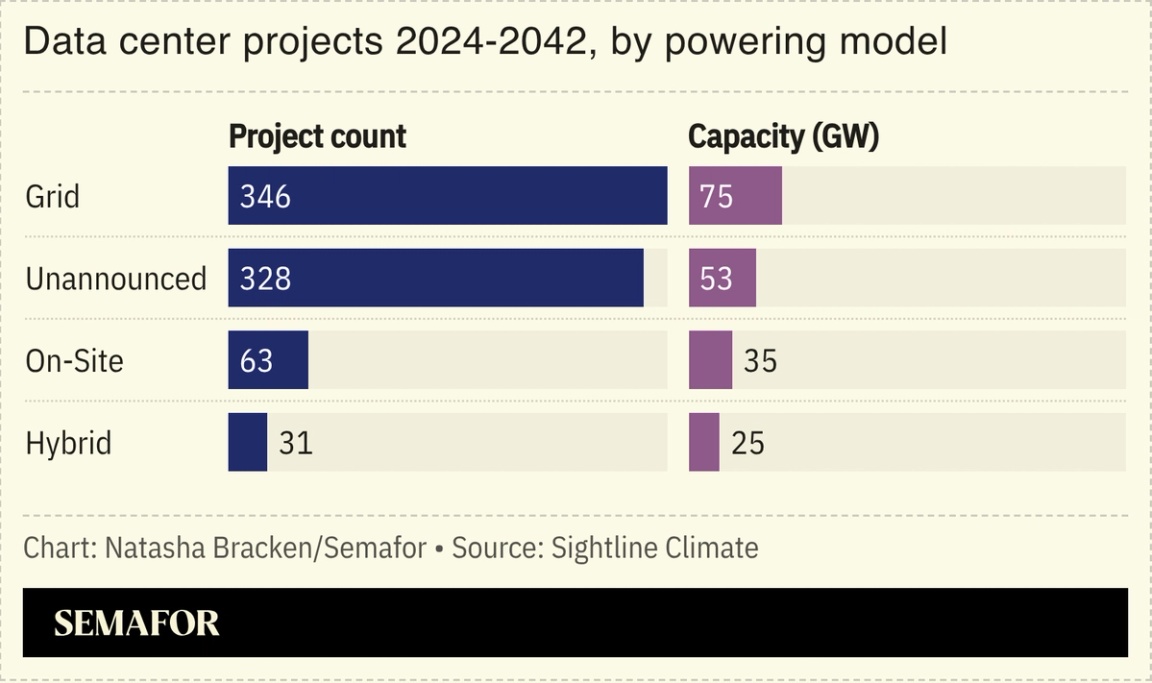 Power constraints and potential grid equipment shortages are set to delay 30% to 50% of data center projects in 2026, as some hyperscalers weigh the benefits of pursuing on-site power generation instead, a new Sightline report found. Delays are already a familiar occurrence: Last year, 110 data center projects were planned to come online, but 26% were delayed and 10% quietly revised their target operation dates, a trend that has pushed some hyperscalers to take on the headache of building their own power capacity rather than relying on the grid. Google recently acquired energy group Intersect Power, giving the tech giant a direct energy lifeline at a time when it’s competing with rivals to train and run power-hungry AI models. Microsoft, meanwhile, is taking a different approach: Last year it cancelled leases and announced smaller data centers than some of its peers, prioritizing grid stability in surrounding areas, including by restarting large nuclear power plants. —Natasha Bracken |
|
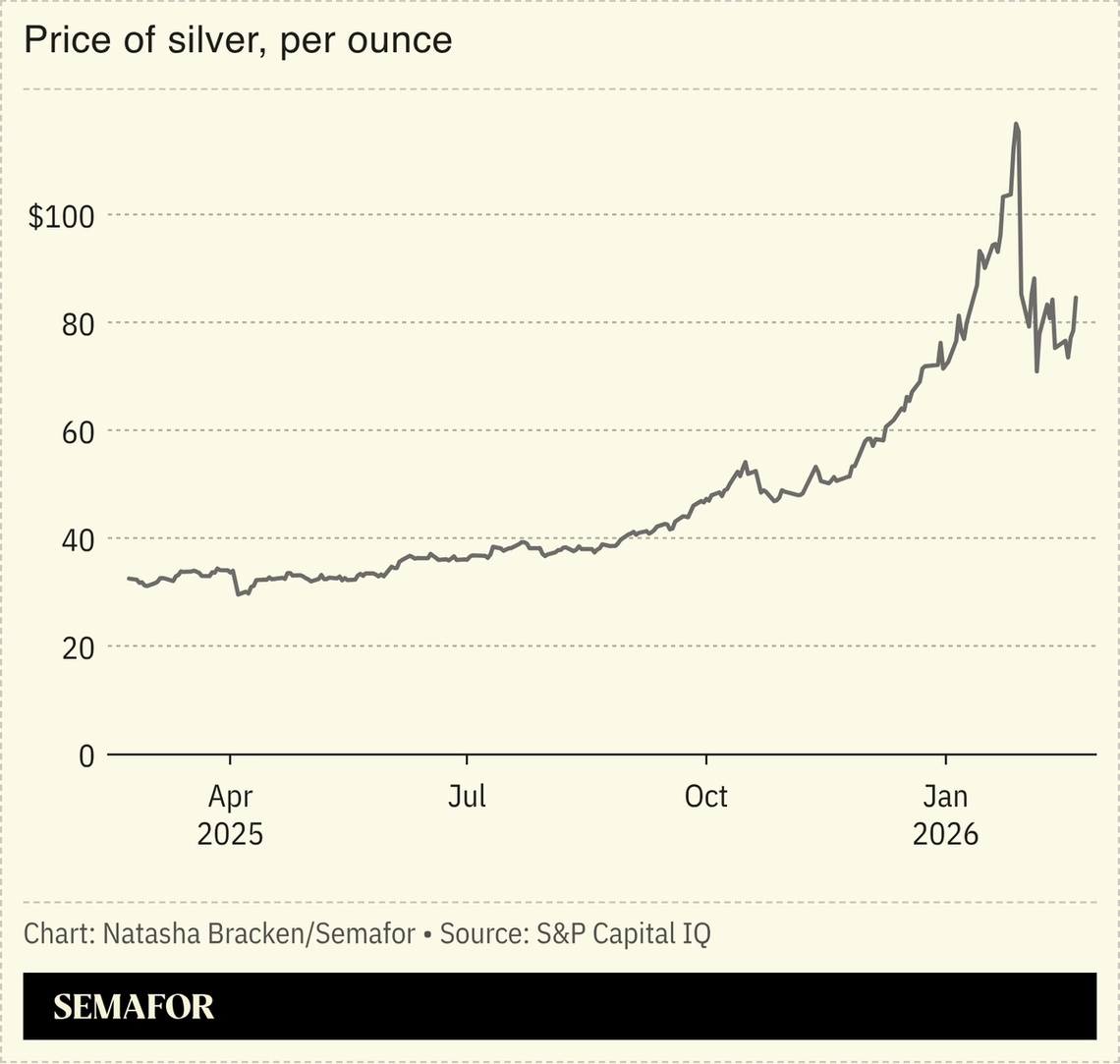
 New Energy- Solar panel producers are looking to replace silver with other metals, such as copper, as silver prices hit record highs and industry margins shrink due to production overcapacity.
 - During India’s first national climate conference, former Secretary of State Hillary Clinton urged India to become a leader in the developing world’s efforts to fight global warming as the country rapidly adopts renewable energy.
- Italian power utility Enel said it plans to grow its dividend per share by an average of 6% annually through 2028, lifting the company’s shares by 6%.
- A large supplier of enriched uranium fuel to nuclear power plants in the US warned of a supply crunch amid rising demand from the restart of several nuclear plants and a ban on Russian imports.
Fossil Fuels- A network of 48 companies working under different physical addresses have reportedly been operating together to mask the origins of Russian oil, smuggling at least $90 billion worth.
- Goldman Sachs raised its Brent and West Texas Intermediate crude forecasts for Q4 of 2026 by $6, citing lower oil inventories in OECD countries, while still assuming no disruption from geopolitical tensions in Iran and maintaining its expectation of a market surplus this year.
Politics & Policy- The US, which has repeatedly threatened to exit the International Energy Agency over its climate advocacy, seems to have succeeded in its demands: In a summary released after a two-day meeting, the IEA does not list addressing climate change among its priorities.
- House Republicans launched an investigation into six environmental organizations over their opposition to a $9 billion oil project in Alaska.
Minerals & Mining- The Ukrainian titanium mining firm Velta was acquired by European Lithium, in a deal which Velta CEO Andriy Brodskyi said will help the company carry out plans to open a new refining facility in the US.
EVs- A California lawsuit alleges Trump illegally stripped the state’s power to establish its own emissions regulat
|
|
|


