Image

Daily News Brief

February 27, 2026

Welcome to CFR’s Daily News Brief. Today we’re covering the dispute between artificial intelligence (AI) firm Anthropic and the Pentagon over use of its technology, as well as...

  • Fighting along the Afghanistan-Pakistan border
  • A U.S.-Democratic Republic of Congo (DRC) agreement on healthcare
  • A new U.S. evacuation warning in the Middle East


Top of the Agenda

Anthropic rejected an ultimatum from the Pentagon yesterday regarding government use of its technology amid an ongoing dispute about the use of AI by the U.S. military. The company opposes the government using its AI systems for mass domestic surveillance and fully autonomous weapons, deeming them “outside the bounds of what today’s technology can safely or reliably do,” Anthropic CEO Dario Amodei wrote in a statement. A Defense Department spokesperson wrote yesterday that the Pentagon “has no interest” in the two use cases flagged by Amodei, but that it still seeks a broader authorization to use Anthropic’s technology for “all lawful purposes.” 


The stakes. The Pentagon has threatened to terminate its $200 million contract with Anthropic and label the company a supply chain risk. That could force any companies that work with the U.S. military to prove they do not use Anthropic products to do so. The government took a step in that direction earlier this week by asking defense contractors to assess their reliance on Anthropic’s AI model, Axios reported. The Pentagon has also indicated that it could use the Defense Production Act to compel Anthropic to accept its terms, which would likely lead to legal challenges.


The broader debate. AI is being rolled out in real military settings even as policies on its usage vary by country, if they have any regulations at all. Reports suggest that countries including Israel, Russia, and Ukraine have all used AI to help identify battlefield targets. The UN Secretary-General has called for international dialogue on AI guardrails, while a U.S. envoy said earlier this month that Washington “totally” rejects global governance of AI. The United States and China both declined to sign a summit declaration this month on responsible military AI use, while multiple European countries endorsed it. The Trump Administration’s own AI Action Plan says the Pentagon will “aggressively” adopt AI to maintain global military preeminence while also ensuring the technology’s use is “secure and reliable.” 


“The growing gap between international dialogue on military AI, which tends to emphasize risks and potential constraints on its use, and the accelerating efforts of militaries worldwide to integrate AI should be concerning to all nations...states are deploying these technologies with a patchwork of haphazard policies—if any—and no opportunity to gain valuable insights on best practices from others.”

—CFR Senior Fellow Michael C. Horowitz in an Expert Take


Unpacking Debates on AI

The Spillover podcast

CFR experts Rebecca Patterson and Sebastian Mallaby dive into the possibility of an AI bubble, the technology’s productivity paradox, and the latest global AI summit in this episode of The Spillover.

Listen


Across the Globe

Afghanistan-Pakistan hostilities. Fighting between the two countries continued yesterday, with Taliban forces firing at Pakistani troops in the border region and Pakistan launching air strikes at Afghanistan’s two largest cities overnight. Both countries reported multiple deaths, and Pakistan’s defense minister called the situation “open war.” The latest clashes began last weekend when Pakistan targeted extremist groups in Afghanistan it alleged were responsible for suicide bombings in Pakistan. 


U.S. guidance on leaving Israel. As the United States weighs a strike on Iran, it authorized non-essential government staff and family members to depart Israel, citing unspecified “safety risks.” Meanwhile, the foreign minister of Oman said yesterday’s indirect nuclear talks between the United States and Iran had achieved “significant progress,” but did not announce a breakthrough that would avert an attack.


Denmark calls snap elections. The country will hold a parliamentary election next month, Prime Minister Mette Frederiksen said yesterday. The ruling center-left party has experienced a surge in support after defending the country’s sovereignty amid U.S. President Donald Trump’s threats to acquire Greenland. The country’s normal electoral calendar required a vote be held before October 31.


U.S.-DRC health deal. The United States will provide up to $900 million over the next five years to fight HIV/AIDS and other diseases in the DRC, while the DRC will increase its health expenditures by $300 million during the same period, the U.S. State Department said yesterday. This is the latest in a series of deals the Trump administration has struck with African countries in the wake of cuts to the U.S. Agency for International Development.  


Canada-India rapprochement. Canadian Prime Minister Mark Carney will begin talks on a comprehensive trade agreement with India during his ongoing visit, Canada’s foreign minister told Reuters. Carney has worked to warm ties with India, which have been frayed since the 2023 killing of a Sikh separatist on Indian soil. Last month in Davos, Carney called for “middle powers” to work together to shape an emerging world order.


South Korea-Google agreement on maps. Seoul today said it would permit Google to export detailed geographic data of the country to its international servers with certain safeguards. For years it has refused to do so over concerns that North Korea could use the data for a military attack. Google agreed to blur images of sensitive sites. 


Greens win closely watched UK parliament seat. The United Kingdom (UK) Labour party came in third yesterday in a special election for a seat in a longheld party stronghold. The Green Party won the seat by a large margin, with right-wing Reform UK coming in second. The election was seen as a test of Labour’s popularity at a time when Prime Minister Keir Starmer’s approval has sagged.


U.S.-India tariff talks. India’s Commerce and Industry Minister Piyush Goyal said that he discussed trade policy with U.S. Commerce Secretary Howard Lutnick yesterday in New Delhi. India is one of the countries that stands to benefit most from last week’s Supreme Court ruling against Trump’s emergency tariffs. Washington has pledged to use other authorities to restore them. IMF Managing Director Kristalina Georgieva said at a press conference Wednesday that U.S. tariffs “added to goods inflation” and affected productivity, urging the Trump administration to work with trade partners to address deficit concerns.    


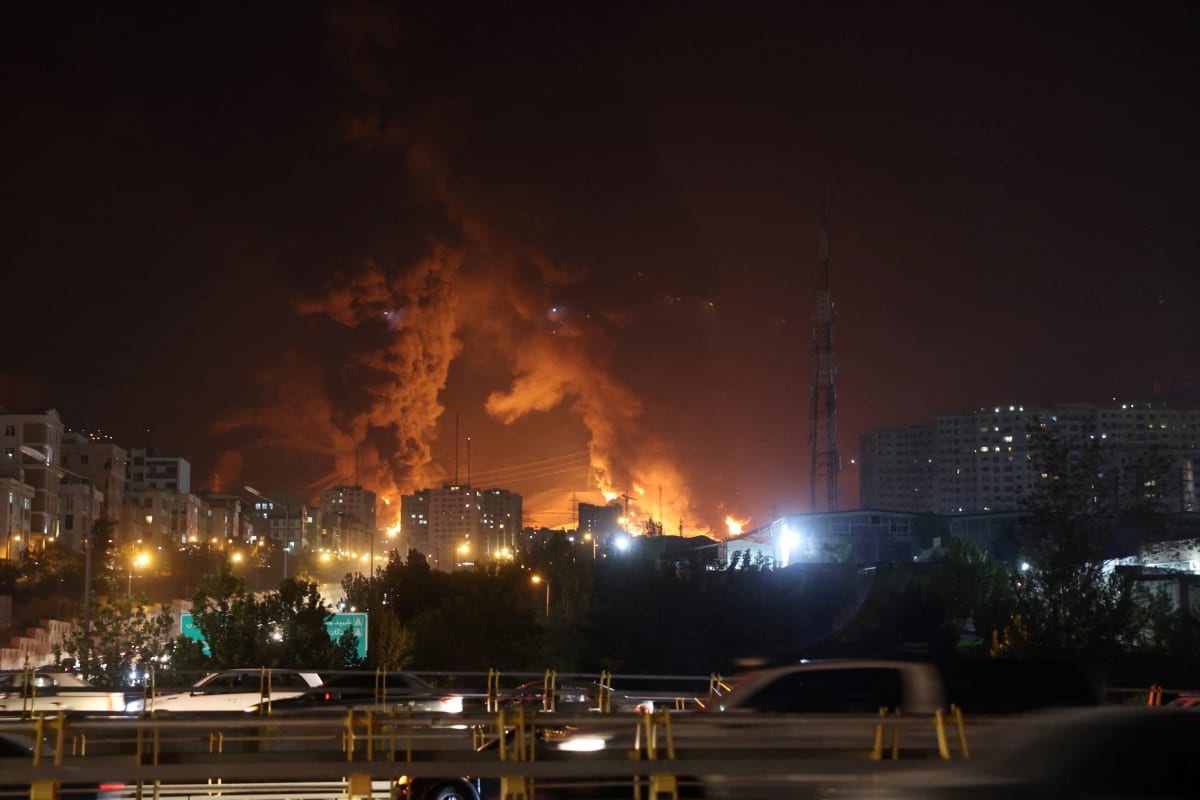
Tracking Iran’s Conflict with Israel and the United States

Smoke from an Israeli attack rises from the Sharan Oil depot in Tehran, Iran, June 15, 2025.

Majid Asgaripour/WANA/Reuters

With the threat of conflict looming, recent military actions by the United States, Iran, and Israel demonstrate their capabilities and can be traced in this Conflict Tracker from the Center for Preventive Action.


What’s Next

  • Today, the Caribbean Community concludes a leaders’ meeting in St. Kitts and Nevis.

  • Tomorrow, planetary movements will leave six planets visible at the same time in the night sky. 

  • Sunday, China will reduce or remove tariffs on Canadian products, including canola meal and some food products.


The Past and Future of Foreign Correspondence

Alan Cullison.

Photo Collage by Lucky Benson

While journalism is undergoing enormous disruptions today, the need for honest interpreters of current events will not disappear, Press Fellow Alan Cullison told CFR’s Mariel Ferragamo in this article.


Council on Foreign Relations

58 East 68th Street, New York, NY 10065

1777 F Street, NW, Washington, DC 20006

Was this forwarded to you? Subscribe to the Daily News Brief

FacebookTwitter