|
|
|
|
|
|
|
|
|
|
The Morning Risk Report: Blasts Rock Mideast for Third Day
|
|
By Richard Vanderford | Dow Jones Risk Journal
|
|
|
|
|
|
|
Good morning. The U.S.-Israeli military operation in Iran entered a third day Monday following a weekend of unprecedented escalation. Iran’s military announced fresh strikes against U.S. bases in the region on Sunday. The conflict has now widened to Lebanon, where the Israeli military struck Hezbollah targets, responding to an attack from the Iranian-backed group.
-
Inflation risks: U.S. and Israeli strikes against the Iranian regime and military threaten to upend the global oil market and send shock waves through the world economy. Dozens of tankers diverted from the Persian Gulf in the early hours of the conflict. The U.S. Navy advised tanker companies to avoid nearby waters because it couldn’t guarantee their safety, according to an alert from an industry body.
-
Glitzy Gulf countries hit: For decades, the Arab states of the Persian Gulf sold themselves as an oasis of peace in a region prone to conflict, attracting wealthy expats, multinational corporations and investment. On Saturday, Iranian explosives pierced that lucrative bubble. Missiles and drones rained down on Qatar, Saudi Arabia, Bahrain and the United Arab Emirates, targeting bases and other strategic sites and scattering debris from intercepts. The attacks marred the business-friendly reputation Gulf countries took years to build. Iran has also systematically targeted its Arab
neighbors’ airports.
-
IRGC lives on: U.S. and Israeli airstrikes killed many of Iran’s top leaders in just hours, including Supreme Leader Ayatollah Ali Khamenei. But the huge security apparatus they oversaw to ensure the regime’s survival is still intact. Unless the Islamic Revolutionary Guard Corps is defeated or somehow turned, it will retain its ability to generate cash through illicit activities and help proxies like Houthi militants in Yemen harass the U.S. and its allies. The IRGC has its own military and intelligence divisions separate from the conventional armed forces and is deeply entrenched in the
country’s businesses.
|
|
|
More coverage from The Wall Street Journal:
|
|
|
|
|
Content from our sponsor: Deloitte
|
|
|
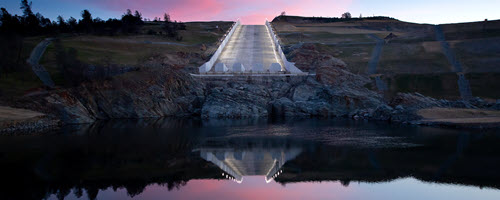
At a California Water System, Risk Management Drives Strategy, Resilience
|
|
The California State Water Project’s risk and resilience officer explains how risk-informed strategy and strategic risk management helps get ahead of major challenges including water scarcity and aging infrastructure. Read More
|
|
|
|
|
|
|
|
|
|
|

|
|
Importers may not be able to escape a tariff but they can pay it on a smaller amount. Photo: Mario Tama/Getty Images
|
|
|
|
|
|
How U.S. businesses are shaving billions off their tariff bills.
A well-honed tariff-reduction playbook is giving businesses—and the lawyers who advise them—some confidence that they can deal with President Trump’s latest tariffs.
One of the most effective plays is reducing the reported value of goods companies bring into the U.S. Importers may not be able to escape a tariff, such as the global 15% rate Trump announced after the recent Supreme Court ruling, but they can pay it on a smaller amount.
A legal way to do this has had such an impact that a bipartisan pair of senators wants to ban it.
|
|
|
|
|
California sets deadline for corporate climate reporting.
California’s air pollution regulator has set a date for businesses to start reporting on the greenhouse gas emissions they generate, Risk Journal reports.
The California Air Resources Board, or CARB, is rolling out two requirements for businesses: reporting carbon emissions and disclosing climate risks. It said Thursday that the deadline for their emissions-reporting rule is Aug. 10.
|
|
|
|
-
Officials at multiple federal agencies have raised concerns about the safety and reliability of Elon Musk’s xAI artificial-intelligence tools in recent months, highlighting continuing disagreements within the U.S. government about which AI models to deploy, according to people familiar with the matter.
-
Dyson agreed to settle a U.K. lawsuit brought by suppliers’ workers who claimed they were trafficked and subject to forced labor, lawyers for the workers said.
|
|
|
|
|
|
|
72%
|
|
The number of S&P 500 companies that included AI as a material risk in securities filings last year, up from 12% in 2023, according to an analysis by the Conference Board and ESGAUGE
|
|
|
|
|
|
|
|
The weekend attacks on Iran by the U.S. and Israel, including the killing of the supreme leader, mark an escalation in a running conflict but also a significant rise in business risks. A 45-minute webinar today at 12 pm Eastern will look at the latest developments in rapidly shifting risk picture across multiple areas, including shipping and supply chains, energy markets, cyber-warfare and broad geopolitical risks.
The webinar will bring together a panel of specialists from across Dow Jones to address what the latest developments indicate about risks, how businesses are responding and more.
|
|
|
|
|
|

|
|
Power-grid health is critical in Virginia, where data centers could use up to 57% of the state’s electricity by 2030. Photo: Jonathan Ernst/Reuters
|
|
|
|
|
|
A new threat to power grids: Data centers unplugging at once.
Early last year, a cluster of data centers in Virginia suddenly dropped off the power grid, threatening the stability of the already vulnerable system.
The roughly 40 data centers, which had been using enough electricity to supply more than one million homes, simultaneously switched to backup power sources in February 2025, when a high-voltage power line malfunctioned. The sudden plunge in electricity demand forced the grid operator to take quick action to avoid potentially serious damage.
The incident, details of which haven’t been reported, was the second such problem in Virginia within a span of months
|
|
|
|
|
Why brands should stop fighting negative reviews and start embracing them.
How should brands deal with negative comments or feedback, especially if the insults seem unjustified or unreasonable?
Sometimes the best course of action may be to embrace the negativity, instead of denying or ignoring it, a new study has found.
|
|
|
|
-
A long-running conflict between Pakistan and Afghanistan’s Taliban regime has turned into what Pakistan declared Friday to be “open war,” with attacks reported in Kabul and along the neighbors’ shared border.
-
President Trump has flipped back and forth about a British plan to cede sovereignty over a strategic U.S.-U.K. military base in the Indian Ocean. Now his Republican allies in Congress are pushing his administration to torpedo the deal.
|
|
|
|
|
|
|
|
|
Special edition: As missiles fly and traffic through the Strait of Hormuz slows, Washington faces a high-risk scenario on escalation, regime change and energy market stability. James Rundle hosts.
You can listen to new episodes every Friday on Apple Podcasts, Spotify and Amazon.
|
|
|
|
|
|
|
|
|
|
|


