| | US calls for help reopening the Strait of Hormuz are met with silence, the world’s central banks fac͏ ͏ ͏ ͏ ͏ ͏ |
| |  | Flagship |  |
| |
|
The World Today | 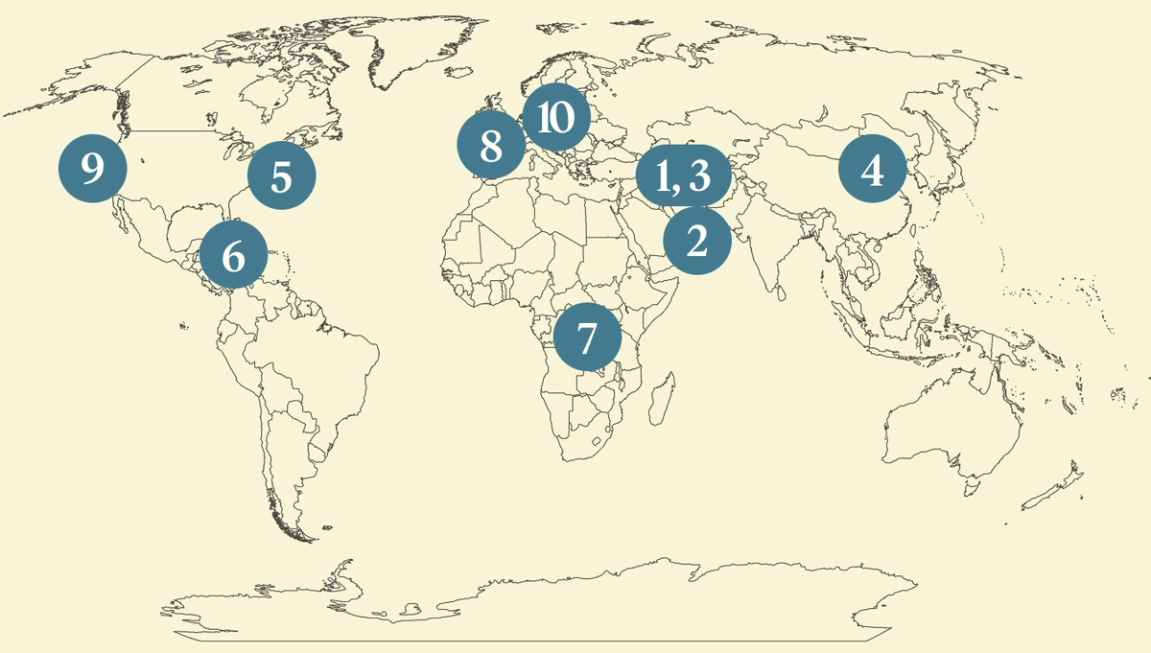 - Iran drone strikes widen
- US wants Hormuz help
- No Iran war end in sight
- Trump may delay Xi meet
- Central banks face dilemma
- Trump hints at Cuba ‘deal’
- Africa’s mineral overhaul
- Global EV sales diverge
- Oscars downplay politics
- EU thinker Habermas dies
 The London Review of Substacks, and a controversial book about fossil fuels’ role in the world economy. |
|
Iran targets Middle East sites |
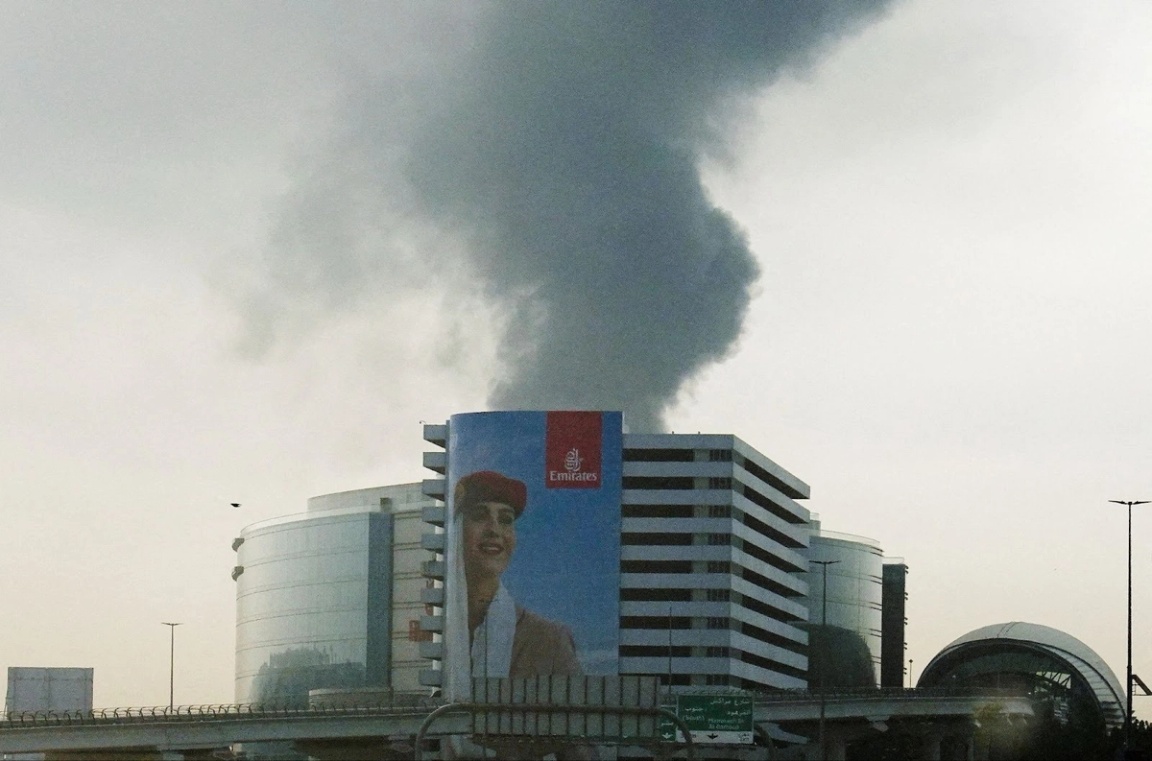 Stringer/Reuters Stringer/ReutersIranian drones hit an Emirati port and targeted neighboring Saudi Arabia and Bahrain as the widening Middle East conflict entered its third week. Though Washington has presented conflicting information about the war’s planned end, hostilities appeared set to expand as the US sent thousands more troops to the region, while Israel said it would strike thousands of targets across Iran. US President Donald Trump is facing rising domestic opposition to the war, with his energy secretary warning there was “no guarantee” that fuel prices would drop soon. Oil remained above $100 a barrel on Monday. Elsewhere, Israel is expanding its offensives against neighbors, planning a massive ground invasion of Lebanon, and hitting targets across Gaza and the West Bank. |
|
US urges support to reopen Hormuz |
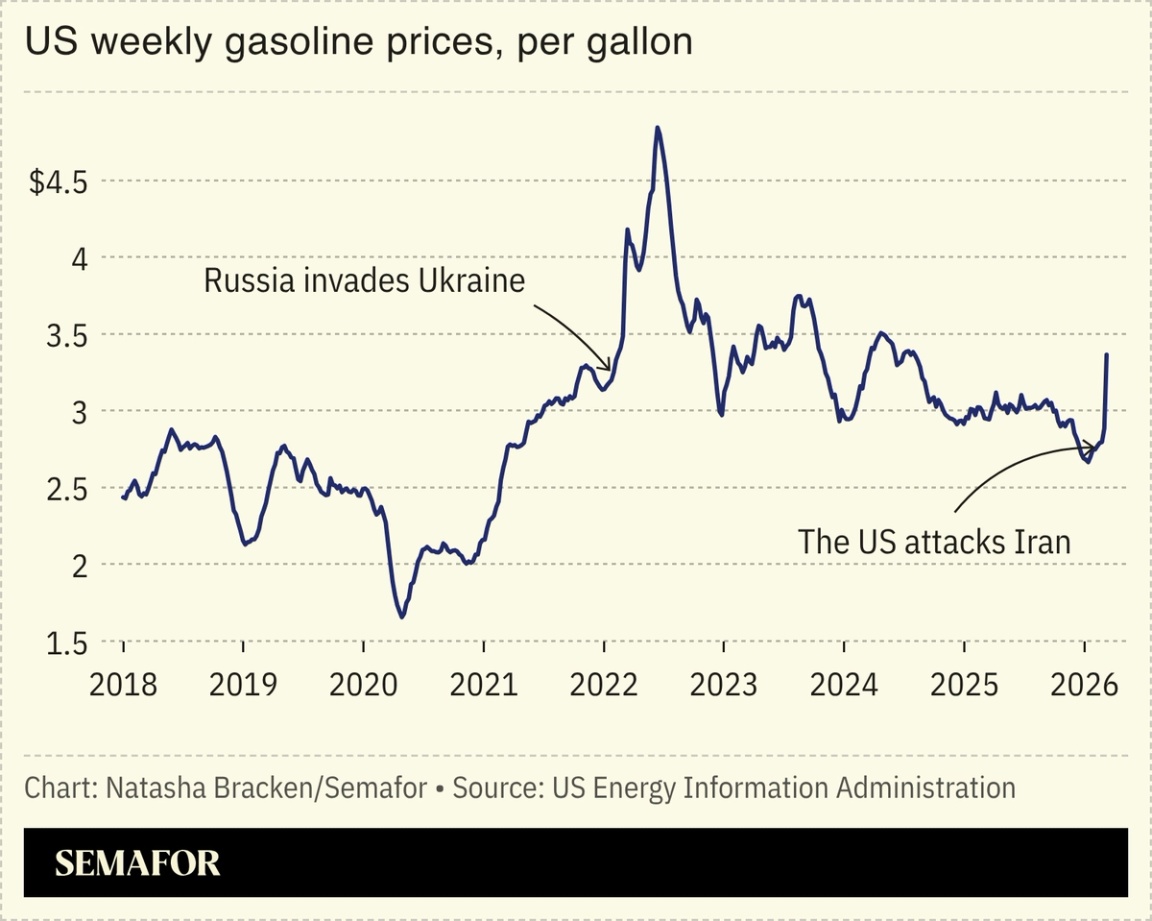 US President Donald Trump called on allies and powers to help reopen the Strait of Hormuz and ease an energy crisis prompted by its closure over the war, but so far none have publicly agreed. Australia and Japan will not send ships, while China and the UK were noncommittal. The White House is keen to announce a coalition, highlighting its awkward position, The Wall Street Journal reported. It wants to frame the war as a success, but also faces rising energy prices and domestic concerns about its endgame, and is struggling to achieve its aims through bombing alone. Trump told the Financial Times that a “negative response” from allies would be “very bad for the future of NATO.” |
|
 Majid Asgaripour/WANA via Reuters Majid Asgaripour/WANA via ReutersA quick end to the war in Iran is unlikely, and Tehran’s hand is strong despite heavy losses, analysts said. Initially, most observers expected a short, sharp operation, Bloomberg’s senior markets editor argued: US President Donald Trump was elected on an anti-interventionist platform and feared price rises ahead of the midterm elections. But Iran’s stiff resistance means Trump now needs a clear win to save face before taking an off-ramp. He faces a stark decision, the head of a prominent Washington think tank agreed: Stopping now leaves a “hostile and wounded, but not destroyed” Iranian regime able to block the Strait of Hormuz, whereas reopening the waterway could be long and costly. |
|
Trump-Xi meeting could be delayed |
 Evelyn Hockstein/Reuters Evelyn Hockstein/ReutersUS President Donald Trump said an upcoming summit with Chinese leader Xi Jinping in Beijing this month could be delayed because of the war in Iran. His remarks came as US and Chinese officials continued talks in Paris centered on trade and tariffs: Though both sides hailed the “remarkably stable” discussions, Trump has said he retained the “absolute right” to ramp up duties; Beijing, meanwhile, urged Washington to correct its “erroneous” ways. Now the US is asking that China help it unblock the Strait of Hormuz, expecting that Beijing will use its leverage over Tehran to help tame the soaring energy prices that are piling domestic pressure on Trump. |
|
Central banks likely to remain cautious |
 Sarah Silbiger/File Photo/Reuters Sarah Silbiger/File Photo/ReutersThe Federal Reserve, European Central Bank, Bank of Japan, and Bank of England are all likely to exercise caution this week when they set borrowing costs, uncertain of an economic picture clouded by the Iran war. The conflict has set off fears of higher inflation driven by rising oil prices, as well as slower growth. Markets are largely betting on policymakers turning hawkish, suggesting higher-for-longer rates that could also hit developing countries that borrow in Western currencies in order to lure international investors. Oil prices surging further, however, could trigger “asymmetries in central bank reaction,” JP Morgan’s chief economist noted, with the Fed looking to cut rates to support growth and the ECB raising them to tame inflation. |
|
Trump hints at Cuba ‘deal’ |
 Norlys Perez/Reuters Norlys Perez/ReutersPresident Donald Trump said the US could soon reach a “deal” with Cuba, where the White House has sought regime change. Cuba’s economic situation has worsened significantly since Washington tightened its oil embargo, and Trump has vowed to take over Cuba, in a friendly manner or otherwise. Cuban President Miguel Díaz-Canel has vowed to cling to power, but acknowledged Friday that Havana was in talks with Washington, which he hoped would move the countries “away from confrontation.” Details of any possible agreement were scant, but Trump suggested resolving the Cuba crisis may only come after the US operation in Iran. Meanwhile, the domestic challenges for Havana are compounding, with thousands staging rare protests over the weekend. |
|
Africa’s mineral overhaul |
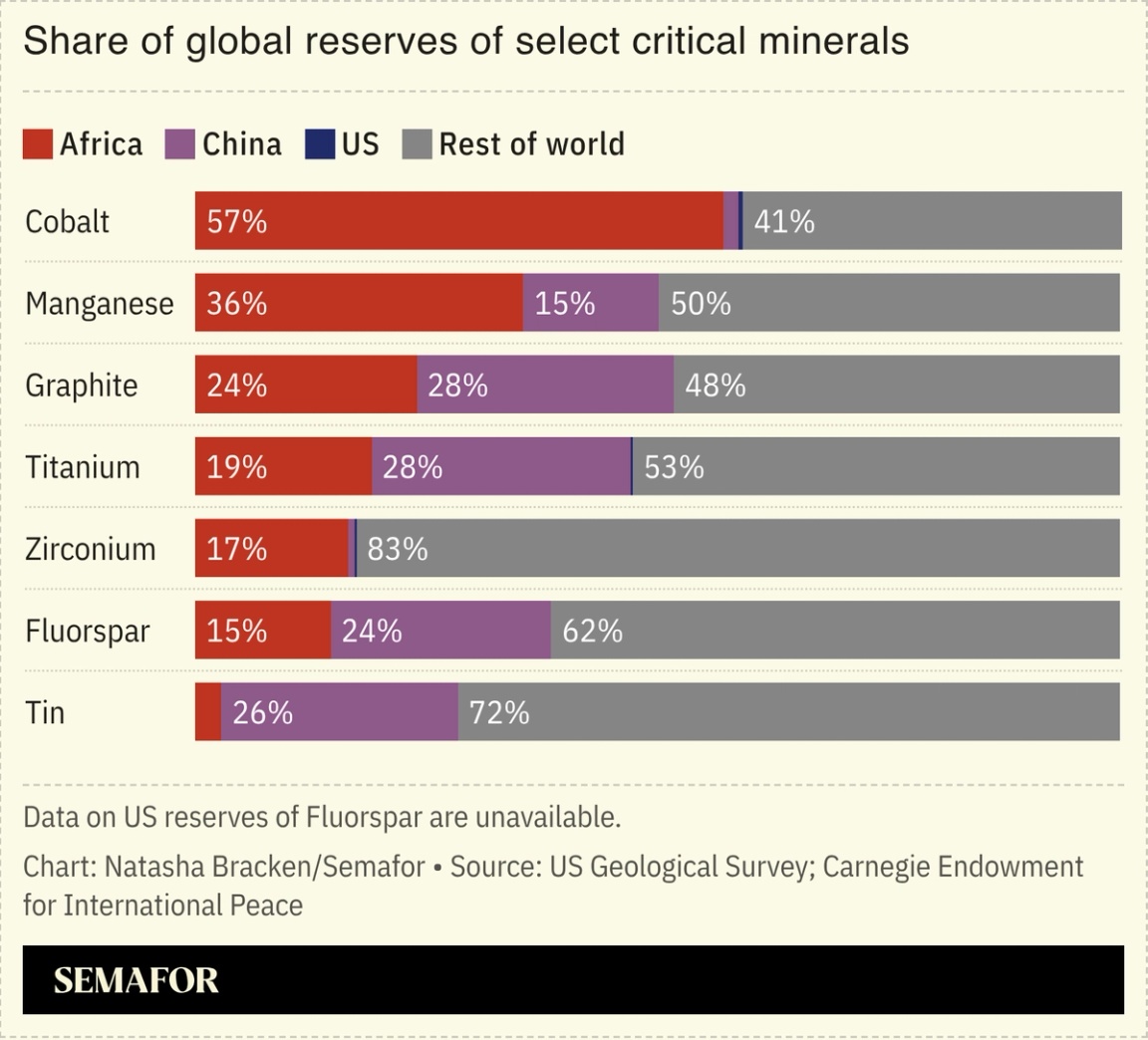 Mineral exports curbs across Africa are upending key Chinese supply chains, and as a result sending global commodity prices soaring. Several African countries have in recent months imposed restrictions on the export of their raw minerals in order to capture more of their value in the refining process, and boost prices: The Democratic Republic of Congo implemented quotas on cobalt, and Ghana and Zimbabwe on lithium. The limits have squeezed Chinese refineries — the world’s biggest — forcing many to draw from domestic stockpiles. However, the moves may not lead to greater investment in Africa. Countries there need to come up with incentives, and “it most likely isn’t by introducing bans,” one expert told the South China Morning Post. |
|
 The world is smaller than you think. Proximities delivers three overlooked, non-Western news stories to your inbox every weekday. Each issue is concise, insightful, and can be read in just two minutes. It’s free Monday through Friday, with in-depth, paid Saturday editions for readers who want to go deeper. Stay effortlessly informed — the kind of informed that turns heads at dinner parties. Subscribe today. |
|
EV sales surge in Europe, slow in US |
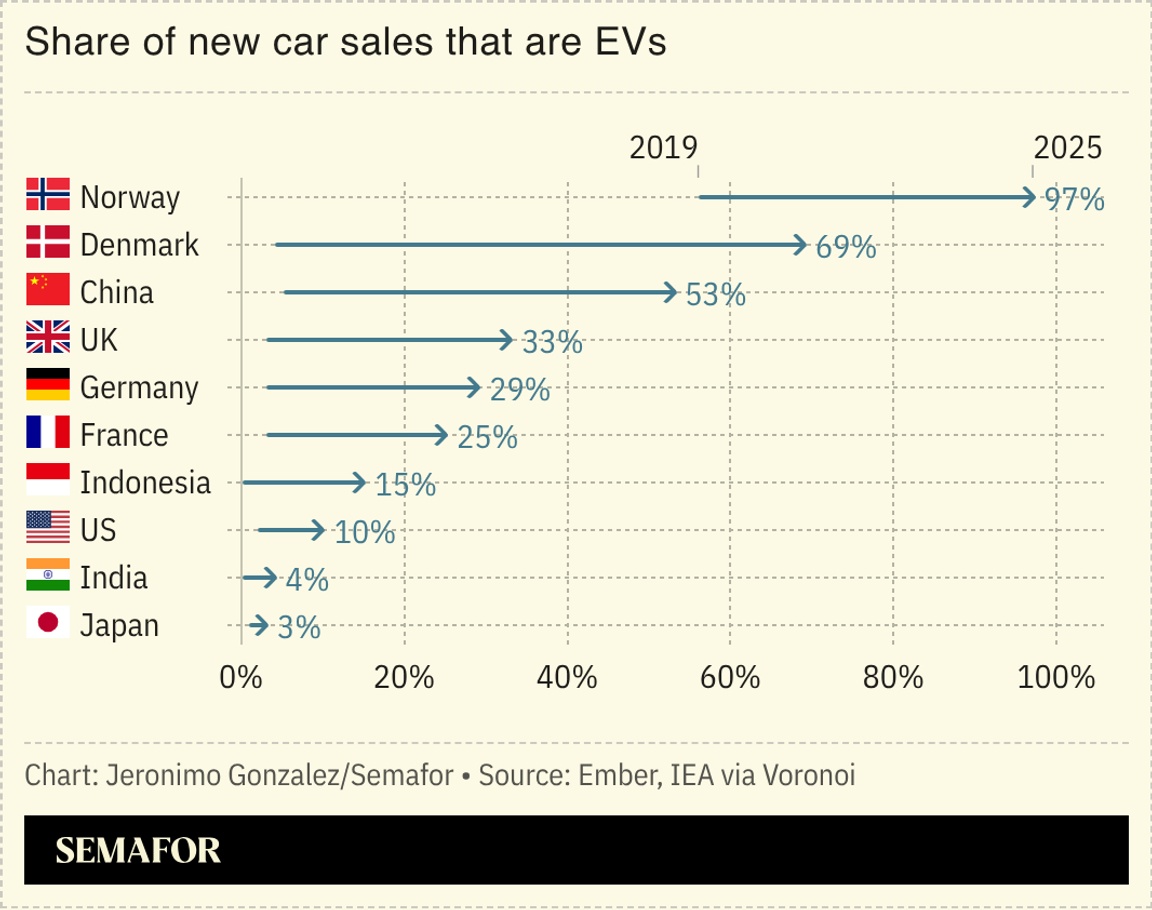 Global EV sales diverged, as purchases in Europe surged while slowing in China and the US. The European increase — a 21% year-on-year rise in February — comes despite growing economic worries, and is driven by continuing subsidies and policy support, Electrek reported, as well as the abundance of cheap Chinese brands. But China itself issued a purchase tax on EVs for the first time since 2014, and domestic sales fell even as exports soared. The US, which all but ended support for EVs, has seen a particularly steep decline: Ford’s battery EV sales are down 70% so far this year. Overall, global sales for the first two months of 2026 are down 8% year-on-year. |
|
Oscar winners sidestep politics |
 One Battle After Another director Paul Thomas Anderson. Mario Anzuoni/Reuters One Battle After Another director Paul Thomas Anderson. Mario Anzuoni/ReutersThe 2026 Academy Awards saw few overt political statements. Though the Best Picture win for One Battle After Another, about revolutionaries in the US, suggests that Hollywood’s minds might have been on politics, acceptance speeches broadly avoided controversial topics. Mr Nobody Against Putin, which follows a schoolteacher documenting the propaganda his students are exposed to in a small Russian town, was an exception to that rule: Accepting the award for Best Documentary, its director David Borenstein warned against governments “[murdering] people on the streets,” a reference to both Russian oppression and recent US events. The film itself has attracted controversy: Ukrainian writers complained that it paints Russian citizens as naive and passive, rather than complicit in Moscow’s war on Ukraine. |
|
|


