Regional Updates
 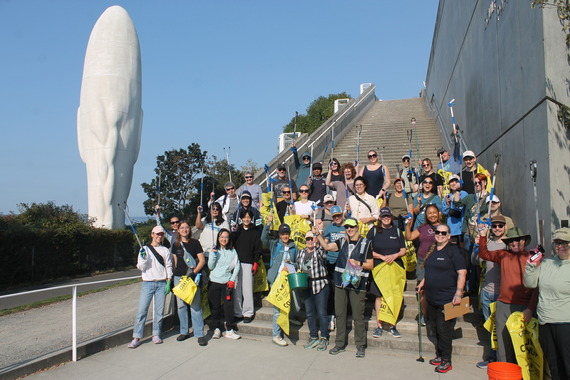 A group of volunteers at Puget Soundkeeper's flagship International Coastal Cleanup event pose for a group photo (Photo Credit: Sean Dixon/Puget Soundkeeper Alliance).
Celebration of 2025 International Coastal Cleanup Efforts in Puget Sound
Every year, Puget Soundkeeper serves as the regional coordinator for International Coastal Cleanup (ICC) events across the Puget Sound and 2025 was no different. Over 15 partner organizations worked with Puget Soundkeeper in 2025 to do an ICC event across the Puget Sound. Between collecting marine debris and documenting data, volunteers got to be citizen scientists and contribute to growing research on marine debris and the detrimental impacts it has on wildlife and communities across the Puget Sound. To learn more about the results from ICC events in 2025, read Puget Soundkeeper's annual report here.
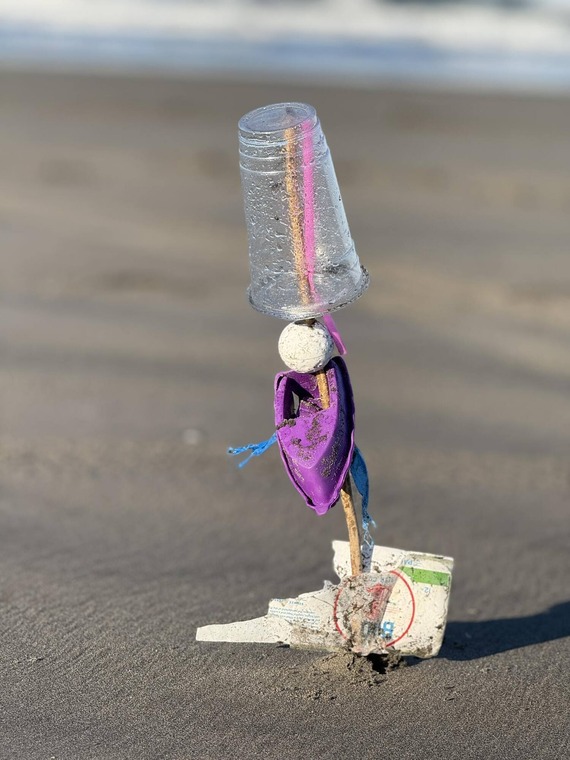 Beach trash, including a Buoy Beer label (Photo Credit: Wendy Murry).
Wildlife Observations and Beach Cleanup Efforts
This summer included notable wildlife observations along the north end of the peninsula by Russ Lewis of GrassRoots Garbage Gang, including coyote activity, pinnipeds, and seabirds. He also documented five Roosevelt elk mortalities, likely caused by entrapment in tidal flat mud and subsequent drowning as tides advanced. On the south end of the peninsula, a female gray whale stranding was observed.
On a positive note, debris removal efforts produced measurable outcomes. During the July 5th holiday period, GrassRoots Garbage Gang dumpsters tipped out 27.7 U.S. tons of debris, with an additional 8 tons collected by Russ Lewis through his consistent weekly beach cleanups. Community members can sign up for his informative weekly beach report.
GrassRoots Garbage Gang continues to seek funding for dumpster support and vehicle maintenance for ongoing cleanup efforts.
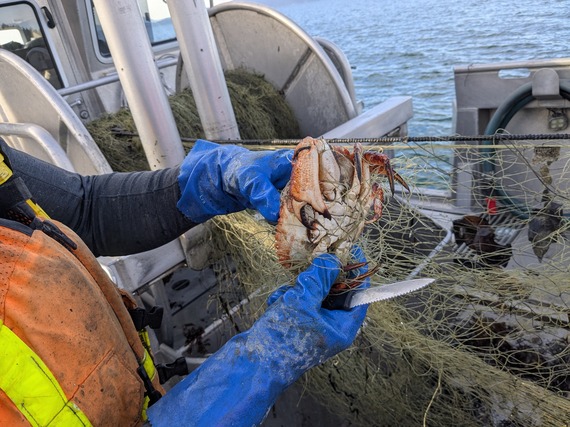 A crab is removed from a recovered lost salmon gillnet (Photo credit: Natural Resources Consultants).
Lost Salmon Gillnet Recovered Through the Reporting, Response, and Retrieval Program
In January 2026, Natural Resources Consultants (NRC) and Fenn Enterprises successfully removed a lost salmon gillnet from Chuckanut Bay, Bellingham, Washington. The 1,300-foot gillnet was recovered through the Northwest Straits Foundation’s newly lost nets Reporting, Response and Retrieval (RRR) program, which facilitates the rapid response and retrieval or reported newly lost nets.
In compliance with mandatory reporting requirements, the harvester reported the lost gillnet to the RRR program. NRC mobilized teams to locate and recover the net, using sidescan sonar and coordinated vessel operations. During gillnet removal, personnel freed more than 200 live crabs, and documented impacts to birds and fish.
The RRR program is managed and funded by the Northwest Straits Foundation. Removal operations are funded by the Northwest Straits Foundation and the Ocean Conservancy Global Ghost Gear Initiative.
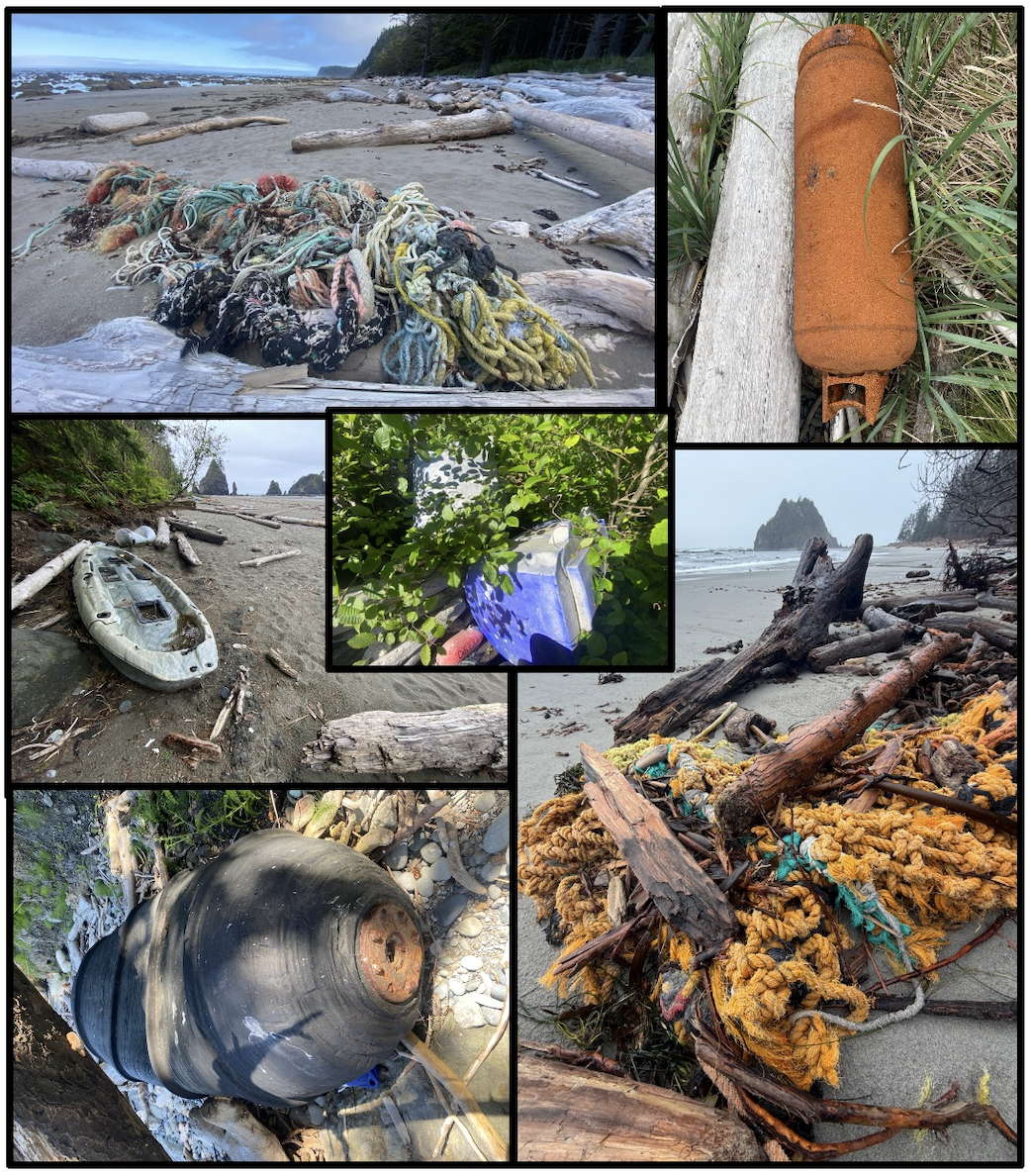 A sample of the large marine debris items found along the wilderness coast of Olympic National Park (Photo Credit: Megan Juran).
Marine Debris Loading Along the Coastal Wilderness of Olympic National Park
Washington CoastSavers, with the support of NOAA Sea Grant and the National Marine Sanctuary Foundation, completed an assessment of the large marine debris along the Olympic National Park wilderness using the MyCoast App. In 2024, reporting increased 3,820% when CoastSavers added 196 additional items to the 5 items previously documented on the app. The prevalence of smaller items was so concerning that they were documented as well. In addition to large objects, the survey cataloged 9,261 pieces of notable marine debris, 2% of which was large debris. Single-use beverage bottles and foam floats were the vast majority of smaller items documented—4,935 and 2,677 items respectively—with the two items making up 89% of the smaller debris.
| Top 10 Large Marine Debris Items |
| Tires |
63 |
| Net/rope |
35 |
| Black buoy |
28 |
| 55 gallon drum |
26 |
| Pallet-plastic |
9 |
| Dock block |
9 |
| Small boat/kayak |
4 |
| XL plastic foam |
4 |
| Fishing tote |
3 |
| Dock |
2 |
 NOAA Marine Debris Program Updates
 |
|
Special Funding Opportunity: Nationwide Fishing Trap Removal, Assessment, and Prevention Program
With Fiscal Year 2022-2023 funding from the NOAA Marine Debris Program, the William and Mary’s Batten School and the Virginia Institute of Marine Science is seeking applications for up to $1,475,000 in grants to remove derelict fishing traps throughout coastal waterways of the United States while collecting data to prevent future gear loss. Projects may range from $50,000 to $150,000. Projects throughout the coastal United States, including United States territories and Freely Associated States, are eligible for consideration.
For more information on the application process, visit the William and Mary’s Batten School and the Virginia Institute of Marine Science website.
Deadline: March 31, 2026 by 11:59 PM ET.
|
 |
|
2026 BoatUS Foundation Turning the Tide Summit Seeks Presenter Applications
Under a 2023 award from the NOAA Marine Debris Program, the BoatUS Foundation is working to increase understanding of the abandoned and derelict vessel issue while also removing and preventing them. The BoatUS Foundation is now seeking speakers for its Turning the Tide Summit in New Orleans on December 6-9, 2026. The summit will bring together government agencies, environmentalists, marine professionals, and recycle and waste management experts nationwide to explore best practices for responsible and sustainable removal and disposal of abandoned and derelict vessels (ADVs) and boating-related debris along with sharing emerging technologies and innovative recycling programs.
The BoatUS Foundation is seeking speakers who can share their experience and expertise regarding:
- Projects pertaining to ADV removals and vessel turn-in programs.
- Projects and efforts that focused on sustainable disposal and recycling solutions for ADVs and boating-related debris.
- Initiatives and/or programs geared towards preventing ADVs and boating-related debris.
Interested speakers are invited to apply here by June 1, 2026.
|
 |
|
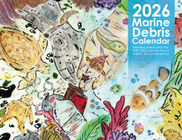
The 2026 Marine Debris Calendar Is Now Available!
The NOAA Marine Debris Program is proud to announce that our 2026 Marine Debris Calendar is now available for download! Our art contest aims to get students thinking about how marine debris impacts our ocean and Great Lakes, and what they can do to help. This year’s calendar features artwork from 13 students in grades one through eight, representing seven states and three U.S. territories. All are winners of the “Keep the Sea Free of Debris” art contest.
Check out the 2026 Marine Debris Calendar on our website!
Photo caption: Artwork by Aaliyah R. M. (Grade 8, Puerto Rico), winner of the 2025 NOAA Marine Debris Program Art Contest.
|
 |
|
Marine Debris Foundation Announces Public-Private Partnership
In January 2026, the Marine Debris Foundation announced an award from the NOAA Marine Debris Program to support a five-year partnership to prevent, remove, and reduce marine debris in the United States and accelerate solutions to global marine debris issues.
The Marine Debris Foundation is a non-profit partner of the NOAA Marine Debris Program focused on supporting community-driven initiatives and advancing innovative solutions to prevent, remove, and reduce marine debris. This new award supports community grants for grassroots projects and the Genius Prize for Save Our Seas Innovation, a biennial national, competitive cash award authorized by Congress that recognizes promising innovations that prevent or remove marine debris for cleaner waters throughout the country.
Learn more about this new award on the Marine Debris Foundation website.
|
|