| | President Trump berates allies for rebuffing his requests to reopen Hormuz, a predictor of the 2008 ͏ ͏ ͏ ͏ ͏ ͏ |
| |  | Flagship |  |
| |
|
The World Today | 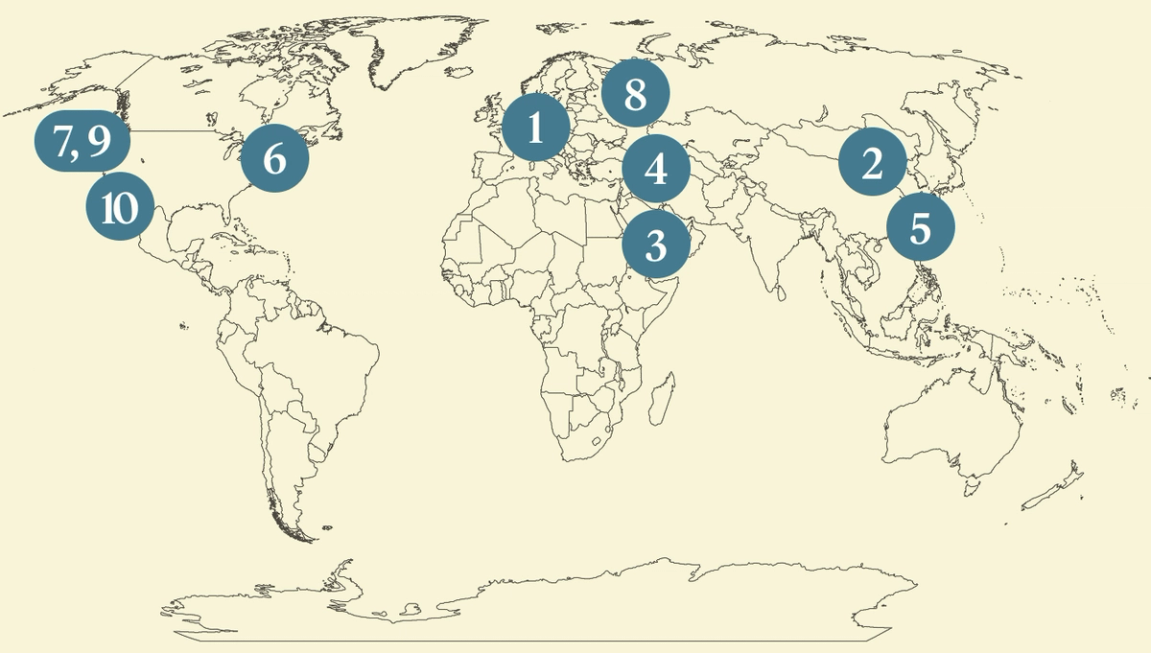 - Trump berates allies over Iran
- Mixed signals on China trip
- Gulf states weigh up US ties
- Iran’s asymmetric warfare
- Global chip supply threat
- Another crisis in the making
- Nvidia’s $1 trillion prediction
- Russia tests control of internet
- An eternal pessimist dies
- Death Valley blossoms
 A St. Patrick’s Day film recommendation. |
|
Trump furious with allies over Iran |
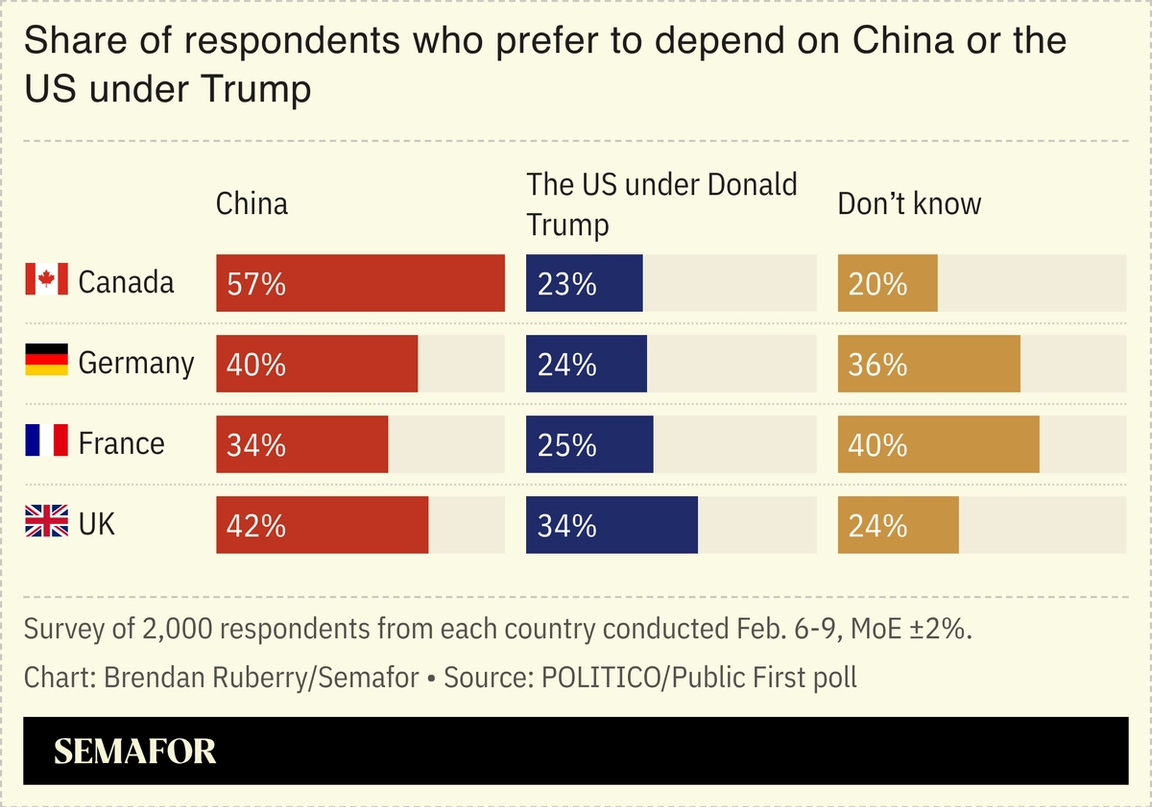 President Donald Trump on Monday lashed out at US allies for rebuffing his calls to help reopen the Strait of Hormuz, reflecting Washington’s strained relations with its closest partners. Europe has largely resisted Trump’s efforts to build an international coalition against Iran, with Germany’s defense minister saying Monday, “This is not our war.” Japan, Italy, and Australia declined to send ships to the strait, while South Korea remained noncommittal. Trump responded to the rejections with his trademark bravado and belligerence, saying, “We don’t need anybody,” while framing his requests as a “loyalty test of America’s allies,” The New York Times wrote. A Politico poll showed that key US allies in the West now see Beijing as more dependable than Washington. |
|
US’ mixed messages on China summit |
 Abdul Saboor/Reuters Abdul Saboor/ReutersThe US Treasury secretary on Monday walked back President Donald Trump’s remarks tying his upcoming China visit to the Iran conflict. Scott Bessent said any delay in the high-stakes meeting between Trump and China’s leader would be because of “logistics” and not — as Trump suggested — linked to Beijing’s cooperation in reopening the Strait of Hormuz. Beijing is keen to keep the visit on track, but Trump’s pressure tactic will likely backfire, analysts said. “Practices of coercion and arbitrary linkage are not conducive to constructive communication,” one said. China views the US’ mixed messages as more evidence of Trump’s erratic approach damaging the US’ credibility, another said: “The best option for Beijing is to sit pretty rather than engage proactively.” |
|
Gulf’s US security ties a liability |
 Stringer/Reuters Stringer/ReutersIran’s retaliatory assault on the Gulf is forcing regional leaders to consider reducing their exposure to the US. Gulf states have been building up security ties with China for years, but may now accelerate this process, given that their security tie-ins with Washington — from hosting military bases to huge hardware purchases — have become more of a liability than a source of protection over the course of the war, Semafor Gulf noted. Meanwhile, Washington’s call to reopen the Strait of Hormuz was directed at Asian and European powers, not regional ones. Still, a fundamental rupture is unlikely: Oman’s foreign minister noted that many parties are “betting that aligning with the United States may lead Washington to reconsider some of its decisions.” |
|
Iran’s asymmetric warfare challenges US |
 DVIDS/Handout via Reuters DVIDS/Handout via ReutersThe US is confronting its limitations in dealing with Iran’s asymmetric warfare, analysts argued. Iran’s aging air force and weak defenses made it susceptible to US and Israeli strikes, but Tehran’s reliance on cheap drones and sea mines in the Strait of Hormuz has allowed it to impose significant costs on the US, the Gulf, and the global economy, Semafor’s Mohammed Sergie wrote. Iran, knowing it cannot prevail in open combat, has instead “shown a knack for finding and exploiting weaknesses,” a Washington Post columnist wrote. “Tehran’s asymmetric strategy strikes several precisely defined pressure points that the US entered the war with only a crudely drawn plan to address,” a Middle East analyst argued. |
|
Iran war threatens global chip supply |
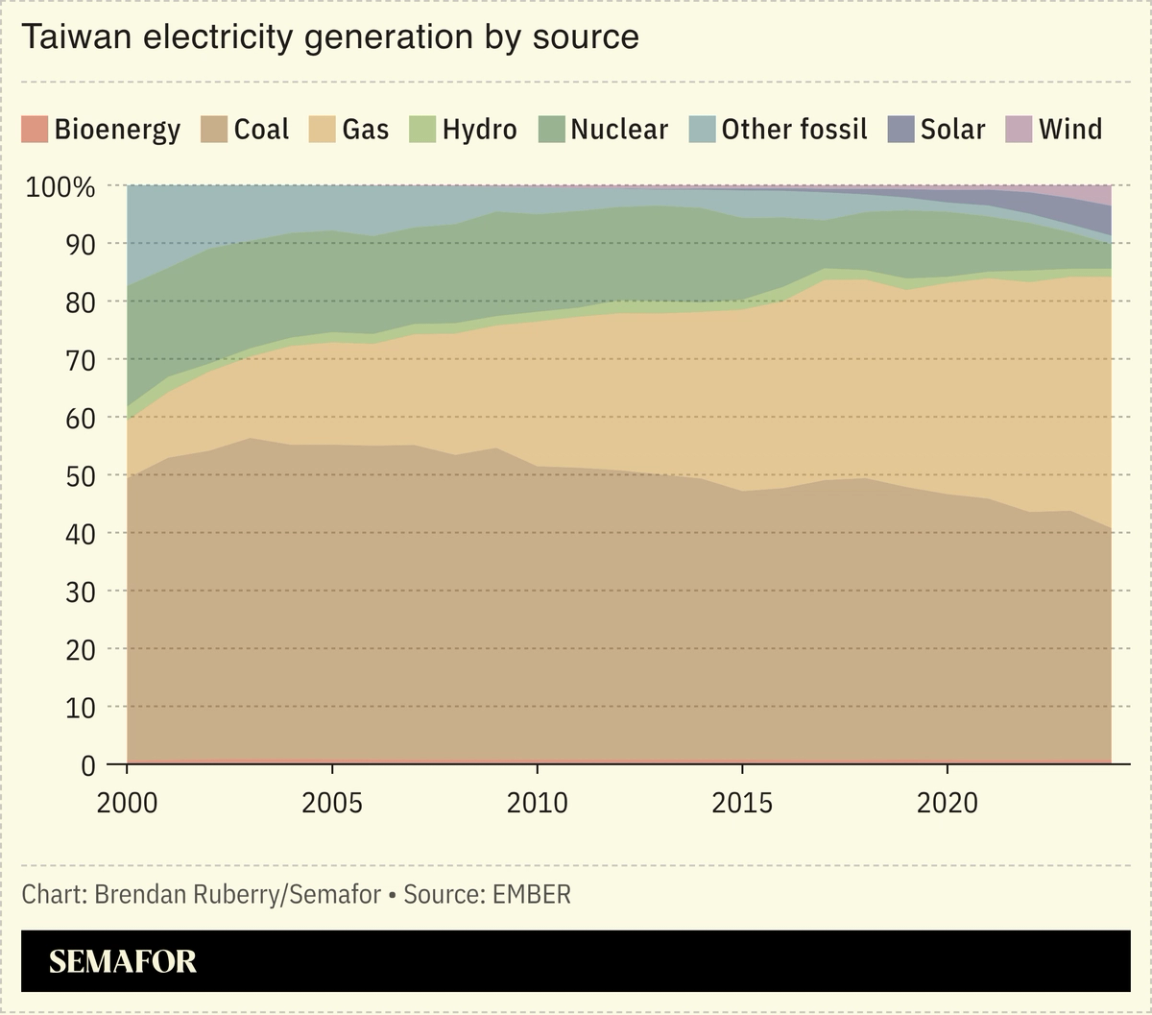 A protracted war in the Persian Gulf endangers the global supply of semiconductors. Barring a quick end to hostilities and the re-opening of the Strait of Hormuz, Taiwan will struggle to satisfy its needs for liquefied natural gas, as well as other chemicals — like helium, a third of which is processed in Qatar — on which chip production depends, Bloomberg wrote: The island relies upon imports for 97% of its energy needs. The war is sending shockwaves throughout Asian economies, Carnegie Endowment analysts wrote, particularly imperiling those, like South Korea, that depend on fuel imports to power their booming semiconductor industries; in the four trading days following the conflict’s start, Korean stocks suffered their worst plunge since 2008. |
|
Prophet of 2008 crash warns of ‘worse’ crisis |
 Brendan McDermid/Reuters Brendan McDermid/ReutersAn early predictor of the 2008 financial crisis warned that interconnected vulnerabilities in the global economy could produce an even worse collapse. Though often analyzed as separate risks, the AI boom, troubled private credit, and Iran-related shocks are merely “different entry points into the same underlying structure,” Richard Bookstaber argued in The New York Times, noting that “the specific source of stress matters less than how quickly that stress can spread.” Trouble could first appear as disruptions to semiconductor supply chains or AI-related infrastructure and cascade into system-wide failure. Uniquely opaque, and exposed to AI, private lending poses particular dangers: A leading credit hedge funder said Monday that a “substantial portion” of the $2 trillion industry was already “stressed or distressed.” |
|
Nvidia expects $1 trillion in chip orders |
 Fred Greaves/Reuters Fred Greaves/ReutersNvidia expects to see $1 trillion in orders for the company’s most advanced processors through 2027, CEO Jensen Huang said Monday, reflecting booming demand for the chip giant’s products. The figure exceeds Nvidia’s previous projection of $500 billion revenue from its Blackwell and Vera Rubin systems. During his keynote speech at the company’s annual developer conference, Huang noted that 60% of Nvidia’s business comes from the top five hyperscalers. “I believe that computing demand has increased by 1 million times in the last two years,” Huang said. The forecast underscores the extent to which the AI boom has supercharged Nvidia’s business, Bloomberg wrote, but investors have sought more assurances on whether the surging AI spending can be maintained. |
|
 There’s a reason 200,000+ investors trust Opening Bell Daily. It’s the newsletter Wall Street actually reads. Get the best market analysis, insider picks, and actionable ideas in one daily briefing. Subscribe free. |
|
Kremlin clamps down on internet |
 Yulia Morozova/Reuters Yulia Morozova/ReutersThe Kremlin is testing its control of the Russian internet. Muscovites recently found themselves unable to access mobile internet; other Russian regions also went offline recently. A week later, some government-approved sites became accessible, but non-whitelisted internet remains blacked out. The regime said the shutoffs were defense against Ukrainian drone attacks, which use cellphone towers for navigation, but analysts told The Wall Street Journal that it was a trial of a nationwide system to limit information in case of political unrest. Sales of walkie-talkies and landline phones have risen, the Financial Times reported. The Russian internet was once famous for being a barely regulated Wild West, but Moscow has clamped down, banning popular apps. |
|
‘The Population Bomb’ author dies |
 Ballantine Books Ballantine BooksPaul Ehrlich, the author of the bestselling, doom-laden, but ultimately wrong book The Population Bomb, died aged 93. Ehrlich warned in 1968 that “the battle to feed all of humanity is over”; hundreds of millions would starve within 15 years, he said, as agricultural production failed to keep up with birth rates. But Ehrlich miscalculated both sides of the equation. Even as he wrote, global population growth rates had peaked, and the “Green Revolution” that transformed agricultural yields was already under way. Ehrlich stuck to his belief that the growing population would deplete resources faster than innovation produced them, losing a high-profile bet in 1990 over the price of metals, and said in 2018 that imminent civilizational collapse remained “a near certainty.” |
|
|


