Your afternoon news update

ADVERTISEMENT

View in Browser | APNews

DONATE

View in Browser | APNews

DONATE
 

AP Afternoon Wire

Advancing the Power of Facts

Policy changes, but facts endure. AP delivers accurate, fact-based journalism to keep the world informed in every administration. Support independent reporting today. Donate.

By Amy Langfield

March 24, 2026

By Amy Langfield

March 24, 2026


Good afternoon and welcome to your afternoon news update from AP. President Donald Trump has cast another mail ballot in Florida; airstrikes batter Iran as it attacks Israel and Gulf states; and scientists in Geneva took some antiprotons out for a spin in a never-tried-before test drive.


UP FIRST

AP Morning Wire

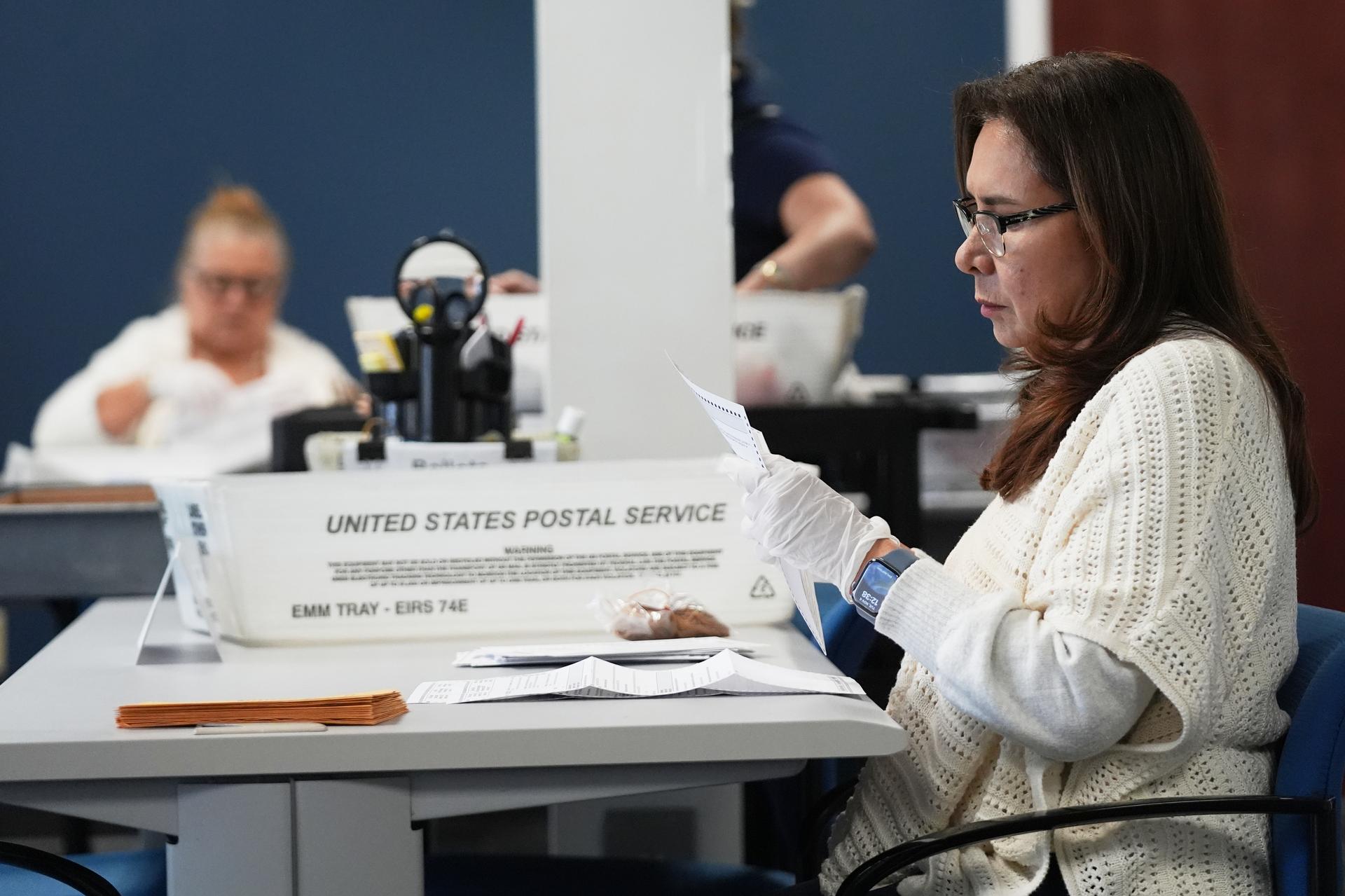
Employees sort vote-by-mail ballots from municipal elections on Election Day at the Miami-Dade County Supervisor of Elections Office in November in Doral, Fla. (AP Photo/Lynne Sladky)

Trump casts Florida mail ballot as he pushes Congress to severely limit that voting option

Trump has cast another mail ballot in Florida as he continues to publicly bash the voting method as a source of fraud and push Congress to curtail the practice. Palm Beach County voter records show the president voted by mail in a Tuesday special election for state legislative seats and that his ballot has been counted. Early in-person voting in the contest ran through Sunday, when Trump was still at his south Florida estate. The White House did not immediately return a request for comment. Aides have said Trump’s ire is directed at states using universal mail-in voting, not individual voters who may not be able to get to a polling place. Read more.

RELATED COVERAGE ➤

  • Trump administration bans import of new foreign-made routers, citing supply chain and security risks
  • Rubio testifies in former congressman’s Venezuela lobbying trial
  • U.S. Park Police officer released from hospital after being shot in vehicle in Washington
  • Oklahoma’s governor picks energy executive Alan Armstrong to fill US Senate seat through end of year
  • Abortion pills are gaining ground as a method for ending pregnancies, and opponents are responding 
  • Lawsuit accuses University of Alabama of censorship in ending student magazines
  • Big money flows into state attorney general races as legal battles shape American politics
  • Michigan cities lose millions to pollution tax breaks with no oversight, little say
  • Hundreds go on strike at major Navy shipbuilder in Maine over wages and benefits
  • It’s a bad time to hunt for new jobs, most US workers say in new Gallup poll
  • Bob Woodward to ‘lift the lid’ on decades of reporting in new memoir ‘Secrets’
 

TOP STORIES

Airstrikes batter Iran as it attacks Israel and Gulf states, while diplomatic efforts gather pace

Airstrikes battered Iran and Iranian missiles and drones targeted Israel’s Tel Aviv and sites across the Mideast on Tuesday, even as Trump said that the United States was in talks with the Islamic Republic to end the war. With thousands more U.S. Marines on their way to the Gulf, both sides firing barrages and Iran denying any negotiations are taking place, the war’s tempo remained high a day after Trump delayed his self-imposed deadline for Iran to reopen the Strait of Hormuz. Tehran’s chokehold on that crucial waterway has snarled international shipping, sent fuel prices skyrocketing and threatened the world economy. Pakistan offered to host diplomatic talks, but Iran remained defiant, vowing to fight “until complete victory.” Read more.

RELATED COVERAGE ➤

  • Philippine president declares national energy emergency to respond to impact of Middle East war
  • Photos from the Mideast in the 4th week of the Iran war
  • WATCH: Villagers check out remains of large missile that came down in West Bank

CERN hails test on transporting antimatter as a scientific success

Scientists at CERN took some antiprotons out for a spin in a never-tried-before test drive. Tuesday's experiment was hailed as a success. About 100 antiprotons traveled in a truck around CERN's Geneva campus and were transported back into the lab. Each particle had a corresponding antiparticle, like an antiproton, exactly matching the particle but oppositely charged. If the opposites came into contact, they would “annihilate” each other and set off energy. The mass in the test was tiny, so the worst that could happen was losing the antiprotons. Read more.

RELATED COVERAGE ➤

  • WATCH: Nuclear research agency CERN runs delicate test
 

ADVERTISEMENT


IN OTHER NEWS

American Dennis Coyle smiles after being released by Afghanistan's Taliban authorities, who had held him for over a year, before boarding a plane at the airport in Kabul, Afghanistan on Tuesday. (AP Photo/Mudassir Safi)

Accused of violating unspecified laws: Afghanistan releases American national Dennis Coyle held for more than a year

Russia-Ukraine war: Russia fires nearly 400 drones at Ukraine with signs its spring offensive has started

2 rivers burst banks: Kenya floods worsen with death toll hitting 88

Congo: Rebels used containers to hold journalists in brutal conditions, advocacy group says

Escalating tensions: China protests to Japan over alleged break-in at its embassy in Tokyo

Mexico: 229 migrants calling for help found in back of truck
Maryland: Quadruple amputee cornhole player fatally shoots man, authorities say

Epstein fallout: French authorities search Paris arm of Swiss bank Edmond de Rothschild in Epstein-linked probe

‘Find ways to really reground yourself’: With long lines and other disruptions, air travel anxiety isn’t just about a fear of flying

WATCH: