|
 |



 |
I INTERVIEWED OSCAR-WINNING PRODUCER Steve Starkey this week about his new book, On the Set of Forrest Gump, for The Bulwark Goes to Hollywood. He had a ton of great stories to tell from the making of that film. (My favorite: the favor Robert Zemeckis called in to get the perfect voice for their Elvis stand-in.) I hope you give it a listen:
 |
|
Steve was Zemeckis’s producing partner for many years, producing Death Becomes Her, Cast Away, Flight, and a host of other huge productions in addition to Forrest Gump. He has seen up close how the economics of production have changed, and he laments what’s happened in his home state of California.
“The genie’s out of the bottle,” he said. “So many states and so many countries have incentivized having film productions come to their country or their state. And they did that because it wasn’t offered here in California.” He proceeded to rattle off a handful of places that he and Zemeckis had filmed to keep costs down—Atlanta, Montreal, Vancouver, London, etc.—and noted that talent pools were now available in each of those locations that allowed for better work to be done there. But Los Angeles still has one big advantage for the folks who live there and the studios that remain based in the city.
“Everybody lives in town,” he said. “All you’re going to do is go, you’re just driving to work every day. That’s just a lot easier than going all the way to Atlanta to just go to a stage every day.”
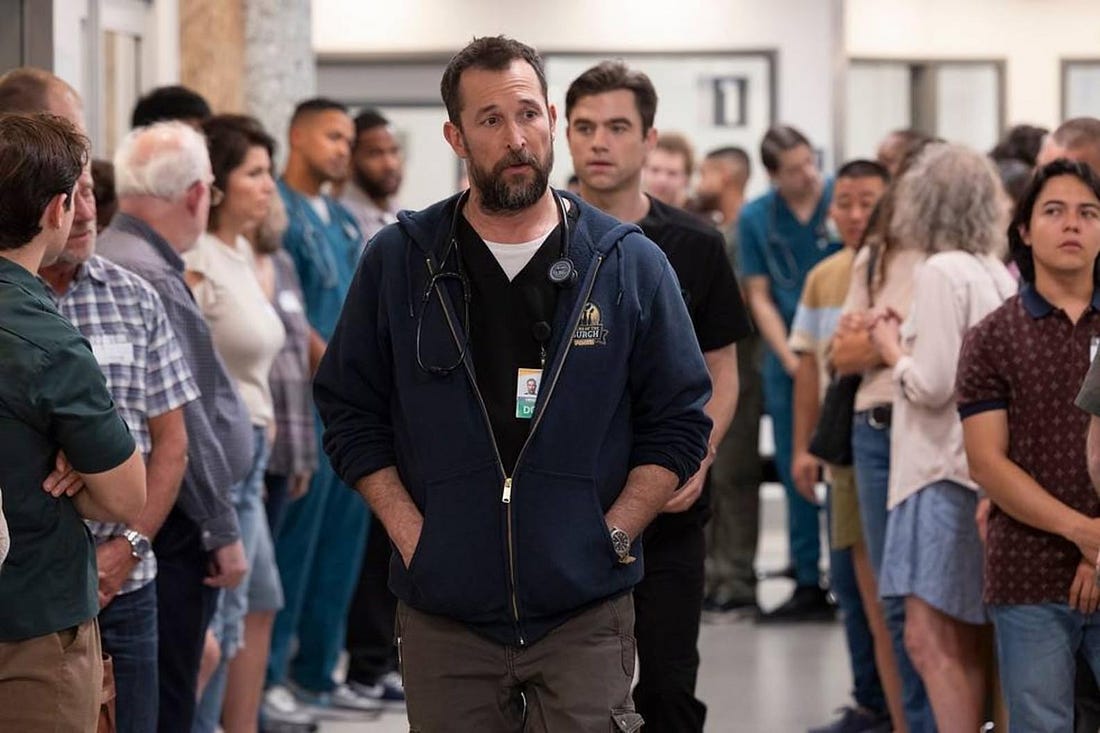
This is the case with The Pitt, the hit HBO drama that wrapped up its second season last night. Star Noah Wyle and execs like John Wells have been very vocal about the joy of shooting in Los Angeles and how it was only really possible thanks to tax credits and other incentives offered by the state of California.
“Last year we filmed for about 135 days over seven months, plus two months of preproduction. We employed about 350 people, full time. We then brought on an additional about 1,100 people, averaging about 200 new people every day. We worked with about 1,400 background performers, averaging about 200 a day. We spent about $35 million in wages, we spent about $20 million in purchasing: lumber, construction materials, rentals, food,” etc., Wyle said at a press conference last year.
Earlier this month, he credited this job creation to the state’s newly generous tax incentives, noting at a Burbank hearing that the $12 million in savings afforded The Pitt was the cost of roughly two episodes of the show: “The ripple effect of that money . . . stimulates additional economic activity. It’s estimated that the procurements associated with The Pitt, season one, stimulated $22.6 million in contributions to the state’s GDP along a domestic supply chain.” This, Wyle said, led to 150 full-time jobs across the state of California.
Now, there’s some debate about the overall efficacy of tax incentives when it comes to film and TV production. The Motion Picture Association’s website hosts a handy collection of studies demonstrating that tax credits lead to jobs in states as diverse as Texas, New York, and Oklahoma. My friend and noted libertarian Peter Suderman says not so fast: Yes, incentives can lead to a quick boom but as soon as they stop or are topped by better incentives, bye-bye jobs.
Still, the simple truth is that film productions have been fleeing from California and it’s largely because of incredibly generous subsidies in states like Georgia and countries like England. The number of shoot days in Los Angeles is in precipitous decline, dropping 16 percent between 2024 and 2025. I’m sure actors and crew alike would love to sleep in their Los Angeles homes rather than globetrot to find the cheapest soundstage space. But millions of dollars are at stake for each of these productions.
Folks in California have been pushing for a federal tax credit that could be stacked on top of state credits in the hopes of luring production—and jobs—back to the United States. I talked to Rep. Laura Friedman (D-Calif.) about this last year, and Sen. Adam Schiff (D-Calif.) was on Matt Belloni’s podcast last week discussing the ongoing efforts. Details remain light, but Schiff made an important point to Belloni: “It would be a baseline of 15 percent, but then you would add on, depending on whether work comes back and