| | In this edition, Gulf gatherings are at risk from the war in Iran, and Bill Ackman tries again with ͏ ͏ ͏ ͏ ͏ ͏ |
| |  | Business |  |
| |
|
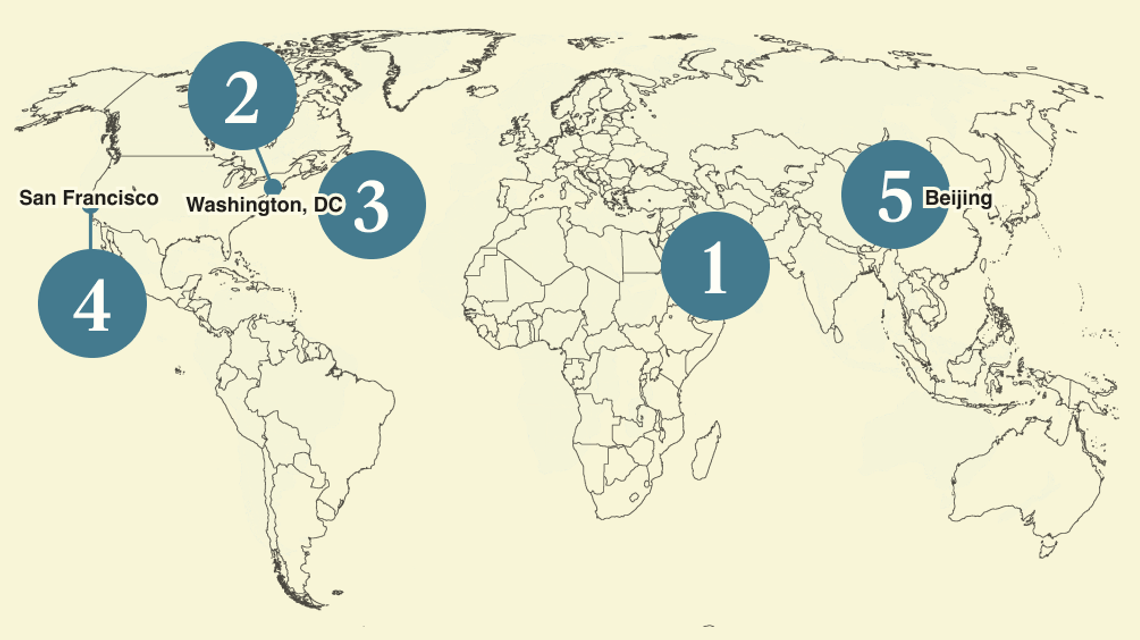 - Gulf gatherings at risk
- Ackman tries again
- Summers’ inflation warning
- Oura on Compound Interest
- China’s power play
 ‘A whole civilization will die tonight,’ Trump warns as Iran clock ticks |
|
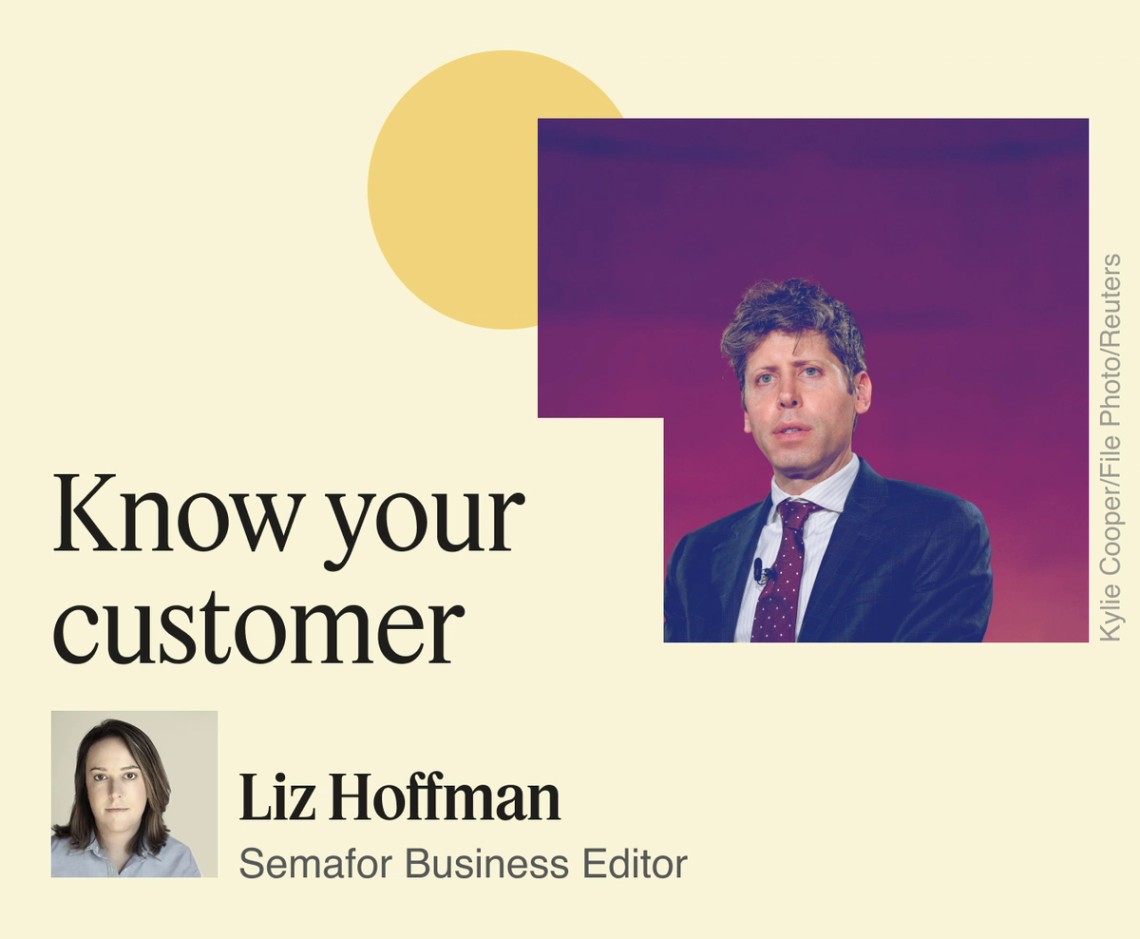 The oldest question in business — who is your customer — turns out to be the one OpenAI still can’t answer. Setting aside the many doubts raised by that 11,000-word New Yorker piece, OpenAI makes most of its money from consumers. In business jargon, it’s a B2C company. Anthropic sells mostly to big businesses (B2B). On Monday, it announced it has doubled its base of customers paying $1 million a year. Anthropic, meanwhile, said it’s “focused on building products people love.” Each has ambitions in the other’s lane — see OpenAI’s Codex tool and Anthropic’s Super Bowl ad — but this is their hard-coded DNA. So who wins? Consumer business models dominated the 2000s and early 2010s as mobile and e-commerce opened up new sales channels. The decade since has belonged to B2B models. Even Uber, which became a household verb, now sees its future in servicing corporate robotaxi fleets. I’d bet on the latter. Consumer models can mint giants, but they tend to produce one winner and a graveyard of also-rans: Google vs. Bing, Facebook vs. Friendster. There’s room for many winners in the enterprise world. (Enterprise software is in trouble now, but only because it might be vibe-coded away, not because companies no longer need it.) That’s one reason OpenAI looks weak right now. Its everyone-uses-us model only works if everyone uses them. That requires everyone to trust them, which requires them to trust Sam Altman, which brings us back to that New Yorker piece. There is, though, a third path — and it’s OpenAI’s best argument. Call it B2C2B: Be so ubiquitous and user-friendly that companies have to buy your product because their employees are using it anyway. Microsoft started as a consumer play — IBM was the 1970s’ enterprise giant, Steve Ballmer recalled last year — but got enough users hooked on its software that companies were forced to buy it wholesale. Its journey to becoming the digital backbone of the office is a playbook for Altman. |
|
 The 2024 Qatar Economic Forum. Qatar News Agency/Handout via Reuters. The 2024 Qatar Economic Forum. Qatar News Agency/Handout via Reuters.For nearly a decade, Gulf states have been building tentpole conferences to draw global money. The war in Iran is threatening those gatherings and the global power they project. Bloomberg is likely to delay the Qatar Economic Forum it runs with the country’s commerce ministry, slated for May, people familiar with the matter said. Billionaire Steve Ross, a megabooster of Florida as a new “Wall Street South,” held early discussions about whether the event might be shifted to West Palm Beach, which would have been another coup for the Miami area’s conference circuit. (A Bloomberg spokesman declined to comment on specifics but said the company is committed to hosting the event in Doha, which has been running since 2021.) The longer the war drags on, the harder these decisions get. Saudi Arabia’s Future Investment Initiative and its Emirati answer, Abu Dhabi Finance Week, are typically held in the fall and draw global CEOs whose schedules book up months in advance. Losing these events, or being forced to host them elsewhere, hurts the narrative the Gulf has been painstakingly trying to project as a stable region open for business. |
|
Ackman’s pseudo-SPAC is back where it started |
 Mike Blake/Reuters Mike Blake/ReutersBill Ackman’s $60 billion bid for Universal Music Group, the record label behind Justin Bieber and Olivia Rodrigo, is classic Ackman: a second bite at a complicated apple. UMG shareholders can receive either cash or stock in the new entity, which would be reincorporated in the US and funded in part by selling off its $1.5 billion stake in Spotify, new borrowing, and retiring shares. The deal also relies on profit projections that are 15% above what analysts think is likely. This is Ackman’s second run at Universal — the company rebuffed his 2021 bid — and a revival of his blank-check (with a twist) vehicle, which he had previously considered trying to merge with X, Airbnb, or Bloomberg. It’s also launching during a busy time for Ackman, who is taking his management company public and dealing with a nasty employment dispute to which he devoted 2,400 words on X on Sunday. Even for the billionaire, no stranger to ends-of-the-earth fights or clever financial structures, it’s a lot. — Rohan Goswami |
|
Inflation is heading back toward 6%, Summers says |
 Larry Summers Larry SummersWhat does Larry Summers think about the biggest story in the world? (Not that one.) Rather, about the topic on which the economist, former treasury secretary and former Harvard president has been so irritatingly correct in recent years: the state of the American economy. Turns out, Semafor’s Ben Smith reports, Summers is quite worried — and was before the Iran war threatened one of history’s biggest supply shocks. Summers thinks the American economy “would be worryingly fragile, and on the brink of a crisis, even without a war,” Ben writes. He sees inflation surging back toward 6% and worries the Federal Reserve is misreading one of the key, if bone-dry, inputs into monetary policy. He is one of many newly converted deficit hawks and inflation worriers. (We’ll be interviewing another of them, Lazard’s Peter Orszag, next week at Semafor World Economy in Washington, and trying to get an update on his dire prewar inflation forecast.) |
|
Why Oura is running toward regulation |
 Liz Hoffman, Oura CEO Tom Hale, and Rohan Goswami. Semafor/YouTube. Liz Hoffman, Oura CEO Tom Hale, and Rohan Goswami. Semafor/YouTube.The Oura ring has become a calling card for elite wellness-maxxers. But the company’s CEO sees its future in the less-glamorous world of medical devices. “We’re already in the health-care business,” Tom Hale said in the latest episode of Semafor’s Compound Interest show. Oura’s customers have expanded beyond what Hale calls the “chronically well” or “healthy, wealthy” crowd into people managing chronic illnesses and trying to get pregnant (or not), and health insurers looking to manage costs. “Increasingly we’ll be providing information that will be used in clinical settings,” he said. “In that case, [wearables] need to be regulated. We’re headed that way and I think it’ll be a pretty interesting future.” |
|
Iran war buoys China’s yuan |
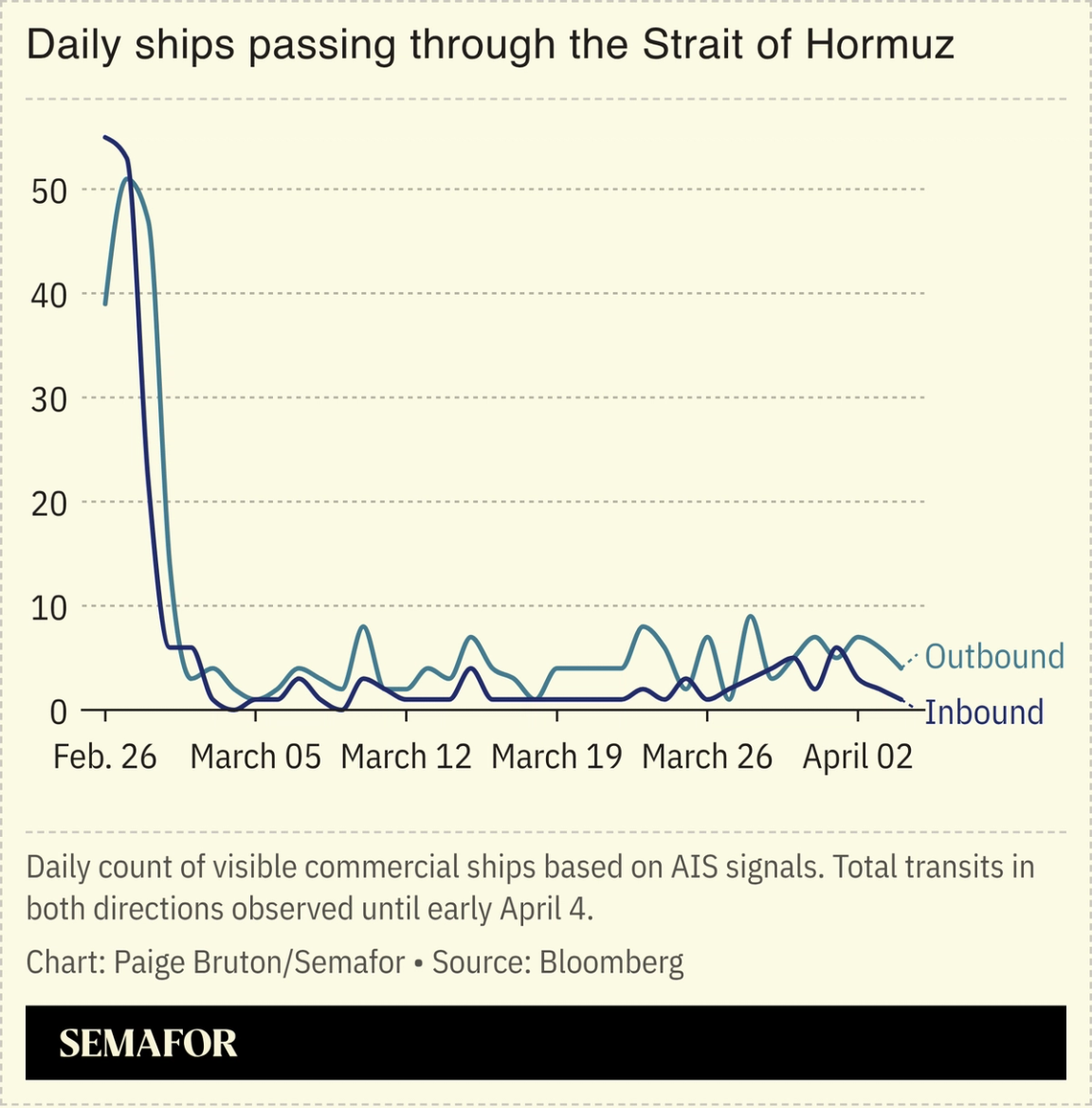 Iran’s chokehold on the Strait of Hormuz threatens to do what the US’ decades of ballooning deficits, sanctions, and growing debt didn’t: Undermine the dollar’s dominance. The war has interrupted the cycle of Gulf countries selling their own and investing the proceeds back into dollar assets like US Treasury bonds — the “petrodollar” cycle that may be on the verge of cracking. It also bolsters China’s efforts to promote its own currency as an alternative; several ships passing through the strait under Iran’s supervision priced their cargo in yuan. And it gives China a chance to press its influence with energy-starved Southeastern Asian countries by promising them access to the diesel their economies run on in exchange for allowing Beijing to build naval bases across the Pacific, one analyst told Substacker Derek Thompson. Meanwhile, China has effectively become the sole buyer of Iranian oil — providing Tehran with tens of billions of dollars to funnel through a sophisticated network of sanctions evasion. |
|
➚ BUY: Remote work. Citrini sent an analyst to the Strait of Hormuz with $12,000 in cash, a pair of hidden-camera sunglasses, and a few tins of Zyn for an on-the-ground look at the biggest story in the world. If nothing else, it’s a fun read. ➘ SELL: Company retreats. A disastrous Survivor-themed 2017 team-building trip gets the oral history treatment in The Wall Street Journal. |
|
 Companies & Deals- Optical collusion: OpenAI, Anthropic, and Google are collaborating to try to fend off Chinese rivals, Bloomberg reports. It’s a test case for US regulators who are looking at relaxing collusion rules to allow competitors to collaborate in certain contexts, including national security, the DOJ’s acting antitrust chief told Semafor last month.
- Better living … through M&A: Gilead will buy German biotech company Tubulis for $5 billion. Biopharma M&A is off to its hottest start in years.
Watchdogs- Security counsel: Hackers accessed the files of 10 clients at Jones Day, the firm said. The firm counts big companies like Goldman Sachs, McDonald’s, and GM among its clients — and previously did significant work for President Donald Trump.
- CBDC catfight: A Cato Institute analyst is suing the DOJ for hiding its analysis on whether the US should have an official digital dollar.
Markets- Great quarter, bots: Crypto influencer Anthony Pompliano wants to replace Wall Street research analysts, whose demise has been long predicted and never materialized, with AI. Among its early calls: Don’t follow the layoffs.
|
|
|


