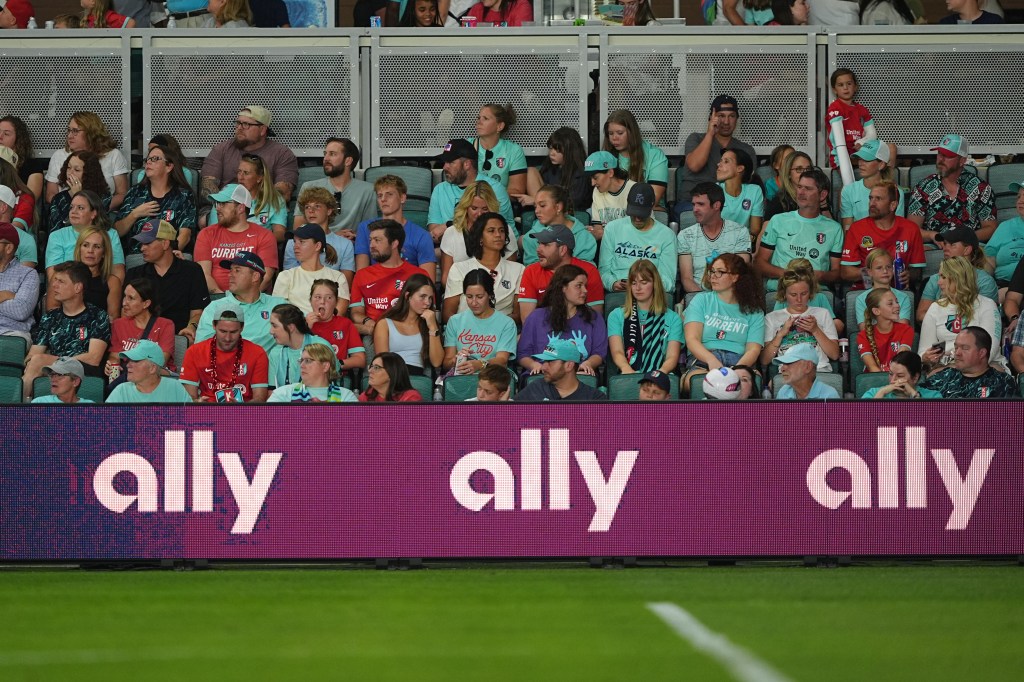
Four years ago, Ally Bank set a goal to reach a 50/50 split in its marketing spend across men’s and women’s sports. Ally CMO Andrea Brimmer had realized the relevance of the women’s sports audience to Ally’s business. The Great Wealth Transfer to women, women delaying marriage and being primary breadwinners in their household, having kids later in life—it was a desirable market for the bank.
The challenge was that inventory for women’s sports advertising is still limited. Leagues are smaller, with fewer teams, and their seasons are often shorter. Ads are cheaper. Even if a brand wanted to spend as much in women’s sports as it did in men’s, sometimes it simply couldn’t. Ally was until recently locked out
of the WNBA by a conflicting sponsorship deal with U.S. Bank, limiting access to one of the biggest media properties in women’s sports. In a big year for sports—with a women’s World Cup or during the Olympics—it was easier to get close to a 50/50 spend. Without those opportunities, it was an uphill climb.
Today, Brimmer announced that Ally has hit its 50/50 goal. And exactly how reveals lessons for other brands looking to both support the growth of women’s sports and benefit from that growth.
To reach 50/50, Ally didn’t reduce its spend in men’s sports at all. And it didn’t increase its seven-figure annual budget either. Instead, it got out of cable. It put its video marketing spend into linear and streaming, nearly entirely in live sports. Over the past four years it’s seen 40% growth in its brand valuation and 20% higher favorability among sports fans.
Recently, Ally helped the Professional Women’s Hockey League
air a game on Ion. It was the first time a PWHL game had ever aired on TV in the U.S. Ally hadn’t been an official sponsor of the PWHL; half of its teams are in Canada and the bank doesn’t have a presence there. But after
all the attention on women’s hockey following the 2026 Olympics, Brimmer thought the time was right for the bank to get involved. Ally brokered the deal with Ion—a huge help for a burgeoning league that doesn’t yet have those media relationships. “If the brands don’t broker those deals and don’t force those conversations, those things won’t happen,” Brimmer says.
After reaching 50/50, Brimmer’s goal is for Ally to stay there. She also wants to tackle the burgeoning problem of “fanflation.” As women’s sports become more popular, ticket prices are going up—which is great for the growth of the leagues, but is pricing out some fans who have been with these teams for years. “Fans are getting priced out of a system they helped create,” Brimmer says. “Sponsors have a voice in that.” As a sponsor and financial institution, Ally can offer fans premium experiences outside the games themselves, provide ticket discounts, and offer banking options with promos to save.
Brimmer spoke about this today at the
Business of Women’s Sports Summit in New York, hosted by Deep Blue Sports and Entertainment. In just a few hours, I’ll be onstage there as well talking with a group of investors about how to future-proof investments in women’s sports. (Brands can certainly help with that too!) Stay tuned for more.
Emma Hinchliffeemma.hinchliffe@fortune.comThe Most Powerful Women Daily newsletter is Fortune’
s daily briefing for and about the women leading the business world. Subscribe here.