
|
Meet the African mycologists fighting to protect fungi
From Benin to Madagascar, a new cohort of mycologists is pioneering the study and conservation of fungi in their home countries.
|

| |||||||||||||||


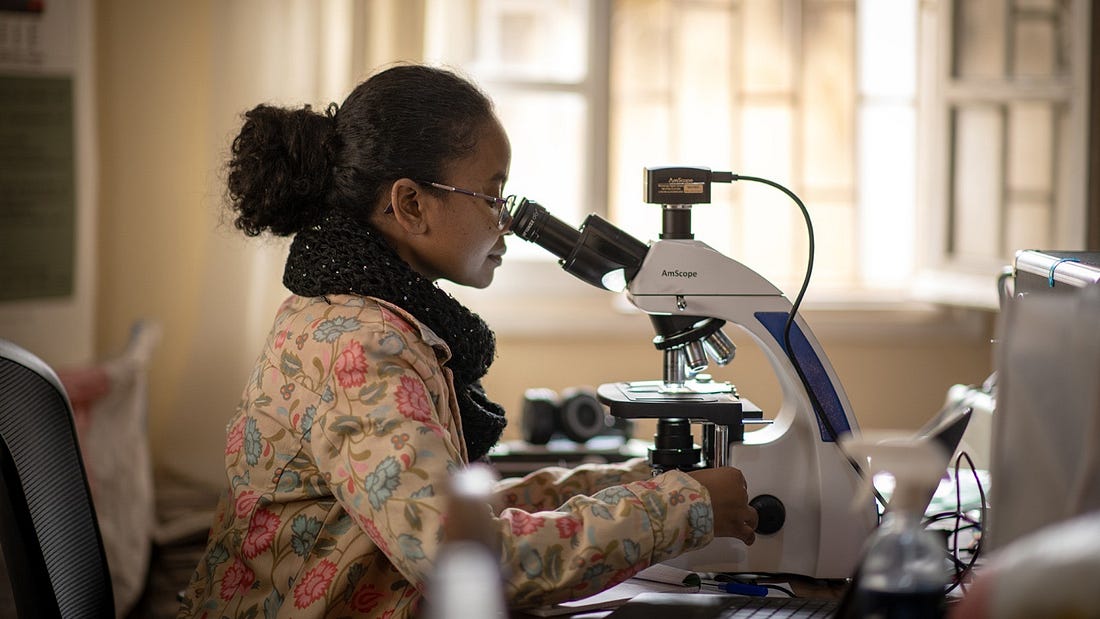 |
Madagascar has long been celebrated for its remarkable wildlife, with the vast majority of its species – from ring-tailed lemurs to certain species of baobab trees – found nowhere else on the planet. But when discussing the island nation’s endemic treasures, fungi are often left out of the conversation.
Yet “fungi are some of the most important things in the world”, says Anna Ralaiveloarisoa, a Malagasy scientist. “They feed 90% of terrestrial plants. Without them, there is no life on the Earth.”
As the first homegrown mycologist in Madagascar, Ralaiveloarisoa wants people to better understand the importance of this under-studied kingdom of life, adding that less than 1% of the estimated 100,000 species of fungi in Madagascar have been scientifically described.
Ralaiveloarisoa is now working on classifying each of the 200 new species she has identified so far, though she faces plenty of challenges in the process: trying to preserve mushrooms without proper infrastructure; journeying to remote spots in the jungle without reliable roads or electricity; and having no other experts to collaborate with in the country.
Though the obstacles are significant, they are ones Ralaiveloarisoa shares with many mycologists in nearby nations. She is part of an emerging cohort of scientists across Africa who are pioneering the study and conservation of fungi in their home countries.
Last November, many met for the first time at the International Congress on Fungal Conservation, held in Cotonou, Benin. The conference drew mycologists from 27 countries across Africa, Europe, the Americas and Asia, with several hailing from African countries where they serve as the only – or one of very few – mycologists in the nation.
Their congress reflected the growing global momentum behind fungal conservation, and the growing role that African scientists see for themselves within it.
Nourou Yorou, a mycologist who was recently named general director of the Benin Agency for Science and Innovation, told delegates at the opening ceremony: “What an exciting time: from almost nothing 20 years ago, fungal conservation has evolved from a little-known field into a dynamic global movement. The challenge is now to plan a future where fungi are firmly placed in the conservation mainstream.”
I was thrilled to have the opportunity to write about African conservation of fungi in my latest dispatch for the Guardian, which was sparked by the International Congress on Fungal Conservation in Cotonou, Benin, last year.
I’ve written about the movement to protect fungi before, and have been following that movement closely for years now. But in all the coverage, I have rarely came across any writing about who was fighting to preserve the biodiversity of fungi in Africa. So I decided to do my little part to try and cover this growing cohort of mycologists who who are breaking serious ground across the continent.
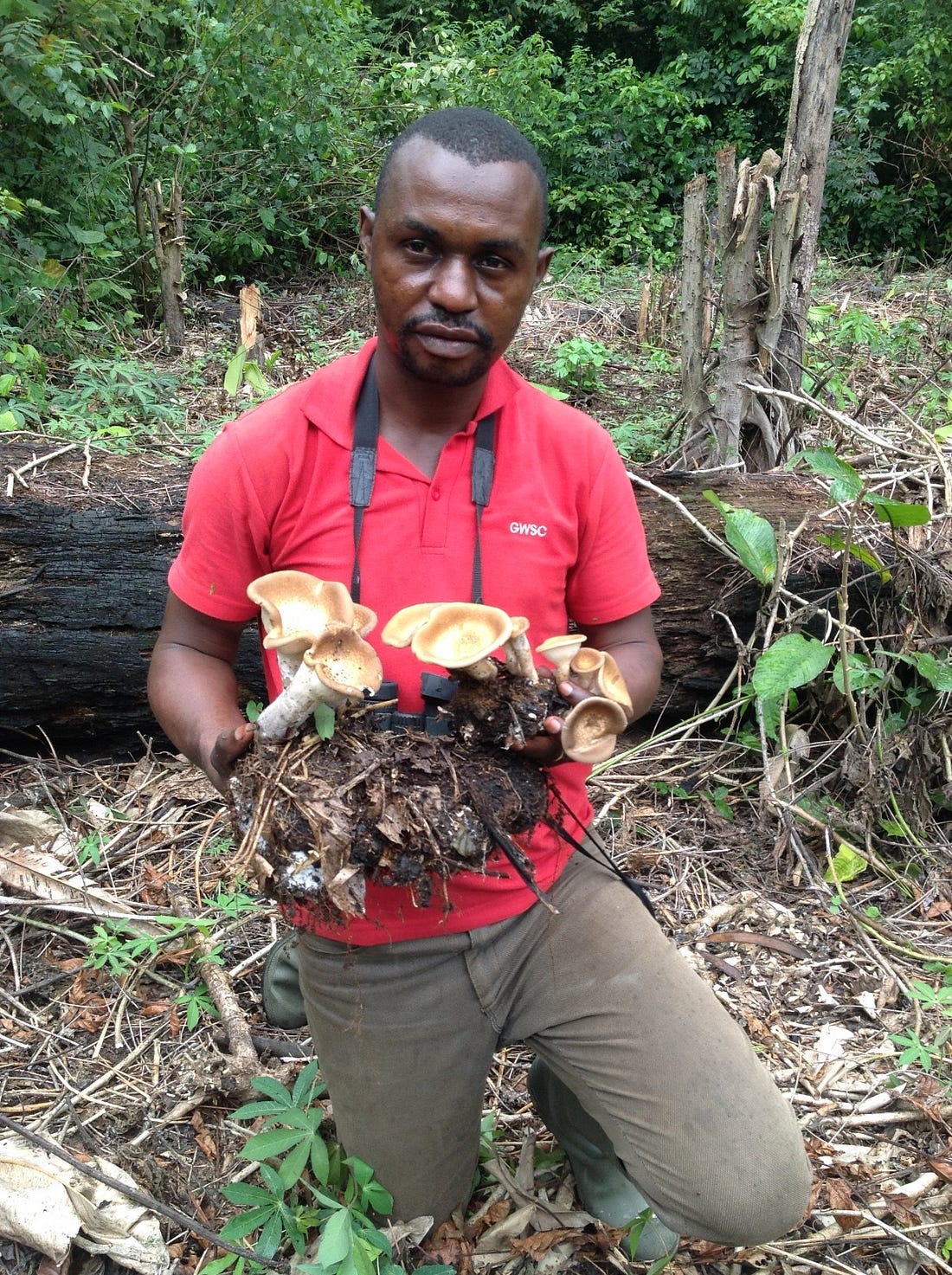 |
So many of the people that I met and spoke to for this story are true trailblazers — some, like Sydney Ndolo Ebika from Republic of the Congo, are the first mycologists in their whole home country (!). Ebika’s doggedness in pursuing fungi is striking: when he first decided he wanted to study fungi, there was no one in Congo-Brazzaville to teach him, so he speculatively began emailing mycologists abroad to ask if he could join their laboratories. When he eventually did begin studying on a graduate program in Germany, he sometimes photocopied entire books on fungi, because he knew no one in the Congo had access to these resources.
Years later, he’s established the Republic of the Congo’s first fungarium, where type specimens are preserved to allow mycologists to establish the existence of new species and hold on to them for future study.
Others, like Cathy Sharp, are taking a different approach. In Zimbabwe, Sharp has been researching the amount of children’s knowledge of fungi, going to schools and asking pupils to draw the first thing that came to mind when they heard “mushroom” in their local languages.
Conserving fungi requires people to know and care about them, Sharp argues, so she is implementing educational initiatives in museums and schools to preserve this knowledge.