Hello Power Up readers,
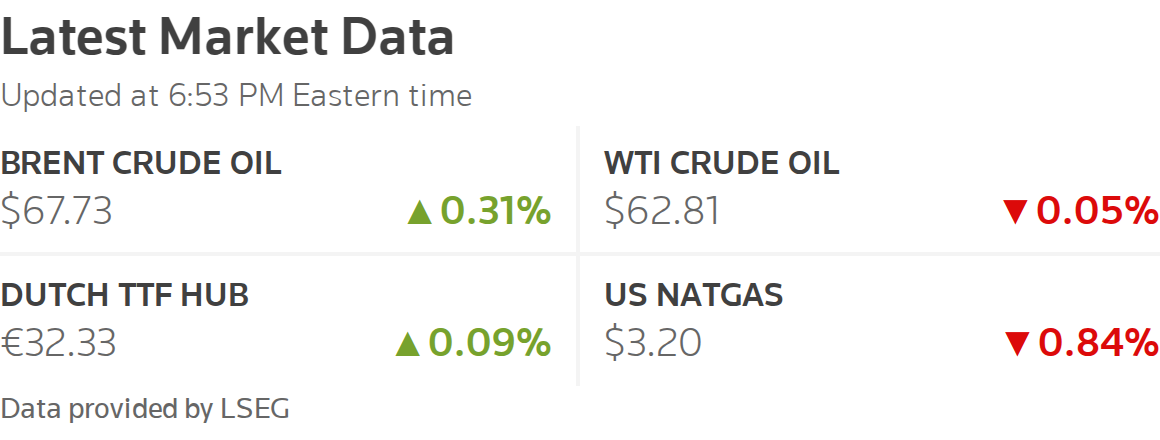
Looking through a financial lens, one gets the strong impression that the Iran war is over: global equities are soaring to new records, the dollar has slid to its lowest since before the war began, and Brent oil crude prices are below $100 a barrel again.
There is definitely cause for optimism. U.S. President Donald Trump has been talking up hopes for a deal with Iran and a key Pakistani mediator was in Tehran. What’s more, hopes are rising that fighting between Israel and Lebanese militant group Hezbollah could soon end, clearing up a major sticking point for a broader settlement, as Israel and Lebanon are weighing a ceasefire.
But the reality on the ground is far less rosy.
The Strait of Hormuz, the vital waterway that once transported a fifth of global oil and gas supplies, remains largely shut under a double Iranian-U.S. blockade. Barely any ships have left the Gulf in recent days, intensifying the supply crunch.
The effects of the loss of some 13 million barrels per day of Mideast production are rippling through the world. Asia was the first to feel the pinch, but Europe is now bracing for acute supply shortages. Indeed, holidaymakers may need to rethink their European summer travel plans as airlines brace for possible flight groundings. The European Union is also seeking measures to shield consumers.
The contrast between the broader financial markets’ optimism and the bleak reality on the ground is epitomized by the dangerous – and unprecedented – disconnect between the futures oil benchmarks and physical crude prices. This divergence is forcing consumers, companies and policymakers to navigate the current environment without a reliable compass. This could leave a lasting scar on the global economy. More on this below.
Here are a few more headlines: