| | Israel and Lebanon agree to a 10-day ceasefire, business leaders worry about investor complacency, a͏ ͏ ͏ ͏ ͏ ͏ |
| |  | Flagship |  |
| |
|
The World Today |  - Israel, Lebanon agree truce
- Investor complacency risks
- Warnings on Europe’s fuel…
- …and Africa’s debt
- Europe wants more giants
- Debate over AI and jobs
- CIA’s first AI-written report
- China’s trendiest new outing
- Colombia’s cocaine hippos
- Timeline of black holes
 A much-heralded staging of Death of a Salesman. |
|
Israel agrees to Lebanon ceasefire |
 Stringer/Reuters Stringer/ReutersA 10-day ceasefire between Israel and Lebanon took hold on Thursday, boosting hopes for progress in peace talks between the US and Iran. Fighting between Israel and Iran-backed Hezbollah in Lebanon has threatened to derail the shaky truce between Washington and Tehran. But Tehran’s top negotiator said Thursday the Lebanon deal is “as important as a ceasefire in Iran.” US President Donald Trump said talks between Washington and Tehran could resume this weekend, striking an optimistic tone for a “good deal.” But complex nuclear agreements involve protracted negotiations on issues such as verification, enrichment levels, and reporting, a former Joe Biden adviser said at Semafor World Economy: He predicted any initial pact would precede months of back-and-forth over a final agreement. |
|
Warnings over investor complacency |
  LSEG’s David Schwimmer. Kris Tripplaar/Semafor LSEG’s David Schwimmer. Kris Tripplaar/SemaforInvestors may be seriously underestimating the global economic impacts of the war in Iran, executives warned Thursday. US stocks have recovered their initial wartime losses and surged to record highs this week on hopes for a more lasting peace in the Middle East. The head of the London Stock Exchange Group said at Semafor World Economy that markets have adopted a sense of “rational complacency” that threatens to “tip over into irrational complacency.” Citadel Securities’ president said there is a “generation of investor that really never learned the price of being wrong.” And the head of private equity firm I Squared Capital said the war, which the market is “underestimating significantly,” will upend supply chains and lead to inflation. |
|
| More from Semafor World Economy |
 - JetBlue’s new customer survey will solicit compliments only, and negative feedback will be withheld from crew members, the airline’s CEO said.
- Global development finance is undergoing a needed “structural reset,” said the head of the UK development investment agency.
- Spain’s relationship with the US is one “that we treasure and that we want to protect,” the country’s economy minister said.
|
|
Europe has six weeks of jet fuel: IEA |
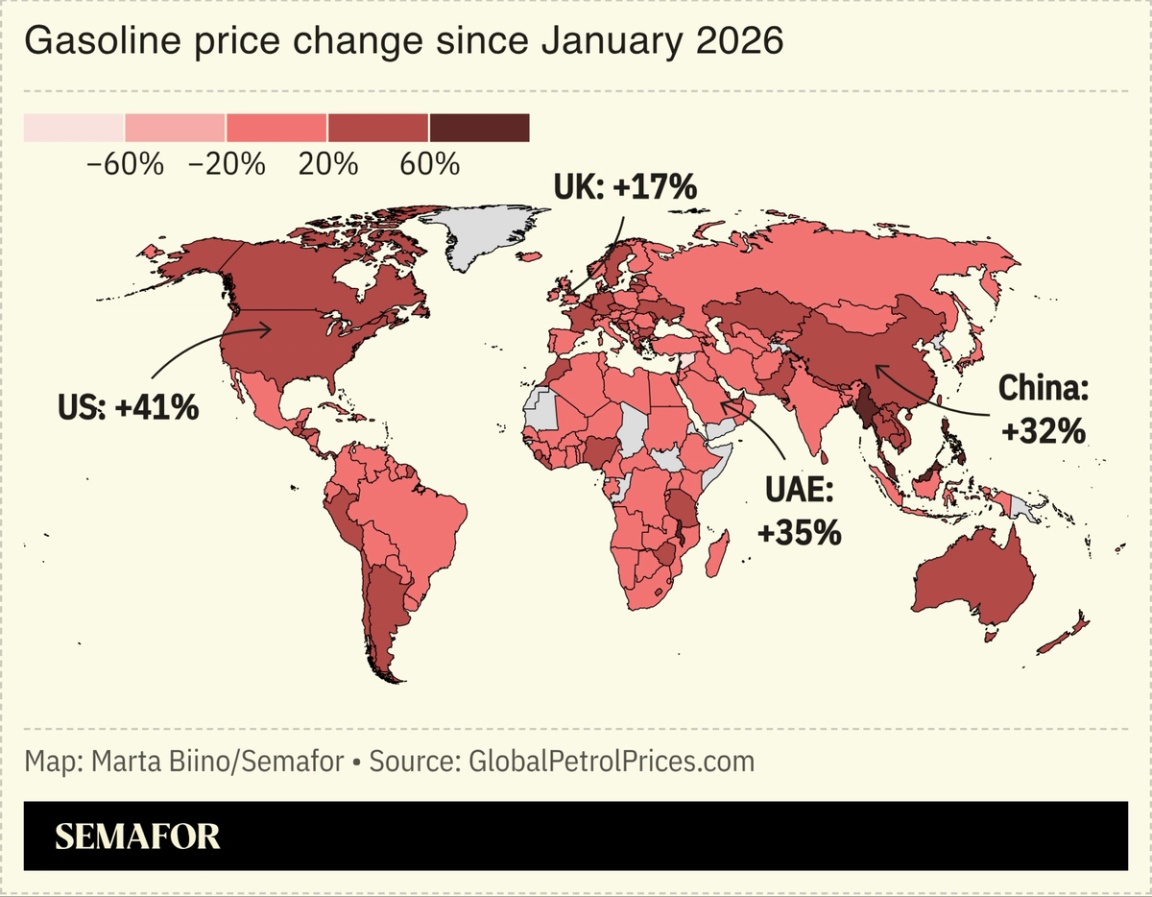 Europe has “maybe six weeks” of jet fuel left, the head of the International Energy Agency said, warning of possible mass flight cancellations as the Iran war hits global energy supplies. The continent is by far the biggest buyer of jet fuel that is shipped through the Strait of Hormuz, leaving it exposed to foreign shocks: The UK, Europe’s leading jet fuel consumer, has just four refineries, down from 18 in the 1970s. While carriers have hiked prices to reflect the 80% jump in fuel costs, IEA chief Fatih Birol warned the war may have permanently altered energy markets. “We are not going back to where we were” after the strait reopens, he said at Semafor World Economy this week. |
|
War sends Africa debt costs spiraling |
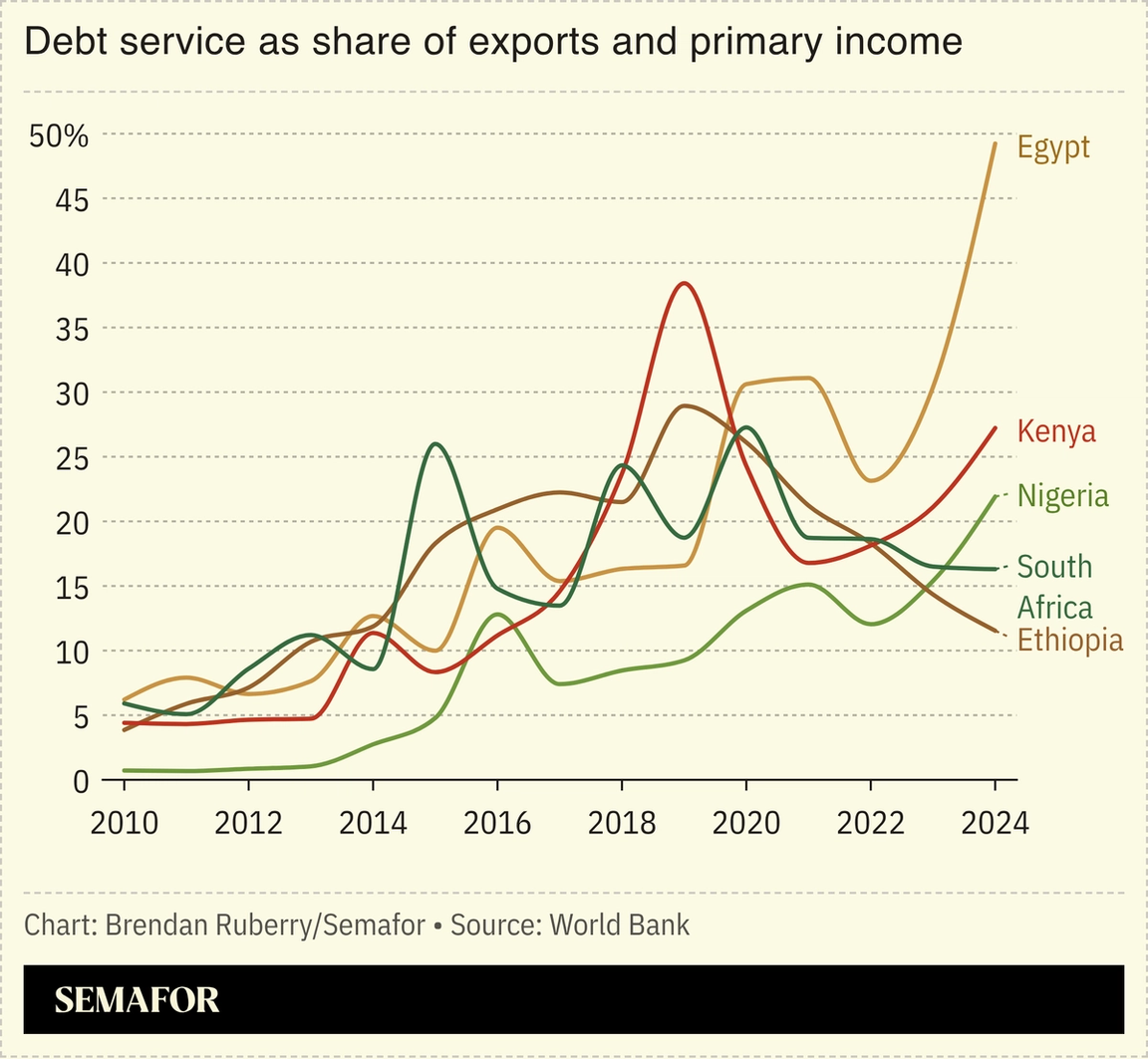 The Iran war is raising debt costs for African countries, sparking warnings that some economies could default as interest rates soar. Several nations on the continent are only just recovering from a post-pandemic shock that sent debt burdens soaring, and inflationary pressures set off by the war in the Middle East now risk unfurling that progress. The IMF this week forecast that economic growth will cool throughout the region in 2026, further compounding challenges: Citi’s chief Africa economist said Malawi, Mozambique, and Senegal could all default on their debts in the next two years. “The space countries have to weather this crisis is severely limited,” one expert told Bloomberg. |
|
EU seeks to relax corporate merger rules |
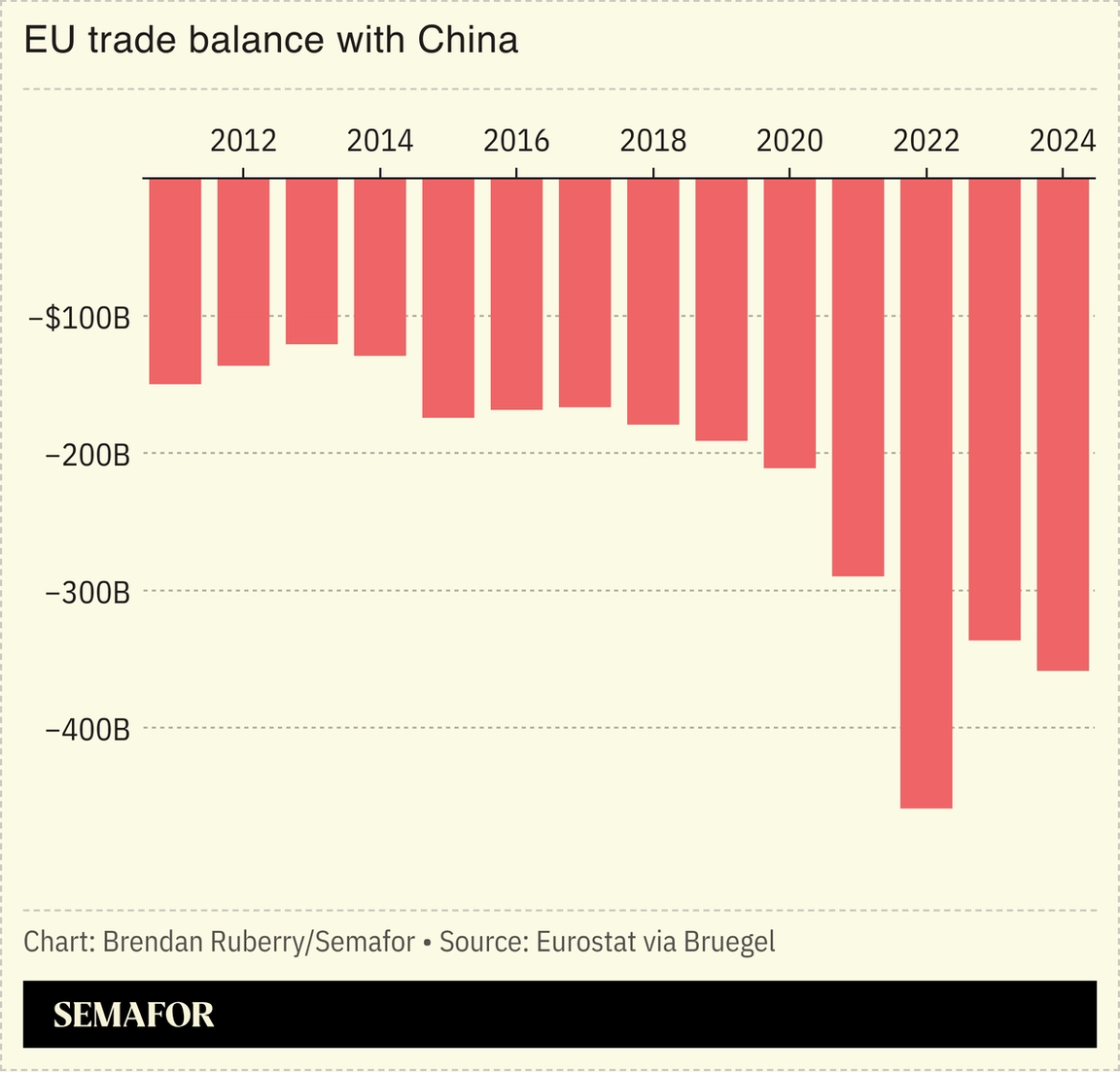 The EU is planning a “radical shake-up” of corporate merger guidelines, as it seeks to build global champions capable of competing with US and Chinese firms, the Financial Times reported. The new draft guidelines — which would relax rules by asking regulators to weigh “innovation” in addition to consumer welfare — come amid a bloc-wide push to favor “Made-in-Europe” manufacturing; Bloomberg reported that China lobbied Spain to oppose those efforts after a recent visit by the Spanish leader to Beijing. Europe trails both the US and China in most major global industries, namely tech. Former White House adviser Amos Hochstein said at Semafor World Economy that “there’s very little innovation happening at scale” in Europe, citing France’s AI startup Mistral as the exception. |
|
No consensus on AI workforce impacts |
 Sen. Mark Warner. Tasos Katopodis/Getty Images for Semafor Sen. Mark Warner. Tasos Katopodis/Getty Images for SemaforBusiness, political, and tech leaders diverged on how dramatically AI will impact the global workforce. The head of Scale AI told Semafor World Economy that AI would not cause an employment “apocalypse,” saying many companies are only using the tech as an excuse for layoffs. US Sen. Mark Warner, though, said rapid AI advancements are a “hair on fire” moment, adding that CEOs are publicly downplaying the scale of the job cuts they are considering. The CEO of Indeed and Recruit Holdings said he doesn’t think unemployment will spike because there are “so many open positions” in blue-collar industries like construction and plumbing. But that creates a labor market gap and a subsequent need for “re-skilling as a whole society.” |
|
CIA uses AI for report writing |
 Jason Reed/Reuters Jason Reed/ReutersThe CIA used AI to create its first-ever entirely autonomous intelligence report. AI’s role in analysis is only likely to grow: Within two years, “AI co-workers [will be] built into all of the agency’s analytic platforms,” Deputy Director Michael Ellis said. The technology will speed up the process of analyzing vast amounts of information gathered by human spies and their tools. This is not the first use of AI in intelligence — both the CIA and Britain’s MI6 were doing so in 2024 — but this may be the first report written without human involvement. Ellis added that AI is vital to maintain an intelligence lead over China, which has caught up with the US in technological terms. |
|
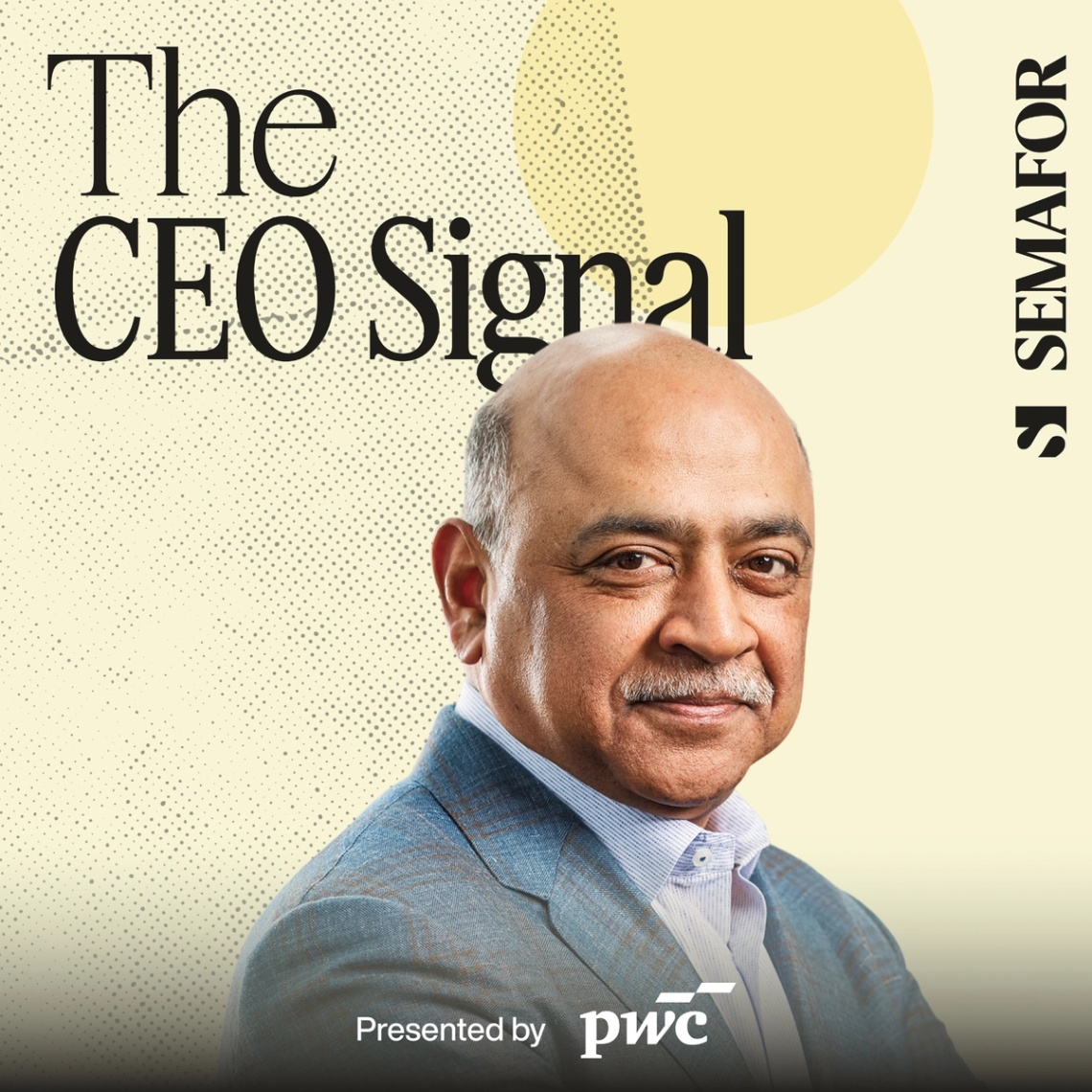 Most CEOs have not woken up to the fact that technology is as important as their balance sheet, IBM Chairman and CEO Arvind Krishna says in the latest episode of The CEO Signal. The first technologist to lead the company in its 115-year history unpacks how he approaches high-stakes decision-making in moments of rapid technological change — including the initially controversial acquisition of Red Hat that he thinks landed him his current role. Krishna makes the case for why CEOs need to place bold bets, even when the payoff won’t be quick. And he cautions his fellow CEOs not to wait to start working out what quantum computing will mean for their companies. “You’d better start thinking about it now,” he says. |
|
Chinese families flock to factories |
|
|


