Image

Daily News Brief

April 30, 2026

Welcome to CFR’s Daily News Brief. Today we’re covering U.S. President Donald Trump’s rejection of Iran’s latest peace proposal, as well as...

  • The potential departure of some U.S. troops from Germany
  • A drop in global deforestation
  • A U.S. indictment of Mexican officials


Top of the Agenda

Trump rejected Iran’s latest peace proposal and vowed to continue the U.S. naval blockade on the country. Iran had proposed reaching a deal to reopen the Strait of Hormuz and end the war, postponing discussions of its nuclear program—but Trump told Axios yesterday that he would maintain the blockade in order to pressure Tehran toward a nuclear agreement. Amid the prospect of a longer war, the price of Brent crude oil rose today to temporarily hit $126 a barrel, the highest level since 2022. The United States has spent an estimated $25 billion fighting the war so far, the acting Pentagon comptroller told lawmakers yesterday.


What both sides are saying. Trump told reporters yesterday that Washington and Tehran are in touch over the phone, while unnamed sources told Axios that the U.S. military is prepared to carry out a “short and powerful” wave of strikes on Iran. Iranian President Masoud Pezeshkian said today that the U.S. blockade is “doomed to fail” and breaks international law. A statement attributed to Iranian Supreme Leader Mojtaba Khamenei said that Tehran would protect its nuclear capabilities and the only place that Americans belonged in the Persian Gulf was “at the bottom of its waters.”


Costs and timelines. The $25 billion estimate of U.S. war costs is a conservative one that does not include repairs to U.S. bases that were attacked, three unnamed sources familiar with the issue told CNN; adding the repair costs could mean billions more. In a congressional hearing yesterday, Defense Secretary Pete Hegseth declined to answer questions about whether the estimate accounted for damage to U.S. bases and about how much longer the United States would need to keep fighting to meet its goals. Trump met with energy companies earlier this week to discuss how to minimize continued fallout of the war for months if needed, White House officials said.


“[Iran’s] nuclear infrastructure is too battered and the regime too unsteady to sprint for the bomb. Tehran needs time, cash and deterrence. Controlling the [Strait of Hormuz] can yield all three. Building a nuke and manipulating the waterway are two sides of the same coin. The first probably can’t happen without the second. America’s primary objective, then, must be reopening the strait.”

—CFR expert Ray Takeyh and the Foundation for Defense of Democracies’ Reuel Marc Gerecht, Wall Street Journal


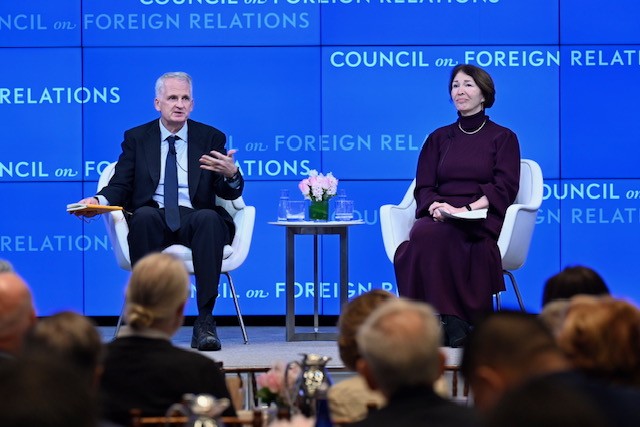
A Conversation With Timothy Snyder

Timothy Snyder at CFR April 20, 2026

Council on Foreign Relations

The United States is choosing to be far less powerful than it could be, whether in research, warfighting, or economic strength, Senior Fellow Timothy Snyder said at CFR’s Leslie H. Gelb Memorial Event.


Across the Globe

Trump considers Germany drawdown. The United States is weighing a reduction in the number of troops it keeps stationed in Germany, Trump wrote on social media yesterday. Germany has served as a major basing site for U.S. operations in the Iran war, but Trump has broadly criticized NATO allies for declining to take a more offensive role in the conflict. More than thirty thousand U.S. troops are deployed in the country. 


Trump-Putin call. Trump and Russian President Vladimir Putin expressed support for the possibility of a brief ceasefire in Ukraine during a call yesterday, Kremlin advisor Yuri Ushakov said. Trump confirmed his support for the idea to reporters. Ushakov said the temporary halt in fighting could occur around the time of a May 9 Russian holiday remembering the end of World War II. Russia normally stages large military parades, but is paring back this year because Ukraine has demonstrated increased cross-border strike capability.


Stabbing in London. United Kingdom (UK) police called the stabbing of two Jewish people in northern London yesterday a terrorist incident, while Prime Minister Keir Starmer said it was an antisemitic attack and part of a larger wave of violence against Jewish residents. A man who has been identified as a British national was arrested after the event. Both men who were stabbed were in stable condition.


U.S. indictment of Mexican officials. The United States indicted the governor of Mexico’s Sinaloa state, Rubén Rocha Moya, as well as nine additional current and former Mexican officials on charges related to drug trafficking, according to a court document unsealed yesterday. Rocha is the highest-ranking member of Mexico’s ruling party to face such a U.S. indictment. He called the charges “entirely false” and an attack on Mexico’s sovereignty. 


Slowing deforestation. The world lost around 36 percent less of its tropical rainforest last year than in 2024, according to a new report based on data from the University of Maryland. Countries such as Brazil and Colombia were among those that reduced deforestation. 2024 saw a record high in forest loss; a researcher wrote that this year’s results show “what decisive government action can achieve.” 


BP in Venezuela. The energy firm has signed an agreement with the acting Venezuelan government to explore joint gas production, BP said in a statement. The firm’s plans include a program for offshore gas drilling and opening a permanent office in Caracas, Venezuelan state television reported. The deal is part of a recent push to revive Venezuela’s hydrocarbon sector after the U.S. ouster of Venezuelan President Nicolás Maduro. It has also included new agreements with Italy’s Eni and Spain’s Repsol.


U.S.-China-UAE anti-crime op. A coordinated effort by security officials in the United States, China, and the United Arab Emirates (UAE) took down at least nine scam centers engaged in cryptocurrency fraud, the U.S. Justice Department announced yesterday. There were at least 276 arrests. It is a rare case of anti-crime cooperation between Washington and Beijing. 


South Sudan cabinet shakeup. President Salva Kiir dismissed his foreign and security ministers without giving explanation, according to a decree issued yesterday. Hostilities flared in recent months between government forces and opposition rebels, though a 2018 peace deal officially ended South Sudan’s civil war. UN agencies said Tuesday that mass displacement as well as other pressures such as flooding and economic decline are pushing 56 percent of the country’s population into acute food insecurity.


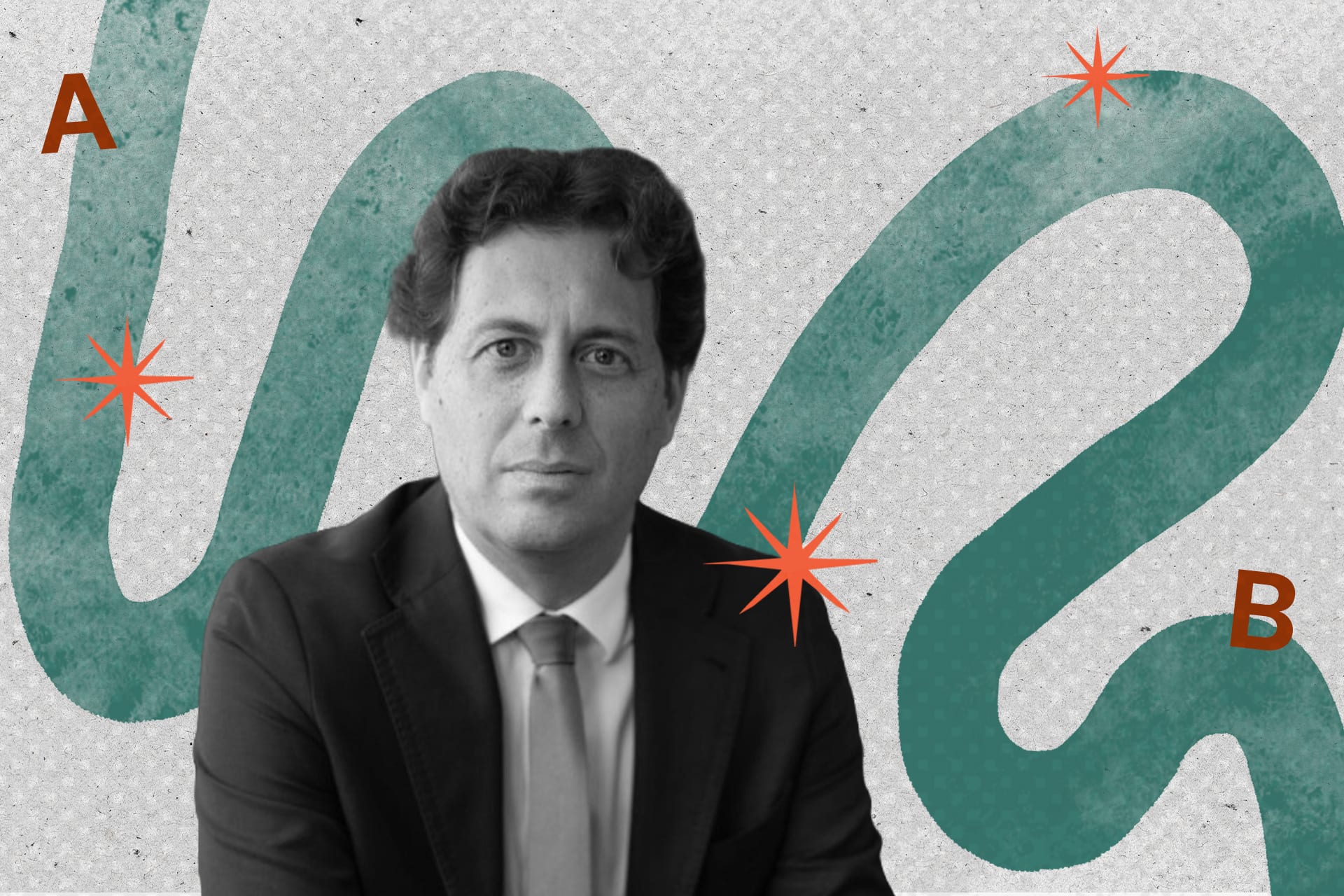
The Power of Persistence

Matthias Matthijs

Photo Collage by Lucky Benson

While topical knowledge is important in advancing a career in foreign policy, so, too, is willingness to grow in positions that might seem far from a dream job, Senior Fellow Matthias Matthijs tells CFR’s Ivana Saric in this article.


What’s Next

  • Today, top U.S. defense officials including Hegseth attend a Senate hearing in Washington, DC.
  • Today, Antigua and Barbuda holds parliamentary elections.
  • Tomorrow, the European Union-Mercosur trade deal takes provisional effect.
  • Tomorrow, the UK’s King Charles and Queen Camilla begin a visit to Bermuda. 


Unpacking a So-Called ‘K-Shaped’ Economy

The Spillover

The gap between better- and worse-off Americans grew after the COVID-19 pandemic, while more recent crises have widened divides between rich and poor countries, Senior Fellows Rebecca Patterson and Sebastian Mallaby explain on this episode of The Spillover.