Women’s sports is a “rocket ship.” It’s on a J-curve. Female athletes are at the center of culture, walking the carpet at last night’s Met Gala. And yet we may soon see a growing divide among women’s teams that are prioritizing the big picture—and those that aren’t.
A few weeks ago, I joined a group of operators and investors onstage at the Business of Women’s Sports Summit hosted by Deep Blue Sports and Entertainment. This was my biggest takeaway from the conversation, which included Muse Capital’s Assia Grazioli-Venier, Athlos’s Kayla Green, Rebel Girls’ Jes Wolfe, and Asrat Alemu, who works for Mellody Hobson’s sports investing vehicle Project Level at Ariel Investments.
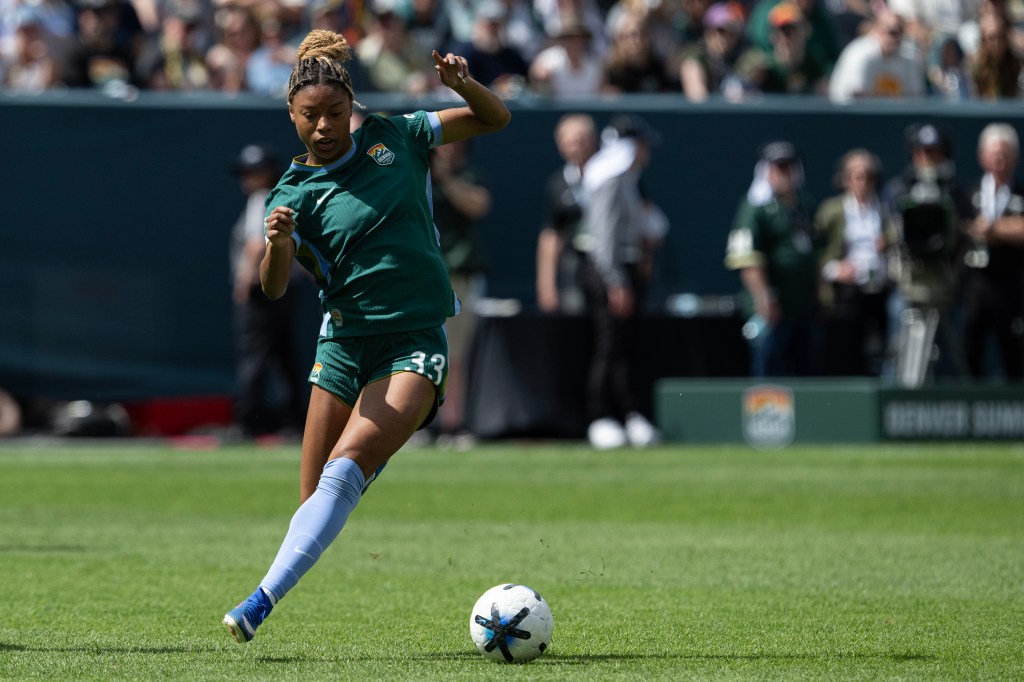
Project Level has raised a $250 million fund for women’s sports and is targeting $1 billion. Its portfolio includes the NWSL team the Denver Summit and League One Vollyball (or LOVB). Within the NWSL especially, Alemu is seeing a growing divide between teams that build their own infrastructure and those that don’t make those investments.
“Purpose-built stadiums and purpose-built venues are one of the ways you can future-proof your investment,” he explains. With a team owns their stadium, they can sell naming rights, premium space entitlements, gate entitlements, and more. He estimates a team can earn $10 to $12 million in incremental revenue each year from having its own stadium. “Without a venue that you own and control, there is a revenue ceiling that is well below your maximum potential,” he says. “And that also means there is a valuation ceiling.”
When you own the stadium, you get first choice in scheduling, too. That means Saturday games, not Wednesday games, which means more fans, more food and beverage sales, more parking revenue. The Denver Summit are building a 14,500-seat stadium, scheduled to be completed in 2028. The Kansas City Current made headlines with
the first stadium purpose-built for women’s sports.
I asked whether we’ll see a divide between teams that make these long-term investments and those that don’t, and Alemu told me, “100%.” But these decisions will also affect entire leagues. Even with control of their own venues, teams still have to play away games.
In more sports news, CNBC
just estimated the Golden State Valkyries’ valuation at $1 billion. That would make the Valkyries the first billion-dollar women’s team in any sport. (Sportico just put the Valkyries at $850 million, still the highest-valued team in the WNBA, but not over that $1 billion hump yet.) The Valkyries are only in their second season, and while they share ownership (and a venue) with the NBA’s Golden State Warriors, their fast ascent to the WNBA’s most valuable team has shown the impact of building a team like a true business.
Emma Hinchliffeemma.hinchliffe@fortune.comThe Most Powerful Women Daily newsletter is Fortune’
s daily briefing for and about the women leading the business world. Subscribe here.