| | In this edition: Kenya’s stalled data center, a DRC-Zambia power link, and Bobi Wine’s literary infl͏ ͏ ͏ ͏ ͏ ͏ |
| |  | Africa |  |
| |
|
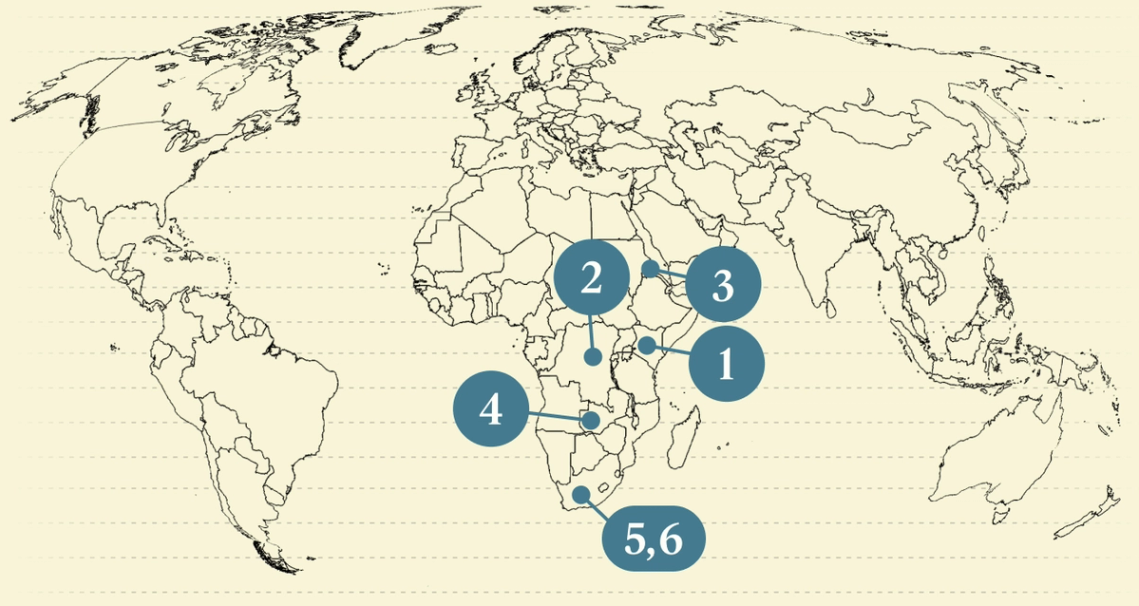 - Kenya’s stalled data center
- DRC’s Zambia power link
- US to lift Eritrea sanctions
- Zambia rejects US health deal
- Canal+ faces S. Africa test
- Crypto adoption grows
 Bobi Wine’s literary influences. |
|
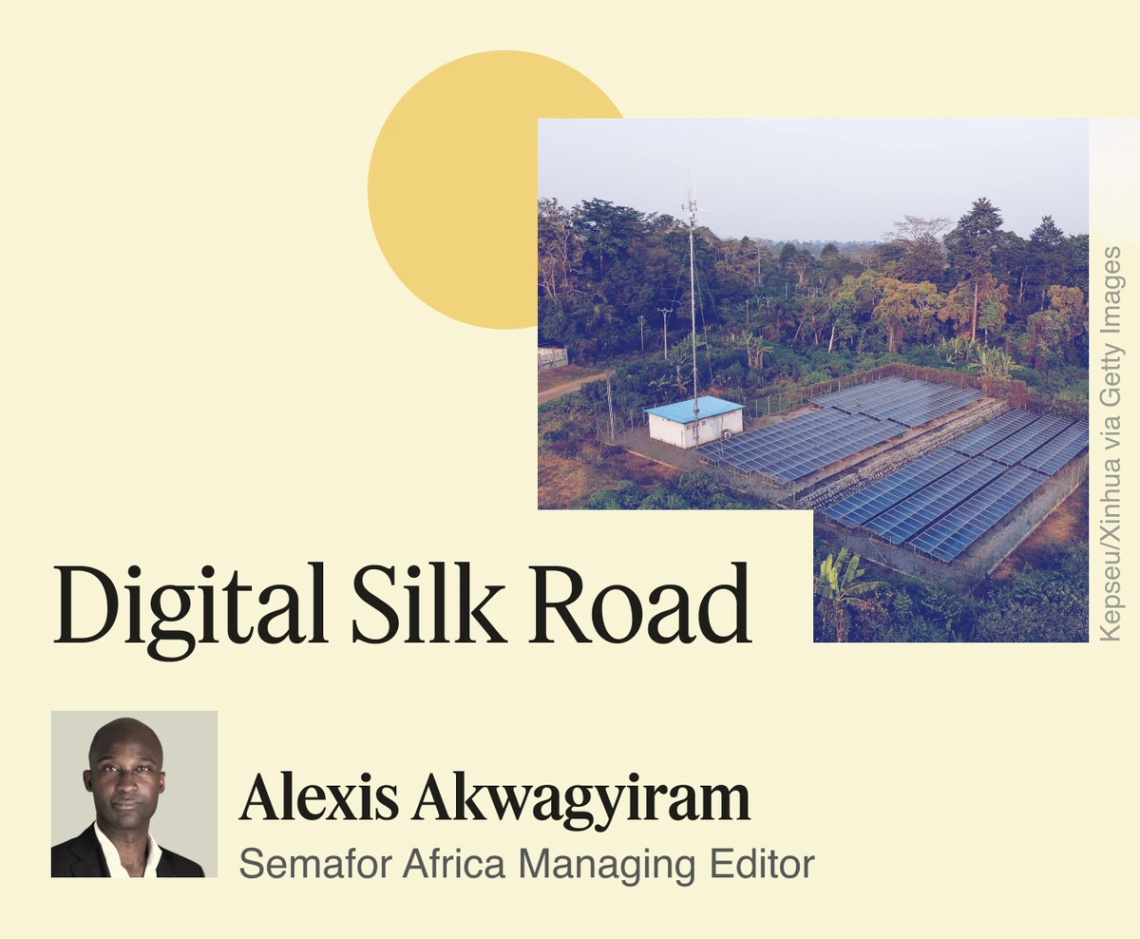 Building digital infrastructure in Africa is easy to announce, but difficult to do: That’s a clear takeaway from comments by Kenya’s president that confirm our scoop, reported last year, that a $1 billion data center project backed by Microsoft and UAE firm G42 won’t go ahead. President William Ruto’s remarks, which we’ll get into in today’s briefing, crystallize the challenges faced by non-Chinese actors — who must grapple with balance sheets and ballot papers — hoping to tap into potential growth opportunities in the world’s least-connected countries. China has been the lynchpin in the rollout of transformative technologies in Africa over the past decade — Huawei alone has built around 70% of the continent’s 4G networks. That dominance has been driven by Beijing’s policy banks providing strategic lines of credit, enabling Chinese firms to provide equipment, services, and financing at significantly lower prices than Western competitors. That approach rests on the view that shifting risk from African treasuries to Chinese lenders is in Beijing’s long-term geoeconomic interests. It’s hard to provide financially viable alternatives to the Chinese model: Western developers face heightened credit costs due to the perception that Africa is inherently risky, before identifying a path to profitability in markets where purchasing power lags far behind advanced economies. While the Chinese model reduces upfront budget pressures on fiscally-strained African states, governments across the continent will now rely heavily on a small number of firms for hardware maintenance, modernization, and training. The US, meanwhile, has long warned that Chinese technology poses a strategic risk by enabling surveillance, data theft, and large-scale disruption of critical infrastructure. But American alternatives to Chinese firms are few and far between. Digital technologies look set to drive global innovation and economic growth over the coming decades. Just as control of railways and shipping lanes cemented Britain’s global economic and political power during the 19th century, Beijing’s foresight means its competitors need to adapt their business models to have any hope of having a foothold in a continent that will be home to about a quarter of the world’s working-age population by 2050. |
|
Ruto confirms data center stalled |
| |  | Martin K.N Siele |
| |
 The proposed site for the data center in Kenya’s Great Rift Valley. Donwilson Odhiambo/Semafor. The proposed site for the data center in Kenya’s Great Rift Valley. Donwilson Odhiambo/Semafor.A $1 billion geothermal-powered data center project in Kenya by Microsoft and UAE’s G42 is unlikely to go ahead after President William Ruto blamed inadequate power capacity for its stalling. Semafor reported in September that the once-hyped project had stalled, with developers yet to break ground and questions mounting on its future. Ruto said last week that Kenya was forced to reconsider the plans after learning that it would require a third of the country’s total installed capacity of around 3,000 megawatts. “To switch on that one data center, we would need to shut off power for half the country,” he said of the project. “That’s when I knew there was a problem.” Ruto had first announced plans for the facility during a state visit to Washington in May 2024. Orchestrated by the Biden administration, Microsoft and G42 originally promised to invest in the site around 60 miles (100 kilometers) northwest of Nairobi to provide government and business cloud services on the US tech giant’s Azure cloud computing platform. They said it would run on geothermal power — which accounts for around 40% of Kenya’s energy mix — a sustainable source of baseload power that was seen as an advantage. |
|
| |  | Ruben Nyanguila |
| |
 Kenny Katombe/Reuters Kenny Katombe/ReutersDR Congo is set to take an equity stake in a $270 million cross-border power line to Zambia, its finance ministry told Semafor. The move comes as electricity demand in DR Congo’s mining region rises faster than supply, with miners building metal processing plants to satisfy local policymakers’ desire to keep some of the value chain in the country. The project, approved by Zambia’s energy regulator last year, is being developed by Enterprise Power DRC, a private power-trading company, and its Zambian subsidiary. DR Congo’s ministry of finance said the 125-mile (200-kilometer) high-voltage line will have initial capacity of 460 megawatts, expandable to 550 MW, running from Kalumbila, a copper mining town in northwestern Zambia, to Kolwezi, the heart of Congo’s copper mining region. A start date for the project is yet to be set. |
|
US plans to reopen ties with Eritrea |
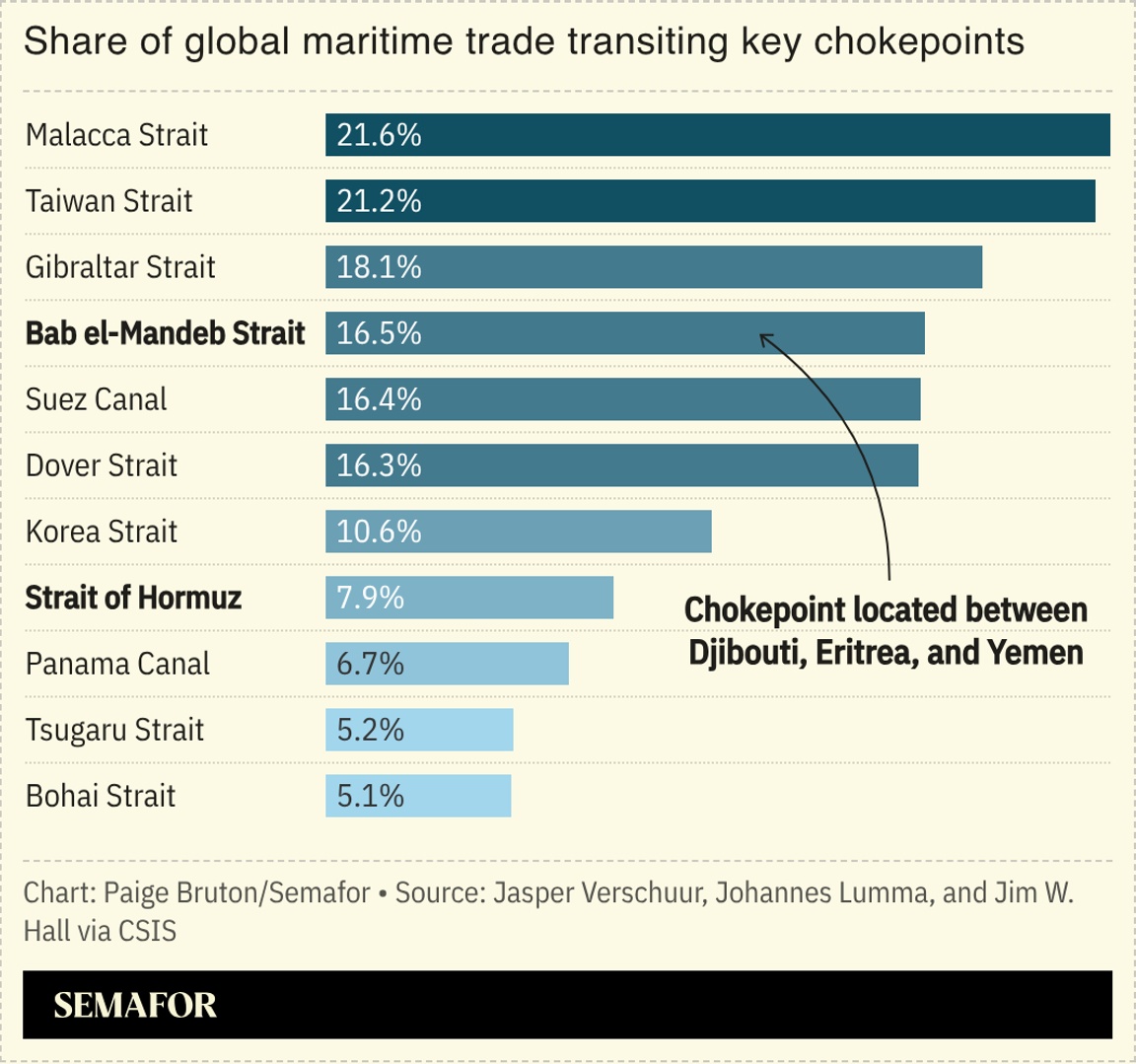 The United States is preparing to reopen ties with long-isolated Eritrea by lifting sanctions, Reuters reported, citing internal US government documents. It marks the country’s rising strategic importance along the Red Sea shipping route — its coastline faces Saudi Arabia — which is one of the world’s busiest transport lanes connecting Asia to Europe via the Suez Canal. With oil flows through the Strait of Hormuz disrupted by the fallout from the US-Israel conflict with Iran, Washington’s focus on alternative routes has intensified. The move reflects a broader effort to reengage the Horn of Africa country and would rescind a 2021 executive order imposed under former US President Joe Biden. Eritrea remains highly repressive, say rights groups, and was sanctioned over its role in Ethiopia’s Tigray war between 2020 to 2022. Semafor reported last month that the latest US-Eritrea normalization talks, brokered by Egypt, were already underway, according to people familiar with the discussions. |
|
Zambia resists US trade approach |
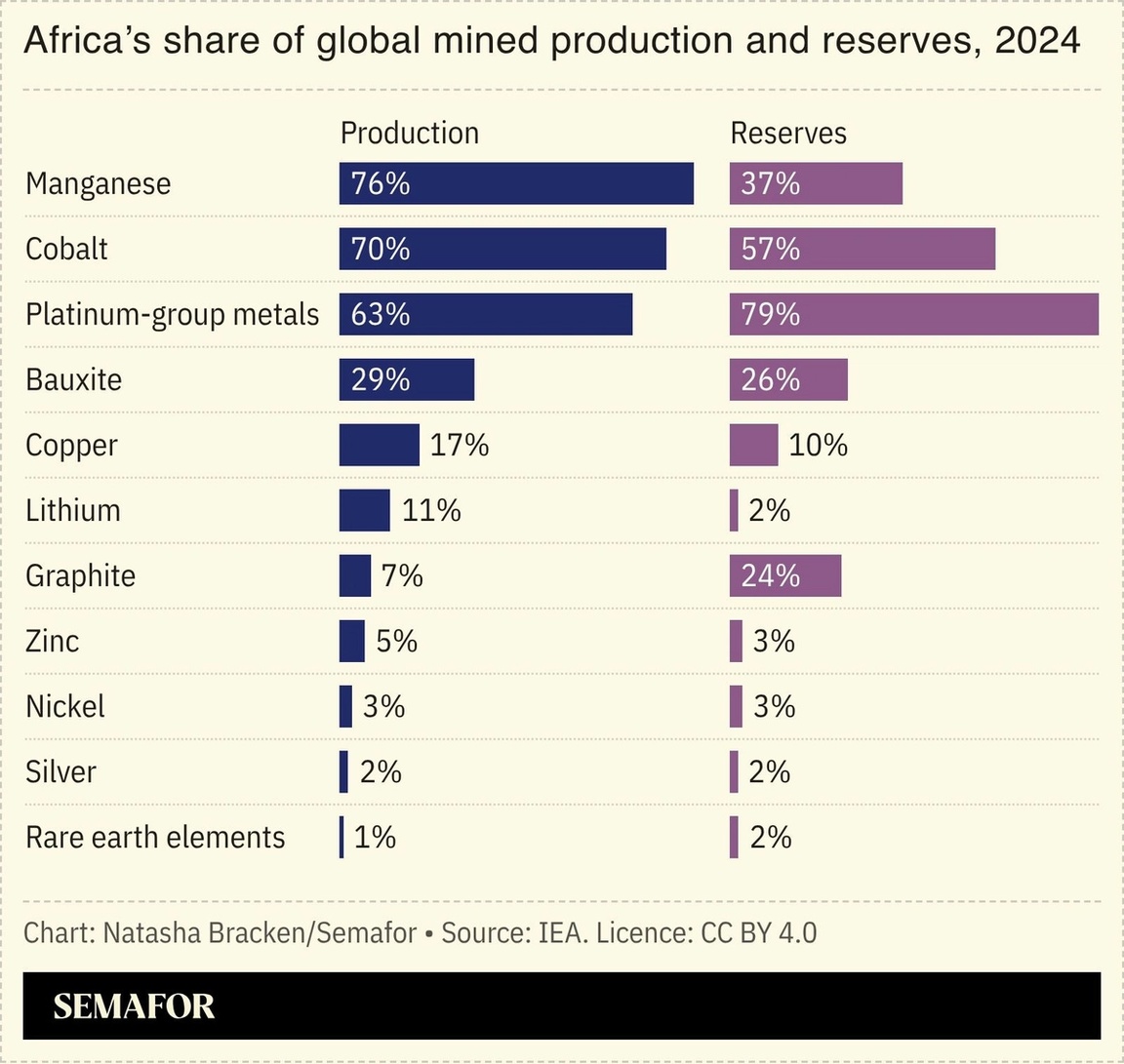 Zambia said it opposed US attempts to tie a $2 billion healthcare deal to access to the country’s minerals, becoming the latest African nation to hit back at Washington’s new approach toward the continent. Since the start of US President Donald Trump’s second term, Washington’s Africa strategy has shifted radically, slashing aid in favor of trade deals that serve US interests. The agreements have raised issues over privacy — Zambia’s foreign minister said his country was against handing over data — prompting “huge concerns” from a leading African health organization along with other nations, including Ghana and Zimbabwe. The new US approach, as well as Trump’s tariffs, have pushed some countries closer to China, which last week slashed levies on virtually all African imports, further embedding Beijing’s toehold on the continent. |
|
Canal+ faces South Africa test |
 Mohamed Abdiwahab/AFP via Getty Images Mohamed Abdiwahab/AFP via Getty ImagesFrench media giant Canal+ is facing an early test in Africa after its $2 billion acquisition of MultiChoice, with the South African pay TV group preparing to face antitrust regulators over decade-old allegations of collusion. South Africa’s Competition Commission on Monday accused MultiChoice and Altech, its set-top box supplier, of reaching an arrangement under which the latter would stay out of the pay TV market. MultiChoice, which became a Canal+ subsidiary in December, has denied wrongdoing. The regulator is seeking to impose a penalty of 10% of MultiChoice’s domestic revenue, amounting to roughly 4 billion rand ($244 million). If MultiChoice is found guilty, the fine would hit Canal+. A date has not been set for the hearing. The French group told investors it expects to make €150 million ($176 million) in annual cost savings in the first year of the deal, rising to more than €400 million ($471 million) a year in savings later in the decade. |
|
Expanding use of crypto in South Africa |
 The number of South Africans that used cryptocurrency platforms in the first six months of 2025, reflecting the widening adoption of digital assets in the country, according to a report by Discovery Bank. More than two-thirds of those surveyed said they were “roughly familiar” with crypto, the report said, with mobile-first platforms playing a key role in broadening consumer access. The result is that South Africans increasingly see cryptocurrencies as an investment option to supplement traditional assets like stocks and properties. South Africa regulates crypto as a financial instrument and taxes consumer’s gains and losses as part of the usual income assessments. Only Nigeria’s crypto market is larger than South Africa’s in sub-Saharan Africa, according to data firm Chainalysis, with growth in business-to-business transactions emerging as a crucial driver for adoption. — Alexander Onukwue |
|
 The global financial landscape is evolving at a pace unseen in previous years, propelled by the adoption of new technologies and rapid innovation. As Washington’s regulatory approach evolves, new opportunities are emerging, but questions remain around how these policy shifts will impact the industry and how consumers access services. On Wednesday, May 20, Semafor will convene the Banking on the Future Forum in Washington, DC, with on-the-record conversations featuring Rep. Tom Emmer, R-Minn., House Majority Whip and Vice Chairman of the House Financial Services Subcommittee; Jonathan V. Gould, Comptroller of the Currency; Rep. French Hill, R-Ark., Chairman of the House Financial Services Committee; Rep. Bryan Steil, R-Wis.; Sarah Levy, CEO of Betterment; and other industry leaders, on how policy and technology are steering the industry’s trajectory. Join us as we examine how evolving regulations are shaping innovation and what they signal for the future of financial technology. May 20 | Washington, DC | Request Invitation |
|
 Business & Macro |
|
|


