See how companies and governments are responding to climate change and social challenges. Subscribe to Reuters.com for $1/week. Subscribe now.
|
|
|
|
Hello!
Today’s newsletter examines the growing dangers faced by workers across health, mining, journalism and tech – from disease scares and deadly misinformation to legal battles and workplace violence. We’ll start off with a brief look at health workers’ concerns in Tenerife, Spain, as nurses fear a repeat of Covid due to the hantavirus-stricken luxury cruise ship, the MV Hondius, that’s expected to reach the island on Saturday. Then we’ll unpack the tragic murders of health workers in the Democratic Republic of Congo due to a fake rumor claiming a mysterious illness had caused men's genitals to atrophy, showing the power and danger of health misinformation.
We’ll continue the workers’ rights focus in today’s Talking Points section too, so keep scrolling for more on the lawsuits around diversity, equity and inclusion in the United States in medical schools and news organizations. But before we dive into the health stories, please note that there will be no Climate Focus tomorrow, but I’ve got a few environmental-related stories on my radar to check out whilst I’m away: |
|
|
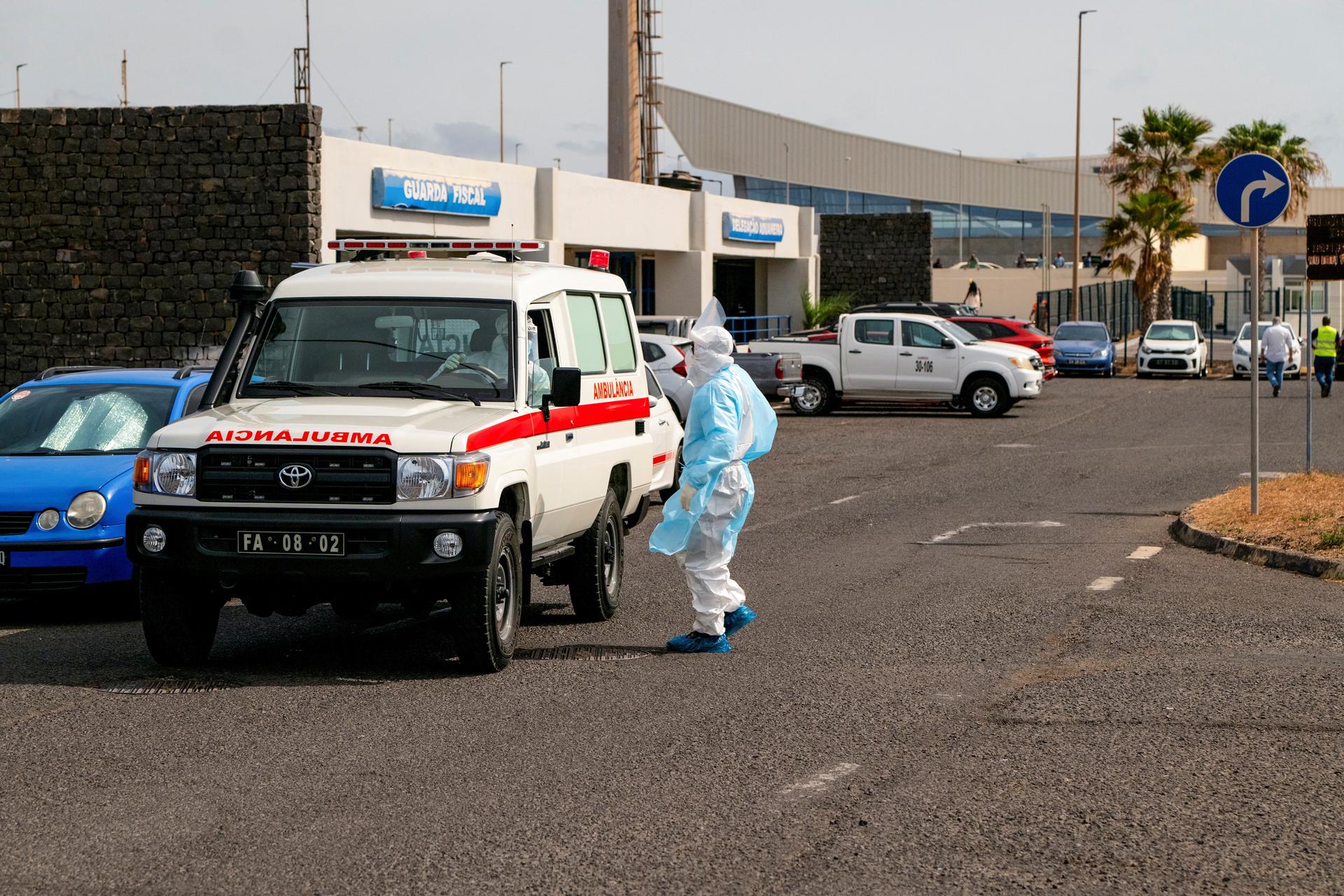
A person in protective clothing by an ambulance at an evacuation of suspected hantavirus patients on the cruise ship MV Hondius. Praia, Cape Verde. REUTERS/Danilson Sequeira |
‘It will be just like Covid... People are worried’ |
Let’s take a look at what hantavirus is before examining health workers’ concerns.
Hantaviruses are rodent-borne viruses that can infect people and cause illness. The World Health Organization estimates there are 10,000 to 100,000 human cases globally each year, with severity varying by strain.
The strain identified on the ship is the Andes hantavirus, which typically circulates in Argentina and Chile. The Hondius set off from Argentina on April 1. The Andes virus is the only known hantavirus that can spread through close, prolonged human-to-human contact.
There have been eight known and suspected hantavirus cases linked to the MV Hondius cruise ship carrying 150 people, the WHO said, including the three deaths.
The news stirred fears that hospitals and health centers on Tenerife would have to be locked down, according to a nurse who asked not to be identified.
"It will be just like Covid ... People are worried about their children, elderly relatives and the vulnerable," the nurse said, adding that the islands' quarantine protocol for viruses, if one was declared, would affect schools and healthcare centers. |
|
|
|
‘Misinformation really led to death and murder’ |
In the Democratic Republic of Congo, health workers are fearful of their lives due to fake health information. Last year, in Tshopo, in the north central part of the country on the Tshopo River, rumors rippled through towns claiming a mysterious illness had caused men's genitals to atrophy.
Within days, testimonials proliferated on social media that amplified the imaginary threat, triggering a real-life panic that turned deadly before the government could react.
In all, at least 17 killings related to the atrophy rumor have been reported, including health workers, according to the WHO-led Africa Infodemic Response Alliance, which monitors fake health information. Reuters could not independently verify the other deaths.
Groups attacked and killed four health workers conducting vaccination research in an episode that took place in October, four officials and a survivor told Reuters - a deadly example of the rising danger posed by online health misinformation.
In Congo, misinformation "really led to death and murder," said the Nairobi-based alliance's director Elodie Ho. "It started in communities. It spread into social media and local media. It was amplified by those actors."
An examination of over a dozen video testimonials by Reuters, one of them viewed hundreds of thousands of times, found that churches helped spread the rumors in Tshopo. Overseas accounts and local news media also played a role. Click here for the full Reuters deep-dive. |
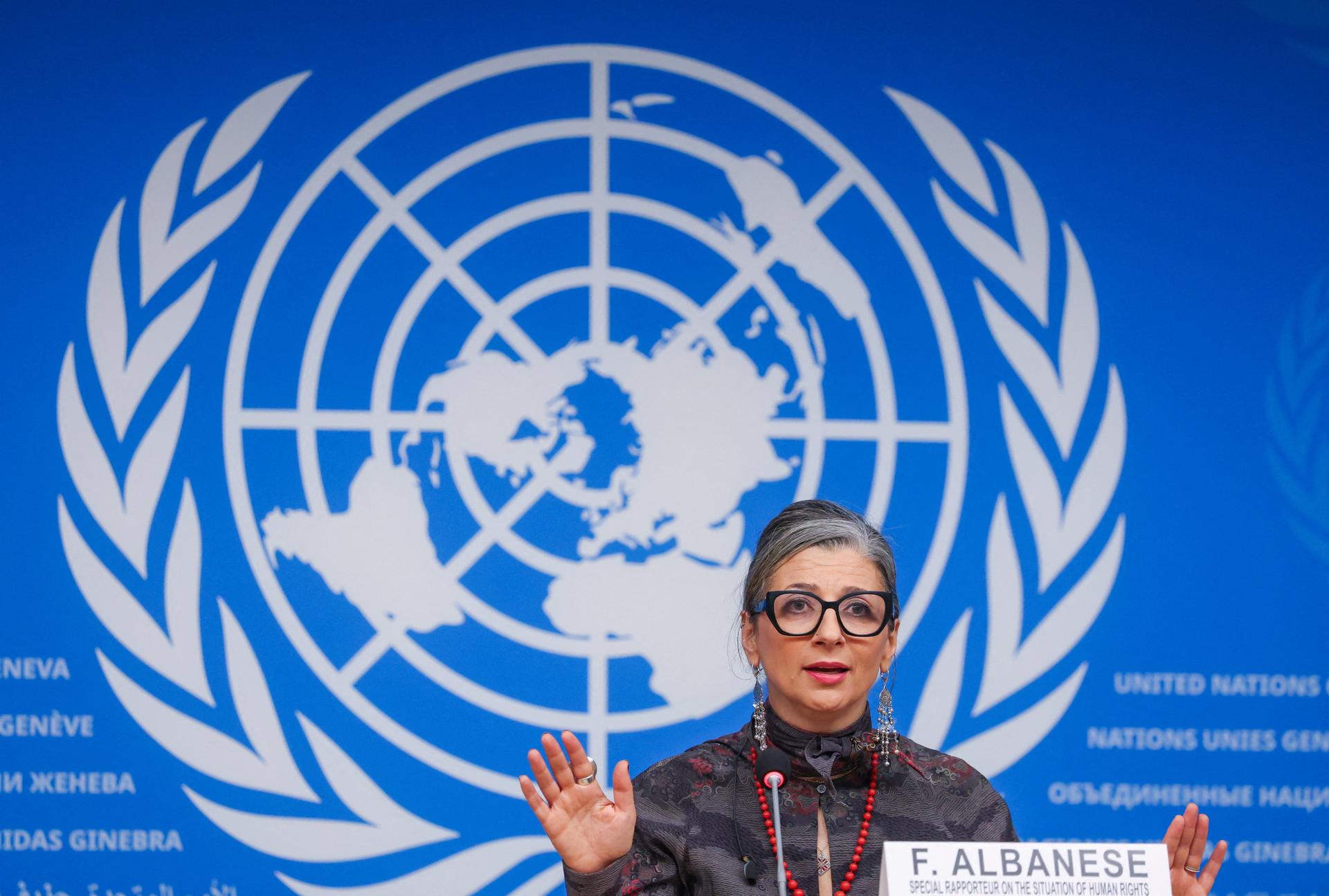
Francesca Albanese, UN special rapporteur on human rights in the Palestinian territories, during at the United Nations. Geneva, Switzerland. REUTERS/Denis Balibouse |
-
Human rights advocate: Since becoming the United Nations’ special rapporteur for the Palestinian territories in 2022, Francesca Albanese has emerged as one of the most forceful critics of Israel's military actions in Gaza. In July, Albanese was sanctioned by the U.S. government for urging the International Criminal Court to investigate American and Israeli companies and individuals who she says are complicit in gross human rights violations. Click here for this insightful feature on Albanese.
-
Mexico journalist deaths: UK-based journalist advocacy group Article 19 found that at least eight journalists disappeared or were murdered in Mexico in 2025. The report also highlighted that Mexico saw 53 physical attacks against reporters, surpassing 10 in Honduras and nine in Guatemala. Mexico also set a record for judicial harassment against the press last year, the report said.
-
Guinea’s miners’ strikes: Workers striking over a pay dispute have halted mining since last week on the two blocks of Guinea's giant Simandou iron ore project operated by a consortium led by China's Baowu Resources, four sources told Reuters. Management and workers were holding talks on Wednesday, the union representatives said, adding that the strike – the first at the Baowu joint venture – involved around 3,000 workers.
-
Dominican Republic miners’ strikes: The Dominican Republic's President Luis Abinader suspended any activity related to GoldQuest Mining's gold and copper project, after thousands of people protested over environmental concerns. Thousands of people took to the streets to protest over the weekend, walking about 20 kilometers (12 miles) through San Juan to reach the Sabaneta Dam, a key water source that they fear could be threatened by pollution due to the mine.
-
Zambia and U.S. health deal: Zambia's government said that it opposed a U.S. attempt to tie health funding to access to critical minerals, giving details for the first time about why negotiations with Washington over two proposed agreements have stalled, because of the terms regarding data sharing which would violate Zambians' right to privacy.
-
DEI cases in the US: The U.S. Justice Department said admissions practices at the University of California Los Angeles' David Geffen School of Medicine were biased in favor of Black and Hispanic applicants, citing findings of a probe as the Trump administration continues its crackdown on diversity policies. Meanwhile, the New York Times was sued by the U.S. Equal Employment Opportunity Commission, which accused the newspaper of passing over a white man for a top editorial role because of his race and gender, in order to meet what the agency viewed as illegal diversity goals.
- Correction: Please note Tuesday’s newsletter photo incorrectly used Masatsugu Asakawa as the current Asian Development Bank on the image when it should be Masato Kanda.
|
|
|
|
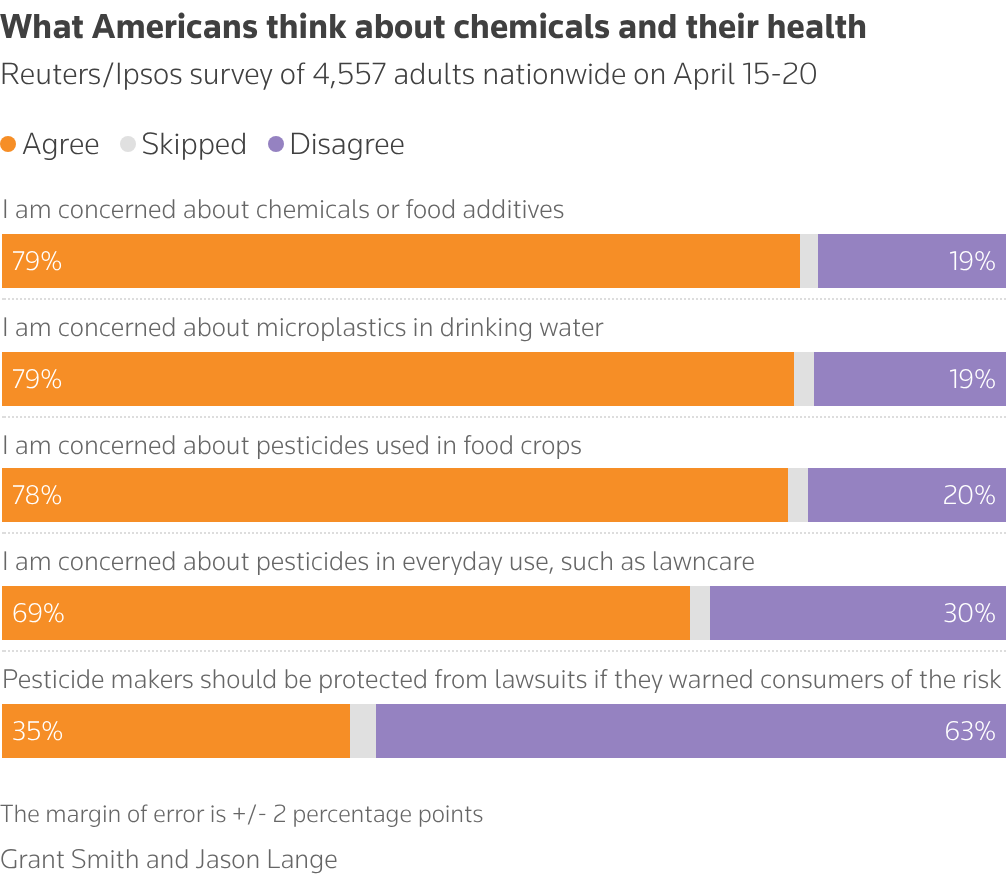
In keeping with today’s main focus on health, today’s Lens takes a look at the growing ‘Make America Healthy Again’ (MAHA) movement, which helped usher President Donald Trump back to the White House for a second term.
In the Reuters/Ipsos poll, 79% of respondents expressed concern about impacts to their health from chemicals or food additives, and from microplastics in drinking water. The poll, which was conducted online April 15-20, had a margin of error of 2 percentage points.
Click here for some more MAHA concerns such as affordability amid the rising cost of living. |
|
|
|
|