Oil shock absorbers are dwindling

Global news you can trust.

Download the Reuters App.


Power Up

Power Up

A Reuters Open Interest newsletter

By Ron Bousso, ROI Energy Columnist


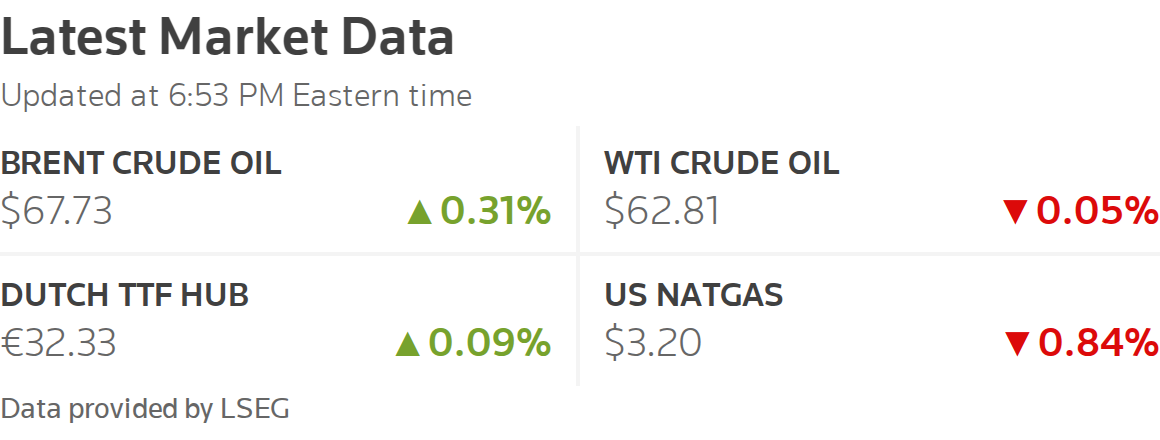
Data refreshes every time you open this email. For more energy news, click here. Please send any feedback to powerup@thomsonreuters.com.

Hello Power Up readers,

The Middle East roller coaster not only continued this week – it accelerated. U.S. President Donald Trump on Sunday announced the launch of a Navy operation, “Project Freedom”, to force open the Strait of Hormuz and get hundreds of stranded ships and their crews out of the Gulf. Iran responded by striking ships and the United Arab Emirates, raising the spectre of a new round of fighting.

Yet within hours, Trump paused the operation, only to announce that a new U.S.-Iranian peace initiative was being hammered out.

As things stand, the two sides appear to be edging towards a limited, temporary agreement to halt the war. The emerging plan centres on a short-term memorandum rather than a ‌comprehensive peace deal, underscoring the deep divisions.

Yet the mere hope of any deal that could lead to the reopening of the strait moved oil prices sharply lower to under $100 a barrel on Wednesday, helping push many global stock markets to record highs.

Time will tell when, if, and how flows through Hormuz will resume. In the meantime, economic pain will mount, particularly in Asia, as countries scramble to handle the loss of over 13% of global oil supplies.

One thing is certain: the world is running out of shock absorbers as oil inventories are drawn down rapidly. That means oil prices will likely stay elevated for a long time to come no matter what happens with this latest peace deal. More on this below.

Here are more headlines;

  • Shell's first-quarter profit hit its highest level in two years at $6.9 ‌billion, boosted by the strong performance of its oil trading business, the world’s largest, in the wake of the Iran war. Shell’s profits topped those of its peers, including larger U.S. rivals Exxon Mobil and Chevron, highlighting the benefits trading can offer.
  • Europe's solar surge has become one of the continent's most visible energy transition success stories. But even the staunchest clean power advocates are now sensing there can be too much of a good thing, wrote ROI Energy Transition Columnist Gavin Maguire.
  • This Reuters article offers great insight into how Middle Eastern oil producers have gone to great lengths to get some tankers out of the Gulf while avoiding Iranian attacks.

As always, don’t hesitate to contact me at ron.bousso@thomsonreuters.com or follow me on LinkedIn with any questions or thoughts.


Top energy headlines

  • Enel's first quarter core earnings up 3.6% as it confirms 2026 guidance
  • Iran cut back oil production by 400,000 bpd, US energy secretary says
  • Oil falls below $100 a barrel on Middle East peace hopes
  • Hungry to sell, UAE slips hidden oil tankers through Strait of Hormuz
  • Cheniere flags earnings pressure from Middle East disruptions after Q1 loss


Shrinking buffer

U.S. fuel markets are flashing warning signs. President Donald Trump has repeatedly argued that gasoline prices will “drop like a rock” once the Iran conflict ends. Yet the sharp and persistent drawdowns in U.S. stocks of crude, gasoline and diesel in recent months suggest otherwise.

And the risk extends far beyond sticker shock at the pump.

Responding to extraordinary price signals, U.S. refiners have boosted jet fuel output by 18% since ⁠the war began, while gasoline and diesel output have each risen by over 2%, according to the Energy Information Administration.

Crude and fuel exports have soared since the start of the war to a record of over 14 million bpd in the week ended April 24, EIA data showed. Those flows have provided badly needed relief to fuel-starved economies - but at a steep cost.

That export frenzy has triggered a rapid, highly counter-cyclical drawdown in domestic inventories that is increasingly threatening the U.S. economy.

Read the full column
 

Get full access to Reuters.com for just $1/week. Subscribe now.


Sponsors are not involved in the creation of newsletters or other Reuters news content. Advertise in this newsletter or on Reuters' website

LiveIntent Logo