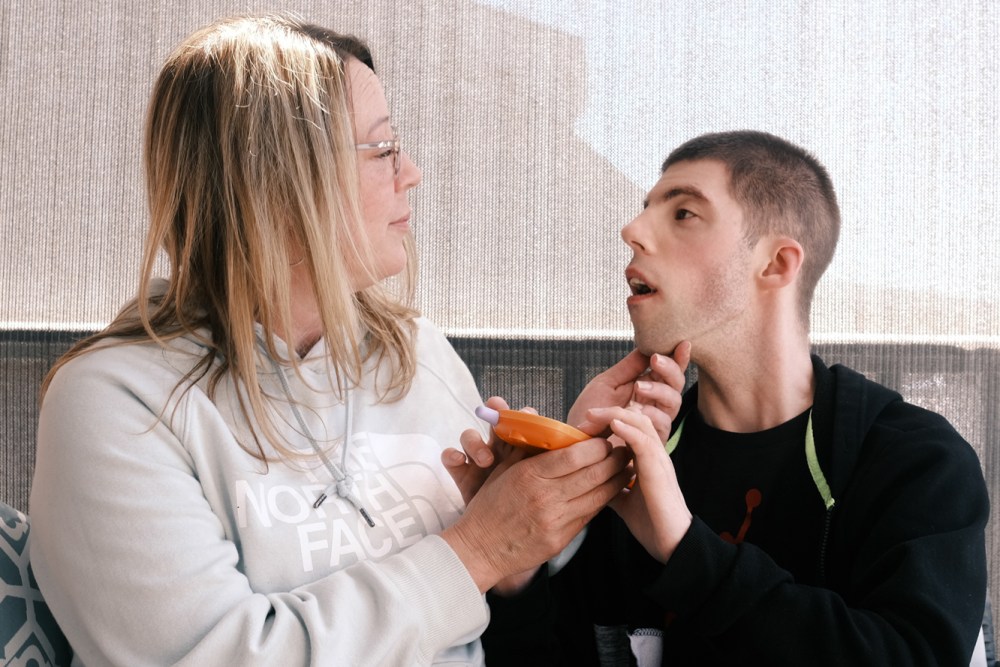
Melissa Gonce used to cry when her son came home from his day program soaked in urine, dehydrated and distressed. Jason, 28, is nonverbal and profoundly disabled, requiring watchful care.
Relief came under a Medicaid-funded program that allows families to be paid as caregivers. Gonce now earns about $67,000 a year to look after Jason full time. With his mother’s care, his seizures stabilized and he began making small gains in independence and daily routines.
Now, families like hers worry that stability could soon collapse under looming Medicaid cuts, threatening services that keep millions of people like Jason alive in their communities. For caregivers like Gonce, that could mean financial ruin and impossible decisions about whether to keep their loved ones at home.
“This isn’t charity,” Gonce said. “This is survival.” |