
|
 |
Good afternoon, and welcome back to Press Pass. Summer weather is scorching much of the United States this week. I can think of no better way to beat the heat than sipping a cocktail and reading The Bulwark: Both can do wonders for your stress levels while keeping your head nice and cool. Upgrade your membership to a Bulwark+ subscription to get access to it all, including ad-free podcasts, every edition of this newsletter, and more:
Today’s edition is about the blending of technology and campaigns, two things that seem to get worse the more advanced they become. First, some campaigns are paying political influencers under the table—and therefore outside the bounds of proper disclosure—to make favorable and aligned content for them. The result: The feed that social media users can’t stop watching is starting to fill up with sponsored content without them realizing it. The tactic also creates a novel extortion risk for campaigns: There’s nothing to prevent content creators from demanding payment and threatening to boost a candidate’s rival if their target doesn’t shell out.
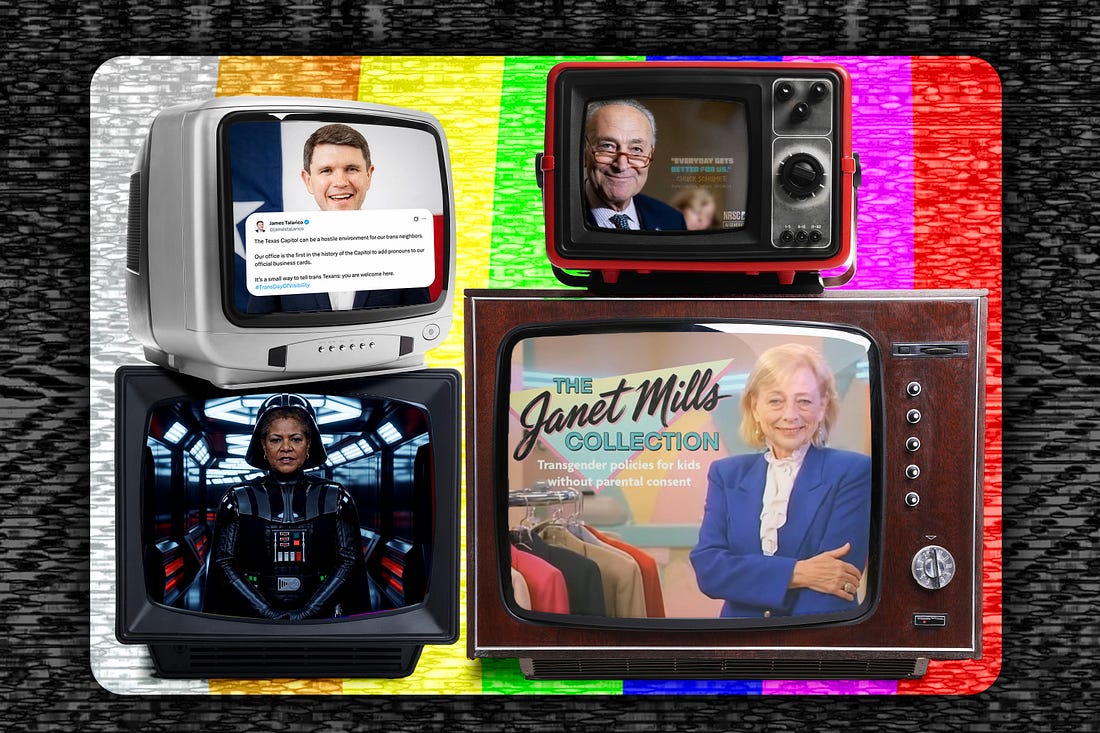
The other aspect of this new “wild, wild west” of politics and tech is the use of AI in campaign materials. Political organizations and candidates are using AI to show voters video of things they could previously offer only in print, and some are even turning ads into miniature Hollywood production–style movies to dramatize their allegations about their opponents’ agendas. Lastly, if you are thinking about leaving a large estate to posterity, have you considered entrusting it all to a fluffy white cat? All that and more than you probably want, below.
That Political Video You Just Liked Is Probably an Ad
Candidates are paying influencers to back their campaigns without proper disclosure.
|

| ||||||||||||


 |
Monsters, Inc.
Paid partnerships are a ubiquitous feature of video and photo–forward social media like Instagram and TikTok. Some of the posts are obvious, and they may even include tags like #ad or #sponcon (“sponsored content”) to make clear that the creator is being remunerated for their breathlessly enthusiastic opinion. But sometimes the commercial backing is not so obvious, and this sort of gray-zone #sponcon goes beyond dog food, jeans, and unnecessary supplements. It’s also getting made for political candidates.
Campaigns are starting to more heavily rely on partnerships with social media influencers to generate interest in their candidates and causes through paid endorsements and custom-ordered content—and the material is very often being served up with no disclosure informing the viewer that what they’re viewing is actually an advertisement.
In the California gubernatorial race, billionaire Democratic donor Tom Steyer has reportedly paid influencers $10 per post in support of his campaign; his failure to explain to his ad-hoc social media brigade that they need to disclose the payments in the sponsored posts likely resulted in numerous violations of a state law requiring such disclosures. (Team Steyer’s offer has since changed to a $1,000/month partnership, with the disclaimer requirement included in the new listing.) In addition, a California elections watchdog is probing his campaign for an “interview” conducted by a TikTok influencer that came with an undisclosed $10,000 honorarium.
Beyond the ethical concerns about proper disclosure, enlisting influencers carries the risk that they might turn on the campaign that recruited them, switching allegiances to rivals offering more money or even attempting to extort candidates to pony up more cash. As Kamala Harris’s 2024 digital director Rob Flaherty wrote in The Bulwark last week in his personal postmortem for the former VP’s failed presidential campaign:
There are a number of tactics that have become standard practice on the right that are probably going to move over to the left—such as paying creators under the table through LLCs for consulting contracts or otherwise. Each campaign in a 2028 primary is going to need a plan for this sort of thing. Does the money flow? If so, where from? You will encounter (as we did in 2024) creators who say something like ‘Pay me $5,000 or I’ll endorse your opponent’—what’s your plan for that?
I asked some senators of both parties whether they would try out this new approach to political advertising, if they believe it’s ethical to do so, and whether they would entertain the idea of contracting with a potentially mercurial and vengeful content creator.
“I’m very familiar with that. That’s a very common thing,” Sen. Brian Schatz (D-Hawaii) told me when I mentioned Flaherty’s claim that influencers often seemed willing to extort campaigns for higher fees. “I would also say that used to happen offline, too.”
“There’s definitely a whole world there [in which] you can interact with them, and if you choose not to form a business relationship, you can have the political equivalent of a review bomb,” Schatz added.
Schatz said that, like many policy areas, the United States’ impotent enforcement mechanisms are to blame.
“I think if we had a good Federal Election Commission—or even a functioning one—then we could do something about that,” he said.
When I asked Sen. Rick Scott (R-Fla.) about all this, he at first expressed confusion about whether these influencer payments would need to be disclosed.¹ When I noted there are loopholes to legal requirements for #sponcon diclosure—for instance, paying social media partners through consultancies or LLCs, as Flaherty alluded to—Scott said dryly, “I think there’s always a risk in any check you write.”
Members of a free society make important decisions about money, political participation, and more on the basis of their best judgment of information they get through the news, and most of us nowadays consume news through our phones. Knowing whether a piece of content you’re consuming is an ad or not is crucially important for assessing its trustworthiness, which is why it helps none of us for sponsored content to go undisclosed. Unfortunately, the key decisionmaking factors are different for the candidates themselves: They can afford to add another risk to their campaigns if doing so will mean they can pull in a bit more attention during a high-stakes campaign, especially if lax enforcement nullifies the risk.