Partner Updates
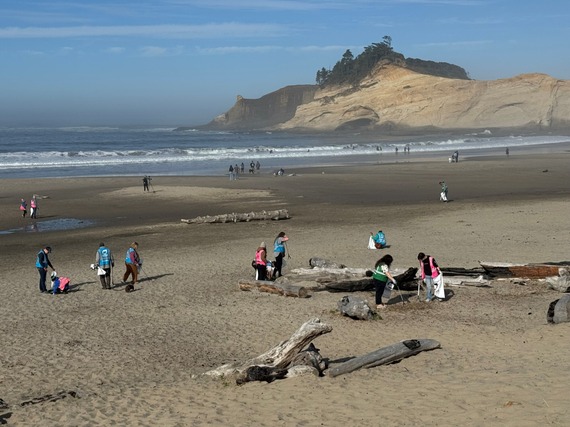 A group of SOLVE volunteers at the Pacific City beach cleanup (Photo Credit: SOLVE).
From Astoria to Brookings:
Coastwide Action Continues
During SOLVE’s Earth Month celebrations, volunteers joined beach cleanups stretching from Astoria to Brookings, tackling marine debris along the entire Oregon Coast. Highlights included a microplastic cleanup at Rockaway Beach where nearly 300 volunteers, most of them students, sifted sand for microplastics, removed debris, and learned how inland litter impacts ocean health. Friends of Netarts Bay - Watershed, Estuary, Beach, and Sea (WEBS) organized a sunset cleanup at Netarts Beach, while several additional coastal projects took place in partnership with Surfrider Foundation.
The momentum continues on July 5 with SOLVE’s Afterglow cleanups, focused on removing fireworks debris and post-holiday litter from Oregon beaches. Coastal volunteers are invited to turn the days after the holiday into a time of restoration and community pride by joining an existing event or stepping up to lead a cleanup in their own community. Learn more on the SOLVE website.
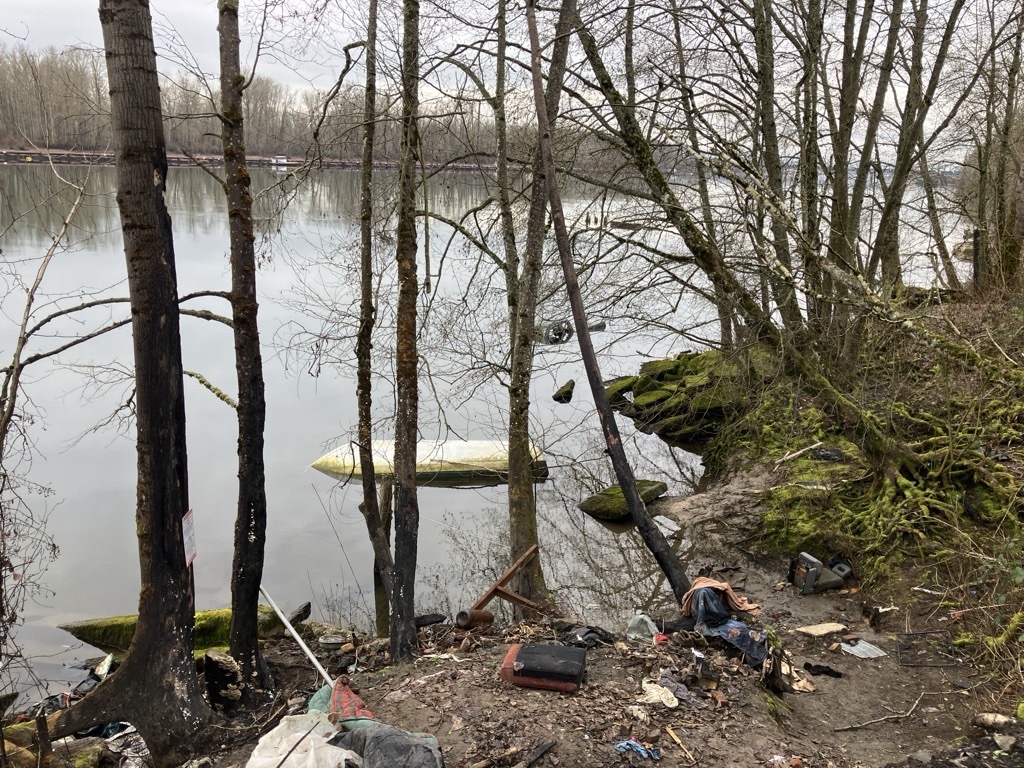 Debris along the Columbia River in Portland, OR (Photo Credit: Kevin McAfee).
Agencies work together to remove shoreline garbage in Portland
The Waterways Stewardship Program at the Oregon Department of State Lands partnered with Metro Regional Illegal Dumping (RID) and the Port of Portland on a clean-up of a Columbia River beach in Portland Oregon in March 2026. Three large truckloads of marine debris were removed by hand from the submerged and submersible land, as well as three derelict vessels and one derelict motor vehicle which were removed with the help of a local towing company.
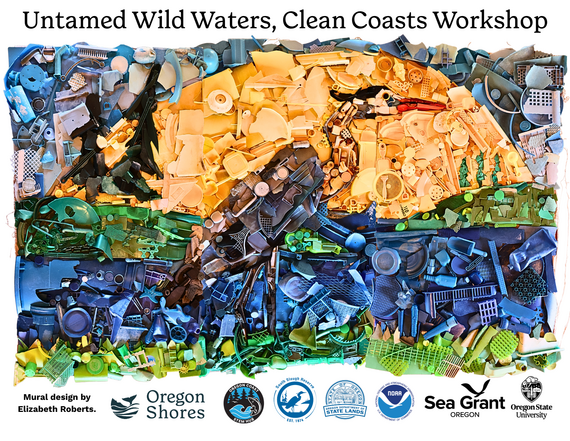 Mural made using marine debris collected on the Oregon Coast, designed by Elizabeth Roberts (Photo Credit: Oregon Shores).
Untamed WILD Waters, Clean Coasts: Exploring Beaches and Estuaries in Coos Bay
On a recent sunny day in April, teachers from across Oregon gathered at Bastendorff Beach in Coos County, Oregon for a full-day professional development workshop dedicated to exploring marine debris: where it comes from, how it impacts our coastline, and what we can do about it.
Together, partners from Oregon Shores, South Slough Reserve, and the Oregon Coast STEM Hub introduced teachers to the Adopt-A-Mile community science project, Aquatic WILD curriculum activities, and teaching resources available through STEM Hub Lending Libraries.
The highlight of the day was using marine debris collected on the Oregon Coast to create a mural designed by Elizabeth Roberts. As the teachers collaboratively placed trash in color-blocked areas atop the canvas, the image of a great blue heron emerged, along with collective hope for cleaner coasts.
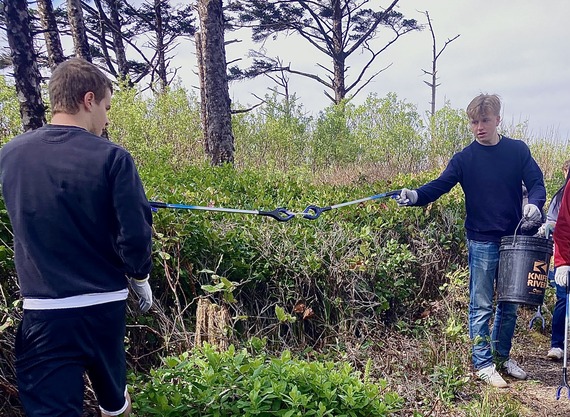 High school students channelled their focus as they worked together to remove debris from Cape Lookout State Park (Photo Credit: Marina Dreeben).
Netarts/Oceanside Earth Month Beach Cleanup
On Sunday April 26, the Friends of Netarts Bay - Watershed, Estuary, Beach, and Sea (WEBS) hosted their annual Earth Month Beach Cleanup in partnership with SOLVE and the Oceanside Action Partnership. Over the course of the day, 109 volunteers covered WEBS’ entire service area from Cape Lookout to Cape Meares. The day began with a group of high school exchange students at Cape Lookout, followed by a public cleanup in the afternoon where volunteer teams set out from Schooner Beach, Oceanside Beach, and Cape Meares Beach. Volunteers enjoyed beautiful weather and removed a total of 165 pounds of debris. WEBS is incredibly grateful to the many community partners who supported this event, which include Oregon Parks and Recreation Department, The Schooner Restaurant, Tillamook County Solid Waste Department, and City Sanitary.
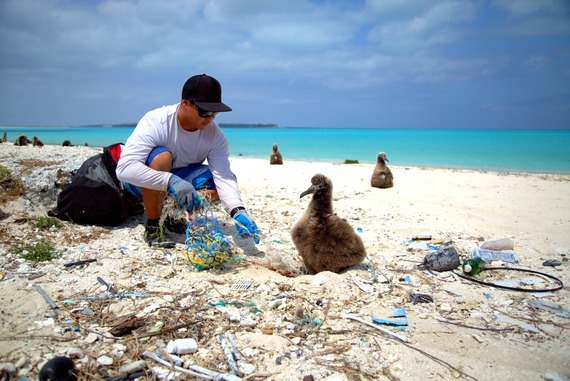 Cleanups protect Laysan Albatross and other ocean animals from plastic pollution (Photo Credit: NOAA).
Ocean Conservancy’s
New Wildlife Impact Calculator
In March 2026, Ocean Conservancy researchers released a free, publicly available tool called the Wildlife Impact Calculator. This tool allows users anywhere in the world to estimate the potential benefit of their cleanup for seabirds, sea turtles and marine mammals. Users enter the number of plastic items collected from a cleanup event to see how many animal lives would have been at risk had those items been ingested. The development of the calculator was informed by award-winning peer-reviewed research, also led by Ocean Conservancy scientists, that quantifies the deadly dose of macroplastics ingested by seabirds, sea turtles, and marine mammals.
 NOAA Marine Debris Program Updates
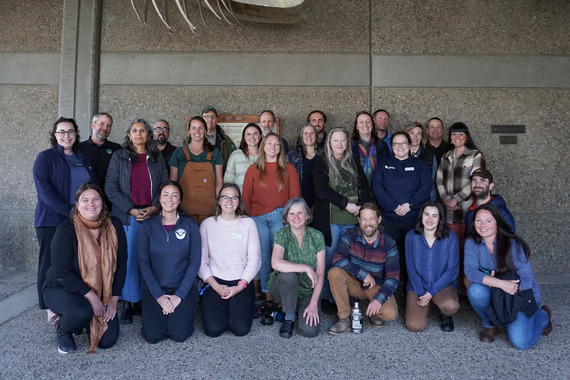 2026 Oregon Marine Debris Action Plan workshop participants (Photo Credit: NOAA).
2026 Oregon Marine Debris Action Plan Workshop Held in Newport, Oregon
On April 28 and 29, the Oregon marine debris community came together to reflect on the 2019-2025 Oregon Marine Debris Action Plan (ORMDAP), strategically update the collaborative goals and strategies outlined in the plan to address the marine debris problem throughout the state, and begin the process of drafting the next six-year iteration of the ORMDAP. Overall it was a wonderful opportunity to reconnect as a community and get reenergized in our ongoing efforts to keep Oregon’s coasts clean and free from the impacts of marine debris. Thank you to everyone who participated in the workshop, and stay tuned for news on the next edition of the Oregon Marine Debris Action Plan!
Is your organization interested in participating in the Oregon Marine Debris Action Plan? Email Pacific Northwest Regional Coordinator Andrew Mason at andrew.mason@noaa.gov for more information.
 |
|
Reminder: Ocean Conservancy Requests Applications for Large Marine Debris Removal Project
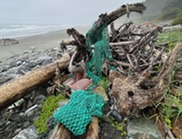
Ocean Conservancy, with support provided by a 2024 award from the NOAA Marine Debris Program, requests applications for their Large Marine Debris Removal Project for the removal of large marine debris, including derelict fishing gear, from remote and hard-to-reach marine environments, including the Great Lakes. Successful projects will remove, prevent, and monitor large marine debris and derelict fishing gear that is too difficult to remove by hand due to its size, volume, or location.
Applications are due on May 31, 2026 by 5:00 PM Eastern Daylight Time (EDT)
Learn more on Ocean Conservancy’s Large Marine Debris Removal Project’s website.
Photo caption: Derelict fishing nets litter the wrack line on Ankau Beach in Yakutat, Alaska (Photo Credit: Hava Rohloff/Ocean Conservancy).
|
 |
|
2027 Sea Grant Knauss Fellowship Applications Now Open
The Sea Grant Dean John A. Knauss Marine Policy Fellowship provides a unique educational experience to students enrolled in graduate programs in fields related to ocean, coastal, and Great Lakes resources and in the national policy decisions affecting those resources. The program matches graduate students with hosts in legislative or executive branch offices in the Washington, D.C., area for a one-year (12-month) paid Fellowship. The Sea Grant Knauss Fellowship is an extension of a student’s education—a chance to serve, grow, and learn in an area they may not have been exposed to in the past.
The application deadline is June 3, 2026. Additional information and application resources are available at seagrant.noaa.gov/prospective.
|
 |
|
Crunching the Numbers: An Abandoned and Derelict Vessel Reporting Platform
Under a 2023 award from the NOAA Marine Debris Program, the BoatUS Foundation is working to increase understanding of the abandoned and derelict vessel (ADV) issue. The BoatUS Foundation has utilized MyCoast to build a public reporting platform to collect information and improve understanding of the scope of the ADV problem, making this information available to the public as well as states and partners working to remove and prevent ADVs.
So far, 1,105 vessel reports have been submitted from boaters and other coastal stewards across the country. Report a vessel to help BoatUS Foundation gather information in your community! Anyone can report a vessel to the database, and you don’t need an account to submit a report.
|
 |
|
Pre-K-–12 Teachers: Promote Watershed and Ocean Stewardship in Your School or Local Community by Becoming a NOAA Ocean Guardian School
A NOAA Ocean Guardian School makes a commitment to the protection and conservation of its local watersheds, ocean, and special ocean areas, like national marine sanctuaries, through implementing a school- or community-based conservation project.
Participation without funding: Any school (PreK-12) in the United States may apply to participate without funding.
Participation with funding: Grant amounts range from $1,000 - $4,000 per school depending on the program region and funding year. Any school (PreK-12) from the following locations may apply for an Ocean Guardian School grant.
-
Oregon counties: Clatsop, Tillamook, Lincoln, Lane, Douglas, Coos and Curry
Applications for the 2026 - 2027 school year are now available. Apply by July 1, 2026.
|
|