Plus US gasoline markets set for fresh test
 

Power Up

Power Up

A Reuters Open Interest newsletter

By Gavin Maguire, ROI Energy Transition Columnist


Data refreshes every time you open this email. For more energy news, click here. Please send any feedback to powerup@thomsonreuters.com.

Hello Power Up readers,

Iran and the U.S. traded fresh strikes while Israel ordered troops to move further into Lebanon over the weekend, dimming hopes for a ceasefire extension that had seemed within reach on Friday.

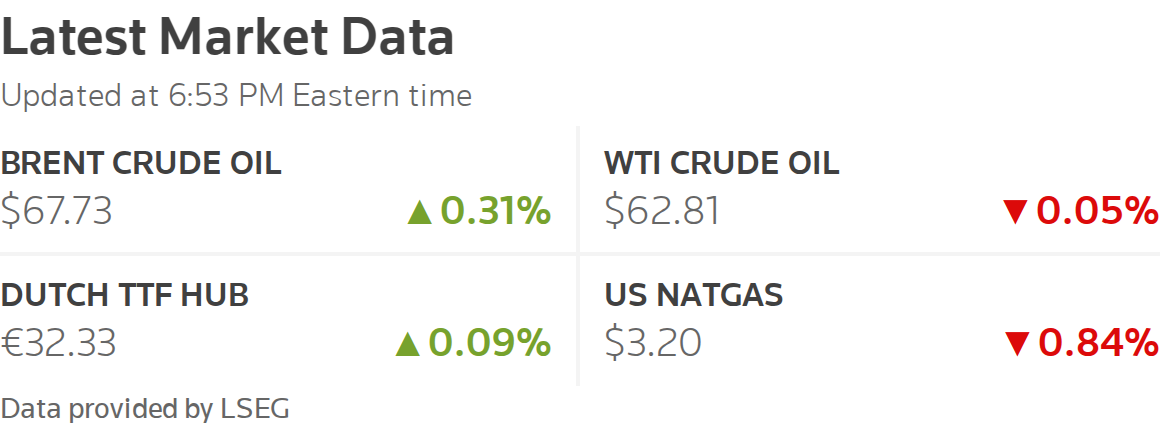
That backsliding has sent oil prices marching higher again, with global benchmark Brent futures rallying over 6% and U.S. light  crude futures posting gains of over 7%. The latest Reuters energy market wrap is here.

Iran's attacks on a U.S. air base in Kuwait on Monday - which were intercepted by air defense systems - along with more intense fighting between Israeli forces and Hezbollah in Lebanon are raising concerns that the conflict may be escalating in the region.

Even so, U.S. President Trump posted on Truth Social that "Iran really wants to make a deal" and everyone should "sit back and relax."

Despite those assurances, markets remain jittery, especially as U.S. gasoline inventories continue to get run down just as the peak driving season is getting underway. I dig into the historically tight U.S. gasoline situation below. 

But first, here are a few key scoops, top stories and columns from the Reuters wire:

  • China's crude oil imports slumped to the lowest in 10 years in May. ROI's Clyde Russell explains the dip has been driven by economics, not altruism.
  • Ousted BP Chairman Manifold met with activist shareholder Elliott Management during his tenure without telling fellow board members directly, two sources with knowledge of the matter told Reuters.
  • U.S. shale producers have the lowest stock of drilled-but-uncompleted wells on record, limiting their ability to move quickly to boost crude output and replace rapidly depleted oil inventories.  Exports and refinery processing jumped to plug the shortfall in supply caused by the U.S.-Israeli war on Iran.
  • Activist investor Voss Capital has urged Sempra to spin off its Oncor electricity unit, creating a high-growth Texas-focused utility unencumbered by the $60 ‌billion energy giant's main California business, according to sources familiar with the matter and a letter seen by Reuters.
  • Devon Energy has received a roughly $8 billion offer from money manager Stone Ridge Asset ‌Management for its Marcellus shale assets, four people familiar with the matter said.

As always, don’t hesitate to contact me at gavin.maguire@reuters.com or follow me on LinkedIn with any questions or thoughts.


Top energy headlines

  • Oil jumps over $6 on Iran report of halted U.S.-Tehran exchanges, Hormuz blockade risk
  • Nearly 8% of Norway oil workers threaten strike from June 5
  • OPEC+ likely to raise July oil output target despite Hormuz disruption, sources say
  • UK regulator says no evidence fuel retailers taking advantage of Middle East crisis
  • Gas generator maker ERock aims for $5 billion valuation in US IPO


US gasoline market set for fresh test

A near-record run of U.S. gasoline inventory draw-downs is flashing a stark warning for fuel markets: the system is losing its buffer just as seasonal demand crests. 

That combination does not guarantee shortages - but it sharply raises the odds of sudden, outsized price moves if anything goes wrong in terms of replenishing inventories as the peak U.S. driving season gets underway.

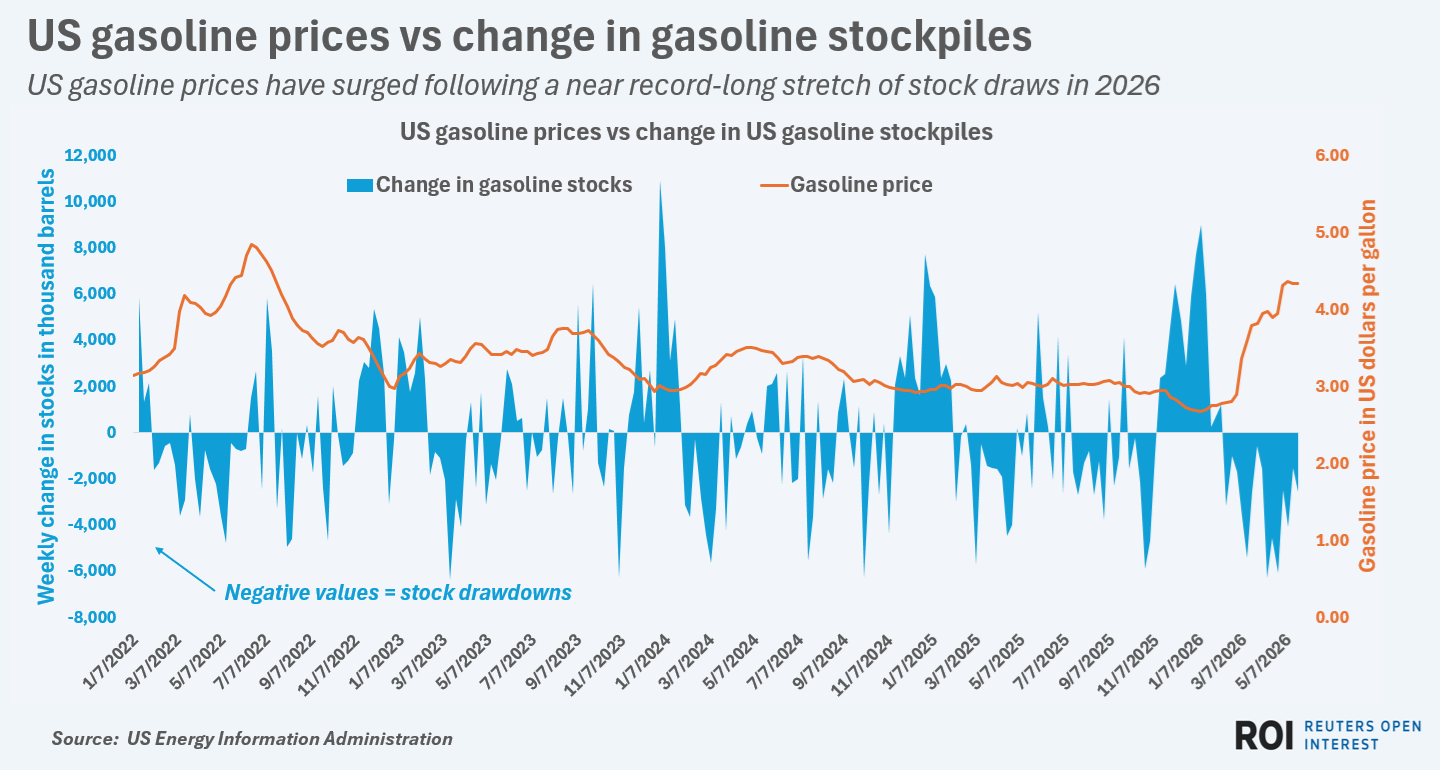
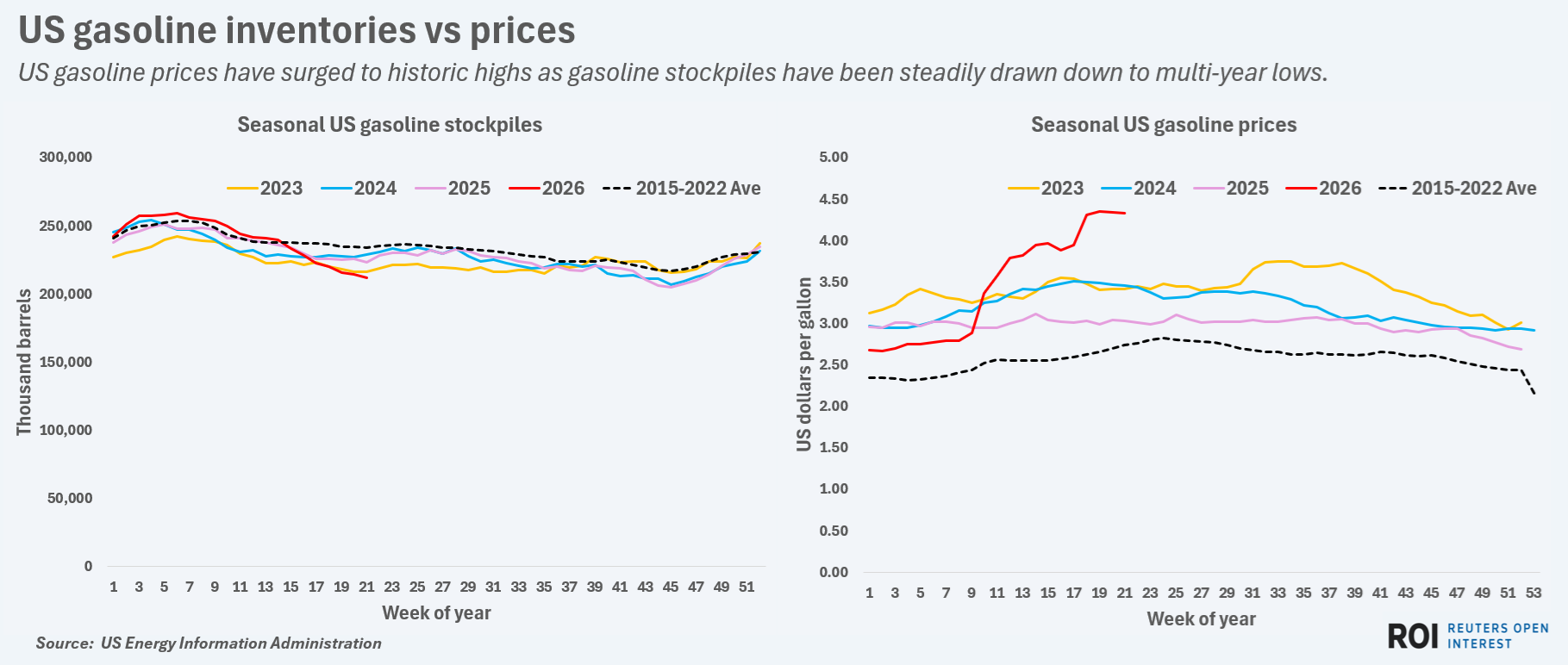
U.S. gasoline prices have already jumped by 50% to close to four-year highs since the U.S. and Israeli war against Iran began on February 28, and currently average around $4.33 per gallon, U.S. Energy Information Administration (EIA) data shows.

But prices could now be primed to take a fresh leg higher after 15 straight weeks of gasoline inventory reductions have drawn national stockpiles to their lowest for this time of year since 2014.

A durable peace deal in the Middle East that speedily restores tanker traffic through the Strait of Hormuz could help avert further steep reductions to U.S. gasoline stocks, and may limit additional price gains over the near term.

But any resumption in military hostilities that threatens to further hamper oil production and exports from the Middle East will likely spark a fresh rally in U.S. gasoline prices this summer, stoking cost-of-living fears across the country. Read the full column for more.

Read the full column
 

Sponsors are not involved in the creation of newsletters or other Reuters news content. Advertise in this newsletter or on Reuters' website

LiveIntent Logo
AdChoices Logo
 

Power Up is sent twice weekly. Think your friend or colleague should know about us? Forward this newsletter to them. They can also sign up here.

Want to stop receiving this email? Unsubscribe here. To manage which newsletters you're signed up for, click here.

This email includes limited tracking for Reuters to understand whether you’ve engaged with its contents. For more information on how we process your personal information and your rights, please see our Privacy Statement.