
|
 |
The Obamacare ‘Phantom’ Menace
Republicans insist the program is full of fake enrollees. Meanwhile, millions of real people are losing coverage.
|

| ||||||||||||


 |
IT HAS BEEN SIX MONTHS since Donald Trump and congressional Republicans refused to renew temporary, enhanced subsidies for the Affordable Care Act, causing premiums to jump for more than 20 million Americans. And at first, it seemed like things might not work out so badly, all things considered.
In January, the administration reported that initial signups were down by just 1.5 million. That would represent a relatively modest fall in a program that serves more than ten times that number, even if it was the largest year-to-year decline on record.
But since then, a handful of states have released their enrollment numbers. Based on that data—and ongoing survey information—several independent analyses have all come to basically the same conclusion: Enrollment is likely to fall by several million more.¹
It will be a few weeks (at least) before the federal government releases final coverage statistics and we learn just how many millions of Americans have dropped their insurance coverage because of the canceled subsidies.² Meanwhile, though, it’s worth remembering that the people dropping insurance aren’t the only ones feeling the pain. The expiring of the subsidies is also hitting many millions of people still getting insurance through the program who are now paying more for their coverage or who have shifted into skimpier plans that, though cheaper on a month-to-month basis, leave them exposed to higher out-of-pocket costs.
This is precisely what Democrats (and a handful of Republicans) warned would happen in the final months of last year, when there was a debate over whether to extend the subsidies. And in theory that argument could still carry the day. Trump and the Republicans could still decide to appropriate the money and offer the assistance retroactively. It’s been done before, and it could potentially bring the GOP some political relief heading into the midterms, given how big an issue affordability is shaping up to be.
But nobody thinks that is going to happen. Trump and the Republicans have signaled clearly they intend to stick by their decision and defend it, mostly by denying the harm it’s causing. Yes, enrollment is falling. But, they say, that’s mostly because they’ve culled from the program “phantom enrollees” who either gave deceptive information to qualify for financial assistance or were signed up without their knowledge by unscrupulous agents and brokers.
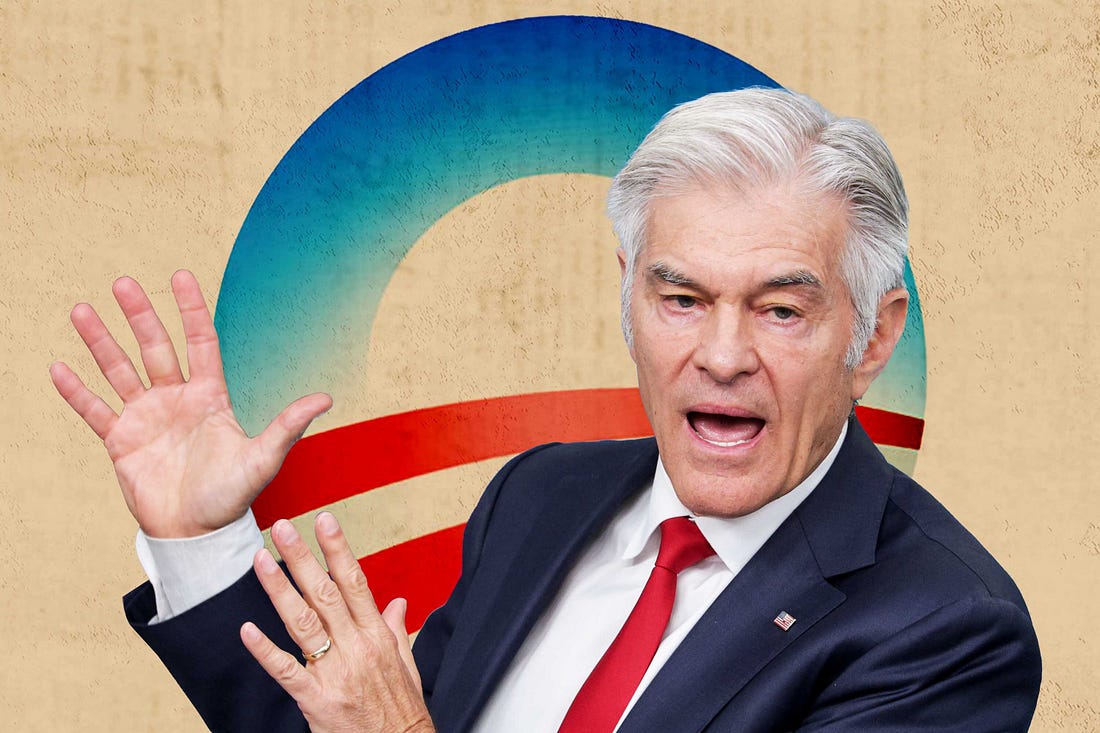
This argument fits seamlessly into one of the administration’s favorite narratives—that social welfare programs have exploded in cost and scope because of fraud, and that aggressively thinning enrollment in these programs is necessary to preserve them for the truly needy. “If you care about the ACA, then you’ll want us to take the fraud out,” Mehmet Oz, the Trump administration official who oversees federal insurance programs, said at a White House briefing earlier this month.
Oz is right that anybody who cares about the Affordable Care Act should support efforts at eliminating fraud. He’s also right that fraud has been a problem. But the available evidence suggests it was a lot less pervasive than Republicans claim—and that it could have been addressed in a way that would have allowed the extra financial assistance to stay in place.
Republicans have used a bazooka to kill an ant colony. And now they want you to believe that the smoldering crater is a figment of your imagination.
Honest news.
Smart analysis.
No-BS commentary.
Support our independent journalism and join our growing pro-democracy community.
ONE PLACE YOU CAN REALLY SEE the impact of the expiring subsidies is Georgia, one of the states where hard numbers are now available. As of April, enrollment in the state’s marketplace had fallen by one-third, according to data the CurrentGA and Georgia Recorder obtained via public-records request.
That comes as no surprise to Linda Williamson, an insurance broker in Atlanta. Most of her clients saw their premiums go up by hundreds of dollars a month, Williamson told me in a phone interview, and many have responded by switching into plans with higher out-of-pocket costs because they came with lower monthly payments. Still others are dropping their Affordable Care Act insurance altogether, Williamson said, with many opting instead for alternative forms of coverage like indemnity plans that have limited benefits.
That last part is an especially revealing window into what’s really happening. The problem with indemnity plans is that they typically pay fixed amounts per medical service, even if the provider charges more, and they stop paying altogether when the bills exceed a fixed threshold—anywhere from $250,000 to a million dollars for the policies Williamson sells.
The costs from a catastrophic medical event can easily exceed that, as Williamson knows personally: About twenty years ago, she had to refinance her house and borrow from retirement funds to pay off more than $100,000 in medical bills following a car accident and (separately) a bilateral pulmonary embolism that hit in her early forties.
The other catch with indemnity and short-term plans is that they usually entail what’s known as “medical underwriting,” which means that insurers will charge higher premiums—or deny coverage altogether—to anyone with pre-existing conditions. Williams told me she’s already had one client get approved for an indemnity plan only to have the coverage rescinded a few weeks later because the insurer went through the client’s records following a hospital visit and determined it was related to a past medical episode.
“They investigated and decided retroactively she never would have qualified for the policy, dissolved her policy, and left her with the medical bills,” Williamson said. “There’s nothing she could do, nothing she could qualify for. She’s paying out of pocket now, until we can get to January 1 and next year’s open enrollment, to get her back into an ACA plan.”
Stories like that used to be a lot more common in the days before the Affordable Care Act, when insurers selling individual coverage routinely subjected buyers to medical underwriting, as well as those retroactive reviews that frequently lead to rescissions like the one Williamson described to me. Putting a stop to those practices was one of the big motivating reasons to pass “Obamacare” in the first place. Now those practices are creeping back into the world of health insurance, at least for people for whom Affordable Care Act coverage has become too expensive.
It’s part of a larger story of backsliding on the Affordable Care Act’s progress just now coming into view—a story that affects middle- and upper-middle-income workers and small business owners, like the type Williamson tends to advise, as well as lower-income workers for whom even seemingly small premium increases of $20 or $30 a month strain budgets.
“What we’re hearing from our [enrollment counselors] is that a lot of these people are working multiple jobs, didn’t have health insurance until a few years ago when the extra credits got them into the ACA marketplaces, and now they’re going back to being uninsured” Whitney Griggs, director of health policy at Georgians for a Healthy Future, told me. “We have also heard about folks who are trying to pay that first premium and just could not keep up that cadence, and dropping their coverage.”